SUBSCRIBE TO OUR FREE NEWSLETTER
Daily news & progressive opinion—funded by the people, not the corporations—delivered straight to your inbox.
5
#000000
#FFFFFF
To donate by check, phone, or other method, see our More Ways to Give page.
There is something painfully fitting about the fact that the race for the GOP presidential nomination is hitting its peak during the Christmastide. The open disdain for the least among us, for the toilers in the vineyards, for strangers that has been expressed by Newt "End Child Labor Laws" Gingrich, Mitt "Corporations Are People Too" Romney and their immigrant-bashing, union-hating compatriots has given the 2012 race a distinct 1843 character.
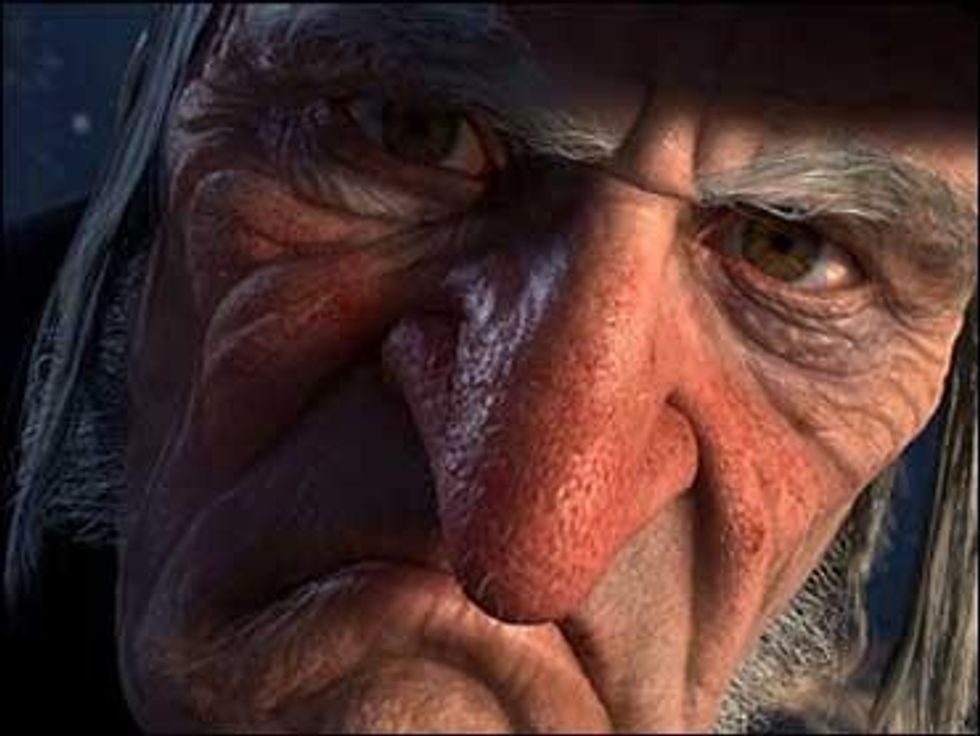
In her exceptional new biography of Charles Dickens, Claire Tomalin explains that the novelist's tale of that latter year, A Christmas Carol, was "Dickens' response to the condition of the working class." And she is right, up to a point. But A Christmas Carol is, as well, Dickens's response to those who would blame the conditions imposed by economic inequality on children who have not taught themselves how to "rise."
In seeking to awaken a spirit of charity in his countrymen, Dickens called attention to those who callously dismissed the poor as a burden and the unemployed as a lazy lot best forced to grab at bootstraps and pull themselves upward.
Dickens was, to be sure, more subtle than Rick Perry, Michele Bachmann and the other conservative dead-enders who on the cusp of this Christmas season were so ardently advocating against compassion. But he captured the essence of their sentiments in an imagining of a visit by two gentlemen, "liberals" we will call them, to a certain conservative businessman. Wrote Dickens:
"At this festive season of the year, Mr. Scrooge," began one of the gentleman, taking up a pen, "it is more than usually desirable that we should make some slight provision for the poor and destitute, who suffer greatly at the present time. Many thousands are in want of common necessaries; hundreds of thousands are in want of common comforts, sir."
"Are there no prisons?" asked Scrooge.
"Plenty of prisons," said the gentleman, laying down the pen again.
"And the union workhouses?" demanded Scrooge. "Are they still in operation?"
"They are. Still," returned the gentleman, "I wish I could say they were not."
"The treadmill and the poor law are in full vigor, then?" said Scrooge.
"Both very busy, sir."
"Oh! I was afraid, from what you said at first, that something had occurred to stop them in their useful course," said Scrooge. "I'm very glad to hear it."
"Under the impression that they scarcely furnish Christian cheer of mind or body to the multitude," returned the gentleman, "a few of us are endeavoring to raise a fund to buy the poor some meat and drink and means of warmth. We choose this time, because it is a time, of all others, when want is keenly felt, and abundance rejoices. What shall I put you down for?"
"Nothing!" Scrooge replied.
"You wish to be anonymous?"
"I wish to be left alone," said Scrooge. "Since you ask me what I wish, gentlemen, that is my answer. I don't make merry myself at Christmas and I can't afford to make idle people merry. I help to support the establishments I have mentioned--they cost enough; and those who are badly off must go there."
"Many can't go there; and many would rather die."
"If they would rather die," said Scrooge, "they had better do it, and decrease the surplus population. Besides--excuse me--I don't know that."
"But you might know it," observed the gentleman.
"It's not my business," Scrooge returned.
So Dickens began A Christmas Carol, a book very much in keeping with the radical tenor of a nineteenth-century moment when the world was awakening to the truth that poverty and desolation need not be accepted by civil society--or civilized people. The language employed by Scrooge was not a Dickensian creation; rather, it was a sort of reporting on the political platforms and statements of those who opposed the burgeoning movements for reform and revolution, which were sweeping through Europe as the author composed his ghost tale.
Dickens imagined that spirited prodding from the Ghosts of Christmas Past, Present and Future would change Scrooge--just as there are those today who imagine that a bit more enlightenment might cause even the most rigid Republican to reconsider his disdain for the unemployed, the underemployed and the never-employed.
In Scrooge's case, the otherworldly pressure did the trick. After his unsettling Christmas Eve, the formerly conservative businessman hastened into the streets of London and came upon one of the two liberals:
"My dear sir," said Scrooge, quickening his pace, and taking the old gentleman by both his hands. "How do you do. I hope you succeeded yesterday. It was very kind of you. A merry Christmas to you, sir!"
"Mr. Scrooge?"
"Yes," said Scrooge. "That is my name, and I fear it may not be pleasant to you. Allow me to ask your pardon. And will you have the goodness"--here Scrooge whispered in his ear.
"Lord bless me!" cried the gentleman, as if his breath were taken away. "My dear Mr. Scrooge, are you serious?"
"If you please," said Scrooge. "Not a farthing less. A great many back-payments are included in it, I assure you. Will you do me that favor?"
Dickens tells us Scrooge was frightened into such humanity that he now thanked the gentleman who asked him to open his wallet in order to "make idle people merry." The poor were suddenly the miser's business.
The poor are still with us, as are the Scrooges. We'd best bless them all, even the Gingriches, with hopes that the Ghosts of Past, Present and Future will again visit the Republicans who refuse to accept that this is not 1843.
There is something painfully fitting about the fact that the race for the GOP presidential nomination is hitting its peak during the Christmastide. The open disdain for the least among us, for the toilers in the vineyards, for strangers that has been expressed by Newt "End Child Labor Laws" Gingrich, Mitt "Corporations Are People Too" Romney and their immigrant-bashing, union-hating compatriots has given the 2012 race a distinct 1843 character.
In her exceptional new biography of Charles Dickens, Claire Tomalin explains that the novelist's tale of that latter year, A Christmas Carol, was "Dickens' response to the condition of the working class." And she is right, up to a point. But A Christmas Carol is, as well, Dickens's response to those who would blame the conditions imposed by economic inequality on children who have not taught themselves how to "rise."
In seeking to awaken a spirit of charity in his countrymen, Dickens called attention to those who callously dismissed the poor as a burden and the unemployed as a lazy lot best forced to grab at bootstraps and pull themselves upward.
Dickens was, to be sure, more subtle than Rick Perry, Michele Bachmann and the other conservative dead-enders who on the cusp of this Christmas season were so ardently advocating against compassion. But he captured the essence of their sentiments in an imagining of a visit by two gentlemen, "liberals" we will call them, to a certain conservative businessman. Wrote Dickens:
"At this festive season of the year, Mr. Scrooge," began one of the gentleman, taking up a pen, "it is more than usually desirable that we should make some slight provision for the poor and destitute, who suffer greatly at the present time. Many thousands are in want of common necessaries; hundreds of thousands are in want of common comforts, sir."
"Are there no prisons?" asked Scrooge.
"Plenty of prisons," said the gentleman, laying down the pen again.
"And the union workhouses?" demanded Scrooge. "Are they still in operation?"
"They are. Still," returned the gentleman, "I wish I could say they were not."
"The treadmill and the poor law are in full vigor, then?" said Scrooge.
"Both very busy, sir."
"Oh! I was afraid, from what you said at first, that something had occurred to stop them in their useful course," said Scrooge. "I'm very glad to hear it."
"Under the impression that they scarcely furnish Christian cheer of mind or body to the multitude," returned the gentleman, "a few of us are endeavoring to raise a fund to buy the poor some meat and drink and means of warmth. We choose this time, because it is a time, of all others, when want is keenly felt, and abundance rejoices. What shall I put you down for?"
"Nothing!" Scrooge replied.
"You wish to be anonymous?"
"I wish to be left alone," said Scrooge. "Since you ask me what I wish, gentlemen, that is my answer. I don't make merry myself at Christmas and I can't afford to make idle people merry. I help to support the establishments I have mentioned--they cost enough; and those who are badly off must go there."
"Many can't go there; and many would rather die."
"If they would rather die," said Scrooge, "they had better do it, and decrease the surplus population. Besides--excuse me--I don't know that."
"But you might know it," observed the gentleman.
"It's not my business," Scrooge returned.
So Dickens began A Christmas Carol, a book very much in keeping with the radical tenor of a nineteenth-century moment when the world was awakening to the truth that poverty and desolation need not be accepted by civil society--or civilized people. The language employed by Scrooge was not a Dickensian creation; rather, it was a sort of reporting on the political platforms and statements of those who opposed the burgeoning movements for reform and revolution, which were sweeping through Europe as the author composed his ghost tale.
Dickens imagined that spirited prodding from the Ghosts of Christmas Past, Present and Future would change Scrooge--just as there are those today who imagine that a bit more enlightenment might cause even the most rigid Republican to reconsider his disdain for the unemployed, the underemployed and the never-employed.
In Scrooge's case, the otherworldly pressure did the trick. After his unsettling Christmas Eve, the formerly conservative businessman hastened into the streets of London and came upon one of the two liberals:
"My dear sir," said Scrooge, quickening his pace, and taking the old gentleman by both his hands. "How do you do. I hope you succeeded yesterday. It was very kind of you. A merry Christmas to you, sir!"
"Mr. Scrooge?"
"Yes," said Scrooge. "That is my name, and I fear it may not be pleasant to you. Allow me to ask your pardon. And will you have the goodness"--here Scrooge whispered in his ear.
"Lord bless me!" cried the gentleman, as if his breath were taken away. "My dear Mr. Scrooge, are you serious?"
"If you please," said Scrooge. "Not a farthing less. A great many back-payments are included in it, I assure you. Will you do me that favor?"
Dickens tells us Scrooge was frightened into such humanity that he now thanked the gentleman who asked him to open his wallet in order to "make idle people merry." The poor were suddenly the miser's business.
The poor are still with us, as are the Scrooges. We'd best bless them all, even the Gingriches, with hopes that the Ghosts of Past, Present and Future will again visit the Republicans who refuse to accept that this is not 1843.
There is something painfully fitting about the fact that the race for the GOP presidential nomination is hitting its peak during the Christmastide. The open disdain for the least among us, for the toilers in the vineyards, for strangers that has been expressed by Newt "End Child Labor Laws" Gingrich, Mitt "Corporations Are People Too" Romney and their immigrant-bashing, union-hating compatriots has given the 2012 race a distinct 1843 character.
In her exceptional new biography of Charles Dickens, Claire Tomalin explains that the novelist's tale of that latter year, A Christmas Carol, was "Dickens' response to the condition of the working class." And she is right, up to a point. But A Christmas Carol is, as well, Dickens's response to those who would blame the conditions imposed by economic inequality on children who have not taught themselves how to "rise."
In seeking to awaken a spirit of charity in his countrymen, Dickens called attention to those who callously dismissed the poor as a burden and the unemployed as a lazy lot best forced to grab at bootstraps and pull themselves upward.
Dickens was, to be sure, more subtle than Rick Perry, Michele Bachmann and the other conservative dead-enders who on the cusp of this Christmas season were so ardently advocating against compassion. But he captured the essence of their sentiments in an imagining of a visit by two gentlemen, "liberals" we will call them, to a certain conservative businessman. Wrote Dickens:
"At this festive season of the year, Mr. Scrooge," began one of the gentleman, taking up a pen, "it is more than usually desirable that we should make some slight provision for the poor and destitute, who suffer greatly at the present time. Many thousands are in want of common necessaries; hundreds of thousands are in want of common comforts, sir."
"Are there no prisons?" asked Scrooge.
"Plenty of prisons," said the gentleman, laying down the pen again.
"And the union workhouses?" demanded Scrooge. "Are they still in operation?"
"They are. Still," returned the gentleman, "I wish I could say they were not."
"The treadmill and the poor law are in full vigor, then?" said Scrooge.
"Both very busy, sir."
"Oh! I was afraid, from what you said at first, that something had occurred to stop them in their useful course," said Scrooge. "I'm very glad to hear it."
"Under the impression that they scarcely furnish Christian cheer of mind or body to the multitude," returned the gentleman, "a few of us are endeavoring to raise a fund to buy the poor some meat and drink and means of warmth. We choose this time, because it is a time, of all others, when want is keenly felt, and abundance rejoices. What shall I put you down for?"
"Nothing!" Scrooge replied.
"You wish to be anonymous?"
"I wish to be left alone," said Scrooge. "Since you ask me what I wish, gentlemen, that is my answer. I don't make merry myself at Christmas and I can't afford to make idle people merry. I help to support the establishments I have mentioned--they cost enough; and those who are badly off must go there."
"Many can't go there; and many would rather die."
"If they would rather die," said Scrooge, "they had better do it, and decrease the surplus population. Besides--excuse me--I don't know that."
"But you might know it," observed the gentleman.
"It's not my business," Scrooge returned.
So Dickens began A Christmas Carol, a book very much in keeping with the radical tenor of a nineteenth-century moment when the world was awakening to the truth that poverty and desolation need not be accepted by civil society--or civilized people. The language employed by Scrooge was not a Dickensian creation; rather, it was a sort of reporting on the political platforms and statements of those who opposed the burgeoning movements for reform and revolution, which were sweeping through Europe as the author composed his ghost tale.
Dickens imagined that spirited prodding from the Ghosts of Christmas Past, Present and Future would change Scrooge--just as there are those today who imagine that a bit more enlightenment might cause even the most rigid Republican to reconsider his disdain for the unemployed, the underemployed and the never-employed.
In Scrooge's case, the otherworldly pressure did the trick. After his unsettling Christmas Eve, the formerly conservative businessman hastened into the streets of London and came upon one of the two liberals:
"My dear sir," said Scrooge, quickening his pace, and taking the old gentleman by both his hands. "How do you do. I hope you succeeded yesterday. It was very kind of you. A merry Christmas to you, sir!"
"Mr. Scrooge?"
"Yes," said Scrooge. "That is my name, and I fear it may not be pleasant to you. Allow me to ask your pardon. And will you have the goodness"--here Scrooge whispered in his ear.
"Lord bless me!" cried the gentleman, as if his breath were taken away. "My dear Mr. Scrooge, are you serious?"
"If you please," said Scrooge. "Not a farthing less. A great many back-payments are included in it, I assure you. Will you do me that favor?"
Dickens tells us Scrooge was frightened into such humanity that he now thanked the gentleman who asked him to open his wallet in order to "make idle people merry." The poor were suddenly the miser's business.
The poor are still with us, as are the Scrooges. We'd best bless them all, even the Gingriches, with hopes that the Ghosts of Past, Present and Future will again visit the Republicans who refuse to accept that this is not 1843.