SUBSCRIBE TO OUR FREE NEWSLETTER
Daily news & progressive opinion—funded by the people, not the corporations—delivered straight to your inbox.
5
#000000
#FFFFFF
To donate by check, phone, or other method, see our More Ways to Give page.
Daily news & progressive opinion—funded by the people, not the corporations—delivered straight to your inbox.
Nature abhors a vacuum, it is said; and the internet abhors unexplained dissonance. When photographs emerged of police lieutenant John Pike pepper-spraying University of California Davis students, it wasn't just the violence in those images that captured the world's attention - it was the surreal juxtaposition of that violence with Pike's oddly casual body language and facial expression.
Photoshop out the students from that picture with your mind. Forget about Pike's uniform, let's say he's just wearing street clothes. Now, instead of a policeman spraying a less-lethal chemical weapon down the throats of peacefully seated 20-year-olds, you might be able to interpret this tableau as a figure sauntering through a garden, spraying weeds. Or maybe he's your paunchy, mustached uncle, nonchalantly dousing bugs in the basement with insecticide.
One way the internet deals with that kind of upsetting dissonance is to mock it. And that's what the internet has done with Pike. The "casually pepper-spraying cop" is now a meme, a kind of folk art or shared visual joke that is open to sharing and reinterpretation by anyone. This particular meme has spread with unusual velocity - in part, I imagine, because the subject matter is just as weird as it is upsetting.
Even Kamran Loghman, one of the men who developed pepper spray as a weapon with the FBI in the 1980s, had a hard time reconciling it. "I have never seen such an inappropriate and improper use of chemical agents," Loghman told the New York Times. And Loghman might add "insouciant" to that list of adjectives. I mean, look at the guy. He's not braced for imminent attack by a foe; he does not move with tension as if navigating a hostile environment. He's administering punishment, and his face says: "Meh."
An investigation, to be led by former NY and LA police chief Bill Bratton, into whether there was police misconduct may take a while to reach a conclusion, but Photoshop justice has been delivered to Pike. And the expressions keep multiplying.
You can find them at Boing Boing's "Occupy Lulz" post, at Know Your Meme, at a Facebook page and at Reddit.
Pike's dissonantly casual body language in the context of violence brings to mind the photos from Abu Ghraib; Lynndie England smiling and giving the camera a thumbs-up in front of tortured prisoners. And, in a fit of macabre recursion, some of the casually pepper-spraying cop meme images reference those very photos from Abu Ghraib. Lynndie and Pike, two "bad apples" taking the fall for systemic problems with the institutions each represent.
Violence is nothing new, of course, and there are plenty of classic art and history images in which to insert Pike. A print of American revolutionary war figure Crispus Attucks, Picasso's Guernica for instance.
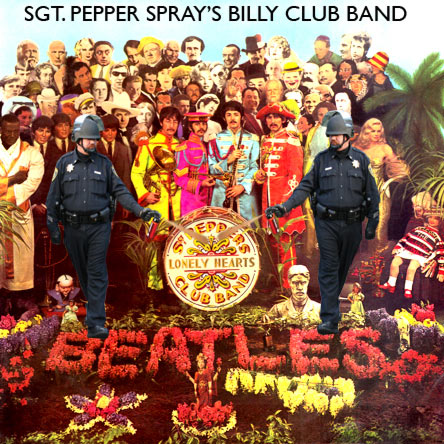
Classic album covers like Pink Floyd's Dark Side of the Moon and the Beatles' Sgt Pepper's Lonely Hearts Club Band get the treatment, too.
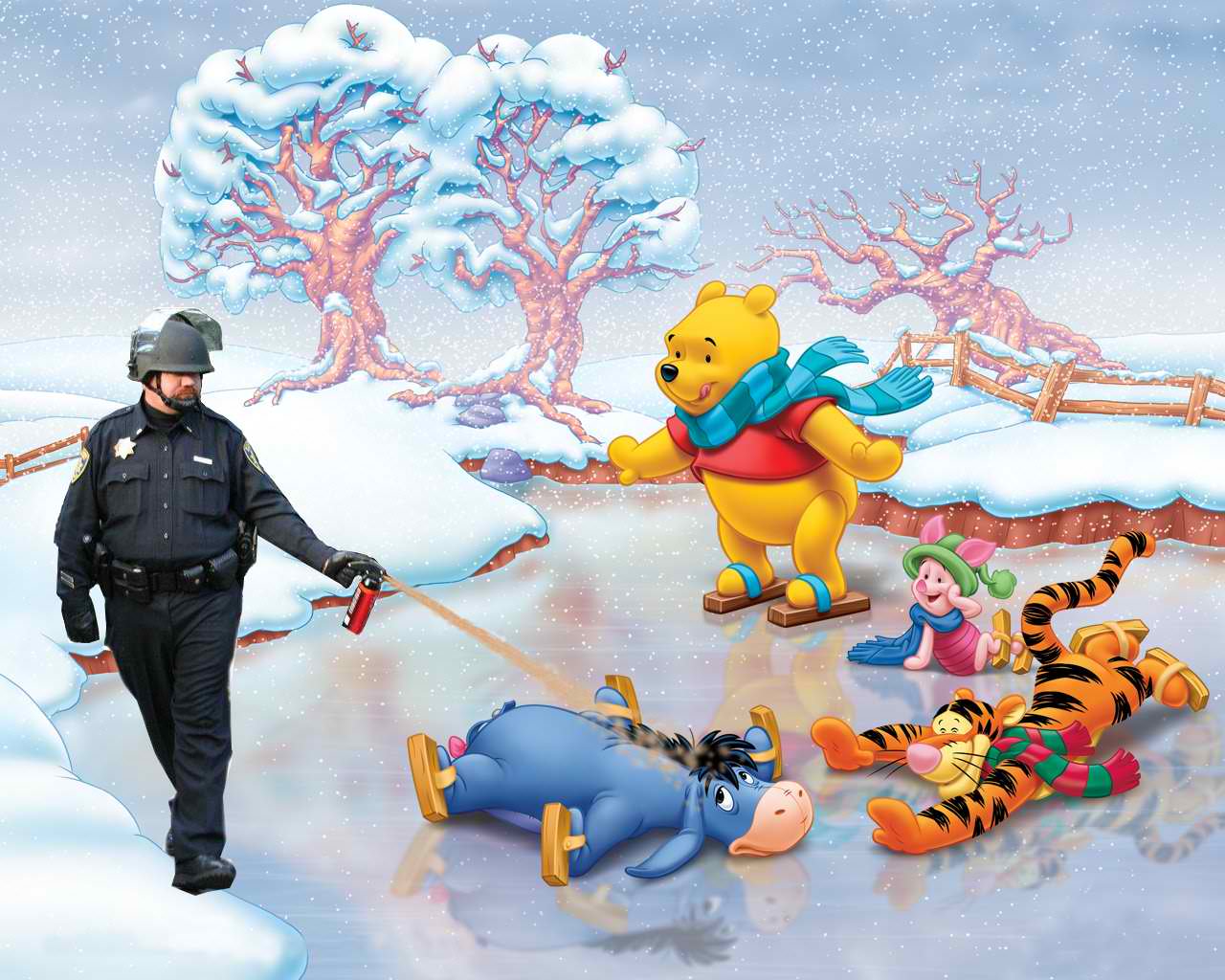
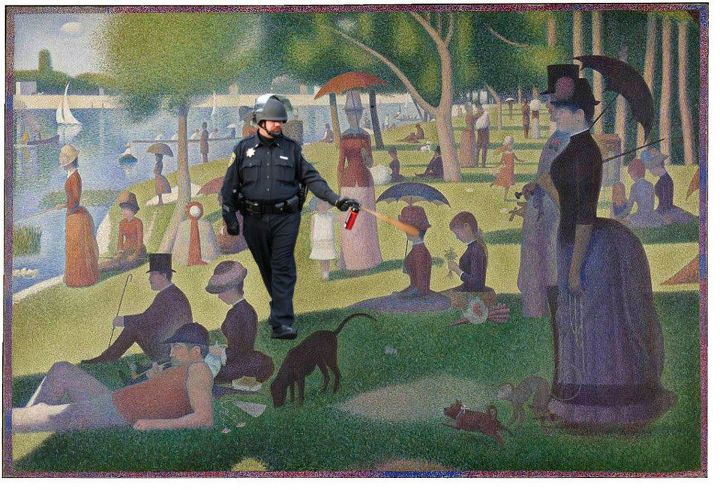
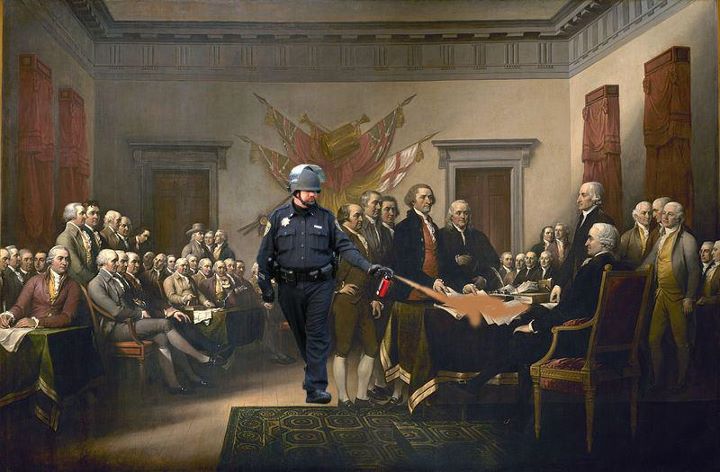
Pop culture and fine art images in which sympathetic figures are seated, supine or vulnerable are another frequently spotted base for Pike's shenanagins. Grandma at the holiday table is going to have some extra pepper on her turkey this Thanksgiving. Eeyore is not safe. Nor are the ladies of Seurat. And forget about the American constitution.
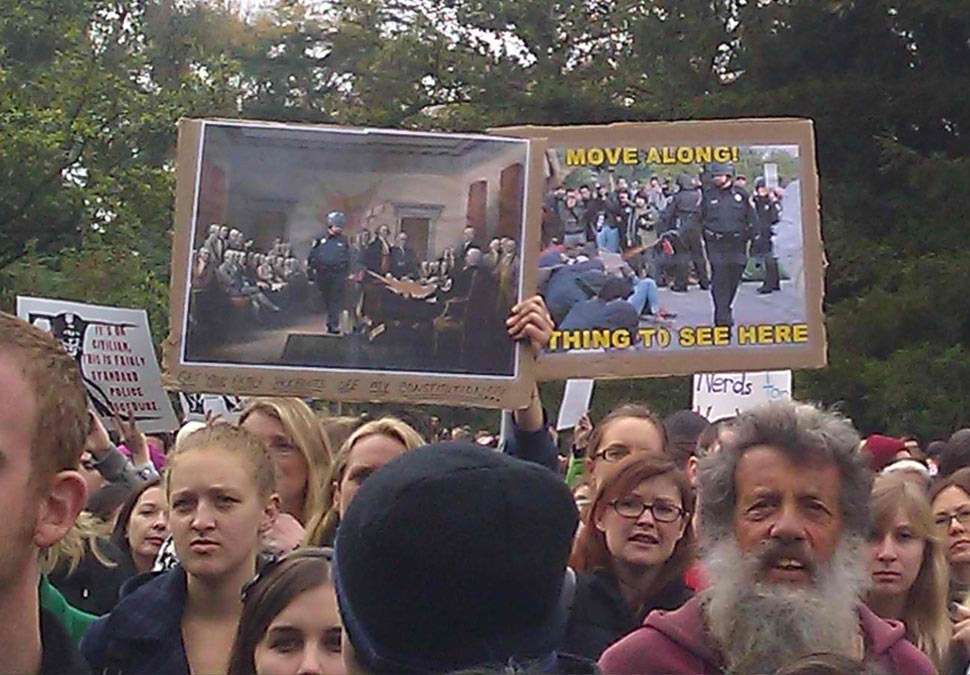
Still, none of us jaded internet chroniclers were prepared for the ultimate act of Inception-like recursion that came this week, when students at UC Davis printed out some of the meme images as posters, and carried them to a protest at the very site on the UC Davis quad where the pepper-spraying incident took place. Images of the casually-pepper-spray-everything-cop, held up as an act of protest on the same spot where Pike casually-pepper-sprayed-everyone. Good news: looks like there will be T-shirts for them to wear soon, too.
Dear Common Dreams reader, It’s been nearly 30 years since I co-founded Common Dreams with my late wife, Lina Newhouser. We had the radical notion that journalism should serve the public good, not corporate profits. It was clear to us from the outset what it would take to build such a project. No paid advertisements. No corporate sponsors. No millionaire publisher telling us what to think or do. Many people said we wouldn't last a year, but we proved those doubters wrong. Together with a tremendous team of journalists and dedicated staff, we built an independent media outlet free from the constraints of profits and corporate control. Our mission has always been simple: To inform. To inspire. To ignite change for the common good. Building Common Dreams was not easy. Our survival was never guaranteed. When you take on the most powerful forces—Wall Street greed, fossil fuel industry destruction, Big Tech lobbyists, and uber-rich oligarchs who have spent billions upon billions rigging the economy and democracy in their favor—the only bulwark you have is supporters who believe in your work. But here’s the urgent message from me today. It's never been this bad out there. And it's never been this hard to keep us going. At the very moment Common Dreams is most needed, the threats we face are intensifying. We need your support now more than ever. We don't accept corporate advertising and never will. We don't have a paywall because we don't think people should be blocked from critical news based on their ability to pay. Everything we do is funded by the donations of readers like you. When everyone does the little they can afford, we are strong. But if that support retreats or dries up, so do we. Will you donate now to make sure Common Dreams not only survives but thrives? —Craig Brown, Co-founder |
Nature abhors a vacuum, it is said; and the internet abhors unexplained dissonance. When photographs emerged of police lieutenant John Pike pepper-spraying University of California Davis students, it wasn't just the violence in those images that captured the world's attention - it was the surreal juxtaposition of that violence with Pike's oddly casual body language and facial expression.
Photoshop out the students from that picture with your mind. Forget about Pike's uniform, let's say he's just wearing street clothes. Now, instead of a policeman spraying a less-lethal chemical weapon down the throats of peacefully seated 20-year-olds, you might be able to interpret this tableau as a figure sauntering through a garden, spraying weeds. Or maybe he's your paunchy, mustached uncle, nonchalantly dousing bugs in the basement with insecticide.
One way the internet deals with that kind of upsetting dissonance is to mock it. And that's what the internet has done with Pike. The "casually pepper-spraying cop" is now a meme, a kind of folk art or shared visual joke that is open to sharing and reinterpretation by anyone. This particular meme has spread with unusual velocity - in part, I imagine, because the subject matter is just as weird as it is upsetting.
Even Kamran Loghman, one of the men who developed pepper spray as a weapon with the FBI in the 1980s, had a hard time reconciling it. "I have never seen such an inappropriate and improper use of chemical agents," Loghman told the New York Times. And Loghman might add "insouciant" to that list of adjectives. I mean, look at the guy. He's not braced for imminent attack by a foe; he does not move with tension as if navigating a hostile environment. He's administering punishment, and his face says: "Meh."
An investigation, to be led by former NY and LA police chief Bill Bratton, into whether there was police misconduct may take a while to reach a conclusion, but Photoshop justice has been delivered to Pike. And the expressions keep multiplying.
You can find them at Boing Boing's "Occupy Lulz" post, at Know Your Meme, at a Facebook page and at Reddit.
Pike's dissonantly casual body language in the context of violence brings to mind the photos from Abu Ghraib; Lynndie England smiling and giving the camera a thumbs-up in front of tortured prisoners. And, in a fit of macabre recursion, some of the casually pepper-spraying cop meme images reference those very photos from Abu Ghraib. Lynndie and Pike, two "bad apples" taking the fall for systemic problems with the institutions each represent.
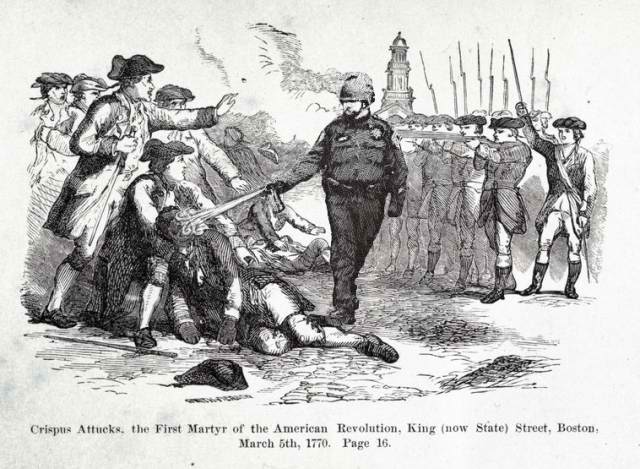
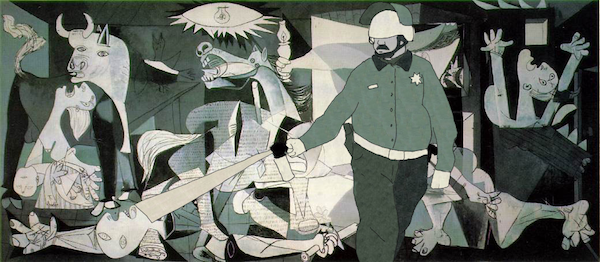
Violence is nothing new, of course, and there are plenty of classic art and history images in which to insert Pike. A print of American revolutionary war figure Crispus Attucks, Picasso's Guernica for instance.
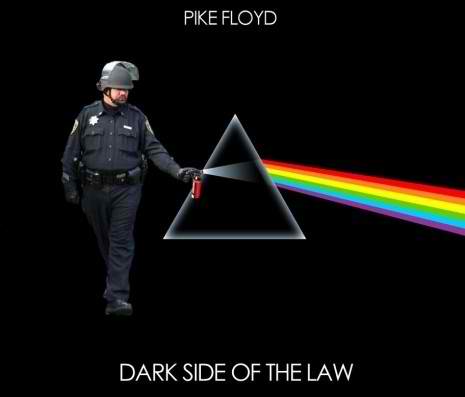
Classic album covers like Pink Floyd's Dark Side of the Moon and the Beatles' Sgt Pepper's Lonely Hearts Club Band get the treatment, too.
Pop culture and fine art images in which sympathetic figures are seated, supine or vulnerable are another frequently spotted base for Pike's shenanagins. Grandma at the holiday table is going to have some extra pepper on her turkey this Thanksgiving. Eeyore is not safe. Nor are the ladies of Seurat. And forget about the American constitution.
Still, none of us jaded internet chroniclers were prepared for the ultimate act of Inception-like recursion that came this week, when students at UC Davis printed out some of the meme images as posters, and carried them to a protest at the very site on the UC Davis quad where the pepper-spraying incident took place. Images of the casually-pepper-spray-everything-cop, held up as an act of protest on the same spot where Pike casually-pepper-sprayed-everyone. Good news: looks like there will be T-shirts for them to wear soon, too.
Nature abhors a vacuum, it is said; and the internet abhors unexplained dissonance. When photographs emerged of police lieutenant John Pike pepper-spraying University of California Davis students, it wasn't just the violence in those images that captured the world's attention - it was the surreal juxtaposition of that violence with Pike's oddly casual body language and facial expression.
Photoshop out the students from that picture with your mind. Forget about Pike's uniform, let's say he's just wearing street clothes. Now, instead of a policeman spraying a less-lethal chemical weapon down the throats of peacefully seated 20-year-olds, you might be able to interpret this tableau as a figure sauntering through a garden, spraying weeds. Or maybe he's your paunchy, mustached uncle, nonchalantly dousing bugs in the basement with insecticide.
One way the internet deals with that kind of upsetting dissonance is to mock it. And that's what the internet has done with Pike. The "casually pepper-spraying cop" is now a meme, a kind of folk art or shared visual joke that is open to sharing and reinterpretation by anyone. This particular meme has spread with unusual velocity - in part, I imagine, because the subject matter is just as weird as it is upsetting.
Even Kamran Loghman, one of the men who developed pepper spray as a weapon with the FBI in the 1980s, had a hard time reconciling it. "I have never seen such an inappropriate and improper use of chemical agents," Loghman told the New York Times. And Loghman might add "insouciant" to that list of adjectives. I mean, look at the guy. He's not braced for imminent attack by a foe; he does not move with tension as if navigating a hostile environment. He's administering punishment, and his face says: "Meh."
An investigation, to be led by former NY and LA police chief Bill Bratton, into whether there was police misconduct may take a while to reach a conclusion, but Photoshop justice has been delivered to Pike. And the expressions keep multiplying.
You can find them at Boing Boing's "Occupy Lulz" post, at Know Your Meme, at a Facebook page and at Reddit.
Pike's dissonantly casual body language in the context of violence brings to mind the photos from Abu Ghraib; Lynndie England smiling and giving the camera a thumbs-up in front of tortured prisoners. And, in a fit of macabre recursion, some of the casually pepper-spraying cop meme images reference those very photos from Abu Ghraib. Lynndie and Pike, two "bad apples" taking the fall for systemic problems with the institutions each represent.
Violence is nothing new, of course, and there are plenty of classic art and history images in which to insert Pike. A print of American revolutionary war figure Crispus Attucks, Picasso's Guernica for instance.
Classic album covers like Pink Floyd's Dark Side of the Moon and the Beatles' Sgt Pepper's Lonely Hearts Club Band get the treatment, too.
Pop culture and fine art images in which sympathetic figures are seated, supine or vulnerable are another frequently spotted base for Pike's shenanagins. Grandma at the holiday table is going to have some extra pepper on her turkey this Thanksgiving. Eeyore is not safe. Nor are the ladies of Seurat. And forget about the American constitution.
Still, none of us jaded internet chroniclers were prepared for the ultimate act of Inception-like recursion that came this week, when students at UC Davis printed out some of the meme images as posters, and carried them to a protest at the very site on the UC Davis quad where the pepper-spraying incident took place. Images of the casually-pepper-spray-everything-cop, held up as an act of protest on the same spot where Pike casually-pepper-sprayed-everyone. Good news: looks like there will be T-shirts for them to wear soon, too.