SUBSCRIBE TO OUR FREE NEWSLETTER
Daily news & progressive opinion—funded by the people, not the corporations—delivered straight to your inbox.
5
#000000
#FFFFFF
To donate by check, phone, or other method, see our More Ways to Give page.
Tent cities and shacks sprung up on empty lots across the country. Food lines at soup kitchens wrapped around city blocks. Unemployment soared to 25 percent. Farmers watched helplessly as crop prices plummeted, then lost their land. The evidence was clear, yet at the height of the Great Depression, Congress lacked the tools to accurately measure just how the economy as a whole was faring. With no commonly accepted national income data, they had no guideposts upon which to base sound economic policy.
And so Congress turned to a young and promising Russian-American economist. U.S. lawmakers asked Professor Simon Kuznets of the National Bureau of Economic Research, who would go on to win the Nobel Prize in economics, to develop a data set to assess the state of the national economy. In 1937, Kuznets presented a vast volume of data on income to Congress. It became the Gross National Product (GNP).
With remarkable foresight and humility, Kuznets warned that his newly minted GNP shouldn't be used as an instrument of social policy. It could never adequately measure the things we value, he said, such as housework or caring for elderly parents. Nor, he warned, could the GNP distinguish between the growth of good and bad jobs. The data would be the same if workers earned their pay from employers who endangered their lives or guarded their health and safety. "Goals for more growth should be more growth of what and for what," Kuznets said.
Alas, Kuznets' warnings on the GNP -- later renamed the Gross Domestic Product (GDP) -- went unheeded. Instead, the GDP became the barometer of health not only for the U.S. economy, but for the entire global economy.
More than 70 years later, the desirability of GDP growth is so entrenched in our national and international discourse that it's hard to imagine it any other way. The revered indicator's expansion or contraction can swing national elections. Conversely, talk of GDP declines can drive a country to war.
During tough economic times such as these, it's particularly surprising to have a leader bucking the tide. Yet Martin O'Malley is doing just that. Maryland's governor is the first in the United States to embrace a set of alternative indicators that bring depth to the analysis of his state's economic growth. Under O'Malley's leadership, the state's officials are now gathering and annually updating economic, social, and environmental data that help measure the overall wellbeing of Maryland's citizens.
The 26 underlying indicators, which collectively comprise the "Genuine Progress Indicator," are a more meaningful gauge of the overall economic health and wellbeing of Maryland residents than standard economic measuring sticks. For example, the state tracks things like volunteerism, time spent with family and loved ones, and air quality in its quest to gauge its real progress. These indicators may lack concrete economic value, but studies show they help make a society more healthy and vibrant.
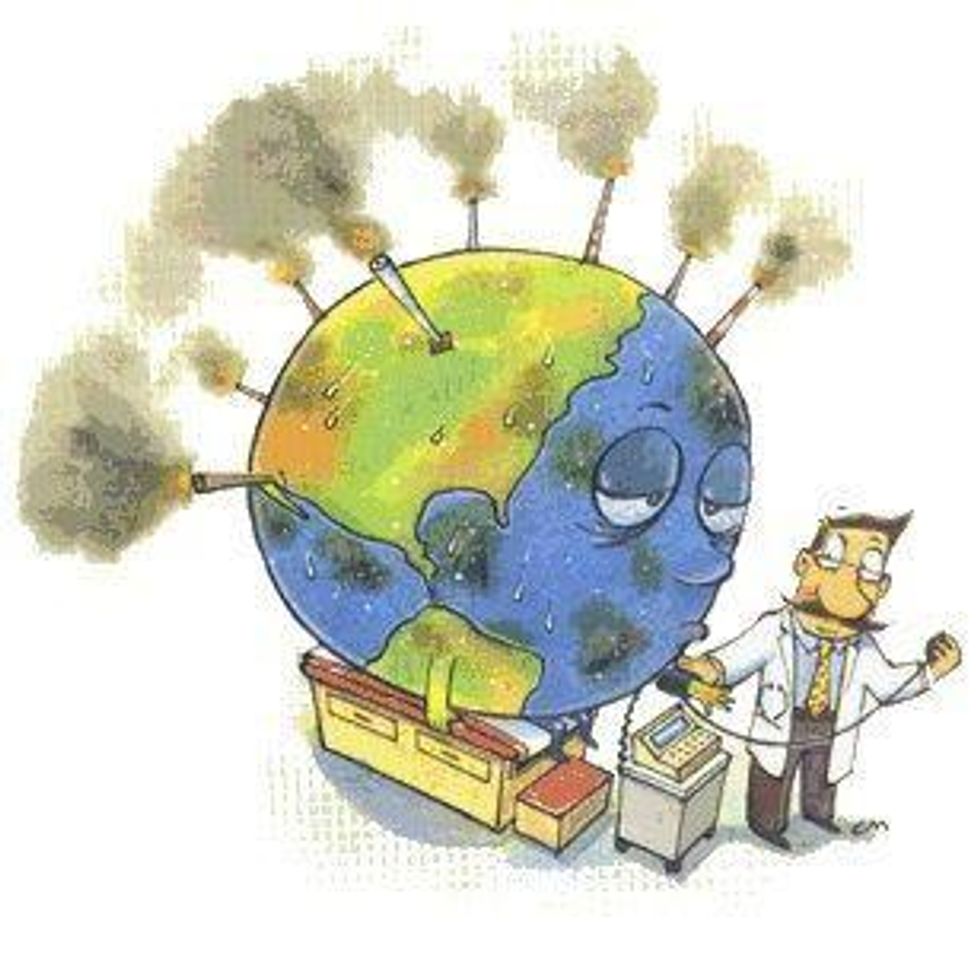
GPI assesses what's left behind when the "gross product" expands. Is the landscape more or less toxic than before? Is the air and water cleaner or dirtier? How well-educated is the populace? Is public transportation decent? Is crime more common? Are too many people spending more time commuting to jobs than at home with their kids?
Maryland leads the nation in measuring overall societal wellbeing through the GPI, but there are similar efforts underway elsewhere in the United States, as well as in Canada, France, and even Bhutan. Yes, Bhutan, a tiny country nestled in the Himalayan mountains. There, "gross domestic happiness" carries more weight than the gross domestic product.
It's time to recall Kuznets' warnings about the limitations of the GDP and to pick up where he left off by embracing a new set of tools that will help shape good social, environmental, and economic policy -- not just for Maryland, but for our entire country and the world.
Tent cities and shacks sprung up on empty lots across the country. Food lines at soup kitchens wrapped around city blocks. Unemployment soared to 25 percent. Farmers watched helplessly as crop prices plummeted, then lost their land. The evidence was clear, yet at the height of the Great Depression, Congress lacked the tools to accurately measure just how the economy as a whole was faring. With no commonly accepted national income data, they had no guideposts upon which to base sound economic policy.
And so Congress turned to a young and promising Russian-American economist. U.S. lawmakers asked Professor Simon Kuznets of the National Bureau of Economic Research, who would go on to win the Nobel Prize in economics, to develop a data set to assess the state of the national economy. In 1937, Kuznets presented a vast volume of data on income to Congress. It became the Gross National Product (GNP).
With remarkable foresight and humility, Kuznets warned that his newly minted GNP shouldn't be used as an instrument of social policy. It could never adequately measure the things we value, he said, such as housework or caring for elderly parents. Nor, he warned, could the GNP distinguish between the growth of good and bad jobs. The data would be the same if workers earned their pay from employers who endangered their lives or guarded their health and safety. "Goals for more growth should be more growth of what and for what," Kuznets said.
Alas, Kuznets' warnings on the GNP -- later renamed the Gross Domestic Product (GDP) -- went unheeded. Instead, the GDP became the barometer of health not only for the U.S. economy, but for the entire global economy.
More than 70 years later, the desirability of GDP growth is so entrenched in our national and international discourse that it's hard to imagine it any other way. The revered indicator's expansion or contraction can swing national elections. Conversely, talk of GDP declines can drive a country to war.
During tough economic times such as these, it's particularly surprising to have a leader bucking the tide. Yet Martin O'Malley is doing just that. Maryland's governor is the first in the United States to embrace a set of alternative indicators that bring depth to the analysis of his state's economic growth. Under O'Malley's leadership, the state's officials are now gathering and annually updating economic, social, and environmental data that help measure the overall wellbeing of Maryland's citizens.
The 26 underlying indicators, which collectively comprise the "Genuine Progress Indicator," are a more meaningful gauge of the overall economic health and wellbeing of Maryland residents than standard economic measuring sticks. For example, the state tracks things like volunteerism, time spent with family and loved ones, and air quality in its quest to gauge its real progress. These indicators may lack concrete economic value, but studies show they help make a society more healthy and vibrant.
GPI assesses what's left behind when the "gross product" expands. Is the landscape more or less toxic than before? Is the air and water cleaner or dirtier? How well-educated is the populace? Is public transportation decent? Is crime more common? Are too many people spending more time commuting to jobs than at home with their kids?
Maryland leads the nation in measuring overall societal wellbeing through the GPI, but there are similar efforts underway elsewhere in the United States, as well as in Canada, France, and even Bhutan. Yes, Bhutan, a tiny country nestled in the Himalayan mountains. There, "gross domestic happiness" carries more weight than the gross domestic product.
It's time to recall Kuznets' warnings about the limitations of the GDP and to pick up where he left off by embracing a new set of tools that will help shape good social, environmental, and economic policy -- not just for Maryland, but for our entire country and the world.
Tent cities and shacks sprung up on empty lots across the country. Food lines at soup kitchens wrapped around city blocks. Unemployment soared to 25 percent. Farmers watched helplessly as crop prices plummeted, then lost their land. The evidence was clear, yet at the height of the Great Depression, Congress lacked the tools to accurately measure just how the economy as a whole was faring. With no commonly accepted national income data, they had no guideposts upon which to base sound economic policy.
And so Congress turned to a young and promising Russian-American economist. U.S. lawmakers asked Professor Simon Kuznets of the National Bureau of Economic Research, who would go on to win the Nobel Prize in economics, to develop a data set to assess the state of the national economy. In 1937, Kuznets presented a vast volume of data on income to Congress. It became the Gross National Product (GNP).
With remarkable foresight and humility, Kuznets warned that his newly minted GNP shouldn't be used as an instrument of social policy. It could never adequately measure the things we value, he said, such as housework or caring for elderly parents. Nor, he warned, could the GNP distinguish between the growth of good and bad jobs. The data would be the same if workers earned their pay from employers who endangered their lives or guarded their health and safety. "Goals for more growth should be more growth of what and for what," Kuznets said.
Alas, Kuznets' warnings on the GNP -- later renamed the Gross Domestic Product (GDP) -- went unheeded. Instead, the GDP became the barometer of health not only for the U.S. economy, but for the entire global economy.
More than 70 years later, the desirability of GDP growth is so entrenched in our national and international discourse that it's hard to imagine it any other way. The revered indicator's expansion or contraction can swing national elections. Conversely, talk of GDP declines can drive a country to war.
During tough economic times such as these, it's particularly surprising to have a leader bucking the tide. Yet Martin O'Malley is doing just that. Maryland's governor is the first in the United States to embrace a set of alternative indicators that bring depth to the analysis of his state's economic growth. Under O'Malley's leadership, the state's officials are now gathering and annually updating economic, social, and environmental data that help measure the overall wellbeing of Maryland's citizens.
The 26 underlying indicators, which collectively comprise the "Genuine Progress Indicator," are a more meaningful gauge of the overall economic health and wellbeing of Maryland residents than standard economic measuring sticks. For example, the state tracks things like volunteerism, time spent with family and loved ones, and air quality in its quest to gauge its real progress. These indicators may lack concrete economic value, but studies show they help make a society more healthy and vibrant.
GPI assesses what's left behind when the "gross product" expands. Is the landscape more or less toxic than before? Is the air and water cleaner or dirtier? How well-educated is the populace? Is public transportation decent? Is crime more common? Are too many people spending more time commuting to jobs than at home with their kids?
Maryland leads the nation in measuring overall societal wellbeing through the GPI, but there are similar efforts underway elsewhere in the United States, as well as in Canada, France, and even Bhutan. Yes, Bhutan, a tiny country nestled in the Himalayan mountains. There, "gross domestic happiness" carries more weight than the gross domestic product.
It's time to recall Kuznets' warnings about the limitations of the GDP and to pick up where he left off by embracing a new set of tools that will help shape good social, environmental, and economic policy -- not just for Maryland, but for our entire country and the world.