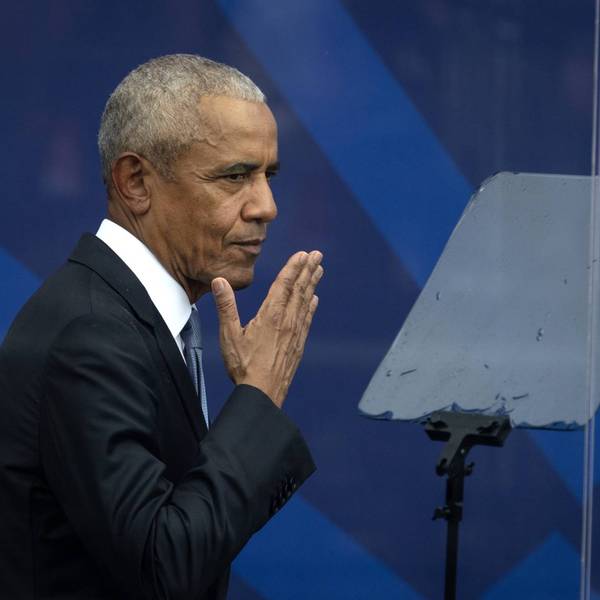

Obama's First Stand
The President says a Republican proposal to
extend the Bush tax cuts to everyone for two years is a "basis for
conversation." I hope this doesn't mean another Obama cave-in.
The President says a Republican proposal to
extend the Bush tax cuts to everyone for two years is a "basis for
conversation." I hope this doesn't mean another Obama cave-in.
Yes, the President needs to acknowledge the Republican sweep on
Election Day. But he can do that by offering his own version of a
compromise that's both economically sensible and politically smart.
Instead of limiting the extension to $250,000 of income (the bottom 98
percent of Americans), he should offer to extend it to all incomes under
$500,000 (essentially the bottom 99 percent), for two years.
The economics are clear:
First, the top 1 percent spends a much smaller proportion of their
income than everyone else, so there's very little economic stimulus at
these lofty heights.
On the other hand, giving the top 1 percent a two-year extension
would cost the Treasury $130 billion over two years, thereby blowing a
giant hole in efforts to get the deficit under control.
Alternatively, $130 billion would be enough to rehire every teacher,
firefighter, and police officer laid off over the last two years and
save the jobs of all of them now on the chopping block. Not only are
these people critical to our security and the future of our children
but, unlike the top 1 percent, they could be expected to spend all of
their earnings and thereby stimulate the economy.
Conservative supply-siders who argue the top 1 percent will stop
working as hard if they have to return to the 39 percent marginal rate
of the Clinton years must be smoking something (probably an expensive
grade).
Their incomes of the top are already soaring (Wall Street is reading a
5% boost in bonuses, executive salaries and perks are back on the
trajectory they were on before the collapse, and the stock market is
booming), so it's hard to argue much hardship.
Besides, only earnings over $500,000 would be affected because -- remember -- we're talking about the marginal tax rate.
In addition, the Clinton years weren't exactly bad years, economically, for the top 1 percent.
Finally, the Bush tax cuts didn't trickle down anyway. To the
contrary, between 2001 and 2007, the median wage dropped. And Bush's
record on jobs was pitiful.
The politics are even clearer. Over the next two years, Obama must
clarify for the nation whose side he's on and whose side his Republican
opponents are on. What better issue to begin with than this one?
The top 1 percent now takes in almost a quarter of all national
income (up from 9 percent in the late 1970s), and its political power is
evident in everything from hedge-fund and private-equity fund managers
who can treat their incomes as capital gains (subject to a 15 percent
tax) to multi-million dollar home interest deductions on executive
mansions.
If the President can't or won't take a stand now -- when he still has a
chance to prevail in the upcoming lame-duck Congress -- when will he
ever?
We are at a crossroads
This country and this world are at a monumental crossroads. In a few short weeks, US voters will have an opportunity to beat back the forces of fascism and confront the billionaires who are rigging the economy, our media system, and our democracy, making it increasingly impossible for ordinary people to get by. We’re not just talking about the election. We’re talking about what must be done once these fascist elements are vanquished from power. We need a bolder set of solutions than what either major party has so far been willing to offer and a working-class movement ready to fight like hell for it. Trump didn't emerge from nowhere. The conditions that fueled MAGA authoritarianism were created by decades of radical neoliberal economic policies and a corrupt political system dominated by corporate interests. They slashed taxes on the super-rich, promising that the benefits would trickle down. They said giveaways to the corporate titans would make life more affordable for the rest of us. It was all bullshit. And when a bitter, betrayed populace searches for someone to blame, right-wing demagogues have little trouble finding scapegoats. People know when they're being lied to, but you won't hear any of this from the corporate media. Only independent journalism—powered and funded by people who believe in building a better world—can deliver truly trustworthy daily news. Our Fall Campaign is underway, and we need your help. To power our newsroom through the rest of the year, we need to raise $125,000 by midnight on October 31. So if you share our vision, please contribute whatever you can to sustain our work. |
The President says a Republican proposal to
extend the Bush tax cuts to everyone for two years is a "basis for
conversation." I hope this doesn't mean another Obama cave-in.
Yes, the President needs to acknowledge the Republican sweep on
Election Day. But he can do that by offering his own version of a
compromise that's both economically sensible and politically smart.
Instead of limiting the extension to $250,000 of income (the bottom 98
percent of Americans), he should offer to extend it to all incomes under
$500,000 (essentially the bottom 99 percent), for two years.
The economics are clear:
First, the top 1 percent spends a much smaller proportion of their
income than everyone else, so there's very little economic stimulus at
these lofty heights.
On the other hand, giving the top 1 percent a two-year extension
would cost the Treasury $130 billion over two years, thereby blowing a
giant hole in efforts to get the deficit under control.
Alternatively, $130 billion would be enough to rehire every teacher,
firefighter, and police officer laid off over the last two years and
save the jobs of all of them now on the chopping block. Not only are
these people critical to our security and the future of our children
but, unlike the top 1 percent, they could be expected to spend all of
their earnings and thereby stimulate the economy.
Conservative supply-siders who argue the top 1 percent will stop
working as hard if they have to return to the 39 percent marginal rate
of the Clinton years must be smoking something (probably an expensive
grade).
Their incomes of the top are already soaring (Wall Street is reading a
5% boost in bonuses, executive salaries and perks are back on the
trajectory they were on before the collapse, and the stock market is
booming), so it's hard to argue much hardship.
Besides, only earnings over $500,000 would be affected because -- remember -- we're talking about the marginal tax rate.
In addition, the Clinton years weren't exactly bad years, economically, for the top 1 percent.
Finally, the Bush tax cuts didn't trickle down anyway. To the
contrary, between 2001 and 2007, the median wage dropped. And Bush's
record on jobs was pitiful.
The politics are even clearer. Over the next two years, Obama must
clarify for the nation whose side he's on and whose side his Republican
opponents are on. What better issue to begin with than this one?
The top 1 percent now takes in almost a quarter of all national
income (up from 9 percent in the late 1970s), and its political power is
evident in everything from hedge-fund and private-equity fund managers
who can treat their incomes as capital gains (subject to a 15 percent
tax) to multi-million dollar home interest deductions on executive
mansions.
If the President can't or won't take a stand now -- when he still has a
chance to prevail in the upcoming lame-duck Congress -- when will he
ever?
The President says a Republican proposal to
extend the Bush tax cuts to everyone for two years is a "basis for
conversation." I hope this doesn't mean another Obama cave-in.
Yes, the President needs to acknowledge the Republican sweep on
Election Day. But he can do that by offering his own version of a
compromise that's both economically sensible and politically smart.
Instead of limiting the extension to $250,000 of income (the bottom 98
percent of Americans), he should offer to extend it to all incomes under
$500,000 (essentially the bottom 99 percent), for two years.
The economics are clear:
First, the top 1 percent spends a much smaller proportion of their
income than everyone else, so there's very little economic stimulus at
these lofty heights.
On the other hand, giving the top 1 percent a two-year extension
would cost the Treasury $130 billion over two years, thereby blowing a
giant hole in efforts to get the deficit under control.
Alternatively, $130 billion would be enough to rehire every teacher,
firefighter, and police officer laid off over the last two years and
save the jobs of all of them now on the chopping block. Not only are
these people critical to our security and the future of our children
but, unlike the top 1 percent, they could be expected to spend all of
their earnings and thereby stimulate the economy.
Conservative supply-siders who argue the top 1 percent will stop
working as hard if they have to return to the 39 percent marginal rate
of the Clinton years must be smoking something (probably an expensive
grade).
Their incomes of the top are already soaring (Wall Street is reading a
5% boost in bonuses, executive salaries and perks are back on the
trajectory they were on before the collapse, and the stock market is
booming), so it's hard to argue much hardship.
Besides, only earnings over $500,000 would be affected because -- remember -- we're talking about the marginal tax rate.
In addition, the Clinton years weren't exactly bad years, economically, for the top 1 percent.
Finally, the Bush tax cuts didn't trickle down anyway. To the
contrary, between 2001 and 2007, the median wage dropped. And Bush's
record on jobs was pitiful.
The politics are even clearer. Over the next two years, Obama must
clarify for the nation whose side he's on and whose side his Republican
opponents are on. What better issue to begin with than this one?
The top 1 percent now takes in almost a quarter of all national
income (up from 9 percent in the late 1970s), and its political power is
evident in everything from hedge-fund and private-equity fund managers
who can treat their incomes as capital gains (subject to a 15 percent
tax) to multi-million dollar home interest deductions on executive
mansions.
If the President can't or won't take a stand now -- when he still has a
chance to prevail in the upcoming lame-duck Congress -- when will he
ever?