
SUBSCRIBE TO OUR FREE NEWSLETTER
Daily news & progressive opinion—funded by the people, not the corporations—delivered straight to your inbox.
5
#000000
#FFFFFF
To donate by check, phone, or other method, see our More Ways to Give page.


Daily news & progressive opinion—funded by the people, not the corporations—delivered straight to your inbox.
Any danger from China's rise is to the U.S.'s business and political elites, not its people.
Everyone who abhors war, detests imperialism, and favors cooperation between nations on global warming, poverty reduction, protection of biodiversity, international disarmament, implementation of international law, and other left-wing priorities ought to be appalled by the escalating tensions between the U.S. and China and actively organizing against them.
The new Cold War between “East” (including Russia) and “West” is more dangerous than the first one, not only in having already provoked a proxy war between great powers in Europe itself, and not only in undermining any progress toward goals that are urgent for all of humanity, but also in preparing the conditions for a horrific large-scale war that might well end in nuclear winter. The coming years will, to a substantial degree, determine the future of civilization, which puts a tremendous burden on all decent people to struggle to end the madness.
“Both sides,” of course, bear responsibility for the new Cold War, just as all great powers share most of the responsibility for failing to act decisively on global warming. Given the disproportionate power and imperialistic history of the United States, however, it is this country that bears most of the blame, in both cases. So it is, first and foremost, this country’s policies that we have to change. Even were this not the case, though, the principle that Noam Chomsky has enunciated would apply: It is the dangers presented by their own states, not enemy states, that citizens have a duty to organize against. Westerners should, primarily, criticize their own governments, which they can hope to influence. They can’t meaningfully influence China or Russia.
Two questions pose themselves: First, is China indeed a threat, and if so, to what, precisely? Second, is confrontation the best means to deal with whatever threat China represents?
The question arises, then, as to how best to steer America from a course of aggression to one of cooperation and conciliation. That is, how can we build an antiwar movement? A crucial task, evidently, is to delegitimize the direction of policy vis-à-vis China that began under Trump and has continued under Biden, the pursuit of military provocation and economic warfare. This entails a relentless focus on refuting the reasons Washington gives to justify its aggressive posture.
Americans are inundated with the message that China is a “threat,” and that for this reason it must be confronted. They hear it from every major media outlet—CBS, Fox, The New York Times, The Washington Post, etc. This message reflects the attitude of Washington, which obviously views China as a major threat—to American “security,” “national security” (as stated for example in the 2022 National Defense Strategy). Two questions pose themselves: First, is China indeed a threat, and if so, to what, precisely? Second, is confrontation the best means to deal with whatever threat China represents?
The concept of “national security” has been thrown around promiscuously for generations, not only in politics and the popular media but even the international relations scholarship. Rarely is it noticed that the term, unless clarified, is meaningless, or that its meaning varies by context. Was George W. Bush protecting America’s “security” by invading Afghanistan and Iraq, thereby massively increasing terror, and terrorist recruiting, across the Middle East? Is the government protecting Americans’ present and future security by subsidizing the fossil fuel industry, thus accelerating global warming? Prima facie, the most obvious meaning of security is something like Franklin Roosevelt’s Four Freedoms: freedom of expression, freedom of religious belief, freedom from want, and freedom from fear. But this kind of security for the average person—is this a high priority of the U.S. government? Is it what is meant by the mantra that China is a security threat? Is China responsible for the economic insecurity of most Americans, or their housing insecurity, or their fear of mass shootings, or their fear of getting sick because they won’t be able to pay medical bills?
“Security,” therefore, apparently doesn’t mean the security of Americans, at least not of the vast majority. The government could invest $800 billion in, say, upgrading infrastructures of public health and housing—you know, actual security infrastructures—rather than upgrading the military and thereby encouraging a dangerous arms race with China. Realist scholars like John Mearsheimer propose an alternative definition: Security in the technical sense means the state’s very survival in an anarchic system of international relations. Potential rivals exist everywhere, so states have to be prepared for military confrontations. Their need to survive, therefore, has a corollary: “Great powers [seek] to maximize their relative power,” Mearsheimer writes, “because that is the optimal way to maximize their security. In other words, survival mandates aggressive behavior,” in order that the state can defend itself against a potential aggressive rival. The ultimate goal in this dog-eat-dog security competition is to be a regional hegemon that can trounce any opponent, and then to prevent any other country from becoming a rival hegemon.
Only through its arsenal of nuclear weapons can China even conceivably threaten the U.S., which means that the most rational American policy is not to provoke a nuclear arms race but to try to phase out all nuclear weapons worldwide.
This “realist” reasoning might sound plausible, although one can see right away that it tends to rationalize and legitimize militarism (as shown by Mearsheimer’s judgment that the brutal expansionism of Germany, Japan, and the Soviet Union in the 1930s and ’40s was quite rational, for they were only trying to survive!). Can it really be maintained, however, that contemporary China threatens the very survival of the United States? Only through its arsenal of nuclear weapons can China even conceivably threaten the U.S., which means that the most rational American policy is not to provoke a nuclear arms race but to try to phase out all nuclear weapons worldwide. This would certainly increase America’s security. Since the new Cold War only exacerbates the nuclear threat, the U.S. government’s motivation for it, contra Mearsheimer, cannot be to ensure its own survival. So, if “security” concerns are, as is often said, what motivate America’s confrontational policies, we need another definition of that perplexing word.
The work of earlier realists such as Hans Morgenthau, as well as Marxists, provides the answer: In the absence of genuine military threats to a country (like the very fortunate United States since 1812), security is nothing but a euphemism for state power and prestige. The struggle for power as an end in itself is what motivates all ruling elites and governments. Economic, military, geopolitical, ideological, cultural power—even a hegemon will insatiably strive for more power, total power, crushing all dissent everywhere to the extent possible. “A political policy,” says Morgenthau, “seeks either to keep power, to increase power, or to demonstrate power.” Whether this is because of human nature, as Morgenthau argues, or the inevitable dynamics of powerful institutions, or the fact that only power-hungry people rise to the top, it is a general principle.
Since Americans rarely look favorably on government as such, opponents of the new Cold War would do well to constantly emphasize that its primary purpose is to defend and assert the hegemonic power (i.e., “national security”) of the U.S. government, together with certain segments of the business community—for example, defense contractors—that are closely interlinked with government. Constant exposure of the belligerence of U.S. policy, as contrasted with China’s relative restraint, would undermine public support for confrontation. When U.S. officials, in characteristic fits of mind-boggling hypocrisy, charge that China is threatening global peace and stability, one might quote Kishore Mahbubani’s article in Harper’s Magazine entitled “What China Threat?”:
Quite remarkably, of the five permanent members of the U.N. Security Council (China, France, Russia, the United States, and the United Kingdom), China is the only one among them that has not fired a single military shot across its border in thirty years, since a brief naval battle between China and Vietnam in 1988. By contrast, even during the relatively peaceful Obama Administration, the American military dropped twenty-six thousand bombs on seven countries in a single year. Evidently, the Chinese understand well the art of strategic restraint.
China is indeed a threat—to the dominance of a small American elite, centered in finance, government, and tech, over world politics and the world economy. As Deborah Veneziale explains in Washington’s New Cold War, much of the hostility of America’s capitalist class (or particular sectors of it) to China results from the difficulty of accessing the Chinese market: “U.S. tech giants such as Google, Amazon, and Facebook have virtually no market in China, while companies like Apple and Microsoft face increasing difficulties… [These companies] yearn for a change to the political system in China that would open the door to the country’s massive market, and major actors in this sector are actively working to advance Washington’s hostile foreign policy.” Finance, likewise, is unhappy with China’s capital controls, which restrict capital flows into and out of the country. George Soros expressed the frustration of many financiers when he tweeted in January 2022 that “Xi Jinping is the greatest threat that open societies face today.”
Aside from grievances due to China’s non-neoliberal character, a significant reason for Washington’s strategy of aggressive confrontation is simply that expansion of U.S. military capacity is an end in itself, for which pretexts have to be sought. As Morgenthau might say, such a policy demonstrates (and can help keep) power, which is the whole point of being a government. It is also the kind of thing that companies like Lockheed Martin, Raytheon, Boeing, Northrop Grumman, and BAE Systems will benefit from and lobby for. It’s hardly a secret that there is a revolving door between the Pentagon and private military contractors: Even Secretary of Defense Lloyd Austin was on the board of directors of companies like Raytheon before Biden appointed him. Cold Wars are in the interest of very wealthy corporations and very powerful government bureaucracies, which can use them to justify larger congressional appropriations and expansions of their power.
Returning to “security” risks—risks to the security of the global dominance (“leadership” is the preferred term) of U.S. elites—it is true that as China’s economy grows, its geopolitical power will necessarily grow as well, thus challenging U.S. “leadership.” There is some sense, therefore, if not much justice, in Biden’s attempts to slow China’s economic growth by restricting exports of cutting-edge semiconductor chips and other high-tech equipment. Whether such restrictions are in the interest of American consumers, or of humanity as a whole, is much more debatable. In any event, to partially delegitimize the trade wars that the U.S. is escalating, and which may well become quite harmful to Americans, it suffices for dissenters to note at every opportunity that these wars’ entire purpose is to hurt China’s economy so it will have more trouble challenging the global dominance of America’s tech industry and the U.S. government. Most Americans are smart enough to know that their interests and those of the government don’t usually coincide.
Indeed, that’s the crucial question to keep asking in public forums: Why should we hate and fear China so much? It makes a lot more sense to hate and fear our own government, together with the corporate sector with which it is fused. China caused none of the vast human suffering, the desolation of hundreds of millions of lives over two generations, that has brought American society to its knees; it merely benefited from the decisions by corporate executives to relocate factories abroad, where it was easier to exploit labor at a higher rate. The fight of working Americans is not with China.
But what about China’s theft of intellectual property? What about its military threat to Taiwan? What about that terrifying balloon that floated into U.S. airspace? Surely all this justifies a new Cold War that could last a generation or more! Well, in fact, as every reasonable person knows, the right way to deal with whatever genuine threats China might pose is to pursue diplomacy, preferably through one of the multilateral institutions that exist for precisely such cases as these, including the United Nations and the World Trade Organization. When the U.S. rejects the obvious path of diplomacy in favor of military escalation and overblown rhetoric, it is clear that it’s merely seizing on real or imagined provocations as pretexts for pursuing some other goal it prefers not to publicize. This was clear when the Bush administration flailed around for excuses to invade Iraq—from weapons of mass destruction to ousting Saddam Hussein to building a wondrous new democracy—and it’s clear now, as the Biden administration orchestrates the wholly unnecessary military and economic containment of China.
Maybe a forced reining in of the U.S. empire could be good for Americans. Whatever constrains the power of the elite is likely to expand the power of the majority.
In fairness, it is perfectly natural for a hegemonic government, used to getting its way and running rampant over most of the world, to try to prevent the emergence of a peer competitor. As Marco Rubio said plaintively in a moment of refreshing candor some weeks ago, “Brazil cut a trade deal with China. They’re now going to do trade in their own currencies, get right around the dollar. They’re creating a secondary economy in the world, totally independent of the United States. We won’t have to talk about sanctions in five years, because there will be so many countries transacting in currencies other than the dollar that we won’t have the ability to sanction them.” From a superpower’s point of view, these are major crimes, the worst crimes possible. To constrain the ability to bully and browbeat that the U.S. has enjoyed since the late 1940s is totally unforgivable.
But the American people should question whether such a threat to their government’s power is also a threat to them. Maybe a forced reining in of the U.S. empire could be good for Americans. Whatever constrains the power of the elite is likely to expand the power of the majority. Those who favor peace, in any case, should welcome the emergence of a new superpower that can challenge the policies of the most warmongering country on earth, such as by brokering peace agreements the United States refuses to. However authoritarian China is internally, its role in the world might end up being relatively constructive.
This is especially the case given that, in its search for support among other countries and peoples, it can’t appeal to any democratic ideology it supposedly represents, as the U.S. at least rhetorically can. To win moral authority, China has to actually deliver rather than merely preach.
In the end, then, China’s rise poses a straightforward security threat: It threatens the security of the old order, the Washington-directed, neoliberal, war-as-a-first-resort order. It threatens to bring about a more multilateral world, with less impunity for America’s crimes and more recourses to which victims can turn. People everywhere—except the West’s power centers—should cheer this fact.
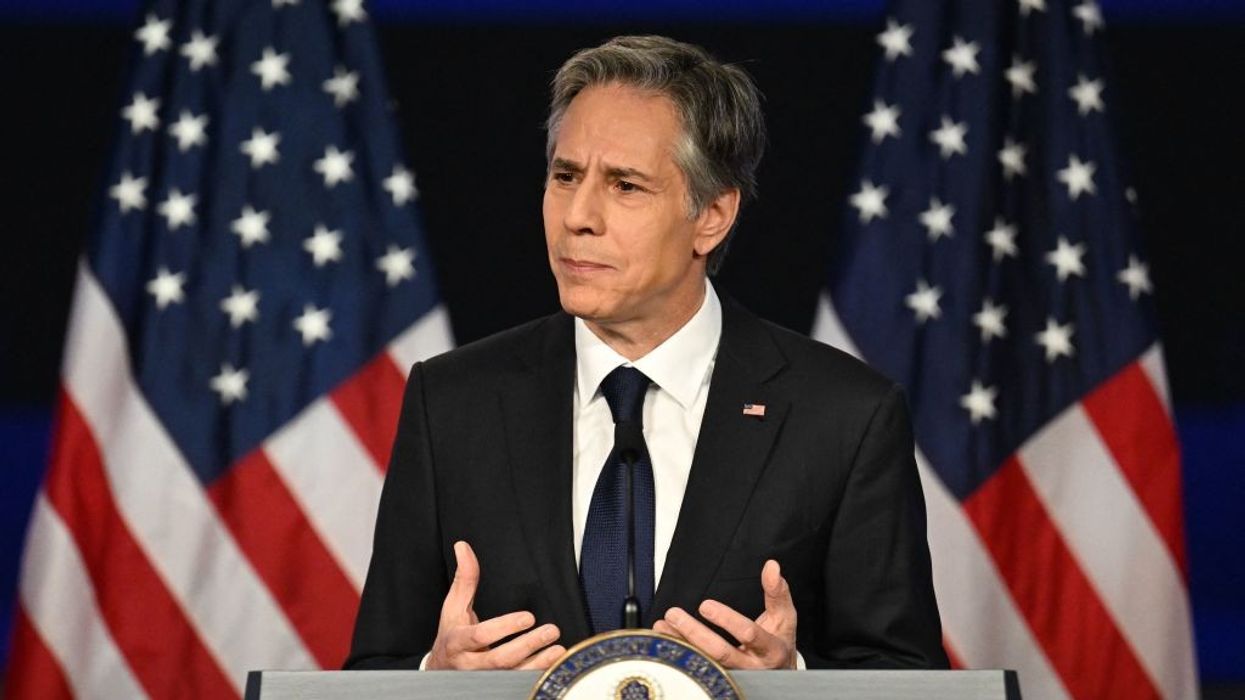
Yet it is imperative that the world’s two biggest economies find a modus vivendi if the peace of the planet is to be preserved.
Relations between the United States and China are spiraling dangerously downward, and neither side seems able to reverse the trend. Yet it is imperative that the world’s two biggest economies find a modus vivendi if the peace of the planet is to be preserved.
Consider the recent contretemps between the U.S. and China over a Chinese balloon that drifted over the United States. The rift caused acrimonious accusations by both sides and a cancellation of the Secretary of State’s visit to China, which had been designed to tamp down tensions.
China’s first reaction was a public regret, only later to be followed by more belligerent language. Wouldn’t it have been better if President Biden had taken China’s expression of regret and ignored the later, harsher responses? Wouldn’t it have been better if the secretary of state’s visits had gone forward?
That’s what President Kennedy did during the Cuban Missile Crisis six decades ago when the Soviet Union’s Nikita Khrushchev sent an emotional message suggesting that, rather than “doom the world to the catastrophe of thermonuclear war…let us not only relax the forces pulling on the ends of the rope, let’s take measures to untie the knot.” The very next day, Russia upped the ante with a much harsher message demanding that American missiles in Turkey be removed.
Kennedy ignored the second message and replied to the first. In due course, the Soviet missiles were removed from Cuba and the American missiles from Turkey, although the latter was not officially part of the deal.
How much better it would have been if the Secretary of State Blinken had gone ahead with his mission, met with his counterpart in China, and made an effort to reduce the tensions between China and the United States instead of accelerating them.
When I looked up the purpose of the new House of Representatives’ Select Committee on the Strategic Competition between the United States and the Chinese Communist Party, I found the following:
The Select Committee “is committed to working on a bipartisan basis to build a consensus on the threat posed by the Chinese Communist Party and develop a plan of action to defend the American people, our economy and our values.”
No one is denying that there is serious competition between the United States and China, but does it justify such a defensive crouch? Wouldn’t it have been better to form a committee that would also develop a plan of action so that the two major competing powers can avoid conflict?
Although the growing antagonism between the United States and China has not grown to the level of the Cuban Missile Crisis, nevertheless it presents the greatest danger to the world today. Much has been written about the “Thucydides Trap,” Graham Allison’s warning that all too often in history the tension between a rising power and an established power results in war, as it did between Sparta and Athens in 431 BC, and German and Great Britain in the early 21th Century.
It is imperative that cooler heads in China and the United States work to defuse tensions. The prospect of nuclear war that so terrified the world in the fifties and sixties has lost some of its emotional punch. The historian Christopher Clark writes that Europe’s leaders in 1914 knew that a general European war would be massively destructive, but did they really feel it? He posits that in the 1950s and 60s decision makers and the general public not only understood the dangers of nuclear war, but viscerally felt it. Today that visceral fear has fallen away among younger generations.
China is not without blame for the growing confrontation between the United States and China. Under President Xi Jinping, the Communist Party has reasserted its dominant role over the economy and returned China to a more Maoist centralized state with aggressive and at times bullying diplomacy and military actions in the South China Sea and in the Himalayas. But that said, a drumbeat of anti-Chinese rhetoric from the Western powers only enables China’s hardliners and handicaps those in China who would seek a less belligerent accommodation with the West.
After all, China does not seek to overthrow our system of government. The Chinese Communist Party does not seek to export revolution as did the old Soviet Union. It is hard to imagine Cambridge University students becoming traitors as did Kim Philby, Guy Burgess, and Donald Maclean in the 1930s for the sake of the Chinese Communist Party.
As Singapore’s Bilahari Kausikan has pointed out: “Competition within a system cannot by definition be existential because the survival of the system is not at stake. China is the principal beneficiary of the existing system and has no strong incentive to kick over the table and change it in any fundamental way because its own economy rests on the foundation of that system.”
Americans have always suffered under the delusion that China should become more like the United States. In the 19th and early 20th centuries, American missionaries fanned out across China in an effort to convert the Chinese to Christianity. President Woodrow Wilson was delighted when he discovered that Sun Yat-sen, the father of modern China, had become a Christian. More recently, when Deng Xiaoping abandoned Maoism for a market economy, Americans concluded that a political liberalization was sure to follow, that China would become more like the United States. It didn’t happen, but is China responsible for this miscalculation and disappointment, or are we?
It is one thing to deny China technology that could be used militarily, but the bipartisan inflammatory language emanating from the United States is counter- productive to America’s interests and the preservation of peace. China and the United States are drifting, like sleepwalkers, toward confrontation much as Europe did in 1914 which of course resulted in a devastating war nobody wanted.
Let us only hope that today’s leaders in both Washington and Beijing prove more restrained than did their counterparts in Berlin and Paris in August 1914 when plans for victory unleashed a war that would leave 20 million dead
While the world has been distracted, even amused, by the diplomatic tussle around China’s recent high-altitude balloon flights across North America, there are signs that Beijing and Washington are preparing for something so much more serious: armed conflict over Taiwan. Reviewing recent developments in the Asia-Pacific region raises a tried-and-true historical lesson that bears repeating at this dangerous moment in history: when nations prepare for war, they are far more likely to go to war.
In The Guns of August, her magisterial account of another conflict nobody wanted, Barbara Tuchman attributed the start of World War I in 1914 to French and German plans already in place. “Appalled upon the brink,” she wrote, “the chiefs of state who would be ultimately responsible for their country’s fate attempted to back away, but the pull of military schedules dragged them forward.” In a similar fashion, Beijing and Washington have been making military, diplomatic, and semi-secretive moves that could drag us into a calamitous conflict that, once again, nobody wants.
At the apex of power, national leaders in Beijing and Washington have staked out starkly contrasting positions on Taiwan’s future. For nearly a year now, President Joe Biden has been trying to resolve the underlying ambiguity in previous U.S. policy toward that island by stating repeatedly that he would indeed defend it from any mainland attack. In May of last year, in response to a reporter’s question about a possible Chinese invasion of Taiwan, he said, “Yes,” the U.S. would intervene militarily. He then added: “We agree with the One China policy. We signed on to it and all the attendant agreements made from there, but the idea that it can be taken by force, just taken by force, is [just not] appropriate.”
As Biden acknowledged, by extending diplomatic recognition to Beijing in 1979, Washington had indeed accepted China’s future sovereignty over Taiwan. For the next 40 years, presidents from both parties made public statements opposing Taiwan’s independence. In effect, they conceded that the island was a Chinese province and its fate a domestic matter (even if they opposed the People’s Republic doing anything about it in the immediate future).
Nonetheless, Biden has persisted in his aggressive rhetoric. He told CBS News last September, for instance, that he would indeed send U.S. troops to defend Taiwan “if, in fact, there was an unprecedented attack.” Then, in a significant break with longstanding U.S. policy, he added: “Taiwan makes their own judgments about their independence… That’s their decision.”
Within weeks, at a Communist Party Congress, Chinese President Xi Jinping responded with a strong personal commitment to the unification of Taiwan — by force if necessary. “We insist on striving for the prospect of peaceful reunification,” he said, “but we will never promise to give up the use of force and reserve the option to take all necessary measures.”
After a long burst of applause from the 2,000 party officials massed in Beijing’s Great Hall of the People, he then invoked the inevitability of Marxian dialectical forces that would insure the victory he was promising. “The historical wheels of national reunification and national rejuvenation are rolling forward,” he said, “and the complete reunification of the motherland must be achieved.”
As the political philosopher Hannah Arendt once reminded us, a sense of historical inevitability is a dangerous ideological trigger that can plunge authoritarian states like China into otherwise unthinkable wars or unimaginable mass slaughter.
War Preparations Move Down the Chain of Command
Not surprisingly, the forceful statements of Biden and Xi have been working their way down the chain of command in both countries. In January, a four-star U.S. Air Force general, Mike Minihan, sent a formal memo to his massive Air Mobility Command of 500 aircraft and 50,000 troops, ordering them to ramp up their training for war with China. “My gut tells me,” he concluded, that “we will fight in 2025.” Instead of repudiating the general’s statement, a Pentagon spokesman simply added, “The National Defense Strategy makes clear that China is the pacing challenge for the Department of Defense.”
Nor is General Minihan even the first senior officer to have made such foreboding statements. As early as March 2021, the head of the Indo-Pacific Command, Admiral Philip Davidson, warned Congress that China was planning to invade the island by 2027: “Taiwan is clearly one of their ambitions… And I think the threat is manifest during this decade, in fact, in the next six years.”
Unlike their American opposites, China’s service chiefs have been publicly silent on the subject, but their aircraft have been eloquent indeed. After President Biden signed a defense appropriation bill last December with $10 billion in military aid for Taiwan, an unprecedented armada of 71 Chinese aircraft and many more military drones swarmed that island’s air defenses in a single 24-hour period.
As such tit-for-tat escalation only increases, Washington has matched China’s aggression with major diplomatic and military initiatives. Indeed, the assistant defense secretary for the Indo-Pacific, Ely Ratner, has promised, ominously enough, that “2023 is likely to stand as the most transformative year in U.S. force posture in the region in a generation.”
During a recent tour of Asian allies, Secretary of Defense Lloyd Austin claimed some significant strategic gains. On a stopover in Seoul, he and his South Korean counterpart announced that the U.S. would deploy aircraft carriers and additional jets for expanded live-fire exercises — a distinctly escalatory move after the curtailment of such joint operations during the Trump years.
Moving on to Manila, Austin revealed that the Philippines had just granted U.S. troops access to four more military bases, several facing Taiwan across a narrow strait. These were needed, he said, because “the People’s Republic of China continues to advance its illegitimate claims” in the South China Sea.
China’s Foreign Ministry seemed stung by the news. After a successful diplomatic courtship of the previous Philippine president, Rodrigo Duterte, that had checked U.S. influence while accepting the Chinese occupation of islands in Philippine waters, Beijing could now do little more than condemn Washington’s access to those bases for “endangering regional peace and stability.” Although some Filipino nationalists objected that an American presence might invite a nuclear attack, according to reliable polling, 84% of Filipinos felt that their country should cooperate with the United States to defend their territorial waters from China.
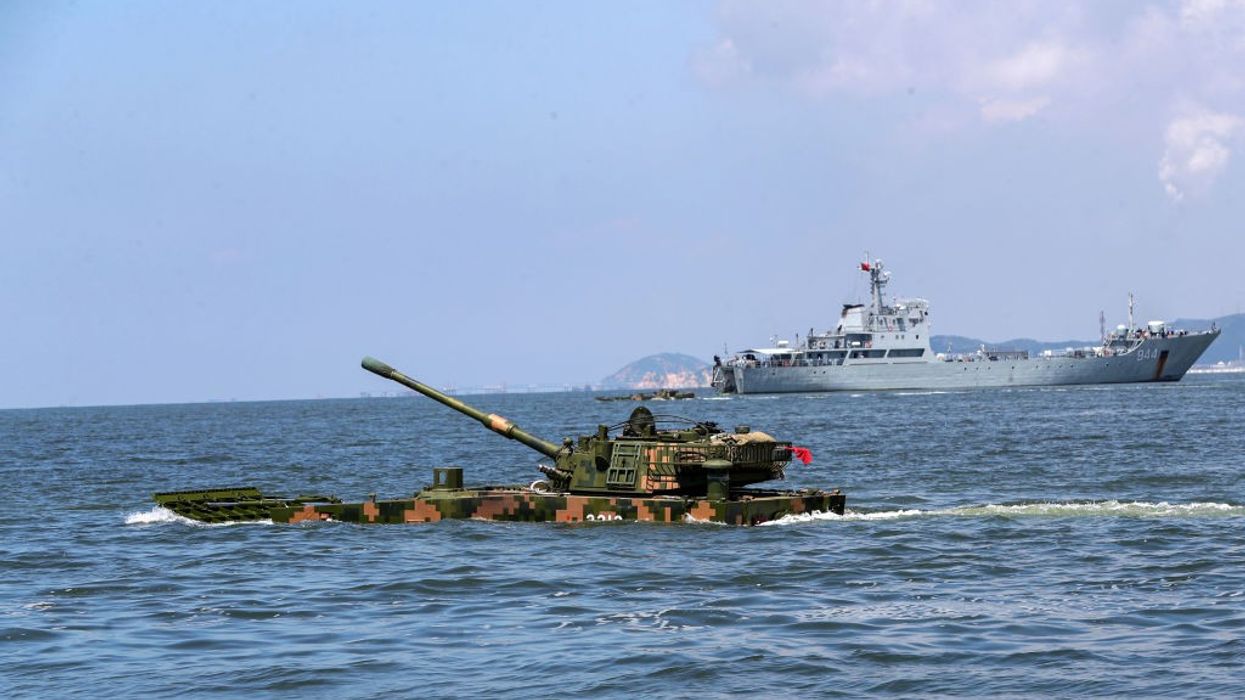
Both of those announcements were dividends from months of diplomacy and down payments on major military deployments to come. The annual U.S. “defense” bill for 2023 is funding the construction of military installations across the Pacific. And even as Japan is doubling its defense budget, in part to protect its southern Islands from China, U.S. Marines in Okinawa plan to trade their tanks and heavy artillery for agile drones and shoulder-fired missiles as they form “littoral regiments” capable of rapid deployment to the smallest of islands in the region.
Secret Strategies
In contrast to those public statements, semi-secret strategies on both sides of the Pacific have generally escaped much notice. If the U.S. military commitment to Taiwan remains at least somewhat ambiguous, this country’s economic dependence on that island’s computer-chip production is almost absolute. As the epicenter of a global supply chain, Taiwan manufactures 90% of the world’s advanced chips and 65% of all semiconductors. (In comparison, China’s share of chips is 5% and the U.S. slice only 10%.) As the world’s top producer of the most critical component in everything from consumer cell phones to military missiles, the Taiwan Semiconductor Manufacturing Company (TSMC) is the leading innovator, supplying Apple and other U.S. tech firms.
Now, American officials are moving to change that. Having overseen the breaking of ground for a $12 billion TSMC chip-production factory in Phoenix in 2020, only two years later, Arizona’s governor announced that “TSMC has completed construction of its main facility.” Last August, just before President Biden signed the $52 billion CHIPS and Science Act, Secretary of Commerce Gina Raimondo insisted that “our dependence on Taiwan for chips is untenable and unsafe.”
Only three months later, TSMC reached for a large slice of those federal funds by investing $28 billion in a second Phoenix factory that, when opened in 2026, will produce what the New York Times has called “more advanced — though not the most advanced — chip-making technology.” At a ceremony featuring President Biden last December, Apple’s CEO Tim Cook proclaimed, “This is an incredibly significant moment.”
That might be true, but the focus on Phoenix obscured equally significant chip factory projects being put in place by Samsung in Texas, Intel in Ohio, and Micron Technology in New York. Add it all up and the U.S. is already about halfway to the “minimum of three years and a $350 billion investment… to replace the Taiwanese [chip] foundries,” according to the Semiconductor Industry Association.
In other words, if Beijing did decide to invade Taiwan after 2026, TSMC’s intellectual capital, in the form of its top computer scientists, would undoubtedly be on outbound flights for Phoenix, leaving little more than a few concrete shells and some sabotaged equipment behind. The global supply chain for silicon chips involving Dutch machines (for extreme ultraviolet lithography), American designs, and Taiwanese production would probably continue without much of a hitch in the United States, Japan, and Europe, leaving the People’s Republic of China with little more than its minimalist 5% of the world’s $570 billion semiconductor industry.
China’s secret calculus over an invasion of Taiwan is undoubtedly more complex. In mid-February at Munich, Secretary of State Antony Blinken charged that Beijing was considering giving Moscow “lethal support” for its war in Ukraine, adding that “we’ve made very clear to them that that would cause a serious problem for… our relationship.”
But China is faced with a far more difficult choice than Blinken’s blithe rhetoric suggests. From its impressive arsenal, Beijing could readily supply Moscow with enough of its Hong Niao cruise missiles to destroy most of Ukraine’s armored vehicles (with plenty left over to demolish Kyiv’s faltering electrical infrastructure).
Bleeding NATO in that way would, however, pay limited dividends for any possible future Chinese plans vis-a-vis Taiwan. In contrast, the types of ground-warfare armaments Washington and its allies continue to pour into Ukraine would do little to strain the U.S. naval capacity in the Western Pacific.
Moreover, the diplomatic and economic price Beijing would pay for a significant involvement in the Ukraine War might well prove prohibitive. As the world’s largest consumer of imported cheap oil and wheat, which Russia exports in abundance, China needs a humbled Putin, desperate for markets and compliant with its designs for greater dominion over Eurasia. A triumphant Putin, bending the will of timorous states in Eastern Europe and Central Asia while negotiating ever-tougher deals for his exports, is hardly in Beijing’s interest.
Ignoring the existential threat Putin’s war poses for the European Union would also cost Beijing decades of diplomacy and billions in infrastructure funds already invested to knit all of Eurasia, from the North Sea to the South China Sea, into an integrated economy. In addition, siding with a distinctly secondary power that has blatantly violated the core principle of the international order — which bars the acquisition of territory by armed conquest — is hardly likely to advance Beijing’s sustained bid for global leadership.
Vladimir Putin might indeed try to equate China’s claim to a breakaway province in Taiwan with his own bid for former Soviet territory in Ukraine, but the analogy is anathema to Beijing. “Taiwan is not Ukraine,” the Chinese Foreign Ministry announced last year, the day before Putin invaded Ukraine. “Taiwan has always been an inalienable part of China. This is an indisputable legal and historical fact.”
The Costs of War
With both Beijing and Washington contemplating a possible future war over Taiwan, it’s important (especially in light of Ukraine) to consider the likely costs of such a conflict. In November 2021, the venerable Reuters News Agency compiled a series of credible scenarios for a China-U.S. war over Taiwan. If the United States decided to fight for the island, said Reuters, “there is no guarantee it would defeat an increasingly powerful PLA [People’s Liberation Army].”
In its least violent scenario, Reuters speculated that Beijing could use its navy to impose a “customs quarantine” around Taiwan, while announcing an Air Defense Identification Zone over the island and warning the world not to violate its sovereignty. Then, to tighten the noose, it could move to a full blockade, laying mines at major ports and cutting underwater cables. Should Washington decide to intervene, its submarines would undoubtedly sink numerous PLA warships, while its surface vessels could launch aircraft and missiles as well. But China’s powerful air-defense system would undoubtedly fire thousands of its own missiles, inflicting “heavy losses” on the U.S. Navy. Rather than attempting a difficult amphibious invasion, Beijing might complete this staged escalation with saturation missile attacks on Taiwan’s cities until its leaders capitulated.
In the Reuters scenario for all-out war, Beijing decides “to mount the biggest and most complex amphibious and airborne landing ever attempted,” seeking to “overwhelm the island before the United States and its allies can respond.” To hold off a U.S. counterattack, the PLA might fire missiles at American bases in Japan and Guam. While Taiwan launched jets and missiles to deter the invasion fleet, U.S. carrier battle groups would steam toward the island and, “within hours, a major war [would be] raging in East Asia.”
In August 2022, the Brookings Institution released more precise estimates of likely losses from various scenarios in such a war. Although China’s “recent and dramatic military modernizations have sharply reduced America’s ability to defend the island,” the complexities of such a clash, wrote the Brookings analyst, make “the outcome… inherently unknowable.” Only one thing would be certain: the losses on both sides (including in Taiwan itself) would be devastating.
In Brookings’ first scenario involving “a maritime fight centered on submarines,” Beijing would impose a blockade and Washington would respond with naval convoys to sustain the island. If the United States were to knock out Beijing’s communications, the U.S. Navy would lose just 12 warships, while sinking all 60 of China’s subs. If, by contrast, China maintained its communications, it could possibly sink 100 vessels, mostly U.S. warships, while losing only 29 subs.
In Brookings’ second scenario for “a broader subregional war,” both sides would use jets and missiles in a struggle that would engulf southeastern China, Taiwan, and U.S. bases in Japan, Okinawa, and Guam. If China’s attacks proved successful, it might destroy 40 to 80 U.S. and Taiwanese warships at a cost of some 400 Chinese aircraft. If the U.S. got the upper hand, it could destroy “much of China’s military in southeastern China,” while shooting down more than 400 PLA aircraft, even as it suffered heavy losses of its own jets.
By focusing largely on military losses, which are chilling enough, both studies grossly underestimate the real costs and potential devastation to Taiwan and much of East Asia. My own instinct tells me that, should China impose a customs blockade on the island, Washington would blink hard at the thought of losing hundreds of aircraft and dozens of warships, including an aircraft carrier or two, and retreat to its longstanding policy of regarding Taiwan as China’s territory. If the U.S. did challenge that customs interdiction zone, however, it would have to attack the Chinese blockade and might, in the eyes of much of the world, become the aggressor — a real disincentive from Washington’s point of view.
Should China launch an all-out invasion, however, Taiwan would likely succumb within a few days once its air force of just 470 combat aircraft was overwhelmed by the PLA’s 2,900 jet fighters, 2,100 supersonic missiles, and its massive navy, now the world’s largest. Reflecting China’s clear strategic advantage of simple proximity to Taiwan, the island’s occupation might well be a fait accompli before the U.S. Navy ships could arrive from Japan and Hawaii in sufficient numbers to challenge the massive Chinese armada.
If Beijing and Washington somehow let the pull of policy and planning drag them into such an ever-widening war, however, the damage could still prove incalculable — with cities devastated, untold thousands dead, and the global economy, with its epicenter in Asia, left in ruins. Let us only hope that today’s leaders in both Washington and Beijing prove more restrained than did their counterparts in Berlin and Paris in August 1914 when plans for victory unleashed a war that would leave 20 million dead in its wake.
Suddenly a relatively harmless balloon from China became the latest small cache of weapons becoming earth-dooming weapons of mass destruction.
There is reason to be alarmed by the recent China balloon. However, that reason is not the alleged China aggression but the very calculated aggression towards China by the Obama, Trump and Biden administrations. This hate and the manufactured reasons for it have been layering on for years. We’ve seen this playbook. It’s the same game plan that led us to the war on Iraq.
The U.S. is trying to contain and control China's growth as a world power by using its military and economic powers. Just as it wanted to control the oil in the middle east.
There are 4 main reasons why the U.S. is doing this: First, it wants to prevent China from becoming an economic superpower that could rival America; Second, it wants the Asian market for itself at any cost; Third, it wants to exacerbate tensions between other countries that have disputes with China over resources in order to isolate Beijing on all sides; Fourth, it believes that such actions will increase American influence over Southeast Asia as well as its political leverage against Russia and Iran.
In other words, the U.S. wants to dominate the whole world even if that means burning it down to its core.
So how do you go to war with a country that is not an eminent threat to our nation’s safety and security? Enter the Chinese “spy” balloon. Before the words “chinese spy balloon” ever became a known phrase in every American household, Secretary of State Anthony Blinken had plans to travel to China to meet with his counterpart, Chinese Foreign Minister Qin Gang. The meeting would have been a diplomatic approach to resolving issues between the two countries and could have been the beginning of working towards cooperation. It also would have been in line with Biden’s promise to Xi in November that we would “keep the lines of communication open.” That was until a high altitude balloon from China drifted into U.S airspace last week.
Suddenly a relatively harmless balloon from China became the latest small cache of weapons becoming earth-dooming weapons of mass destruction. Regardless of the fact that balloons have accidentally entered US airspace before or that it happened three times during the Trump administration, the Pentagon created mass hype and hysteria in this newest attempt to manufacture consent. In fact, just last year during the Biden administration, a balloon crashed near Hawaii without making a splash. This balloon turned into a spectacle because the U.S. is relentless in its aim to ramp up aggression towards China. Those drums don’t beat themselves.
This is evidenced by Blicken’s immediate response by canceling his diplomatic trip to Beijing; essentially closing the lines for diplomacy. Meanwhile during the State of the Union Address on Tuesday, President Biden made reference to the balloon by vowing to protect the US “sovereignty.” He called out Xi by name, “Name me one world leader who’d change places with Xi Jinping. Name me one!” yelling out a threat against a world leader on national television amidst the roaring drums.
Biden and Congress are using the idea of competition with China as a thinly painted veil for what they really want – war. A war they have been setting up for years.
It is clear that U.S. aggression towards China is calculated and deliberate.
Over the past decade, the United States has increased its military presence in the Pacific at an alarming rate. The U.S. military has acquired access to four new bases in the Philippines, and increased its presence in Southeast Asia by half-a-million troops since 2002. However, the increased military presence doesn’t just stop and end with the Philippines. On January 1, 2020, U.S. Marine Corps opened a new base in Guam to monitor and conduct military operations in the South China Sea. This new base came to much of the dismay of the locals.
Having a base there means that the United States has more power to control China's maritime rights under international law. In addition, there are also rumors that this new military base will be used as a "military outpost" against China by the U.S., so that they can more easily attack Chinese territory.
Then on November 29, 2022, the USS Chancellorsville sailed into the South China Sea without permission of the Chinese government. The move was seen as a provocation by many experts, who believe that it may bring about a military conflict between China and the United States. Notably its last participation in a war was when the United States illegally invaded Iraq after lying and misleading the public. Today, it is one of the most advanced warships in America's arsenal. Sailing the USS Chancellorsville into the South China Sea was a clear threat to China and an act of provocation by the United States.
If that alone is not enough to convince you of major U.S. aggression towards China, then just listen to the words of General Mike Miniha, general in the United States Air Force, who wrote in a leaked memo “My gut tells me we will fight in 2025.” That memo that was leaked to NBC News. There is no indication whatsoever that China wants a war with the United States or any other country. Likewise, Admiral John Aquilino, recently warned the Senate Armed Services Committee that China invading Taiwan is “much closer to us than most think.” All of these are eerily similar to the bloodlust U.S. military leaders expressed prior to their war of deceit in Iraq.
It is clear that U.S. aggression towards China is calculated and deliberate. The United States has been trying to contain China since the end of World War II, but its efforts have intensified over the past few years as China has become more powerful on the global stage. Our government’s reckless rhetoric towards Beijing shows that Washington will not hesitate to use military force against China if they can manufacture enough consent to make it seem necessary--even though such an action would cause catastrophic consequences for both nations' economies as well as international stability in the Asia Pacific region. We’ve heard this same drum beat before. We cannot allow murder of millions of people to happen again under the name of American imperialism.
We cannot go to war over greed. We must push for cooperation over competition. It is up to us to stop this escalation now, for the safety and security of all people and the planet.
Across the Indo-Pacific, as well as in the escalating Ukraine War, humanity stands an accident or miscalculation away from the calamity of nuclear war.
"Japan in December adopted a set of three security and defense strategy documents that break from its exclusively self-defense-only stance. Under the new strategies, Japan vows to build up its counterstrike capability with long-range cruise missiles that can reach potential targets in China, double its defense budget within five years and bolster development of advanced weapons." —Asahi Shimbun
"U.S. officials have welcomed Japan's willingness to take on more offensive role, while experts say it could also help widen cooperation with Australia, their main regional defense partner." —Asahi Shimbun
Japan's Prime Minister Fumio Kishida comes to Washington on Friday, January 13. Unlike Japan, his summit with President Joe Biden will not garner much press attention here in the United States, but it marks a signal moment in Japan's rise in military power and in the implementation of the Biden Administration's National Security Strategy. The Strategy, which prioritizes Chinese and Russian challenges to the so-called "rules-based order", a euphemism for U.S. primacy which is rife with contradictions, prioritizes the centrality of alliances to U.S. global power, stating that "our alliances and partnerships around the world are our most important strategic asset."
The revitalized 70-year-old U.S.-Japan alliance has renewed importance in enforcing U.S. defense of Taiwan and resisting the expansion of Chinese influence across the South China/West Philippine Sea. This Sea is the geopolitically critical expanse of ocean across which 40% of world trade—including Middle East oil which fuels East Asian economies—flows. Similarly, further integration of the Japanese and U.S. economies and technological resources are encompassed by the alliance and seen as essential to the power and wealth of both nations.
Prime Minister Kishida has stated that the summit will be a "very important" opportunity to "demonstrate at home and abroad the further strengthening of the Japan-U.S. alliance." The alliance is not a new development. In 1952 the Mutual Security Treaty (AMPO in Japanese) was secretly imposed on Japan as a condition for ending the postwar military occupation. Since then, contrary to Japan's "peace constitution," the island nation has served as the center of the United States' hub and spokes Asia-Pacific alliance structure. It reinforced the Cold War containment doctrine in Asia, and in the 21st century it plays a critical role in containing and managing China's rise and its challenge to U.S. regional hegemony.
Misconceptions about Japan's "Peace Constitution" abound. The document's Article 9, which has been fervently defended by most Japanese, states that "the Japanese people forever renounce war as a sovereign right of the nation and the threat or use of force as a means of settling international disputes." It goes on to commit that "land, sea, and air forces, as well as other war potential, will never be maintained. The right of belligerency of the state will not be recognized."
Yet, in the tradition of law being what those with power say it is, the Japanese Diet (parliament) and courts have been "elastic" in their interpretation of Article 9. Over recent decades, Japan's military spending has grown to $50 billion a year and is about to be doubled. Japan currently ranks as the world's eighth greatest military spender, well behind China, but significantly ahead of U.S. allies like Israel, Italy, Australia, and Canada.
In addition to its major role in drafting Japan's postwar constitution, U.S. occupation forces identified and empowered the country's post-war ruling elite. In the 1930s and 40s Japan's elite was divided by the "militarists" who aimed to win "the whole melon", completely destroying and replacing U.S. and British Asia- Pacific colonial empires with their own. The militarists were opposed by more sober-minded members of the elite who understood the folly of the "militarists'" ambitions and sought to expand the Japanese empire under the umbrella of U.S. and British imperial power. It was this latter camp that the U.S. occupation brought to power. Their descendants have ruled Japan almost continually since then via the conservative Liberal Democratic Party. (The successes of the occupation of Japan provided the model for the George W. Bush Administration's ambitions in Iraq.)
During the Korean War, to protect the rear flank of its military bases across Japan, occupation forces led the Japanese government to take its initial steps in what was to become its military, euphemistically branded as the "Japan Self Defense Force" (SDF). In 1952, what had been a minimal national police force was renamed the National Safety Force and expanded to 110,000 personnel. Two years later the Safety Force was rechristened the Japan Ground Self-Defense Force, shattering essential constitutional restraints. Over time the SDF would grow, as did its capabilities and regional roles.
Until recent decades, the U.S. and Japanese militaries operated with a division of labor. The SDF was responsible for guarding Japan and the more than 100 U.S. military bases and installations across the Japanese archipelago, including the massive Yakota Base in the Japanese capital and the massive concentration of bases in Okinawa which have transformed Japan into an "unsinkable aircraft carrier" for the United States. Washington's "responsibility" has been to ensure "peace" through the exercise of its regional hegemony. This has included defense of Japan via "extended deterrence," Washington's nuclear umbrella over Japan, which has also served as a check on the nuclear ambitions of segments of the Japanese elite and military.
Given strong Japanese pacifist commitments as a consequence of the country's disastrous 15-year war of aggression (beginning with the 1931 invasion of China, not the 1941 attack on Pearl Harbor), the military and the elite have pursued a "salami strategy" by expanding the Japanese military and its roles one slice at a time. Boiling frogs might be the better analogy. By 1989 the SDF moved to increase its capacities for overseas military deployments under cover of participation in U.N. peacekeeping operations from Cambodia and East Timor to Haiti and South Sudan. Tokyo came under enormous pressure in 1991 when popular opposition prevented the SDF from joining the "coalition of the willing" in the first Gulf War. But soon thereafter Chinese military potential as manifested in the 1996 Taiwan crisis and growing fears of North Korea's nuclear weapons program spurred greater Japanese military commitments. A month after Chinese military forces bracketed waters around Taiwan with demonstration missile strikes, and in the wake of Okinawan protests that shook the U.S.-Japan alliance to its core, also in 1996 Prime Minister Ryutaro Hashimoto and President Bill Clinton signed the Japan-U.S. Joint Declaration on Security Alliance for the 21st Century.
Following the terrorist attacks on Sept. 11, 2001 and the subsequent U.S. invasion of Afghanistan, Prime Minister Junichiro Koizumi invoked Japan's "responsibilities as a member of the international community" as necessitating Maritime Self Defense Force operations to provide logistical support to U.S. forces in the form transporting supplies, especially oil, across the Indian Ocean. And in 2003, this time under cover of a U.N. resolution for Iraqi reconstruction, a small SDF force was dispatched to Iraq with U.S. guarantees that they would not suffer casualties.
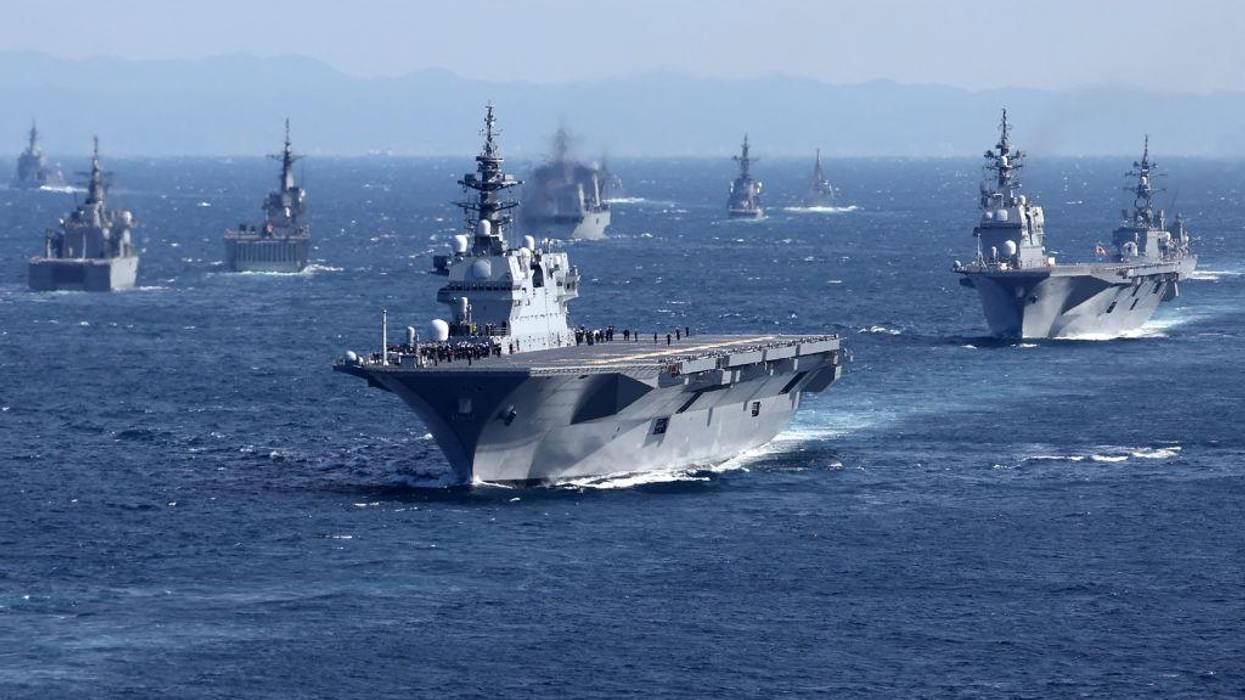
While it added nothing to the U.S.-led war, it was designed to whittle away at popular Japanese resistance to sending SDF forces into war zones. In 2017, Japan joined a revitalized QUAD alliance (U.S., Japan, Australia, and India) and has since participated in joint naval operations with the U.S. and partner nations in the South China Sea, the Indian Ocean, and Persian Gulf, and over the past year it has signaled its willingness to join the U.S. in battle in the event of a war for Taiwan. Today the Japanese military is anything but inconsequential with more than 300,000 troops, an Air Self Defense Force comprised primarily of advanced U.S. fighters, and a Maritime Self Defense Force of 155 ships including destroyers and helicopter carriers, some of which can double as aircraft carriers. Japan's rockets can reach Beijing and Pyongyang as well as Mars. It has intelligence satellites, and the Kishida government is in the process of committing to develop precision conventional first-strike attacks against North Korea and China.
At last count, Japan possessed 47 tons of weapons-grade plutonium in its stockpiles, and it has long been assumed that it is just "a turn of a screwdriver" away from becoming a full-fledged nuclear power. Sheila A. Smith writes in Japan Rearmed that "the Japanese government has never argued that Article 9 would prevent the nuclear option." And in 1996 the lead author of Japan's Defense White Paper stated that for 30 years the SDF has believed that it has the right to deploy tactical nuclear weapons (which can be as powerful as the Hiroshima and Nagasaki A-bombs). It was, he simply said, a right that the SDF had yet to exercise. In times past, U.S. diplomats have sought to influence Chinese policy decisions by threatening to rescind the nuclear umbrella over Japan, opening the way for Tokyo to become a rival nuclear power.
With memories of Japan's brutal WWII conquests and military/colonial occupations, Asian nations—especially China and Korea—have been wary of Japanese militarism and rearmament. However, China's rise, replacing Japan as the world's second wealthiest country, the military buildup the Chinese economy has made possible, and North Korea's nuclear and missile programs came as a massive shocks to the Japanese people and establishment. They have spurred and provided the political rationale for Tokyo's near total abandonment of Article I, its military buildup, and the expanding alliance with the United States.
In part, it's an identity crisis that dates back to the Japanese elites' response to Admiral Perry's 1853 "opening" of Japan with his Black warships. The Meiji restoration, which overthrew the shogunate and created modern Japan, opted to integrate many dimensions of Western civilization, methods, and ambitions as it began to identify more with the West than the East. Throughout the 20th century, most Japanese viewed China as poor and backward, and there were complex feelings, including guilt, about their nation's brutal invasion and colonization of much of China. Ironically, China's industrial modernization under Deng Xiaoping was largely fueled by Japanese technologies and investments.
Despite this modern history of cooperation, the 2012 right-wing Japanese initiative to purchase the uninhabited Senkaku/Diaoyu islets which lie in the East China Sea between Japan and China triggered intensifying military tensions between Beijing and Tokyo. These uninhabited rocks are claimed by both nations and could potentially influence a struggle for control of Okinawa and the waters leading to Taiwan. Japanese and Chinese naval and air forces have conducted almost daily provocative operations around and over the islets to reinforce their claims. A collision or other accident could easily spark a military escalation, which in turn could precipitate U.S. intervention on Japan's behalf in order to fulfill its alliance Treaty obligations.
In the face of China's growing military power and North Korea's increasing military capabilities, Tokyo has repeatedly increased its military budget, breaking what was the long-honored spending cap of 1% of its GDP for the SDF. Prime Minister Shinzo Abe—who ruled from 2012 to 2022 and was the son of the accused Class A war criminal and later Prime Minister Nobusuke Kishi—pressed the expansion of the Japanese military and unsuccessfully prioritized the elimination of Article 9, constitutional limitations be damned.
In mid-December, without national debate, Prime Minister Kishida—Abe's successor—appears to have shattered the last vestiges of Article 9 restrictions. In the last month he has committed to doubling Japan's military expenditures. In the words of Japan's newspaper of record, Asahi Shimbun, the Kishida Cabinet adopted new versions of three major security policies: the National Security Strategy, the Defense Strategy, and the Defense Capability Enhancement Plan. As Asahi Shimbun editorialized, "the centerpiece of his new defense strategy is the possession of the ability to strike enemy bases, which…entails the risk of triggering a Japanese action that is seen as a pre-emptive strike in violation of international law. The policy shift could also risk provoking military countermeasures from potential enemies and heighten tensions in the region."
Japan has played the role of prized and largely obedient Asia-Pacific ally, even secretly allowing for the U.S. to introduce nuclear weapons into its Japanese bases despite Japan's three non-nuclear principles (not to possess, manufacture or allow introduction of nuclear weapons). At the same time, its ruling elite is proceeding with an awareness that there is no permanence between friends and enemies. In the words of Sheila A. Smith, Japan has been preparing for "the U.S. abandonment of its longstanding maritime dominance in Asia [which] would leave Japan open to greater Chinese pressure." This fear may be taking on greater traction as the new Republican majority in the House of Representatives threatens to cut Pentagon spending by $75 billion. Via its coalition building and joint operations with other Indo-Pacific naval powers, Tokyo is laying the foundations for a possible new 21st century alliance structure to restrain China
All of this is taking place in the context of spiraling arms races and provocative military activities in East Asia and more broadly across the Indo-Pacific. China responded to December's massive increase in U.S. military spending by sending a wave of 71 warplanes and 7 warships across the medial line in the Taiwan Strait. Subsequently, a Chinese warplane intercepted a U.S. spy plane threatening a collision as it came within 10 feet of the American aircraft.
Responding to renewed and massive U.S.-South Korean military exercises, which include the toppling of the North Korean regime, Kim Jung Un launched dozens of missiles near South Korean and Japanese waters and claims to have tested a new ICBM rocket engine capable of reaching the United States. In response, the right-wing Yoon government in Seoul and the Biden administration are meeting to deepen their nuclear weapons collaborations. Meanwhile, deeper into Asia, Chinese and Indian forces came to blows again in their contest to control oxygen-thin heights in the Himalayan mountains.
Were the stakes not so high, these reckless demonstrations of power could be compared to Mafia battles for street cred. Just as there are rules for the games of Mafia struggles for power, there are also diplomatic rules and international law designed to prevent catastrophes in great power and other international competitions. Not the least is the United Nations charter which obligates states to "refrain….from the threat or use of force against the territorial integrity or political independence of any state", and requires that international disputes be resolved by peaceful means. These rules were further enhanced in the 1980s by the common security commitments that no nation will seek to enhance its security by jeopardizing that of other nations. Common Security served as the paradigm on which the Cold War was brought to an end prior to the collapse of the Berlin Wall, and it defined Euro-Atlantic relations throughout the 1990s, the first decade of the post-Cold War era.
Today, across the Indo-Pacific, as well as in the escalating Ukraine War, humanity stands an accident or miscalculation away from the calamity of nuclear war. It is past time for the U.S., Japan, China, and the Koreas to pursue their national interests—including human survival—by backing away from and reversing their dangerously spiraling military confrontations and embrace common security diplomacy and solutions. With necessity being the mother of invention, as it faces possible massive cuts in U.S. military spending by the newly-installed GOP majority in the House of Representatives, the Biden Administration could proactively get ahead of the curve. It could renew appeals for Common Security diplomacy and solutions, urging great and lesser power collaborations—including reversal of the dangers of the climate emergency—instead of pursuing primacy.
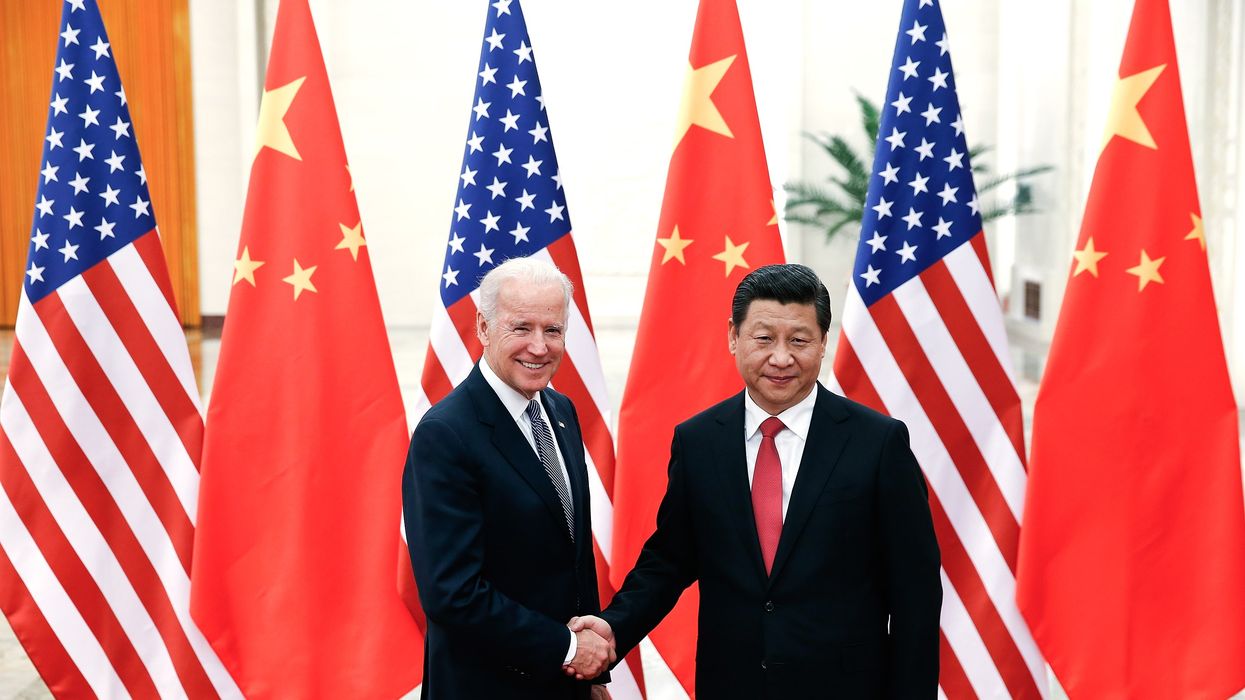
Rather than pouring military fuel on the fire, the U.S. and Japan, each of which faces major economic and social challenges, should cease encouraging Taiwanese independence and encourage what would be difficult and extended Taiwanese-Chinese negotiations over the self-governing island's future. As in the days that immediately followed the brief Biden-Xi summit, the two great powers could ratchet down the number and intensity of their provocative military exercises.
Much as the 1924 naval agreement between the U.S., Japan, and Britain ensured more than a decade of relative peace across the Pacific, today's Asia-Pacific powers could agree to collaborate in securing South China/West Philippine sea lanes, encourage ASEAN-Chinese negotiations for a regional code of conduct, and share the Sea's vast resources. The U.S., South Korea, and Japan could reengage diplomacy with North Korea by signaling a willingness to reduce and then halt their escalating tit-for-tat military operations and press for a resumption of a version of the Six-Party Talks of the first decade of this century.
Reprising the words of a Japanese-American prophet, Yoko Ono, "War is over if you want." Solutions are known. The question is if we have the will to secure them.