SUBSCRIBE TO OUR FREE NEWSLETTER
Daily news & progressive opinion—funded by the people, not the corporations—delivered straight to your inbox.
5
#000000
#FFFFFF
To donate by check, phone, or other method, see our More Ways to Give page.
Daily news & progressive opinion—funded by the people, not the corporations—delivered straight to your inbox.
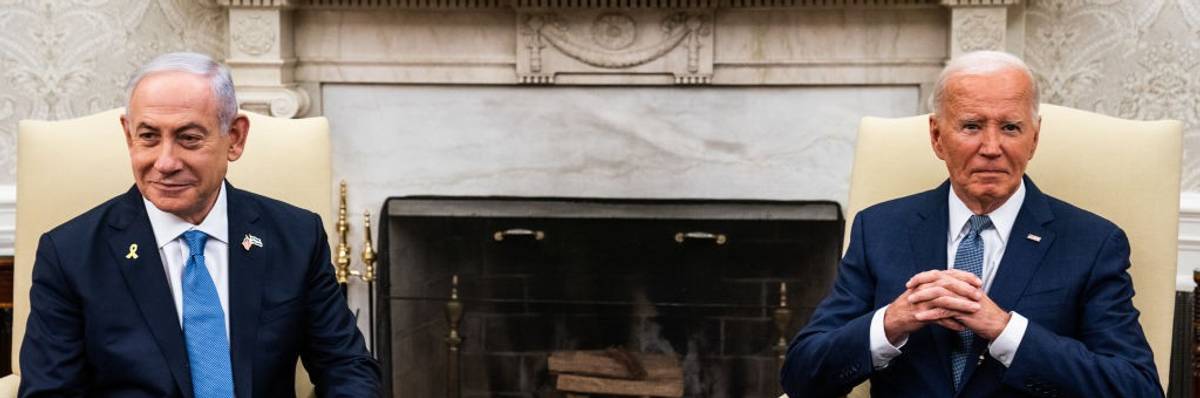
U.S. President Joe Biden was pictured with Israeli Prime Minister Benjamin Netanyahu during a meeting in the Oval Office of the White House on July 25, 2024.
"I'm afraid that if Israel will start a war, a comprehensive war against Iran... America will join in to help Israel," said former Israeli Prime Minister Ehud Olmert. "And that is what Netanyahu believes."
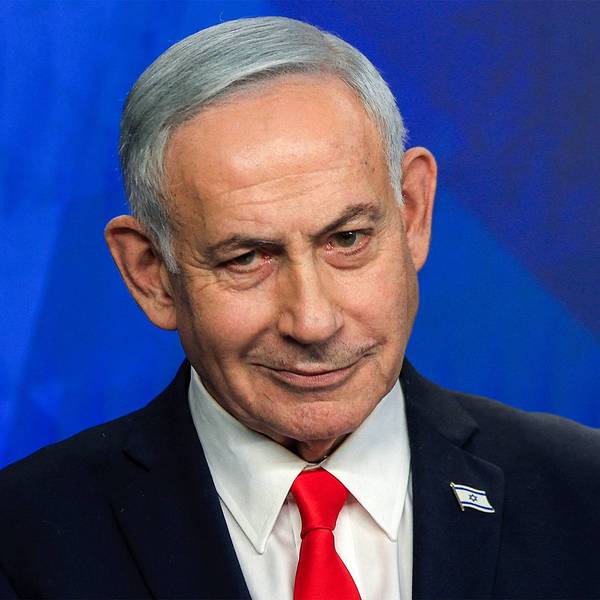
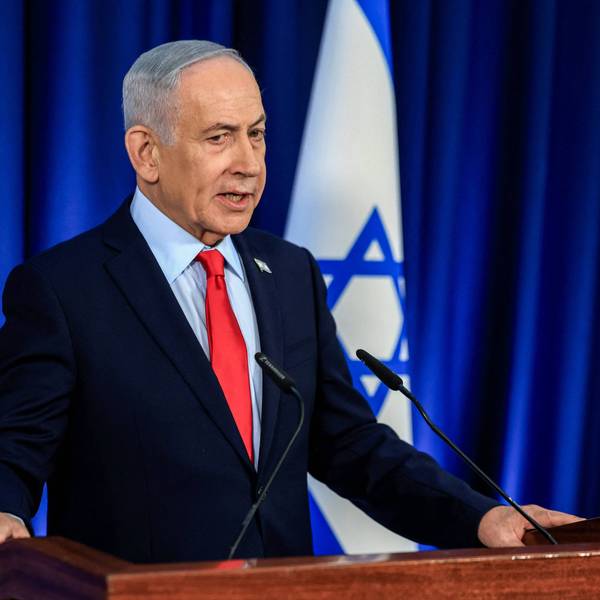
Former Israeli Prime Minister Ehud Olmert told the British outlet Channel 4 on Monday that he believes current Prime Minister Benjamin Netanyahu wants to drag the U.S. into a war with Iran, an effort that the ex-Israeli leader called "reckless."
Asked whether he thinks Netanyahu "wants to draw the United States into a confrontation with Iran," Olmert replied, "I suspect that he does."
"I think that's reckless because I'm afraid that if Israel will start a war, a comprehensive war against Iran, and it will expand and Israel will not be in a very comfortable situation, America will join in to help Israel. And that is what Netanyahu believes to be the case," said Olmert, who served as Israel's prime minister from 2006 to 2009 and was succeeded by Netanyahu.
Olmert expressed support for Israel's killing of Hezbollah leader Hassan Nasrallah—a move that prompted Iranian retaliation earlier this month—and said that "something needs to be done" with regard to Iran.
"What needs to be done needs to be done with care, with sensitivity, with responsibility, and with a sense of proportion," Olmert added. "And I'm not certain that Netanyahu wants this proportion. He looks at the leadership of the international community, the Western world, and he says, 'Who are they? I'm Bibi Netanyahu.'"
Watch the interview:
Former Israeli Prime Minister Ehud Olmert tells Channel 4 News that he ‘suspects’ Netanyahu wants to draw the US into a confrontation with Iran. pic.twitter.com/crCktsgmEn
— Channel 4 News (@Channel4News) October 8, 2024
Olmert's remarks came amid growing concern that the U.S.-armed Israeli military could be preparing to bomb Iran's nuclear energy facilities in response to Iran's ballistic missile attack last week. The New York Times noted Monday that "there is a rising call inside Israel, echoed by some in the United States, to seize the moment" and strike Iranian nuclear facilities.
Former president Donald Trump, the 2024 GOP nominee, said over the weekend that Israel should "hit the nuclear first and worry about the rest later."
Speaking to reporters last Thursday, U.S. President Joe Biden said that the U.S. and Israel are "discussing" a possible attack on Iranian oil infrastructure. The president has said he would oppose an Israeli attack on Iranian nuclear facilities.
Iran has pledged to retaliate against an Israeli attack with a "crushing" blow, heightening fears of a full-blown regional war as Israel continues its devastating assault on Gaza, the West Bank, and Lebanon.
Dylan Williams, vice president for government affairs at the Center for International Policy, said Monday that "President Biden needs to decide if he is finally going to rein in and end his unconditional arming of Netanyahu, or if he will let Netanyahu draw the United States and its forces into war with Iran—a country that is nearly four times the size of Iraq and has twice the population."
U.S. Vice President Kamala Harris, the Democratic presidential nominee, has done nothing to distance herself from Biden's unconditional support for Israel despite vocal calls for her to back an arms embargo against the country.
In a closely watched "60 Minutes" interview that aired late Monday, Harris said that "Israel has a right to defend itself" while conceding that "far too many innocent Palestinians have been killed."
But she did not say she would be willing to use U.S. military aid to Israel as leverage to secure a cease-fire agreement.
Harris also named Iran when asked which country she considers to be the United States' "greatest adversary"—an answer that CBS did not air as part of its televised broadcast of the "60 Minutes" interview.
Harris went on to say that one of her "highest priorities" as president would be to "ensure that Iran never achieves the ability to be a nuclear power." Asked whether she would take military action in the face of "proof that Iran is building a nuclear weapon," the vice president responded that she is "not going to talk about hypotheticals."
Sina Toossi, a senior fellow at the Center for International Policy, called Harris' answer on Iran "completely out of touch" and said it underscores "the irrational U.S. obsession with Iran, which is driven by politics and donor money, not U.S. interests."
Last week, a coalition of more than 80 advocacy organizations warned the Biden-Harris administration that "it is not in the national interest for the U.S. to be led into a war with Iran by Benjamin Netanyahu's government in Israel."
"It is in the strong national interest to utilize diplomacy, backed by full American leverage—including withholding further offensive weapons transfers to Israel’s military—to move all the parties back from the brink and toward a ceasefire that ends the devastation of Gaza and Lebanon and reverses the slide to regional war," the groups added.
Dear Common Dreams reader, It’s been nearly 30 years since I co-founded Common Dreams with my late wife, Lina Newhouser. We had the radical notion that journalism should serve the public good, not corporate profits. It was clear to us from the outset what it would take to build such a project. No paid advertisements. No corporate sponsors. No millionaire publisher telling us what to think or do. Many people said we wouldn't last a year, but we proved those doubters wrong. Together with a tremendous team of journalists and dedicated staff, we built an independent media outlet free from the constraints of profits and corporate control. Our mission has always been simple: To inform. To inspire. To ignite change for the common good. Building Common Dreams was not easy. Our survival was never guaranteed. When you take on the most powerful forces—Wall Street greed, fossil fuel industry destruction, Big Tech lobbyists, and uber-rich oligarchs who have spent billions upon billions rigging the economy and democracy in their favor—the only bulwark you have is supporters who believe in your work. But here’s the urgent message from me today. It's never been this bad out there. And it's never been this hard to keep us going. At the very moment Common Dreams is most needed, the threats we face are intensifying. We need your support now more than ever. We don't accept corporate advertising and never will. We don't have a paywall because we don't think people should be blocked from critical news based on their ability to pay. Everything we do is funded by the donations of readers like you. When everyone does the little they can afford, we are strong. But if that support retreats or dries up, so do we. Will you donate now to make sure Common Dreams not only survives but thrives? —Craig Brown, Co-founder |
Former Israeli Prime Minister Ehud Olmert told the British outlet Channel 4 on Monday that he believes current Prime Minister Benjamin Netanyahu wants to drag the U.S. into a war with Iran, an effort that the ex-Israeli leader called "reckless."
Asked whether he thinks Netanyahu "wants to draw the United States into a confrontation with Iran," Olmert replied, "I suspect that he does."
"I think that's reckless because I'm afraid that if Israel will start a war, a comprehensive war against Iran, and it will expand and Israel will not be in a very comfortable situation, America will join in to help Israel. And that is what Netanyahu believes to be the case," said Olmert, who served as Israel's prime minister from 2006 to 2009 and was succeeded by Netanyahu.
Olmert expressed support for Israel's killing of Hezbollah leader Hassan Nasrallah—a move that prompted Iranian retaliation earlier this month—and said that "something needs to be done" with regard to Iran.
"What needs to be done needs to be done with care, with sensitivity, with responsibility, and with a sense of proportion," Olmert added. "And I'm not certain that Netanyahu wants this proportion. He looks at the leadership of the international community, the Western world, and he says, 'Who are they? I'm Bibi Netanyahu.'"
Watch the interview:
Former Israeli Prime Minister Ehud Olmert tells Channel 4 News that he ‘suspects’ Netanyahu wants to draw the US into a confrontation with Iran. pic.twitter.com/crCktsgmEn
— Channel 4 News (@Channel4News) October 8, 2024
Olmert's remarks came amid growing concern that the U.S.-armed Israeli military could be preparing to bomb Iran's nuclear energy facilities in response to Iran's ballistic missile attack last week. The New York Times noted Monday that "there is a rising call inside Israel, echoed by some in the United States, to seize the moment" and strike Iranian nuclear facilities.
Former president Donald Trump, the 2024 GOP nominee, said over the weekend that Israel should "hit the nuclear first and worry about the rest later."
Speaking to reporters last Thursday, U.S. President Joe Biden said that the U.S. and Israel are "discussing" a possible attack on Iranian oil infrastructure. The president has said he would oppose an Israeli attack on Iranian nuclear facilities.
Iran has pledged to retaliate against an Israeli attack with a "crushing" blow, heightening fears of a full-blown regional war as Israel continues its devastating assault on Gaza, the West Bank, and Lebanon.
Dylan Williams, vice president for government affairs at the Center for International Policy, said Monday that "President Biden needs to decide if he is finally going to rein in and end his unconditional arming of Netanyahu, or if he will let Netanyahu draw the United States and its forces into war with Iran—a country that is nearly four times the size of Iraq and has twice the population."
U.S. Vice President Kamala Harris, the Democratic presidential nominee, has done nothing to distance herself from Biden's unconditional support for Israel despite vocal calls for her to back an arms embargo against the country.
In a closely watched "60 Minutes" interview that aired late Monday, Harris said that "Israel has a right to defend itself" while conceding that "far too many innocent Palestinians have been killed."
But she did not say she would be willing to use U.S. military aid to Israel as leverage to secure a cease-fire agreement.
Harris also named Iran when asked which country she considers to be the United States' "greatest adversary"—an answer that CBS did not air as part of its televised broadcast of the "60 Minutes" interview.
Harris went on to say that one of her "highest priorities" as president would be to "ensure that Iran never achieves the ability to be a nuclear power." Asked whether she would take military action in the face of "proof that Iran is building a nuclear weapon," the vice president responded that she is "not going to talk about hypotheticals."
Sina Toossi, a senior fellow at the Center for International Policy, called Harris' answer on Iran "completely out of touch" and said it underscores "the irrational U.S. obsession with Iran, which is driven by politics and donor money, not U.S. interests."
Last week, a coalition of more than 80 advocacy organizations warned the Biden-Harris administration that "it is not in the national interest for the U.S. to be led into a war with Iran by Benjamin Netanyahu's government in Israel."
"It is in the strong national interest to utilize diplomacy, backed by full American leverage—including withholding further offensive weapons transfers to Israel’s military—to move all the parties back from the brink and toward a ceasefire that ends the devastation of Gaza and Lebanon and reverses the slide to regional war," the groups added.
Former Israeli Prime Minister Ehud Olmert told the British outlet Channel 4 on Monday that he believes current Prime Minister Benjamin Netanyahu wants to drag the U.S. into a war with Iran, an effort that the ex-Israeli leader called "reckless."
Asked whether he thinks Netanyahu "wants to draw the United States into a confrontation with Iran," Olmert replied, "I suspect that he does."
"I think that's reckless because I'm afraid that if Israel will start a war, a comprehensive war against Iran, and it will expand and Israel will not be in a very comfortable situation, America will join in to help Israel. And that is what Netanyahu believes to be the case," said Olmert, who served as Israel's prime minister from 2006 to 2009 and was succeeded by Netanyahu.
Olmert expressed support for Israel's killing of Hezbollah leader Hassan Nasrallah—a move that prompted Iranian retaliation earlier this month—and said that "something needs to be done" with regard to Iran.
"What needs to be done needs to be done with care, with sensitivity, with responsibility, and with a sense of proportion," Olmert added. "And I'm not certain that Netanyahu wants this proportion. He looks at the leadership of the international community, the Western world, and he says, 'Who are they? I'm Bibi Netanyahu.'"
Watch the interview:
Former Israeli Prime Minister Ehud Olmert tells Channel 4 News that he ‘suspects’ Netanyahu wants to draw the US into a confrontation with Iran. pic.twitter.com/crCktsgmEn
— Channel 4 News (@Channel4News) October 8, 2024
Olmert's remarks came amid growing concern that the U.S.-armed Israeli military could be preparing to bomb Iran's nuclear energy facilities in response to Iran's ballistic missile attack last week. The New York Times noted Monday that "there is a rising call inside Israel, echoed by some in the United States, to seize the moment" and strike Iranian nuclear facilities.
Former president Donald Trump, the 2024 GOP nominee, said over the weekend that Israel should "hit the nuclear first and worry about the rest later."
Speaking to reporters last Thursday, U.S. President Joe Biden said that the U.S. and Israel are "discussing" a possible attack on Iranian oil infrastructure. The president has said he would oppose an Israeli attack on Iranian nuclear facilities.
Iran has pledged to retaliate against an Israeli attack with a "crushing" blow, heightening fears of a full-blown regional war as Israel continues its devastating assault on Gaza, the West Bank, and Lebanon.
Dylan Williams, vice president for government affairs at the Center for International Policy, said Monday that "President Biden needs to decide if he is finally going to rein in and end his unconditional arming of Netanyahu, or if he will let Netanyahu draw the United States and its forces into war with Iran—a country that is nearly four times the size of Iraq and has twice the population."
U.S. Vice President Kamala Harris, the Democratic presidential nominee, has done nothing to distance herself from Biden's unconditional support for Israel despite vocal calls for her to back an arms embargo against the country.
In a closely watched "60 Minutes" interview that aired late Monday, Harris said that "Israel has a right to defend itself" while conceding that "far too many innocent Palestinians have been killed."
But she did not say she would be willing to use U.S. military aid to Israel as leverage to secure a cease-fire agreement.
Harris also named Iran when asked which country she considers to be the United States' "greatest adversary"—an answer that CBS did not air as part of its televised broadcast of the "60 Minutes" interview.
Harris went on to say that one of her "highest priorities" as president would be to "ensure that Iran never achieves the ability to be a nuclear power." Asked whether she would take military action in the face of "proof that Iran is building a nuclear weapon," the vice president responded that she is "not going to talk about hypotheticals."
Sina Toossi, a senior fellow at the Center for International Policy, called Harris' answer on Iran "completely out of touch" and said it underscores "the irrational U.S. obsession with Iran, which is driven by politics and donor money, not U.S. interests."
Last week, a coalition of more than 80 advocacy organizations warned the Biden-Harris administration that "it is not in the national interest for the U.S. to be led into a war with Iran by Benjamin Netanyahu's government in Israel."
"It is in the strong national interest to utilize diplomacy, backed by full American leverage—including withholding further offensive weapons transfers to Israel’s military—to move all the parties back from the brink and toward a ceasefire that ends the devastation of Gaza and Lebanon and reverses the slide to regional war," the groups added.