

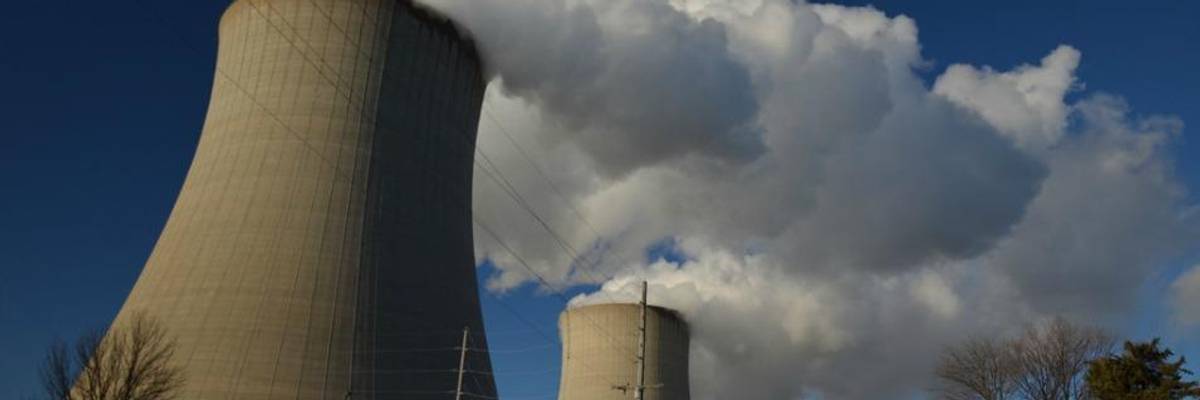
Analysis Warns Climate Crisis Threatens US Nuclear Reactors
"Climate change is expected to exacerbate natural hazards—including heat, drought, wildfires, flooding, hurricanes, and sea level rise," the report reads.
The nation's nuclear reactors may be at risk due to the climate emergency, according to a report released by the U.S. Government Accountability Office on Tuesday.
The report claims the Nuclear Regulatory Commission (NRC) needs to consider these risks as it regulates nuclear power plants going forward. There are currently 94 nuclear reactors in the United States that could be affected.
" Climate change is expected to exacerbate natural hazards—including heat, drought, wildfires, flooding, hurricanes, and sea-level rise. In addition, climate change may affect extreme cold weather events," the report reads. "Risks to nuclear power plants from these hazards include loss of offsite power, damage to systems and equipment, and diminished cooling capacity, potentially resulting in reduced operations or plant shutdowns."
Extreme weather event like floods can pose safety risks to #NuclearPower plants. #ClimateChange is likely to make these natural hazards more severe.
Our new report looks at how @NRCgov could better address climate risks to nuclear power plants: https://t.co/lZhGAjtNkF pic.twitter.com/MOjambENtG
— U.S. GAO (@USGAO) April 2, 2024
The report notes that many new reactors are currently being developed, which increases the need for the NRC to properly regulate those reactors.
It says that the NRC has mostly used historical data to "identify and assess safety risks," which would not account for the climate risks that are likely to threaten reactors in the future. The report claims most reactors could be negatively impacted by future climate risks.
Beyond Nuclear, which advocates against nuclear power and weapons, said in a statement that that GAO's findings and recommendations confirm what the group has been litigating with the NRC—that "the agency cannot continue to ignore the safety impacts on nuclear power plants from the worsening climate crisis."
"These risks include a worsening of natural hazards and encompass heat and cold, drought, wildfires, flooding, hurricanes, and sea-level rise, according to the GAO, all of which could seriously jeopardize the safe operation of the nation's current fleet that is going through extreme license renewals—and any future new... nuclear reactors if not properly safeguarded," the group said.
Plans to triple the amount of nuclear power in 22 countries by 2050 that were announced at the most recent United Nations climate summit have been denounced as "dangerous" and not a realistic solution to address the climate emergency.
We are at a crossroads
This country and this world are at a monumental crossroads. In a few short weeks, US voters will have an opportunity to beat back the forces of fascism and confront the billionaires who are rigging the economy, our media system, and our democracy, making it increasingly impossible for ordinary people to get by. We’re not just talking about the election. We’re talking about what must be done once these fascist elements are vanquished from power. We need a bolder set of solutions than what either major party has so far been willing to offer and a working-class movement ready to fight like hell for it. Trump didn't emerge from nowhere. The conditions that fueled MAGA authoritarianism were created by decades of radical neoliberal economic policies and a corrupt political system dominated by corporate interests. They slashed taxes on the super-rich, promising that the benefits would trickle down. They said giveaways to the corporate titans would make life more affordable for the rest of us. It was all bullshit. And when a bitter, betrayed populace searches for someone to blame, right-wing demagogues have little trouble finding scapegoats. People know when they're being lied to, but you won't hear any of this from the corporate media. Only independent journalism—powered and funded by people who believe in building a better world—can deliver truly trustworthy daily news. Our Fall Campaign is underway, and we need your help. To power our newsroom through the rest of the year, we need to raise $125,000 by midnight on October 31. So if you share our vision, please contribute whatever you can to sustain our work. |
The nation's nuclear reactors may be at risk due to the climate emergency, according to a report released by the U.S. Government Accountability Office on Tuesday.
The report claims the Nuclear Regulatory Commission (NRC) needs to consider these risks as it regulates nuclear power plants going forward. There are currently 94 nuclear reactors in the United States that could be affected.
" Climate change is expected to exacerbate natural hazards—including heat, drought, wildfires, flooding, hurricanes, and sea-level rise. In addition, climate change may affect extreme cold weather events," the report reads. "Risks to nuclear power plants from these hazards include loss of offsite power, damage to systems and equipment, and diminished cooling capacity, potentially resulting in reduced operations or plant shutdowns."
Extreme weather event like floods can pose safety risks to #NuclearPower plants. #ClimateChange is likely to make these natural hazards more severe.
Our new report looks at how @NRCgov could better address climate risks to nuclear power plants: https://t.co/lZhGAjtNkF pic.twitter.com/MOjambENtG
— U.S. GAO (@USGAO) April 2, 2024
The report notes that many new reactors are currently being developed, which increases the need for the NRC to properly regulate those reactors.
It says that the NRC has mostly used historical data to "identify and assess safety risks," which would not account for the climate risks that are likely to threaten reactors in the future. The report claims most reactors could be negatively impacted by future climate risks.
Beyond Nuclear, which advocates against nuclear power and weapons, said in a statement that that GAO's findings and recommendations confirm what the group has been litigating with the NRC—that "the agency cannot continue to ignore the safety impacts on nuclear power plants from the worsening climate crisis."
"These risks include a worsening of natural hazards and encompass heat and cold, drought, wildfires, flooding, hurricanes, and sea-level rise, according to the GAO, all of which could seriously jeopardize the safe operation of the nation's current fleet that is going through extreme license renewals—and any future new... nuclear reactors if not properly safeguarded," the group said.
Plans to triple the amount of nuclear power in 22 countries by 2050 that were announced at the most recent United Nations climate summit have been denounced as "dangerous" and not a realistic solution to address the climate emergency.
The nation's nuclear reactors may be at risk due to the climate emergency, according to a report released by the U.S. Government Accountability Office on Tuesday.
The report claims the Nuclear Regulatory Commission (NRC) needs to consider these risks as it regulates nuclear power plants going forward. There are currently 94 nuclear reactors in the United States that could be affected.
" Climate change is expected to exacerbate natural hazards—including heat, drought, wildfires, flooding, hurricanes, and sea-level rise. In addition, climate change may affect extreme cold weather events," the report reads. "Risks to nuclear power plants from these hazards include loss of offsite power, damage to systems and equipment, and diminished cooling capacity, potentially resulting in reduced operations or plant shutdowns."
Extreme weather event like floods can pose safety risks to #NuclearPower plants. #ClimateChange is likely to make these natural hazards more severe.
Our new report looks at how @NRCgov could better address climate risks to nuclear power plants: https://t.co/lZhGAjtNkF pic.twitter.com/MOjambENtG
— U.S. GAO (@USGAO) April 2, 2024
The report notes that many new reactors are currently being developed, which increases the need for the NRC to properly regulate those reactors.
It says that the NRC has mostly used historical data to "identify and assess safety risks," which would not account for the climate risks that are likely to threaten reactors in the future. The report claims most reactors could be negatively impacted by future climate risks.
Beyond Nuclear, which advocates against nuclear power and weapons, said in a statement that that GAO's findings and recommendations confirm what the group has been litigating with the NRC—that "the agency cannot continue to ignore the safety impacts on nuclear power plants from the worsening climate crisis."
"These risks include a worsening of natural hazards and encompass heat and cold, drought, wildfires, flooding, hurricanes, and sea-level rise, according to the GAO, all of which could seriously jeopardize the safe operation of the nation's current fleet that is going through extreme license renewals—and any future new... nuclear reactors if not properly safeguarded," the group said.
Plans to triple the amount of nuclear power in 22 countries by 2050 that were announced at the most recent United Nations climate summit have been denounced as "dangerous" and not a realistic solution to address the climate emergency.