SUBSCRIBE TO OUR FREE NEWSLETTER
Daily news & progressive opinion—funded by the people, not the corporations—delivered straight to your inbox.
5
#000000
#FFFFFF
To donate by check, phone, or other method, see our More Ways to Give page.
Daily news & progressive opinion—funded by the people, not the corporations—delivered straight to your inbox.
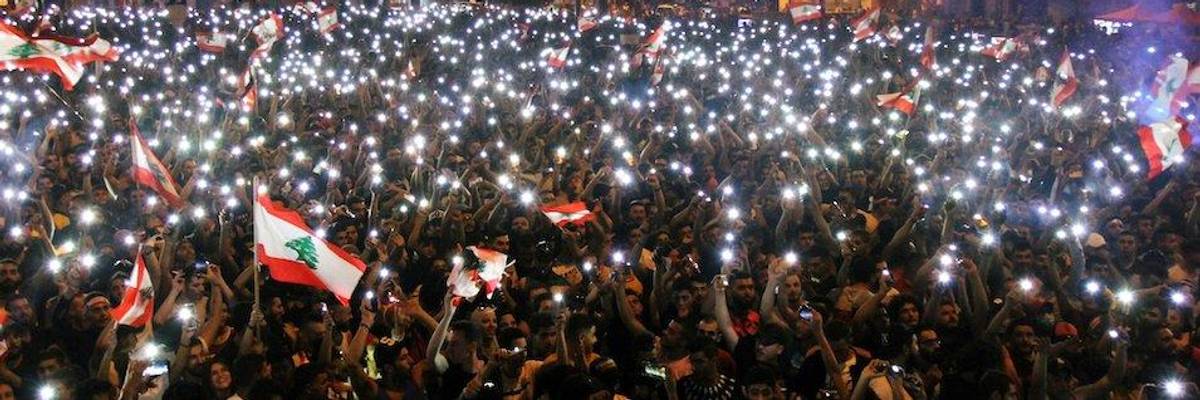
Lebanese demonstrators dance to music by DJs as the protest movement takes over the country. (Photo: Al Jazeera/Twitter)
The anti-corruption protest movement overtaking Lebanon has motivated over a million people to take to the streets in demonstrations against the country's government, and has been marked by crowds dancing in squares to techno and even the popular children's song "Baby Shark."
A moment from the protests involving the children's song went viral over the weekend after a frightened toddler in a car stopped by protests was serenaded by demonstrators singing "Baby Shark" and doing the dance associated with the catchy tune.
And it didn't end there.
"Only in Lebanon would a song like 'Baby Shark,' which is now being played at every crowd gathering, become the anthem of a revolution," novelist Rabih Alameddine wrote for The New York Times.
The YouTube sensation is one of many examples of Lebanese protesters using music and dancing to celebrate during the protests against the government, which were sparked by a proposed tax on calls made by WhatsApp. Demonstrators are rejecting proposed reforms from the government and calling for fundamental changes in how the country is run.
As Alameddine explained:
Heeding the calls for change, the government rescinded the WhatsApp tax soon after announcing it, and on Monday, it announced its agreement to a list of demands. But skeptical protesters are refusing to budge. In the meantime, the Lebanese are showing the world how to hold a great demonstration. They are partying, playing table tennis, and celebrating weddings out on the street.
One marriage proposal, caught on camera, took place in the heart of the protests.
"The music has been epic, it's like a constant rave downtown," In the Now journalist Rania Khalek, who is on the ground in Lebanon's capital, Beruit, told Common Dreams. "It's so Lebanese!"
Videos from cities across the country show DJs playing to crowds from the top of vans and in buildings overlooking people in the streets.
"Lebanese people love to dance and love to party, so it makes sense that protests would turn into a big festive party with sound systems and in some cases DJs blasting old songs, new songs, the national anthem, and various chants against corrupt officials," said Khalek.
Dear Common Dreams reader, It’s been nearly 30 years since I co-founded Common Dreams with my late wife, Lina Newhouser. We had the radical notion that journalism should serve the public good, not corporate profits. It was clear to us from the outset what it would take to build such a project. No paid advertisements. No corporate sponsors. No millionaire publisher telling us what to think or do. Many people said we wouldn't last a year, but we proved those doubters wrong. Together with a tremendous team of journalists and dedicated staff, we built an independent media outlet free from the constraints of profits and corporate control. Our mission has always been simple: To inform. To inspire. To ignite change for the common good. Building Common Dreams was not easy. Our survival was never guaranteed. When you take on the most powerful forces—Wall Street greed, fossil fuel industry destruction, Big Tech lobbyists, and uber-rich oligarchs who have spent billions upon billions rigging the economy and democracy in their favor—the only bulwark you have is supporters who believe in your work. But here’s the urgent message from me today. It's never been this bad out there. And it's never been this hard to keep us going. At the very moment Common Dreams is most needed, the threats we face are intensifying. We need your support now more than ever. We don't accept corporate advertising and never will. We don't have a paywall because we don't think people should be blocked from critical news based on their ability to pay. Everything we do is funded by the donations of readers like you. When everyone does the little they can afford, we are strong. But if that support retreats or dries up, so do we. Will you donate now to make sure Common Dreams not only survives but thrives? —Craig Brown, Co-founder |
The anti-corruption protest movement overtaking Lebanon has motivated over a million people to take to the streets in demonstrations against the country's government, and has been marked by crowds dancing in squares to techno and even the popular children's song "Baby Shark."
A moment from the protests involving the children's song went viral over the weekend after a frightened toddler in a car stopped by protests was serenaded by demonstrators singing "Baby Shark" and doing the dance associated with the catchy tune.
And it didn't end there.
"Only in Lebanon would a song like 'Baby Shark,' which is now being played at every crowd gathering, become the anthem of a revolution," novelist Rabih Alameddine wrote for The New York Times.
The YouTube sensation is one of many examples of Lebanese protesters using music and dancing to celebrate during the protests against the government, which were sparked by a proposed tax on calls made by WhatsApp. Demonstrators are rejecting proposed reforms from the government and calling for fundamental changes in how the country is run.
As Alameddine explained:
Heeding the calls for change, the government rescinded the WhatsApp tax soon after announcing it, and on Monday, it announced its agreement to a list of demands. But skeptical protesters are refusing to budge. In the meantime, the Lebanese are showing the world how to hold a great demonstration. They are partying, playing table tennis, and celebrating weddings out on the street.
One marriage proposal, caught on camera, took place in the heart of the protests.
"The music has been epic, it's like a constant rave downtown," In the Now journalist Rania Khalek, who is on the ground in Lebanon's capital, Beruit, told Common Dreams. "It's so Lebanese!"
Videos from cities across the country show DJs playing to crowds from the top of vans and in buildings overlooking people in the streets.
"Lebanese people love to dance and love to party, so it makes sense that protests would turn into a big festive party with sound systems and in some cases DJs blasting old songs, new songs, the national anthem, and various chants against corrupt officials," said Khalek.
The anti-corruption protest movement overtaking Lebanon has motivated over a million people to take to the streets in demonstrations against the country's government, and has been marked by crowds dancing in squares to techno and even the popular children's song "Baby Shark."
A moment from the protests involving the children's song went viral over the weekend after a frightened toddler in a car stopped by protests was serenaded by demonstrators singing "Baby Shark" and doing the dance associated with the catchy tune.
And it didn't end there.
"Only in Lebanon would a song like 'Baby Shark,' which is now being played at every crowd gathering, become the anthem of a revolution," novelist Rabih Alameddine wrote for The New York Times.
The YouTube sensation is one of many examples of Lebanese protesters using music and dancing to celebrate during the protests against the government, which were sparked by a proposed tax on calls made by WhatsApp. Demonstrators are rejecting proposed reforms from the government and calling for fundamental changes in how the country is run.
As Alameddine explained:
Heeding the calls for change, the government rescinded the WhatsApp tax soon after announcing it, and on Monday, it announced its agreement to a list of demands. But skeptical protesters are refusing to budge. In the meantime, the Lebanese are showing the world how to hold a great demonstration. They are partying, playing table tennis, and celebrating weddings out on the street.
One marriage proposal, caught on camera, took place in the heart of the protests.
"The music has been epic, it's like a constant rave downtown," In the Now journalist Rania Khalek, who is on the ground in Lebanon's capital, Beruit, told Common Dreams. "It's so Lebanese!"
Videos from cities across the country show DJs playing to crowds from the top of vans and in buildings overlooking people in the streets.
"Lebanese people love to dance and love to party, so it makes sense that protests would turn into a big festive party with sound systems and in some cases DJs blasting old songs, new songs, the national anthem, and various chants against corrupt officials," said Khalek.