SUBSCRIBE TO OUR FREE NEWSLETTER
Daily news & progressive opinion—funded by the people, not the corporations—delivered straight to your inbox.
5
#000000
#FFFFFF
To donate by check, phone, or other method, see our More Ways to Give page.
Large, old trees are better at "sequestering" carbon than previously thought, in some cases absorbing as much CO2 as is in a smaller tree each year, according to a study published last week in the journal Nature.
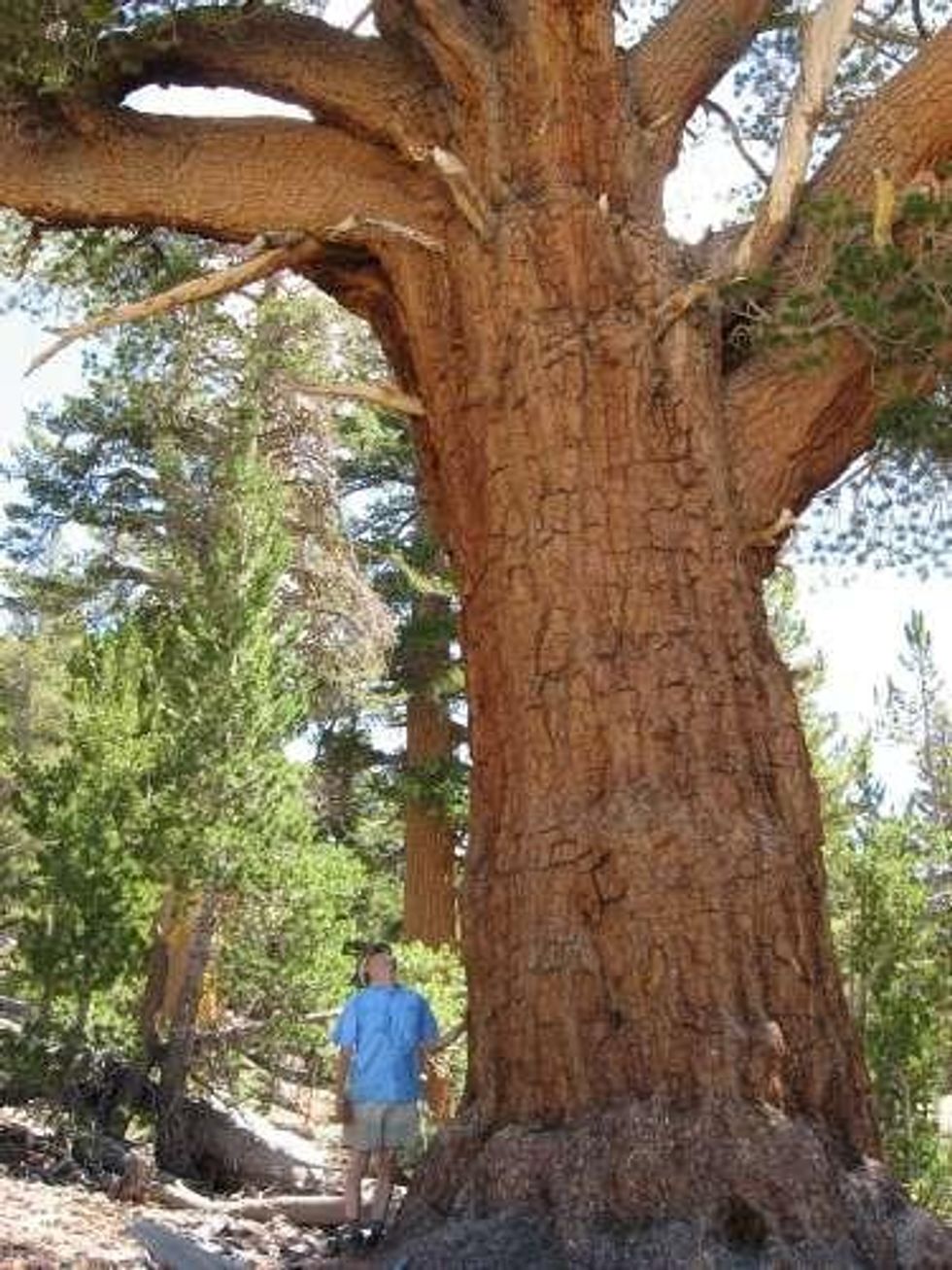
"It also means that big, old trees are better at absorbing carbon from the atmosphere than has been commonly assumed," Stephenson said, and they play an important role in mitigating human-caused CO2 emissions.
The researchers studied the growth rate measurements of over 670,000 representing over 400 tree species across six continents.
While the old trees do release carbon back into the atmosphere when they die, the "findings do suggest that while they are alive, large old trees play a disproportionately important role within a forest's carbon dynamics. It is as if the star players on your favorite sports team were a bunch of 90-year-olds," added study co-author Adrian Das, also with the USGS.
_____________________
Large, old trees are better at "sequestering" carbon than previously thought, in some cases absorbing as much CO2 as is in a smaller tree each year, according to a study published last week in the journal Nature.
"It also means that big, old trees are better at absorbing carbon from the atmosphere than has been commonly assumed," Stephenson said, and they play an important role in mitigating human-caused CO2 emissions.
The researchers studied the growth rate measurements of over 670,000 representing over 400 tree species across six continents.
While the old trees do release carbon back into the atmosphere when they die, the "findings do suggest that while they are alive, large old trees play a disproportionately important role within a forest's carbon dynamics. It is as if the star players on your favorite sports team were a bunch of 90-year-olds," added study co-author Adrian Das, also with the USGS.
_____________________
Large, old trees are better at "sequestering" carbon than previously thought, in some cases absorbing as much CO2 as is in a smaller tree each year, according to a study published last week in the journal Nature.
"It also means that big, old trees are better at absorbing carbon from the atmosphere than has been commonly assumed," Stephenson said, and they play an important role in mitigating human-caused CO2 emissions.
The researchers studied the growth rate measurements of over 670,000 representing over 400 tree species across six continents.
While the old trees do release carbon back into the atmosphere when they die, the "findings do suggest that while they are alive, large old trees play a disproportionately important role within a forest's carbon dynamics. It is as if the star players on your favorite sports team were a bunch of 90-year-olds," added study co-author Adrian Das, also with the USGS.
_____________________