SUBSCRIBE TO OUR FREE NEWSLETTER
Daily news & progressive opinion—funded by the people, not the corporations—delivered straight to your inbox.
5
#000000
#FFFFFF
To donate by check, phone, or other method, see our More Ways to Give page.
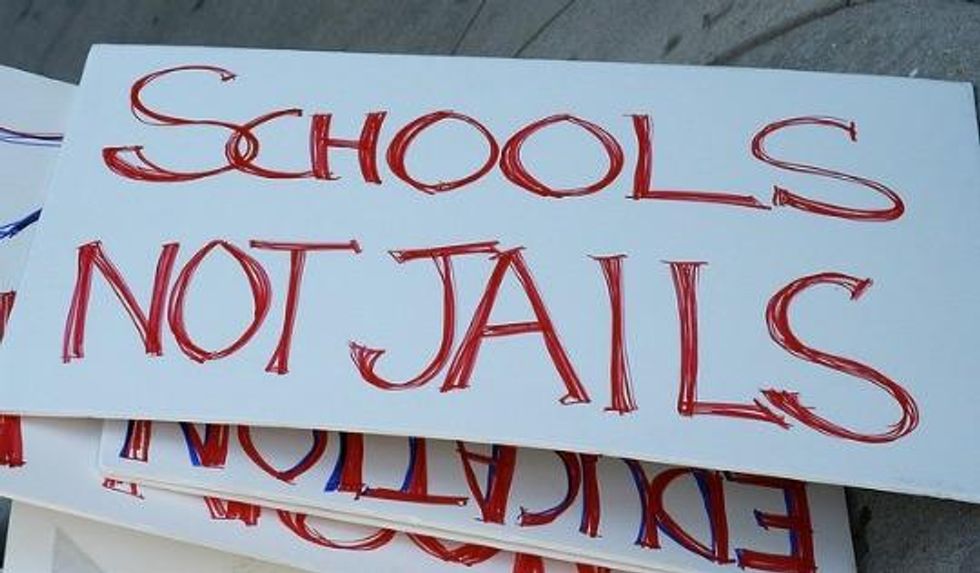
"Ordinary trouble-making can sometimes provoke responses that are overly severe, including out of school suspensions, expulsions and even referral to law enforcement and then you end up with kids that end up in police precincts instead of the principal's office," said Attorney General Eric Holder upon the release of the guidelines, co-authored by the Justice and Education Departments.
Although the guidelines are non-binding, as the Associated Press reports, "the federal government is telling the school districts around the country that they should adhere to the principles of fairness and equity in student discipline or face strong action if they don't."
Last March, the Justice Department settled a court case with a Miss. school district to end discriminatory disciplinary practices that were targeting black students over others.
The phrase school-to-prison pipeline stems from an increasing trend in these tactics, which civil rights advocates say are disproportionally targeting black, Hispanic, and other minority students.
As the Associated Press reports:
In American schools, black students without disabilities were more than three times as likely as whites to be expelled or suspended, according to government civil rights data collection from 2011-2012. Although black students made up 15 percent of students in the data collection, they made up more than a third of students suspended once, 44 percent of those suspended more than once and more than a third of students expelled.
More than half of students involved in school-related arrests or referred to law enforcement were Hispanic or black, according to the data.
Research conducted by the U.S. government prior to the release of the guidelines shows that such racial disparities are not due to more frequent or serious misbehavior by minority students.
"For example, in our investigations, we have found cases where African-American students were disciplined more harshly and more frequently because of their race than similarly situated white students," reads a letter sent to schools with the recommendations by the departments. "In short, racial discrimination in school discipline is a real problem."
A similar study released by University of South Carolina this week shows that by age 23, 48 percent of all American black men will have been arrested at least once. Forty-four percent of Hispanic males will also have been arrested by the same age, according to the analysis.
Referring to the school-to-prison pipeline, author of the study criminologist Robert Brame stated, "A problem is that many males - especially black males - are navigating the transition from youth to adulthood with the baggage and difficulties from contact with the criminal justice system."
The non-binding guidelines issued to schools ensure "that all school personnel are trained in classroom management, conflict resolution and approaches to de-escalate classroom disruptions," AP reports.
According to AP, other recommendations include directives to:
Although recommendations do not call for the elimination of law enforcement or school resource officers (SROs) from schools, the ACLU said in a press release Wednesday that they mark a "groundbreaking" step in the right direction.
"This guidance makes it crystal clear for schools what their obligations are under our civil rights laws and provides examples of best practices so that they can easily implement positive alternative practices," stated Deborah J. Vagins, ACLU senior legislative counsel. "This is a victory for all who care about creating environments where students can thrive."
_______________________
"Ordinary trouble-making can sometimes provoke responses that are overly severe, including out of school suspensions, expulsions and even referral to law enforcement and then you end up with kids that end up in police precincts instead of the principal's office," said Attorney General Eric Holder upon the release of the guidelines, co-authored by the Justice and Education Departments.
Although the guidelines are non-binding, as the Associated Press reports, "the federal government is telling the school districts around the country that they should adhere to the principles of fairness and equity in student discipline or face strong action if they don't."
Last March, the Justice Department settled a court case with a Miss. school district to end discriminatory disciplinary practices that were targeting black students over others.
The phrase school-to-prison pipeline stems from an increasing trend in these tactics, which civil rights advocates say are disproportionally targeting black, Hispanic, and other minority students.
As the Associated Press reports:
In American schools, black students without disabilities were more than three times as likely as whites to be expelled or suspended, according to government civil rights data collection from 2011-2012. Although black students made up 15 percent of students in the data collection, they made up more than a third of students suspended once, 44 percent of those suspended more than once and more than a third of students expelled.
More than half of students involved in school-related arrests or referred to law enforcement were Hispanic or black, according to the data.
Research conducted by the U.S. government prior to the release of the guidelines shows that such racial disparities are not due to more frequent or serious misbehavior by minority students.
"For example, in our investigations, we have found cases where African-American students were disciplined more harshly and more frequently because of their race than similarly situated white students," reads a letter sent to schools with the recommendations by the departments. "In short, racial discrimination in school discipline is a real problem."
A similar study released by University of South Carolina this week shows that by age 23, 48 percent of all American black men will have been arrested at least once. Forty-four percent of Hispanic males will also have been arrested by the same age, according to the analysis.
Referring to the school-to-prison pipeline, author of the study criminologist Robert Brame stated, "A problem is that many males - especially black males - are navigating the transition from youth to adulthood with the baggage and difficulties from contact with the criminal justice system."
The non-binding guidelines issued to schools ensure "that all school personnel are trained in classroom management, conflict resolution and approaches to de-escalate classroom disruptions," AP reports.
According to AP, other recommendations include directives to:
Although recommendations do not call for the elimination of law enforcement or school resource officers (SROs) from schools, the ACLU said in a press release Wednesday that they mark a "groundbreaking" step in the right direction.
"This guidance makes it crystal clear for schools what their obligations are under our civil rights laws and provides examples of best practices so that they can easily implement positive alternative practices," stated Deborah J. Vagins, ACLU senior legislative counsel. "This is a victory for all who care about creating environments where students can thrive."
_______________________
"Ordinary trouble-making can sometimes provoke responses that are overly severe, including out of school suspensions, expulsions and even referral to law enforcement and then you end up with kids that end up in police precincts instead of the principal's office," said Attorney General Eric Holder upon the release of the guidelines, co-authored by the Justice and Education Departments.
Although the guidelines are non-binding, as the Associated Press reports, "the federal government is telling the school districts around the country that they should adhere to the principles of fairness and equity in student discipline or face strong action if they don't."
Last March, the Justice Department settled a court case with a Miss. school district to end discriminatory disciplinary practices that were targeting black students over others.
The phrase school-to-prison pipeline stems from an increasing trend in these tactics, which civil rights advocates say are disproportionally targeting black, Hispanic, and other minority students.
As the Associated Press reports:
In American schools, black students without disabilities were more than three times as likely as whites to be expelled or suspended, according to government civil rights data collection from 2011-2012. Although black students made up 15 percent of students in the data collection, they made up more than a third of students suspended once, 44 percent of those suspended more than once and more than a third of students expelled.
More than half of students involved in school-related arrests or referred to law enforcement were Hispanic or black, according to the data.
Research conducted by the U.S. government prior to the release of the guidelines shows that such racial disparities are not due to more frequent or serious misbehavior by minority students.
"For example, in our investigations, we have found cases where African-American students were disciplined more harshly and more frequently because of their race than similarly situated white students," reads a letter sent to schools with the recommendations by the departments. "In short, racial discrimination in school discipline is a real problem."
A similar study released by University of South Carolina this week shows that by age 23, 48 percent of all American black men will have been arrested at least once. Forty-four percent of Hispanic males will also have been arrested by the same age, according to the analysis.
Referring to the school-to-prison pipeline, author of the study criminologist Robert Brame stated, "A problem is that many males - especially black males - are navigating the transition from youth to adulthood with the baggage and difficulties from contact with the criminal justice system."
The non-binding guidelines issued to schools ensure "that all school personnel are trained in classroom management, conflict resolution and approaches to de-escalate classroom disruptions," AP reports.
According to AP, other recommendations include directives to:
Although recommendations do not call for the elimination of law enforcement or school resource officers (SROs) from schools, the ACLU said in a press release Wednesday that they mark a "groundbreaking" step in the right direction.
"This guidance makes it crystal clear for schools what their obligations are under our civil rights laws and provides examples of best practices so that they can easily implement positive alternative practices," stated Deborah J. Vagins, ACLU senior legislative counsel. "This is a victory for all who care about creating environments where students can thrive."
_______________________