

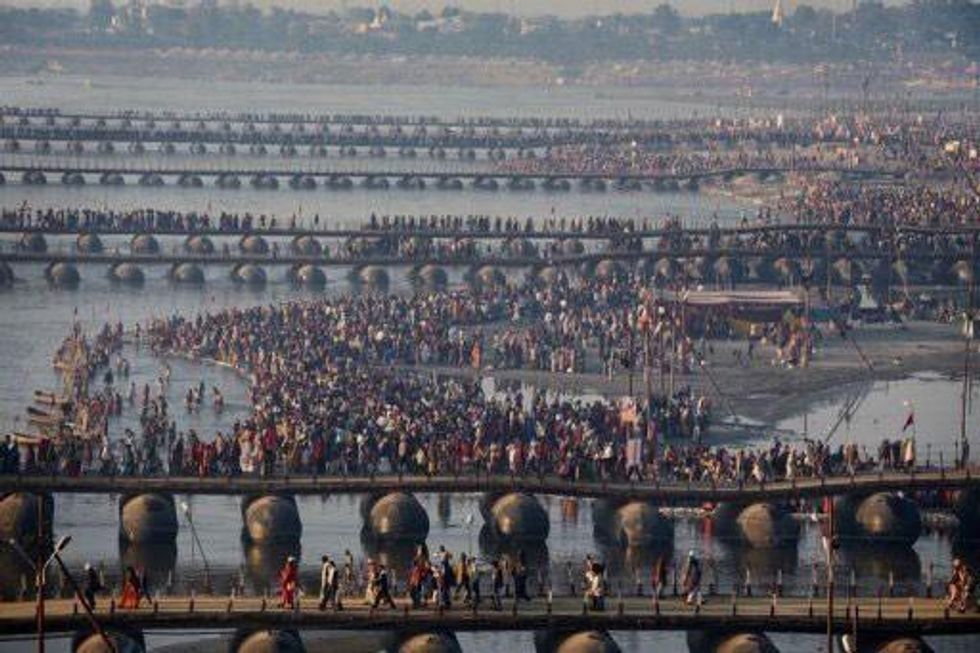
According to a government spokesperson, the population of the city had swollen from its normal 1.2 million to about 40 million, with about 20 million packed inside the vast sealed-off bathing area on the banks of the river.
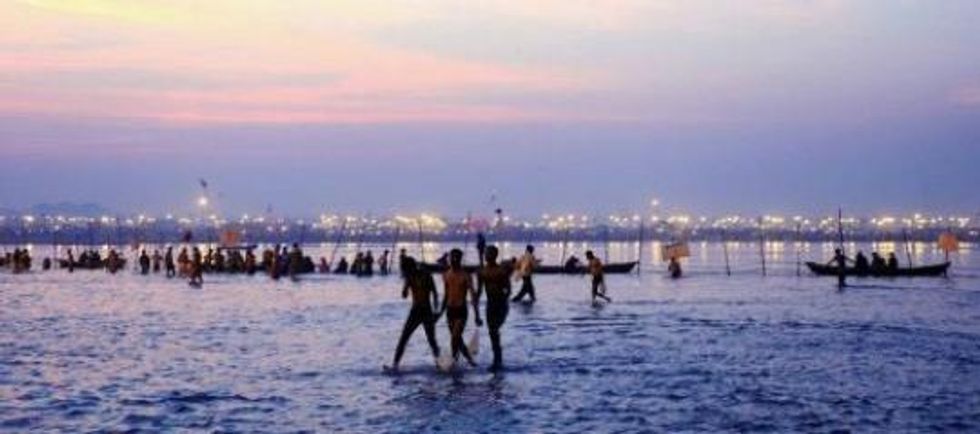
Devotees believe that by entering the mighty rivers they are cleansed of sin and freed from the karmic cycle of rebirth. The bathing takes place in an area known as the Sangam at the confluence of the Ganges and Yamuna rivers "and a third mythical waterway called the Saraswati."
Known a "Mauni Amavasya," the ritual bathing day is the "most auspicious" in the month-long festival which takes place every twelve years.
The Kumbh Mela festival "has its origins in Hindu mythology, which describes how a few drops of the nectar of immortality fell on the four places that host the festival--Allahabad, Nasik, Ujjain and Haridwar," AFP reports.
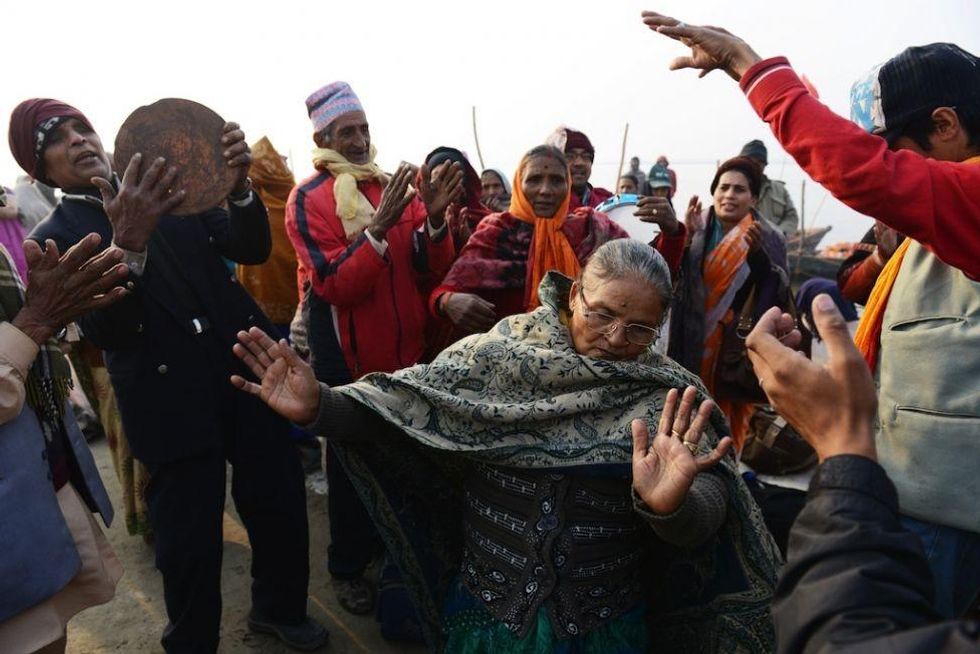
"This is the time when the chances of spiritual salvation are at a peak," added holyman Parushram Shastri.

According to a government spokesperson, the population of the city had swollen from its normal 1.2 million to about 40 million, with about 20 million packed inside the vast sealed-off bathing area on the banks of the river.
Devotees believe that by entering the mighty rivers they are cleansed of sin and freed from the karmic cycle of rebirth. The bathing takes place in an area known as the Sangam at the confluence of the Ganges and Yamuna rivers "and a third mythical waterway called the Saraswati."
Known a "Mauni Amavasya," the ritual bathing day is the "most auspicious" in the month-long festival which takes place every twelve years.
The Kumbh Mela festival "has its origins in Hindu mythology, which describes how a few drops of the nectar of immortality fell on the four places that host the festival--Allahabad, Nasik, Ujjain and Haridwar," AFP reports.
"This is the time when the chances of spiritual salvation are at a peak," added holyman Parushram Shastri.
According to a government spokesperson, the population of the city had swollen from its normal 1.2 million to about 40 million, with about 20 million packed inside the vast sealed-off bathing area on the banks of the river.
Devotees believe that by entering the mighty rivers they are cleansed of sin and freed from the karmic cycle of rebirth. The bathing takes place in an area known as the Sangam at the confluence of the Ganges and Yamuna rivers "and a third mythical waterway called the Saraswati."
Known a "Mauni Amavasya," the ritual bathing day is the "most auspicious" in the month-long festival which takes place every twelve years.
The Kumbh Mela festival "has its origins in Hindu mythology, which describes how a few drops of the nectar of immortality fell on the four places that host the festival--Allahabad, Nasik, Ujjain and Haridwar," AFP reports.
"This is the time when the chances of spiritual salvation are at a peak," added holyman Parushram Shastri.