SUBSCRIBE TO OUR FREE NEWSLETTER
Daily news & progressive opinion—funded by the people, not the corporations—delivered straight to your inbox.
5
#000000
#FFFFFF
To donate by check, phone, or other method, see our More Ways to Give page.
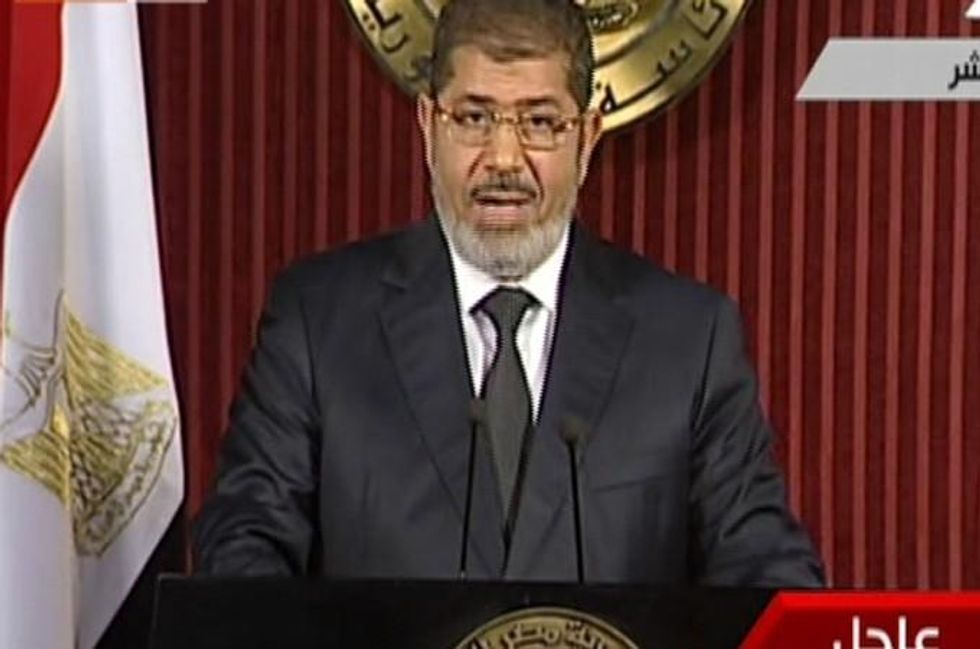
In a long awaited televised address, Egyptian President Mohamed Morsi remained defiant Thursday night, refusing to make concessions to protesters' demands, including the recall of his December 15 constitutional referendum and presidential decree which set off protests over a week ago. The speech has set off a fresh wave of unrest in Cairo with protesters currently pushing against police lines at the Presidential Palace while others set the Muslim Brotherhood headquarters on fire.
In his speech, Morsi called for peace and dialogue between opposition groups and expressed condolences for those who have lost loved ones during the week of clashes; however, he refused to take responsibility for any of the unrest.
Morsi instead invited the opposition to a dialogue on Saturday but seemed largely unlikely to take further steps towards compromise.
Morsi also claimed that the large group who attacked a group of opposition protesters, who were staging a peaceful sit-in outside the palace, on Wednesday, were "infiltrators" funded by unnamed third parties. Others maintain the attackers were supporters of the president.
Subsequently, Morsi's speech has only angered protesters further, as reports of enraged masses outside of the Presidential Palace are surfacing with calls for Morsi's ousting in the air.
Morsi additionally warned that further unrest will not be tolerated.
_______________________
_______________________
Article updated by Jacob Chamberlain
Earlier:
Tanks in the Streets of Cairo: A 'Rehearsal for Civil War'?
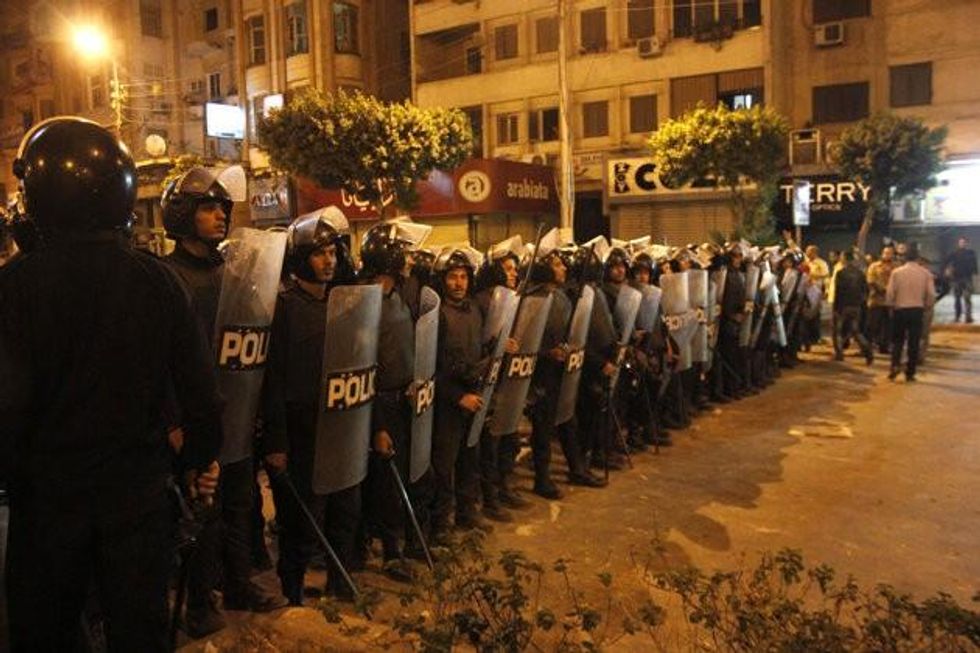
The military presence outside the palace grew after five people were reported killed overnight amid growing violence that escalated Wednesday between backers of Egyptian President Mohamed Morsi and his liberal and secularist opponents.
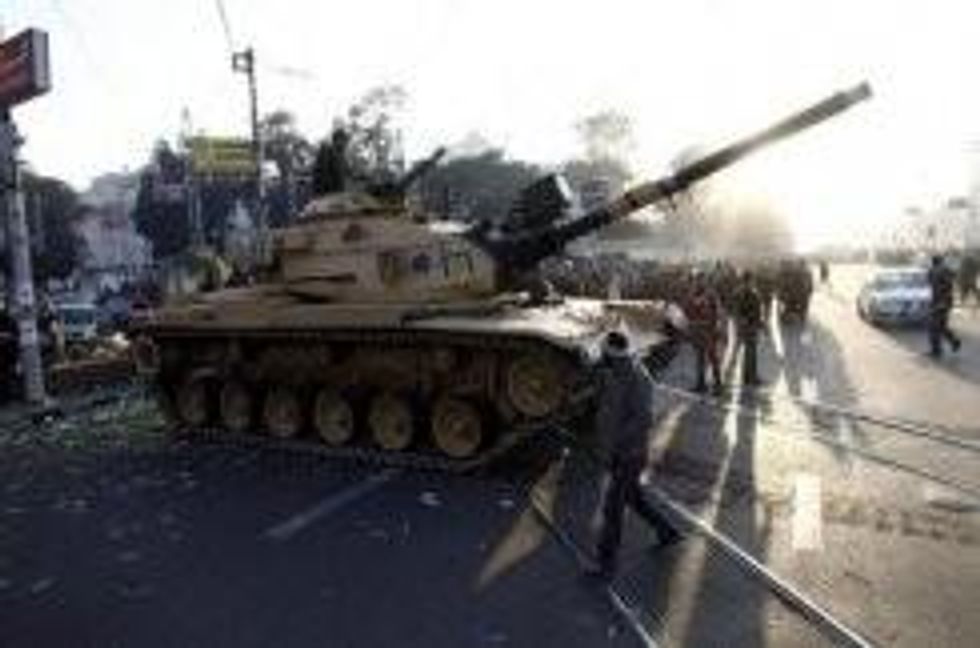
"The Republican Guard began a deployment around the headquarters of the presidency ... to secure the headquarters of the presidency in its capacity as a symbol of the state and the official headquarters of government," the Egyptian state news agency reported.
Opponents of Morsi say they will not stand down until the president discards his newly claimed powers, which have made him immune to the nation's courts, and cancels a declared December 15 referendum on a draft constitution that they say ignores the rights of women, secularists, and Christians.
Early on Thursday, an Agence France-Presse correspondent at the scene in Cairo reported intermittent gunshots amid sporadic violence just before the tanks took up position.
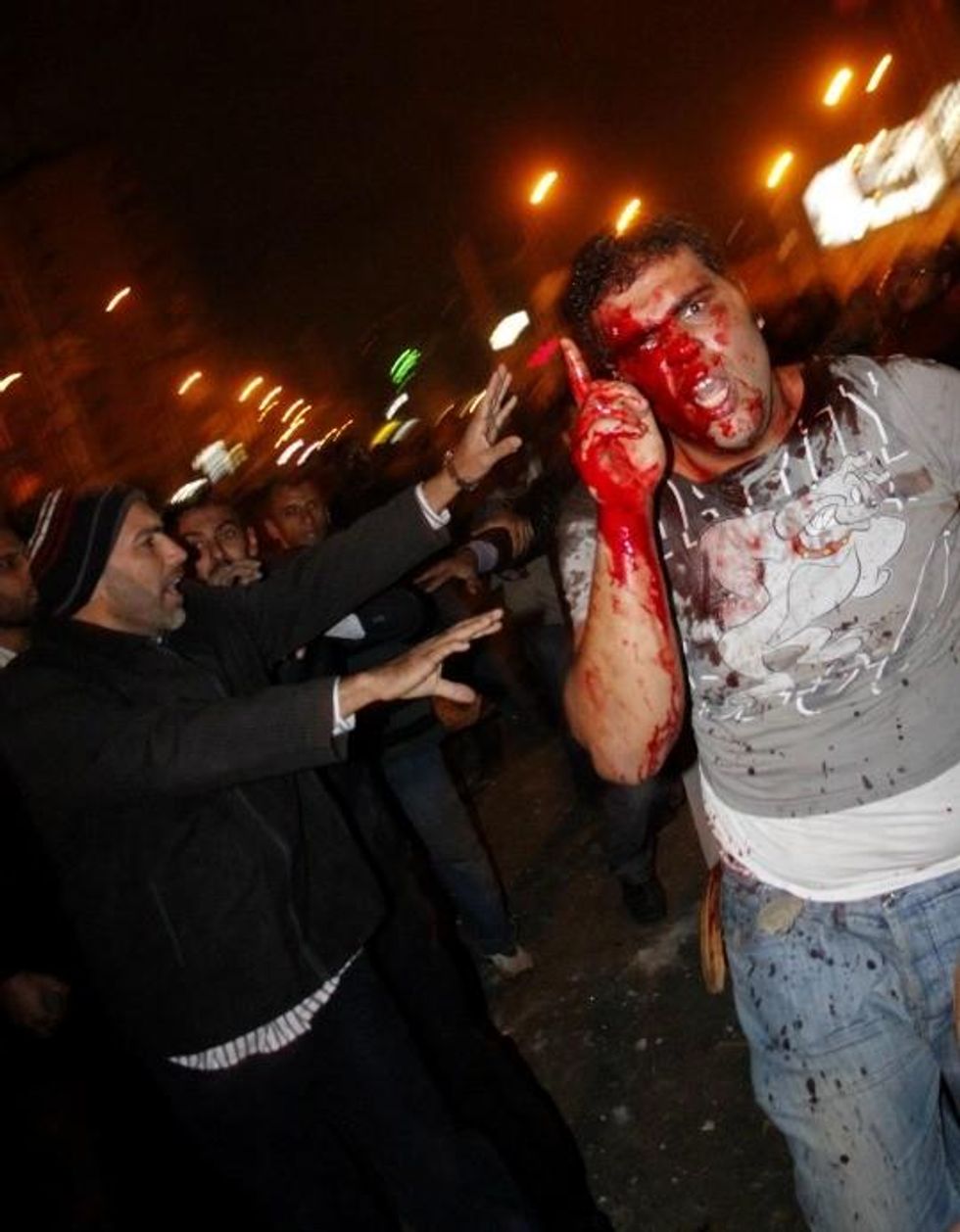
The renewed clashes on Thursday continue more than a week of escalating conflict between the two factions, which has left at least six people dead and hundreds wounded, following Morsi's declaration of sweeping--what his critics call "dictatorial"-- powers in late November. Talk of civil war is now being openly discussed in Egyptian media as stone throwing and gun fire replaces what was considered peaceful, if not charged, political disputes earlier this year.
As independent journalist Sharif Abdel Kouddous tweeted early Thursday:
Clarifying the demands of the president's opponents in a tweet, Egyptian reform advocate and Nobel Laureate Mohamed ElBaradei said:
Al-Jazeera reports that Thursday afternoon violence as "opposing sides began throwing stones at each other, despite the military presence."
Reviewing the growing intensity of the clashes across Egypt, Al-jazeera reports:
The large scale and intensity of the fighting marked a milestone in Egypt's rapidly entrenched schism, pitting the Brotherhood and ultra-conservative Islamists in one camp, against liberals, leftists and Christians in the other.
The violence spread to other parts of the country on Wednesday. Anti-Morsi protesters stormed and set ablaze the Brotherhood offices in Suez and Ismailia, east of Cairo, and there were clashes in the industrial city of Mahallah and the province of Menoufiyah in the Nile Delta north of the capital.
There were rival demonstrations outside the Brotherhood's headquarters in the Cairo suburb of Moqatam and in Alexandria, security officials said senior Brotherhood official Sobhi Saleh was hospitalised after being severely beaten
by Morsi opponents.
_______________________
_______________________
In a long awaited televised address, Egyptian President Mohamed Morsi remained defiant Thursday night, refusing to make concessions to protesters' demands, including the recall of his December 15 constitutional referendum and presidential decree which set off protests over a week ago. The speech has set off a fresh wave of unrest in Cairo with protesters currently pushing against police lines at the Presidential Palace while others set the Muslim Brotherhood headquarters on fire.
In his speech, Morsi called for peace and dialogue between opposition groups and expressed condolences for those who have lost loved ones during the week of clashes; however, he refused to take responsibility for any of the unrest.
Morsi instead invited the opposition to a dialogue on Saturday but seemed largely unlikely to take further steps towards compromise.
Morsi also claimed that the large group who attacked a group of opposition protesters, who were staging a peaceful sit-in outside the palace, on Wednesday, were "infiltrators" funded by unnamed third parties. Others maintain the attackers were supporters of the president.
Subsequently, Morsi's speech has only angered protesters further, as reports of enraged masses outside of the Presidential Palace are surfacing with calls for Morsi's ousting in the air.
Morsi additionally warned that further unrest will not be tolerated.
_______________________
_______________________
Article updated by Jacob Chamberlain
Earlier:
Tanks in the Streets of Cairo: A 'Rehearsal for Civil War'?
The military presence outside the palace grew after five people were reported killed overnight amid growing violence that escalated Wednesday between backers of Egyptian President Mohamed Morsi and his liberal and secularist opponents.
"The Republican Guard began a deployment around the headquarters of the presidency ... to secure the headquarters of the presidency in its capacity as a symbol of the state and the official headquarters of government," the Egyptian state news agency reported.
Opponents of Morsi say they will not stand down until the president discards his newly claimed powers, which have made him immune to the nation's courts, and cancels a declared December 15 referendum on a draft constitution that they say ignores the rights of women, secularists, and Christians.
Early on Thursday, an Agence France-Presse correspondent at the scene in Cairo reported intermittent gunshots amid sporadic violence just before the tanks took up position.
The renewed clashes on Thursday continue more than a week of escalating conflict between the two factions, which has left at least six people dead and hundreds wounded, following Morsi's declaration of sweeping--what his critics call "dictatorial"-- powers in late November. Talk of civil war is now being openly discussed in Egyptian media as stone throwing and gun fire replaces what was considered peaceful, if not charged, political disputes earlier this year.
As independent journalist Sharif Abdel Kouddous tweeted early Thursday:
Clarifying the demands of the president's opponents in a tweet, Egyptian reform advocate and Nobel Laureate Mohamed ElBaradei said:
Al-Jazeera reports that Thursday afternoon violence as "opposing sides began throwing stones at each other, despite the military presence."
Reviewing the growing intensity of the clashes across Egypt, Al-jazeera reports:
The large scale and intensity of the fighting marked a milestone in Egypt's rapidly entrenched schism, pitting the Brotherhood and ultra-conservative Islamists in one camp, against liberals, leftists and Christians in the other.
The violence spread to other parts of the country on Wednesday. Anti-Morsi protesters stormed and set ablaze the Brotherhood offices in Suez and Ismailia, east of Cairo, and there were clashes in the industrial city of Mahallah and the province of Menoufiyah in the Nile Delta north of the capital.
There were rival demonstrations outside the Brotherhood's headquarters in the Cairo suburb of Moqatam and in Alexandria, security officials said senior Brotherhood official Sobhi Saleh was hospitalised after being severely beaten
by Morsi opponents.
_______________________
_______________________
In a long awaited televised address, Egyptian President Mohamed Morsi remained defiant Thursday night, refusing to make concessions to protesters' demands, including the recall of his December 15 constitutional referendum and presidential decree which set off protests over a week ago. The speech has set off a fresh wave of unrest in Cairo with protesters currently pushing against police lines at the Presidential Palace while others set the Muslim Brotherhood headquarters on fire.
In his speech, Morsi called for peace and dialogue between opposition groups and expressed condolences for those who have lost loved ones during the week of clashes; however, he refused to take responsibility for any of the unrest.
Morsi instead invited the opposition to a dialogue on Saturday but seemed largely unlikely to take further steps towards compromise.
Morsi also claimed that the large group who attacked a group of opposition protesters, who were staging a peaceful sit-in outside the palace, on Wednesday, were "infiltrators" funded by unnamed third parties. Others maintain the attackers were supporters of the president.
Subsequently, Morsi's speech has only angered protesters further, as reports of enraged masses outside of the Presidential Palace are surfacing with calls for Morsi's ousting in the air.
Morsi additionally warned that further unrest will not be tolerated.
_______________________
_______________________
Article updated by Jacob Chamberlain
Earlier:
Tanks in the Streets of Cairo: A 'Rehearsal for Civil War'?
The military presence outside the palace grew after five people were reported killed overnight amid growing violence that escalated Wednesday between backers of Egyptian President Mohamed Morsi and his liberal and secularist opponents.
"The Republican Guard began a deployment around the headquarters of the presidency ... to secure the headquarters of the presidency in its capacity as a symbol of the state and the official headquarters of government," the Egyptian state news agency reported.
Opponents of Morsi say they will not stand down until the president discards his newly claimed powers, which have made him immune to the nation's courts, and cancels a declared December 15 referendum on a draft constitution that they say ignores the rights of women, secularists, and Christians.
Early on Thursday, an Agence France-Presse correspondent at the scene in Cairo reported intermittent gunshots amid sporadic violence just before the tanks took up position.
The renewed clashes on Thursday continue more than a week of escalating conflict between the two factions, which has left at least six people dead and hundreds wounded, following Morsi's declaration of sweeping--what his critics call "dictatorial"-- powers in late November. Talk of civil war is now being openly discussed in Egyptian media as stone throwing and gun fire replaces what was considered peaceful, if not charged, political disputes earlier this year.
As independent journalist Sharif Abdel Kouddous tweeted early Thursday:
Clarifying the demands of the president's opponents in a tweet, Egyptian reform advocate and Nobel Laureate Mohamed ElBaradei said:
Al-Jazeera reports that Thursday afternoon violence as "opposing sides began throwing stones at each other, despite the military presence."
Reviewing the growing intensity of the clashes across Egypt, Al-jazeera reports:
The large scale and intensity of the fighting marked a milestone in Egypt's rapidly entrenched schism, pitting the Brotherhood and ultra-conservative Islamists in one camp, against liberals, leftists and Christians in the other.
The violence spread to other parts of the country on Wednesday. Anti-Morsi protesters stormed and set ablaze the Brotherhood offices in Suez and Ismailia, east of Cairo, and there were clashes in the industrial city of Mahallah and the province of Menoufiyah in the Nile Delta north of the capital.
There were rival demonstrations outside the Brotherhood's headquarters in the Cairo suburb of Moqatam and in Alexandria, security officials said senior Brotherhood official Sobhi Saleh was hospitalised after being severely beaten
by Morsi opponents.
_______________________
_______________________