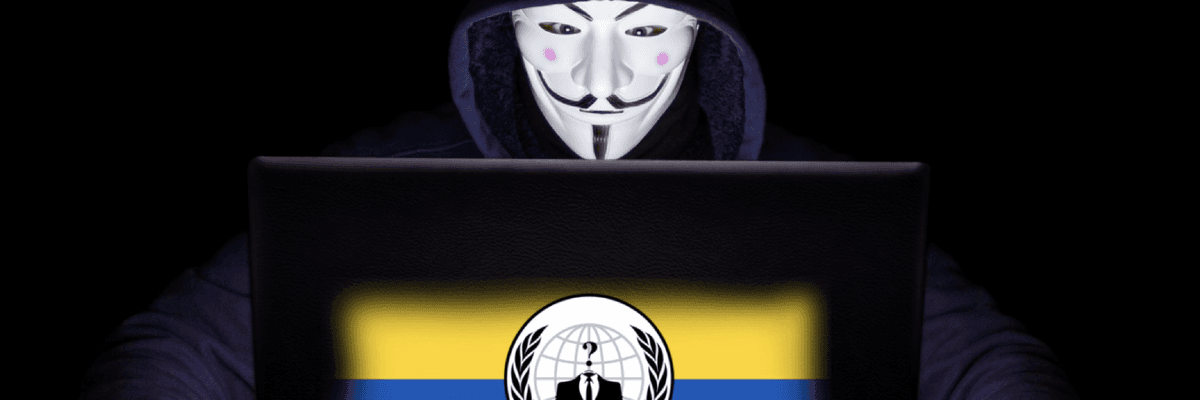
Anonymous image
Blood of the Innocent: Anonymous Vs Putin
Seeking to beat them at their own sordid game, Anonymous and other international hacktivist groups have declared cyber war on Russia for their invasion of Ukraine, launching "an avalanche" of attacks to hack, leak and transform data from state-run, ill-secured corporate and government websites, including their own Defense Ministry and censorship agency. Posting images of the devastation in Ukraine and helpful tweaks to bypass Kremlin lies, they are urging Russians to "fight for their heritage and honor" against Putin's unconscionable war.
Seeking to beat them at their own sordid game, Anonymous and several other international hacktivist groups have declared cyber war on Russia for their brutal invasion of Ukraine, launching "an avalanche" of almost daily attacks on Kremlin-run organizations - media, corporate, government and even censorship - to hack and leak data from their evidently woefully ill-secured websites, and disseminate anti-war messages in their stead. Since announcing their offensive the day after Russia went into Ukraine, Anonymous has added some 500,000 followers to their almost 8 million; joining the effort is also the Polish hacktivist movement Squad303, named for a squadron of Polish Resistance fighters during World War II, the Belarusian Cyber Partisans, and other hacking groups.
With Biden warning Putin may start his own cyber war and the Kremlin blocking virtually all outside news sources, hacktivists aim to "beat the Russians in the information war," replacing the lies of their historically powerful propaganda machine with real news of the devastation unfolding in Ukraine. Under hashtags like #OpRussia, #OpUkraine, #OpRedScare, they've hacked hundreds of unsecured printers to issue hundreds of thousands of messages to "Citizens of Russia," telling them in Russian they "should find horror" in Putin's "terrorist" actions." Referencing the printers at their source, they said, "A wad of paper and ink is a cheap price to pay for the blood of the innocent."
Thanks to stunningly lax security - one study found that 97 of 100 Russian databases analyzed had been compromised - Anonymous has pulled off a series of "denial of service" attacks (overloading servers to make them inaccessible) against government websites, including the Kremlin, Ministry of Defense, state television, and the agency censoring Russian media. They also stole/leaked data from servers at major Russian business groups and state-run Transneft, the world's largest oil pipeline company; they dedicated those leaks to Hillary Clinton. In their most recent action, they hacked Nestles, the world's biggest food company, published some of their files, urged #BoycottNestle, and warned them and other Western companies, "The blood money you make from Russia will always stain your hands."
With their hacks, they've erased and exposed files, renamed data - "Putin Stop This War," "Putin Lied," "Save Your Children" - showed banned images of Russian atrocities, posted patriotic Ukrainian songs and news, told Russians to fight for their "heritage and honor, and overthrow Putin's corrupt system." Experts say their acts will not "change the face of the conflict," but carry symbolic weight, exposing the fiction of Russia's so-called indomitable might; they could also provide data useful to Ukraine. Finally, hacktivists have suggested tech tweaks to followers to by-pass Russian censors and access real news. Squad 303 has created a tool to send messages to Russian cell numbers and "alert them to the reality of the conflict"; to date, they say, over 20 million have been sent to Russians. And Anonymous isn't going anywhere. "Expect us," they write. "Here live. Not a cat."
We are at a crossroads
This country and this world are at a monumental crossroads. In a few short weeks, US voters will have an opportunity to beat back the forces of fascism and confront the billionaires who are rigging the economy, our media system, and our democracy, making it increasingly impossible for ordinary people to get by. We’re not just talking about the election. We’re talking about what must be done once these fascist elements are vanquished from power. We need a bolder set of solutions than what either major party has so far been willing to offer and a working-class movement ready to fight like hell for it. Trump didn't emerge from nowhere. The conditions that fueled MAGA authoritarianism were created by decades of radical neoliberal economic policies and a corrupt political system dominated by corporate interests. They slashed taxes on the super-rich, promising that the benefits would trickle down. They said giveaways to the corporate titans would make life more affordable for the rest of us. It was all bullshit. And when a bitter, betrayed populace searches for someone to blame, right-wing demagogues have little trouble finding scapegoats. People know when they're being lied to, but you won't hear any of this from the corporate media. Only independent journalism—powered and funded by people who believe in building a better world—can deliver truly trustworthy daily news. Our Fall Campaign is underway, and we need your help. To power our newsroom through the rest of the year, we need to raise $125,000 by midnight on October 31. So if you share our vision, please contribute whatever you can to sustain our work. |
Seeking to beat them at their own sordid game, Anonymous and several other international hacktivist groups have declared cyber war on Russia for their brutal invasion of Ukraine, launching "an avalanche" of almost daily attacks on Kremlin-run organizations - media, corporate, government and even censorship - to hack and leak data from their evidently woefully ill-secured websites, and disseminate anti-war messages in their stead. Since announcing their offensive the day after Russia went into Ukraine, Anonymous has added some 500,000 followers to their almost 8 million; joining the effort is also the Polish hacktivist movement Squad303, named for a squadron of Polish Resistance fighters during World War II, the Belarusian Cyber Partisans, and other hacking groups.
With Biden warning Putin may start his own cyber war and the Kremlin blocking virtually all outside news sources, hacktivists aim to "beat the Russians in the information war," replacing the lies of their historically powerful propaganda machine with real news of the devastation unfolding in Ukraine. Under hashtags like #OpRussia, #OpUkraine, #OpRedScare, they've hacked hundreds of unsecured printers to issue hundreds of thousands of messages to "Citizens of Russia," telling them in Russian they "should find horror" in Putin's "terrorist" actions." Referencing the printers at their source, they said, "A wad of paper and ink is a cheap price to pay for the blood of the innocent."
Thanks to stunningly lax security - one study found that 97 of 100 Russian databases analyzed had been compromised - Anonymous has pulled off a series of "denial of service" attacks (overloading servers to make them inaccessible) against government websites, including the Kremlin, Ministry of Defense, state television, and the agency censoring Russian media. They also stole/leaked data from servers at major Russian business groups and state-run Transneft, the world's largest oil pipeline company; they dedicated those leaks to Hillary Clinton. In their most recent action, they hacked Nestles, the world's biggest food company, published some of their files, urged #BoycottNestle, and warned them and other Western companies, "The blood money you make from Russia will always stain your hands."
With their hacks, they've erased and exposed files, renamed data - "Putin Stop This War," "Putin Lied," "Save Your Children" - showed banned images of Russian atrocities, posted patriotic Ukrainian songs and news, told Russians to fight for their "heritage and honor, and overthrow Putin's corrupt system." Experts say their acts will not "change the face of the conflict," but carry symbolic weight, exposing the fiction of Russia's so-called indomitable might; they could also provide data useful to Ukraine. Finally, hacktivists have suggested tech tweaks to followers to by-pass Russian censors and access real news. Squad 303 has created a tool to send messages to Russian cell numbers and "alert them to the reality of the conflict"; to date, they say, over 20 million have been sent to Russians. And Anonymous isn't going anywhere. "Expect us," they write. "Here live. Not a cat."
Seeking to beat them at their own sordid game, Anonymous and several other international hacktivist groups have declared cyber war on Russia for their brutal invasion of Ukraine, launching "an avalanche" of almost daily attacks on Kremlin-run organizations - media, corporate, government and even censorship - to hack and leak data from their evidently woefully ill-secured websites, and disseminate anti-war messages in their stead. Since announcing their offensive the day after Russia went into Ukraine, Anonymous has added some 500,000 followers to their almost 8 million; joining the effort is also the Polish hacktivist movement Squad303, named for a squadron of Polish Resistance fighters during World War II, the Belarusian Cyber Partisans, and other hacking groups.
With Biden warning Putin may start his own cyber war and the Kremlin blocking virtually all outside news sources, hacktivists aim to "beat the Russians in the information war," replacing the lies of their historically powerful propaganda machine with real news of the devastation unfolding in Ukraine. Under hashtags like #OpRussia, #OpUkraine, #OpRedScare, they've hacked hundreds of unsecured printers to issue hundreds of thousands of messages to "Citizens of Russia," telling them in Russian they "should find horror" in Putin's "terrorist" actions." Referencing the printers at their source, they said, "A wad of paper and ink is a cheap price to pay for the blood of the innocent."
Thanks to stunningly lax security - one study found that 97 of 100 Russian databases analyzed had been compromised - Anonymous has pulled off a series of "denial of service" attacks (overloading servers to make them inaccessible) against government websites, including the Kremlin, Ministry of Defense, state television, and the agency censoring Russian media. They also stole/leaked data from servers at major Russian business groups and state-run Transneft, the world's largest oil pipeline company; they dedicated those leaks to Hillary Clinton. In their most recent action, they hacked Nestles, the world's biggest food company, published some of their files, urged #BoycottNestle, and warned them and other Western companies, "The blood money you make from Russia will always stain your hands."
With their hacks, they've erased and exposed files, renamed data - "Putin Stop This War," "Putin Lied," "Save Your Children" - showed banned images of Russian atrocities, posted patriotic Ukrainian songs and news, told Russians to fight for their "heritage and honor, and overthrow Putin's corrupt system." Experts say their acts will not "change the face of the conflict," but carry symbolic weight, exposing the fiction of Russia's so-called indomitable might; they could also provide data useful to Ukraine. Finally, hacktivists have suggested tech tweaks to followers to by-pass Russian censors and access real news. Squad 303 has created a tool to send messages to Russian cell numbers and "alert them to the reality of the conflict"; to date, they say, over 20 million have been sent to Russians. And Anonymous isn't going anywhere. "Expect us," they write. "Here live. Not a cat."