

SUBSCRIBE TO OUR FREE NEWSLETTER
Daily news & progressive opinion—funded by the people, not the corporations—delivered straight to your inbox.
5
#000000
#FFFFFF
To donate by check, phone, or other method, see our More Ways to Give page.
Daily news & progressive opinion—funded by the people, not the corporations—delivered straight to your inbox.
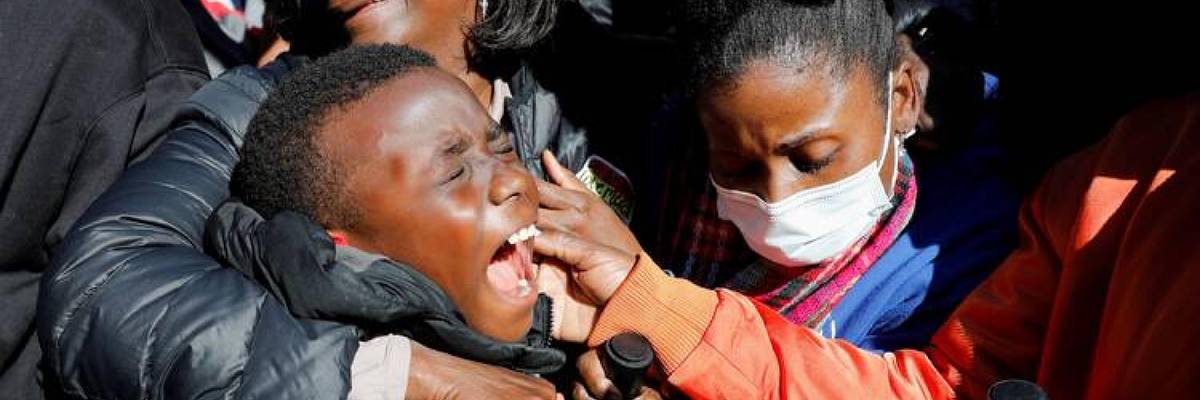
Community members in Brunswick, Georgia react to the first guilty verdict against the three white men who killed Ahmaud Arbery. CNS photo by Marco Bello/Reuters
This week, Georgia's first Ahmaud Arbery Day marks two years since Arbery - 25, black, jogging - was chased and killed by three good ole boys who habitually called black people "niggers." (Yes, we're saying it.) Convicted in an earlier state trial that barely referenced race, they've now been found guilty of federal hate crimes in a trial that laid bare this country's lethal, heedless, enduring racism, and that arose largely thanks to the grit and fury of his mother Wanda, who demanded it. She called the verdict "a victory" denied too many families. Still and all, "Ahmaud is gone forever."
Wednesday was Georgia's first Ahmaud Arbery Day, marking two years since Arbery - 25, black, unarmed, jogging in a neighborhood near where he lived - was chased and shot dead by three white good ole boys who, this week's federal trial revealed, habitually called black people "niggers." (Yes, we're saying it.) In November, Travis McMichael, his father Gregory, and Roddie Bryant, who carried out what's widely deemed a modern-day lynching in broad daylight, were convicted of multiple charges, including malice murder and felony murder, in a state trial that controversially barely referenced race. In January, they all received life sentences in state prison, which they're appealing; only Bryant was given a chance of parole. On Tuesday, they were also found guilty of federal hate crimes in a second trial that brutally laid bare the lethal, heedless, enduring racism of "an America where every day people feel completely free to speak hate." In that case, brought by the Department of Justice, prosecutors argued the men killed Arbery out of "racial assumption, racial resentment and racial anger," and a jury of eight whites, three blacks and one Hispanic agreed. Rev. Al Sharpton called the guilty verdict "precedent- setting," proving it is now finally possible that, "Even in the Deep South, the feds will convict you of hate actions."
But such prosecutions are distressingly rare. According to DOJ data, only about 600 alleged hate crimes were investigated from 2015 to 2019; of those, over 80% weren't prosecuted for lack of evidence. Given the legal challenge of proving racist intent - when Georgia still didn't have a hate crime law - the men's state trial mostly dodged the issue of race. In harsh contrast, the second one exposed the visceral racism - what feds termed "pent-up racial anger" - you'd expect of Lost Causer yahoos cruising in a truck adorned with Confederate flags. In her damning testimony, FBI analyst Amy Vaughan, reminding us the Internet is forever, cited an ugly litany of racist slurs the men happily, regularly spewed in texts and on social media - thus confirming Travis' blithe boast, "We used to walk around committing hate crimes all day." Because black people "ruin everything," Travis said he liked his new job: "Not a nigger in sight." Black teenagers were "monkeys"; when they beat up a white teen, he offered, "I say, shoot 'em all." A white woman dating a black man was "a nigger lover"; on Julian Bond's death: "All these Blacks are nothing but trouble. I wish they'd all die." "Happy Bootlip Day," Bryan wrote a friend on MLK Day. "I worked like a nigger today." On his daughter dating a black man: "She has her nigger now." A final, grisly irony: In court, they defended their "citizens' arrest" with an 1863 law meant to catch escaped slaves, which is likely why Travis called Arbery, bleeding out on the ground, "Nigger."
This week's trial went ahead largely thanks to the grit and fury of Arbery's mother Wanda Cooper-Jones, who sought to put on the historic record that three racists killed her son for being black. In that, she opposed a plea deal struck by the feds: The men would plead guilty to one federal count; then they'd avoid a hate crimes trial and do their time in a cushier federal prison. "Please listen to me," she told the judge appraising the deal. "Granting these men their preferred choice of confinement (gives) them one last chance to spit in my face." The judge took the rare step of rejecting the deal, opening the way to this week's verdict - another small pained step, advocates say, to "advance the work of justice." Earlier, the state of Georgia had declared Feb. 23 Ahmaud Arbery Day "in perpetuity," calling him a "distinguished citizen" whose life was taken "because of the color of his skin." It also noted two changes: a new state hate crimes law, and repeal of the slave-catching law. On Wednesday, amidst a commemorative march, run, vigil, release of doves, Cooper-Jones announced a foundation in her son's name to award six scholarships yearly, and called the state's changes "just the beginning - we must change the minds and the perception of Black men in this country." She was just as fierce talking to the media after the verdict, blasting a DOJ that "was made to do their job." "We got a victory today," she added, but "Ahmaud is gone forever." She was asked if the verdict helped with her "healing." "Healing?" she repeated. The word hung in the bittersweet air. "I, as a mom, will never heal," she said, a slight catch in her voice. "Now I want to go back to the DOJ..."
Dear Common Dreams reader, It’s been nearly 30 years since I co-founded Common Dreams with my late wife, Lina Newhouser. We had the radical notion that journalism should serve the public good, not corporate profits. It was clear to us from the outset what it would take to build such a project. No paid advertisements. No corporate sponsors. No millionaire publisher telling us what to think or do. Many people said we wouldn't last a year, but we proved those doubters wrong. Together with a tremendous team of journalists and dedicated staff, we built an independent media outlet free from the constraints of profits and corporate control. Our mission has always been simple: To inform. To inspire. To ignite change for the common good. Building Common Dreams was not easy. Our survival was never guaranteed. When you take on the most powerful forces—Wall Street greed, fossil fuel industry destruction, Big Tech lobbyists, and uber-rich oligarchs who have spent billions upon billions rigging the economy and democracy in their favor—the only bulwark you have is supporters who believe in your work. But here’s the urgent message from me today. It's never been this bad out there. And it's never been this hard to keep us going. At the very moment Common Dreams is most needed, the threats we face are intensifying. We need your support now more than ever. We don't accept corporate advertising and never will. We don't have a paywall because we don't think people should be blocked from critical news based on their ability to pay. Everything we do is funded by the donations of readers like you. When everyone does the little they can afford, we are strong. But if that support retreats or dries up, so do we. Will you donate now to make sure Common Dreams not only survives but thrives? —Craig Brown, Co-founder |
Wednesday was Georgia's first Ahmaud Arbery Day, marking two years since Arbery - 25, black, unarmed, jogging in a neighborhood near where he lived - was chased and shot dead by three white good ole boys who, this week's federal trial revealed, habitually called black people "niggers." (Yes, we're saying it.) In November, Travis McMichael, his father Gregory, and Roddie Bryant, who carried out what's widely deemed a modern-day lynching in broad daylight, were convicted of multiple charges, including malice murder and felony murder, in a state trial that controversially barely referenced race. In January, they all received life sentences in state prison, which they're appealing; only Bryant was given a chance of parole. On Tuesday, they were also found guilty of federal hate crimes in a second trial that brutally laid bare the lethal, heedless, enduring racism of "an America where every day people feel completely free to speak hate." In that case, brought by the Department of Justice, prosecutors argued the men killed Arbery out of "racial assumption, racial resentment and racial anger," and a jury of eight whites, three blacks and one Hispanic agreed. Rev. Al Sharpton called the guilty verdict "precedent- setting," proving it is now finally possible that, "Even in the Deep South, the feds will convict you of hate actions."
But such prosecutions are distressingly rare. According to DOJ data, only about 600 alleged hate crimes were investigated from 2015 to 2019; of those, over 80% weren't prosecuted for lack of evidence. Given the legal challenge of proving racist intent - when Georgia still didn't have a hate crime law - the men's state trial mostly dodged the issue of race. In harsh contrast, the second one exposed the visceral racism - what feds termed "pent-up racial anger" - you'd expect of Lost Causer yahoos cruising in a truck adorned with Confederate flags. In her damning testimony, FBI analyst Amy Vaughan, reminding us the Internet is forever, cited an ugly litany of racist slurs the men happily, regularly spewed in texts and on social media - thus confirming Travis' blithe boast, "We used to walk around committing hate crimes all day." Because black people "ruin everything," Travis said he liked his new job: "Not a nigger in sight." Black teenagers were "monkeys"; when they beat up a white teen, he offered, "I say, shoot 'em all." A white woman dating a black man was "a nigger lover"; on Julian Bond's death: "All these Blacks are nothing but trouble. I wish they'd all die." "Happy Bootlip Day," Bryan wrote a friend on MLK Day. "I worked like a nigger today." On his daughter dating a black man: "She has her nigger now." A final, grisly irony: In court, they defended their "citizens' arrest" with an 1863 law meant to catch escaped slaves, which is likely why Travis called Arbery, bleeding out on the ground, "Nigger."
This week's trial went ahead largely thanks to the grit and fury of Arbery's mother Wanda Cooper-Jones, who sought to put on the historic record that three racists killed her son for being black. In that, she opposed a plea deal struck by the feds: The men would plead guilty to one federal count; then they'd avoid a hate crimes trial and do their time in a cushier federal prison. "Please listen to me," she told the judge appraising the deal. "Granting these men their preferred choice of confinement (gives) them one last chance to spit in my face." The judge took the rare step of rejecting the deal, opening the way to this week's verdict - another small pained step, advocates say, to "advance the work of justice." Earlier, the state of Georgia had declared Feb. 23 Ahmaud Arbery Day "in perpetuity," calling him a "distinguished citizen" whose life was taken "because of the color of his skin." It also noted two changes: a new state hate crimes law, and repeal of the slave-catching law. On Wednesday, amidst a commemorative march, run, vigil, release of doves, Cooper-Jones announced a foundation in her son's name to award six scholarships yearly, and called the state's changes "just the beginning - we must change the minds and the perception of Black men in this country." She was just as fierce talking to the media after the verdict, blasting a DOJ that "was made to do their job." "We got a victory today," she added, but "Ahmaud is gone forever." She was asked if the verdict helped with her "healing." "Healing?" she repeated. The word hung in the bittersweet air. "I, as a mom, will never heal," she said, a slight catch in her voice. "Now I want to go back to the DOJ..."
Wednesday was Georgia's first Ahmaud Arbery Day, marking two years since Arbery - 25, black, unarmed, jogging in a neighborhood near where he lived - was chased and shot dead by three white good ole boys who, this week's federal trial revealed, habitually called black people "niggers." (Yes, we're saying it.) In November, Travis McMichael, his father Gregory, and Roddie Bryant, who carried out what's widely deemed a modern-day lynching in broad daylight, were convicted of multiple charges, including malice murder and felony murder, in a state trial that controversially barely referenced race. In January, they all received life sentences in state prison, which they're appealing; only Bryant was given a chance of parole. On Tuesday, they were also found guilty of federal hate crimes in a second trial that brutally laid bare the lethal, heedless, enduring racism of "an America where every day people feel completely free to speak hate." In that case, brought by the Department of Justice, prosecutors argued the men killed Arbery out of "racial assumption, racial resentment and racial anger," and a jury of eight whites, three blacks and one Hispanic agreed. Rev. Al Sharpton called the guilty verdict "precedent- setting," proving it is now finally possible that, "Even in the Deep South, the feds will convict you of hate actions."
But such prosecutions are distressingly rare. According to DOJ data, only about 600 alleged hate crimes were investigated from 2015 to 2019; of those, over 80% weren't prosecuted for lack of evidence. Given the legal challenge of proving racist intent - when Georgia still didn't have a hate crime law - the men's state trial mostly dodged the issue of race. In harsh contrast, the second one exposed the visceral racism - what feds termed "pent-up racial anger" - you'd expect of Lost Causer yahoos cruising in a truck adorned with Confederate flags. In her damning testimony, FBI analyst Amy Vaughan, reminding us the Internet is forever, cited an ugly litany of racist slurs the men happily, regularly spewed in texts and on social media - thus confirming Travis' blithe boast, "We used to walk around committing hate crimes all day." Because black people "ruin everything," Travis said he liked his new job: "Not a nigger in sight." Black teenagers were "monkeys"; when they beat up a white teen, he offered, "I say, shoot 'em all." A white woman dating a black man was "a nigger lover"; on Julian Bond's death: "All these Blacks are nothing but trouble. I wish they'd all die." "Happy Bootlip Day," Bryan wrote a friend on MLK Day. "I worked like a nigger today." On his daughter dating a black man: "She has her nigger now." A final, grisly irony: In court, they defended their "citizens' arrest" with an 1863 law meant to catch escaped slaves, which is likely why Travis called Arbery, bleeding out on the ground, "Nigger."
This week's trial went ahead largely thanks to the grit and fury of Arbery's mother Wanda Cooper-Jones, who sought to put on the historic record that three racists killed her son for being black. In that, she opposed a plea deal struck by the feds: The men would plead guilty to one federal count; then they'd avoid a hate crimes trial and do their time in a cushier federal prison. "Please listen to me," she told the judge appraising the deal. "Granting these men their preferred choice of confinement (gives) them one last chance to spit in my face." The judge took the rare step of rejecting the deal, opening the way to this week's verdict - another small pained step, advocates say, to "advance the work of justice." Earlier, the state of Georgia had declared Feb. 23 Ahmaud Arbery Day "in perpetuity," calling him a "distinguished citizen" whose life was taken "because of the color of his skin." It also noted two changes: a new state hate crimes law, and repeal of the slave-catching law. On Wednesday, amidst a commemorative march, run, vigil, release of doves, Cooper-Jones announced a foundation in her son's name to award six scholarships yearly, and called the state's changes "just the beginning - we must change the minds and the perception of Black men in this country." She was just as fierce talking to the media after the verdict, blasting a DOJ that "was made to do their job." "We got a victory today," she added, but "Ahmaud is gone forever." She was asked if the verdict helped with her "healing." "Healing?" she repeated. The word hung in the bittersweet air. "I, as a mom, will never heal," she said, a slight catch in her voice. "Now I want to go back to the DOJ..."