
If you haven't seen it yet, you owe yourself a visit. If you're already familiar with it, go back to remind yourself why the #Occupy movement is so powerful.
A stocky man with a short beard, maybe in his forties, has written neatly in marker: "947 days unemployed. 2,000+ resumes sent out. 0 job prospects."
A young woman in light lipstick: "I'm a full-time grad student and a full-time worker. I have chronic, excruciating migraines. I live in fear of the next attack. I can barely cover rent, gas, and groceries. I can't afford a doctor's visit, let alone health insurance."
A woman with a weary stare: "My husband has been looking for work for five years. I support him, myself, our 6-year-old-son, and (increasingly) my aging parents. Now my job is in jeopardy too."
They write: "I am one paycheck away from not being able to make my loan payments." "I am 32 years old and live with my mother." "I have lost hope." "What am I doing wrong?"
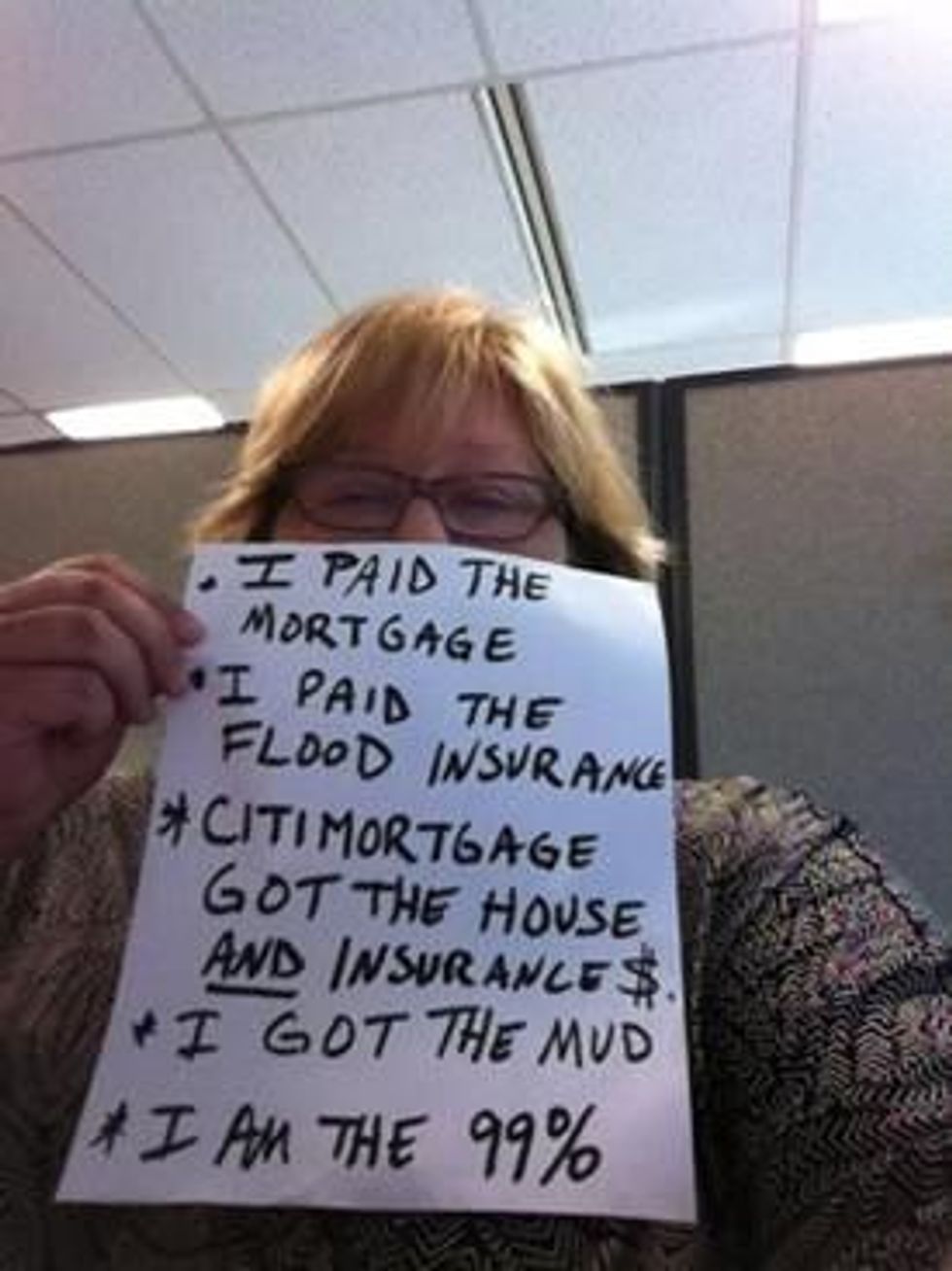
They sign their messages, "I am the 99%."
You will not get through all of the stories. As I write, there are 185 pages of them. Yet the message of the site is immediately clear: While our society's richest 1% enjoy a hugely disproportionate share of wealth and income, the economy has left the vast majority of us behind.
The majority has had enough.
Conservatives say that those protesting Wall Street are just complaining. Republican presidential candidate Herman Cain tells them, "Get a job."
As a response to the movement's Tumblr, right-wingers have made a blog called, "We Are the 53%." It is based on the misleading notion that since only around half of Americans pay federal income taxes, the rest are freeloading. (In fact, even those not subject to federal taxes on income nevertheless pay state and local taxes, gas and excise taxes, plus mandatory contributions for Medicare and Social Security.)
The "53%" stories are testimonials to dogged determination. One man, a father of a 5-month-old, expresses pride in working 70-hour weeks in an effort to pay $100,000 in student loans. "I will be responsible for my own success through character and hard work," he writes. Another story that has gained notoriety reads: "I am a former Marine. I work two jobs. I don't have health insurance... I haven't had 4 consecutive days off in over 4 years. But I don't blame Wall Street. Suck it up you whiners."
These stories only reinforce the message of the occupations. For, if you're working nearly all of your waking hours, we think you deserve health care. We want you to be free of crippling debt. In fact, we want these things for those who work 40 hours per week. We believe a just society should allow you to spend time with your children.
In large part, the difference between the two blogs is not the description of our economic plight. It's whether individuals have recognized their personal struggles as part of something larger.
Those who have joined the #Occupy movement are not whining. They are drawing strength from shared experience. They are laying bare the failure of a system. And they are doing something to change it.
Their signature is not merely a denunciation of economic inequality. It is an assertion of a solution: true democracy and collective action. It is a statement of power. We Are the 99%.
If you haven't seen it yet, you owe yourself a visit. If you're already familiar with it, go back to remind yourself why the #Occupy movement is so powerful.
A stocky man with a short beard, maybe in his forties, has written neatly in marker: "947 days unemployed. 2,000+ resumes sent out. 0 job prospects."
A young woman in light lipstick: "I'm a full-time grad student and a full-time worker. I have chronic, excruciating migraines. I live in fear of the next attack. I can barely cover rent, gas, and groceries. I can't afford a doctor's visit, let alone health insurance."
A woman with a weary stare: "My husband has been looking for work for five years. I support him, myself, our 6-year-old-son, and (increasingly) my aging parents. Now my job is in jeopardy too."
They write: "I am one paycheck away from not being able to make my loan payments." "I am 32 years old and live with my mother." "I have lost hope." "What am I doing wrong?"
They sign their messages, "I am the 99%."
You will not get through all of the stories. As I write, there are 185 pages of them. Yet the message of the site is immediately clear: While our society's richest 1% enjoy a hugely disproportionate share of wealth and income, the economy has left the vast majority of us behind.
The majority has had enough.
Conservatives say that those protesting Wall Street are just complaining. Republican presidential candidate Herman Cain tells them, "Get a job."
As a response to the movement's Tumblr, right-wingers have made a blog called, "We Are the 53%." It is based on the misleading notion that since only around half of Americans pay federal income taxes, the rest are freeloading. (In fact, even those not subject to federal taxes on income nevertheless pay state and local taxes, gas and excise taxes, plus mandatory contributions for Medicare and Social Security.)
The "53%" stories are testimonials to dogged determination. One man, a father of a 5-month-old, expresses pride in working 70-hour weeks in an effort to pay $100,000 in student loans. "I will be responsible for my own success through character and hard work," he writes. Another story that has gained notoriety reads: "I am a former Marine. I work two jobs. I don't have health insurance... I haven't had 4 consecutive days off in over 4 years. But I don't blame Wall Street. Suck it up you whiners."
These stories only reinforce the message of the occupations. For, if you're working nearly all of your waking hours, we think you deserve health care. We want you to be free of crippling debt. In fact, we want these things for those who work 40 hours per week. We believe a just society should allow you to spend time with your children.
In large part, the difference between the two blogs is not the description of our economic plight. It's whether individuals have recognized their personal struggles as part of something larger.
Those who have joined the #Occupy movement are not whining. They are drawing strength from shared experience. They are laying bare the failure of a system. And they are doing something to change it.
Their signature is not merely a denunciation of economic inequality. It is an assertion of a solution: true democracy and collective action. It is a statement of power. We Are the 99%.
If you haven't seen it yet, you owe yourself a visit. If you're already familiar with it, go back to remind yourself why the #Occupy movement is so powerful.
A stocky man with a short beard, maybe in his forties, has written neatly in marker: "947 days unemployed. 2,000+ resumes sent out. 0 job prospects."
A young woman in light lipstick: "I'm a full-time grad student and a full-time worker. I have chronic, excruciating migraines. I live in fear of the next attack. I can barely cover rent, gas, and groceries. I can't afford a doctor's visit, let alone health insurance."
A woman with a weary stare: "My husband has been looking for work for five years. I support him, myself, our 6-year-old-son, and (increasingly) my aging parents. Now my job is in jeopardy too."
They write: "I am one paycheck away from not being able to make my loan payments." "I am 32 years old and live with my mother." "I have lost hope." "What am I doing wrong?"
They sign their messages, "I am the 99%."
You will not get through all of the stories. As I write, there are 185 pages of them. Yet the message of the site is immediately clear: While our society's richest 1% enjoy a hugely disproportionate share of wealth and income, the economy has left the vast majority of us behind.
The majority has had enough.
Conservatives say that those protesting Wall Street are just complaining. Republican presidential candidate Herman Cain tells them, "Get a job."
As a response to the movement's Tumblr, right-wingers have made a blog called, "We Are the 53%." It is based on the misleading notion that since only around half of Americans pay federal income taxes, the rest are freeloading. (In fact, even those not subject to federal taxes on income nevertheless pay state and local taxes, gas and excise taxes, plus mandatory contributions for Medicare and Social Security.)
The "53%" stories are testimonials to dogged determination. One man, a father of a 5-month-old, expresses pride in working 70-hour weeks in an effort to pay $100,000 in student loans. "I will be responsible for my own success through character and hard work," he writes. Another story that has gained notoriety reads: "I am a former Marine. I work two jobs. I don't have health insurance... I haven't had 4 consecutive days off in over 4 years. But I don't blame Wall Street. Suck it up you whiners."
These stories only reinforce the message of the occupations. For, if you're working nearly all of your waking hours, we think you deserve health care. We want you to be free of crippling debt. In fact, we want these things for those who work 40 hours per week. We believe a just society should allow you to spend time with your children.
In large part, the difference between the two blogs is not the description of our economic plight. It's whether individuals have recognized their personal struggles as part of something larger.
Those who have joined the #Occupy movement are not whining. They are drawing strength from shared experience. They are laying bare the failure of a system. And they are doing something to change it.
Their signature is not merely a denunciation of economic inequality. It is an assertion of a solution: true democracy and collective action. It is a statement of power. We Are the 99%.