

SUBSCRIBE TO OUR FREE NEWSLETTER
Daily news & progressive opinion—funded by the people, not the corporations—delivered straight to your inbox.
5
#000000
#FFFFFF
To donate by check, phone, or other method, see our More Ways to Give page.
Daily news & progressive opinion—funded by the people, not the corporations—delivered straight to your inbox.

Minnesota Attorney General Keith Ellison said it "should never have taken this long."
After being shut out of the investigations by the Trump administration, Minnesota prosecutors announced on Monday that federal investigators finally turned over reams of unseen evidence related to shootings by immigration agents that killed Renee Good and Alex Pretti and injured Julio Sosa-Celis in January.
Hennepin County Attorney Mary Moriarty announced that after "six months of relentless collective effort," state and local prosecutors had "obtained hard drives of previously withheld evidence" about the killings, which took place during the administration's aggressive surge of immigration agents in and around Minneapolis and sparked a wave of protests.
Moriarty added that prosecutors had also obtained some physical evidence that was "previously withheld" by federal investigators. This includes the SUV that Good, a 37-year-old US citizen and mother of three, had been driving when she was shot through her driver's side window by US Immigration and Customs Enforcement (ICE) agent Jonathan Ross as she appeared to be leaving the scene of an enforcement operation.
Attorney Antonio Romanucci and the legal team representing the family of Good said in a statement that turning over the vehicle and other evidence was "an important and meaningful step towards justice and accountability," and that they were "grateful for the resumption of regular investigatory protocols, which is not only important for the families impacted in these cases, but it is essential for the community and the country."
Shortly after Good was shot, Department of Homeland Security (DHS) spokesperson Tricia McLaughlin portrayed her as a “violent rioter" who had attempted to run over Ross with her car, which then-Secretary Kristi Noem claimed was an "act of domestic terrorism." But video evidence showed that her wheels were pointed away from the agent, indicating that she was attempting to leave.
Homeland Security adviser Stephen Miller similarly described Pretti, a 37-year-old intensive care nurse, another US citizen, as a "would-be assassin” while DHS said he showed up at a protest against ICE attempting to "massacre law enforcement" based on the fact that he was carrying a legal firearm when he was shot by two Customs and Border Protection (CBP) agents.
Videos showed that Pretti had intervened to stop agents from harming another protester and only held his phone during the confrontation, never reaching for his gun.
Sosa-Celis, a 24-year-old Venezuelan national, was called a "violent criminal alien" by DHS, which accused him and his two roommates of having attacked agent Christian Castro with snow shovels, leading Sosa-Celis to be shot in the leg through the door of the home.
Assault charges against him and his roommate were dropped by federal prosecutors after video and medical evidence showed that Castro had not been attacked. ICE Director Todd Lyons acknowledged that the agents had lied about the incident, and Castro has since been arrested after being charged by Moriarty's office as part of an independent investigation.
Neither Ross nor the two CBP agents who shot Pretti—Jesus Ochoa and Raymundo Gutierrez—have been charged.
Federal authorities have repeatedly rejected demands from Minnesota officials to cooperate with investigations into the three shootings and grant access to evidence and the ability to interview witnesses.
In the case of Pretti, agents blocked investigators with the Minnesota Bureau of Criminal Apprehension from entering the shooting scene after the BCA had obtained a search warrant and removed physical evidence before Minnesota investigators could document it. This included Pretti's gun, cellphone, and body camera footage, and other physical and digital evidence.
In March, Minnesota sued the Trump administration over its refusal to cooperate with the investigations, a lawsuit that was still ongoing as of Monday.
The federal government did not explain its sudden change of direction. The Associated Press described it as part of an agreement in which Minnesota agreed to share evidence it had collected in Castro's case if the federal government shared evidence it was withholding about the shootings of Good and Pretti.
Moriarty thanked the federal officials for "their willingness to consider changing course to share evidence and promote public trust."
But Minnesota Attorney General Keith Ellison emphasized that it "should never have taken this long."
"I remain deeply troubled that the federal government spent more than half a year attempting to conceal this evidence from state investigators," he said in a statement. "And I hope this is the beginning of a major course correction on the part of the federal government."
US Sen. Tina Smith (D-Minn.) agreed that "this took way too long" and said, "It's not enough."
"Minnesotans' trust has been fundamentally broken," she said. "There's a long way to go before we get true justice for ICE killing two of our neighbors."
The federal government's decision to turn over evidence to Minnesota officials came less than a week after an ICE agent shot and killed Lorenzo Salgado Araujo, a 52-year-old Mexican father in Houston, whom DHS claimed had attempted to attack officers with his car, only to once again be undermined by video and witness accounts.
DHS has acknowledged that it was not attempting to target Salgado for removal and had mistaken his van for someone else's.
Harris County District Attorney Sean Teare has said that, just like in Minnesota, the federal government was refusing to share evidence with local officials.
“The federal government has not invited us in,” Teare said. “The federal government is not collaborating with us with this investigation.”
On Monday, ICE agents killed another man in Maine, 26-year-old Colombian father Joan Sebastian Guerrero, who was reportedly shot several times after stopping his vehicle, according to video footage.
DHS Secretary Markwayne Mullin has said Guerrero “weaponized” his vehicle and attempted to ram officers. One eyewitness told Reuters they saw a federal SUV ram Guerrero's car.
According to Sen. Angus King (I-Maine), Mullin said that Guerrero, who was authorized to work in the US and had a Social Security number, was not the target of the warrant agents were executing.
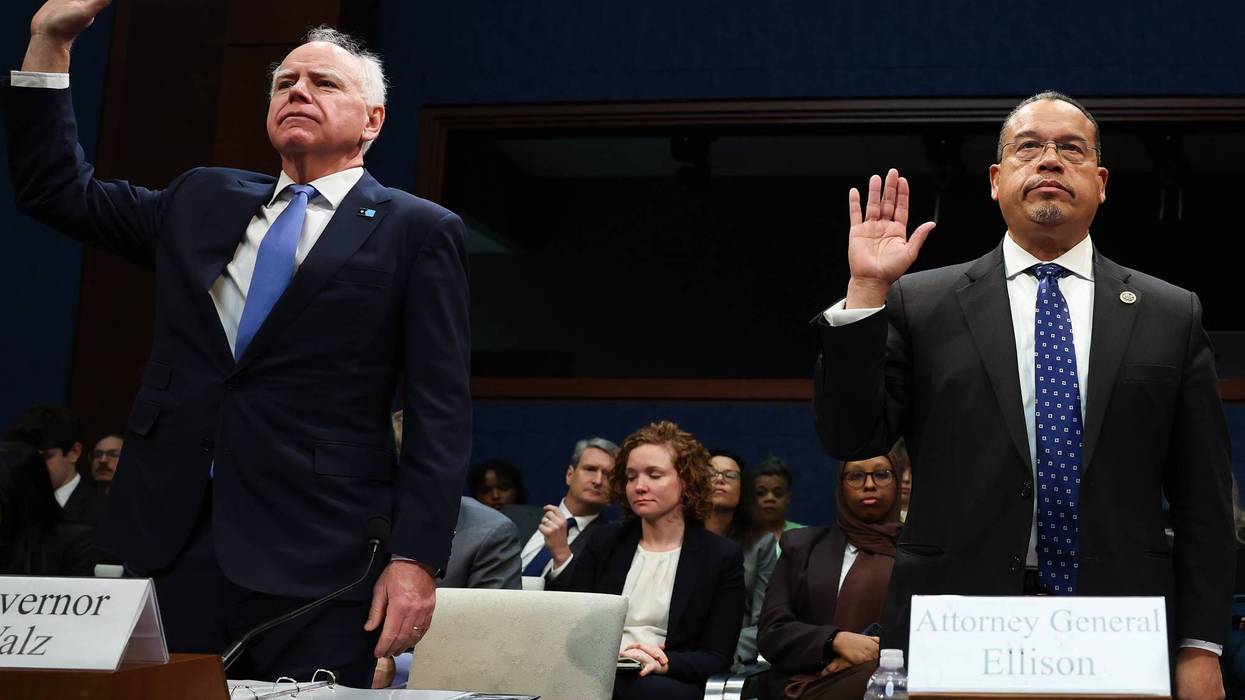
"I will never stop exercising my constitutional rights to stand up for Minnesotans and the American freedoms we hold dear," Minnesota Gov. Tim Walz said after the ruling.
A federal judge on Monday quashed multiple grand jury subpoenas issued by the US Department of Justice aimed at political leaders in Minnesota, including Gov. Tim Walz and Minneapolis Mayor Jacob Frey.
In his ruling, Judge Patrick Schiltz of the United States District Court for the District of Minnesota found there was "no doubt" that the DOJ had initiated "a criminal investigation in order to harass political opponents or to coerce them into taking official action," which he described as "a blatantly unlawful and unethical use of the grand-jury process."
Finding that "the evidence that the challenged subpoenas were issued for unlawful reasons is overwhelming," Schiltz, an appointee of former President George W. Bush, cited multiple instances of Trump administration officials "threatening and attempting to punish states and localities that have adopted 'sanctuary' policies."
The judge then quoted several social media posts by President Donald Trump in which he warned that "retribution" was coming for Minnesota officials, as well as statements from Trump DOJ officials linking grand jury subpoenas to the state's lack of cooperation with federal immigration enforcement operations.
Schiltz also said it was "risible" for the DOJ to justify the subpoenas on the grounds that it is investigating officials' refusal to devote state and local resources to assisting federal law enforcement, which he described as "constitutionally protected conduct."
"A grand-jury subpoena cannot be issued for an improper purpose," Schiltz emphasized. "The fact that connections between the information sought in the subpoenas and any possible criminal violation range from extremely weak to nonexistent only adds to the overwhelming evidence that these subpoenas were not issued to investigate, but to harass, coerce, and retaliate."
In a statement released after Schiltz's ruling, Walz hailed the decision as "a victory for the rule of law and our democracy," depicting the DOJ probe as yet another example of the department "pursuing criminal investigations into the president's political opponents."
"I will never stop exercising my constitutional rights to stand up for Minnesotans and the American freedoms we hold dear," Walz added.
Frey also released a statement after the ruling, accusing the DOJ of "subpoenaing political opponents because they spoke out on behalf of their constituents."
"My job is not to stay silent when Minneapolis residents are killed, families are torn apart, and businesses are closed," Frey said. "My job is to stand up for the people I represent, the families who call our city home, and the thousands of people who showed up and spoke out."
Rep. Angie Craig (D-Minn.) celebrated the ruling, which she said "confirms what we knew all along—that this was nothing but a baseless political attack on Minnesota’s leaders."
Aaron Reichlin-Melnick, senior fellow at the American Immigration Council, noted in a social media post just how far off the rails the Trump DOJ has gone.
"The Trump administration’s efforts to use the criminal grand jury process to retaliate against Minnesota and Minneapolis has floundered badly," he wrote. "It's a sign of how they are willing to toss aside basic rules to get at their enemies, and how the courts have largely smacked them down when they tried."
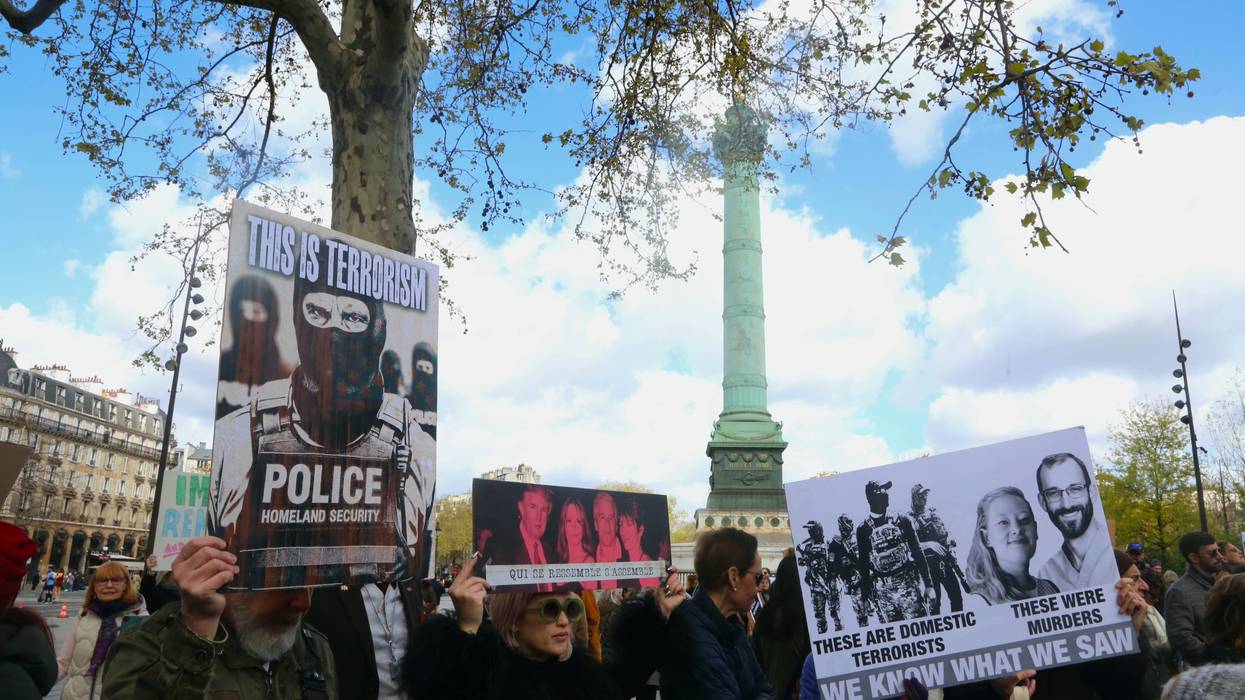
National Security Presidential Memorandum-7, which President Donald Trump issued last year, explicitly targets left-wing protesters and beliefs.
Federal prosecutors in Minnesota have struggled to come up with charges that stick as they've indicted dozens of people this year for protesting President Donald Trump's immigration crackdown, and observers suggested Tuesday's indictments of 15 organizers would likely fail to convince any court. But with a US attorney explicitly citing Trump's memo threatening to crack down on left-wing protesters, advocates warned the charges were a "major escalation" against First Amendment rights.
US Attorney Daniel Rosen, who was appointed by Trump for the District of Minnesota last year, noted in his announcement of the indictments that Trump issued National Security Presidential Memorandum 7 (NSPM-7) last September and that "Joint Task Force Vanguard," an investigative group set up "to investigate, prosecute, and disrupt those who engage in political violence and intimidation," had worked on the case.
NSPM-7, as Common Dreams reported last year, was issued weeks after the assassination of right-wing activist Charlie Kirk and focuses exclusively on left-wing and "anti-fascist" activities, mandating a "national strategy to investigate and disrupt networks, entities, and organizations that foment political violence so that law enforcement can intervene in criminal conspiracies before they result in violent political acts.”
Around the same time, Trump issued an executive order asserting that "antifa," or the anti-fascist movement, had been designated as a "domestic terrorist organization," despite the fact that there is no centralized antifa group and that the president does not have the authority to make such a designation.
The president's directives underpinned the indictment of 15 organizers, including at least one professor and several union leaders and members, who had led direct actions and protests against federal agents during Operation Metro Surge, a crackdown by US Immigration and Customs Enforcement (ICE) and other federal agencies in Minnesota earlier this year.
Rosen said the defendants were members of two Minneapolis-based groups—Direct Action Minnesota and Black Cat Workers Collective—that were associated with "antifa" and were "violently opposed to the enforcement of federal law in our state."
🚨 Feds point to NSPM-7 as basis for charging 15 anti-ICE protesters in Minnesota, alleging ties to "Antifa".
U.S. Attorney Daniel Rosen: "Last year, President Trump issued National Security Presidential Memorandum 7, which directed the Department of Justice to prioritize… pic.twitter.com/s3uCKCi09V
— Ken Klippenstein (@kenklippenstein) June 16, 2026
Twelve of the defendants were arrested on Tuesday, while one had already been in custody on other charges and two had not yet been detained.
The charges include conspiracy to impede or injure a federal officer, solicitation to commit a crime of violence, interstate stalking, assault on a federal officer, and destruction of government property.
But after examining the indictment, David Bier, director of immigration studies at the libertarian Cato Institute, found just one "documented, charged violence by any defendant in the actual indictment against any ICE agent's person": A defendant, William Morgan, "approached one of the agents and knocked the agent's notes out of his hand."
Bier listed the rest of the overt acts included in the 94-page indictment, which he described as a "cobbled together series of basically unrelated incidents or comments, nearly all of it not criminal with a few minor crimes, effectively all nonviolent acts of civil disobedience."
The other acts include "attending meetings," "posting on Facebook and social media about resistance to ICE," "posting flyers advertising direct actions," "conducting after-action reviews," "forming human blockades" at a building used for ICE operations in Minneapolis, and impeding ICE vehicles with sandbags, debris, and vehicles to block roads.
At the press conference Tuesday, evidence presented by Rosen included a Facebook post in which one defendant, Cameron Kennedy, said, "We need to become ungovernable."
Organizers expressed that they were "highly critical of nonviolent peaceful protest," said Rosen.
"Oh," said Bier in response on social media.
Journalist Ryan Grim of Drop Site News also pointed to a section of the indictment that accuses Isaac Auman Sant of engaging in conduct that "caused, attempted to cause, or would be reasonably expected to cause substantial emotional distress to a person."
"Actual federal charges in Minnesota for hurting ICE agents' feelings," Grim said.
The defendants appeared in the US District Court for the District of Minnesota on Tuesday, where Judge John Docherty said the defendants were being released for the time being and that the conditions for a detention hearing had not been met.
A defendant named Erik Davis, a religious studies professor at Macalester College, told Docherty that according to the indictment, he was being "indicted for holding meetings.”
While the charges were denounced as outrageous by a number of observers, an attorney for one of the defendants, Bruce Nestor, told Democracy Now! that the conspiracy charge "is really an attempt to broaden the net of federal law enforcement and to expand the ability of the federal government to target our movement and to foster repression."
Federal prosecutors have charged 15 Minnesotans for conspiracy to impede or injure immigration officers in Minneapolis earlier this year during President Trump’s so-called Operation Metro Surge. The indictment has linked the defendants to anti-fascist or "antifa" groups. Trump… pic.twitter.com/5eAI1WmUrI
— Democracy Now! (@democracynow) June 17, 2026
Adam Federman of Type Investigations said the administration's strategy for cracking down on those who oppose its political agenda appears to be: "Define a loose coalition of activists opposed to the government's immigration policies as Antifa, make the case that Antifa is a terrorist organization, and then prosecute them on conspiracy charges. We're going to see a lot more of this."
The indictment was announced weeks after federal prosecutors dropped all charges against four protesters who had been accused of interfering with ICE agents at a detention center in the Chicago area.
In March, the Trump administration won its first legal victory in its effort to criminalize groups that organize against its agenda when a federal jury convicted eight people of domestic terrorism because they wore all black to a protest outside ICE's Prairieland Detention Facility in Alvarado, Texas, where one of the protesters shot and wounded a police officer.
"Prairieland was exhibit A," said Federman on Tuesday. "My guess is that we will get to the end of the alphabet before this administration runs its course."
US Rep. Ilhan Omar (D-Minn.) noted that the federal officers who fatally shot two Minneapolis protesters, Renée Good and Alex Pretti, in January have not been criminally charged.
"While the killers of Renée Good and Alex Pretti walk free, the DOJ is busy bringing bogus charges against protesters," said Omar. "The administration thinks intimidation will make us back down. They keep learning the same lesson: Minnesotans don't scare easily. We organize for our rights."
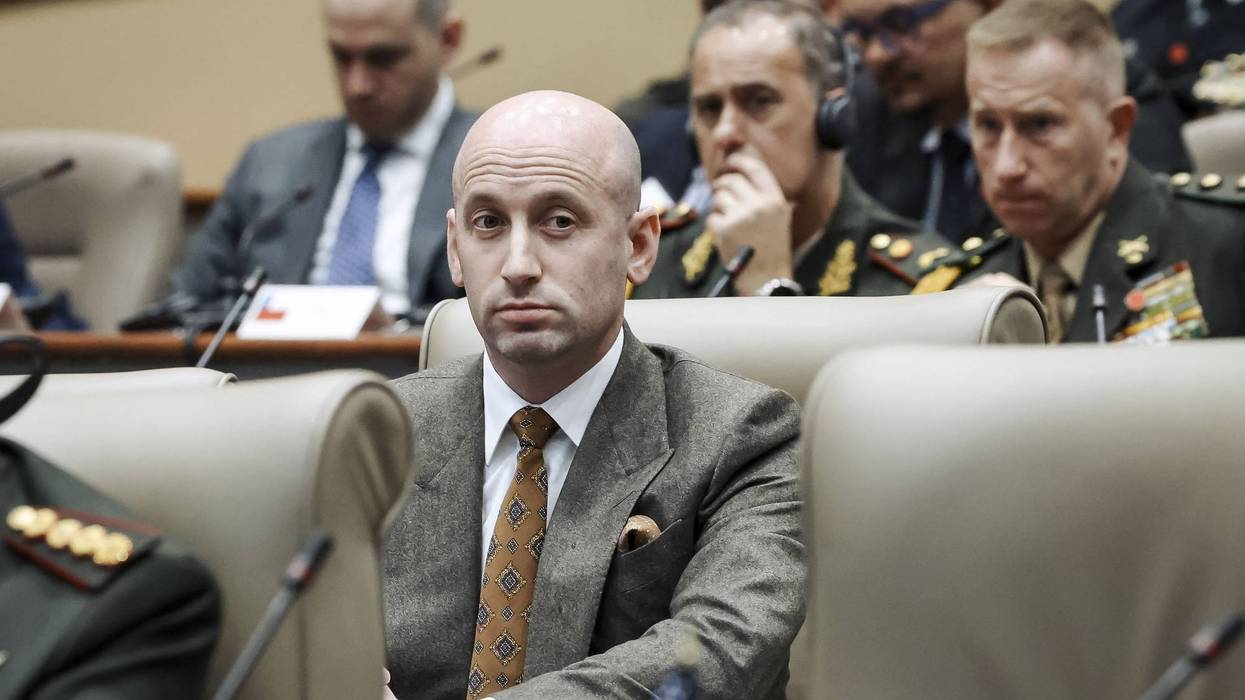
Reporting in The New York Times reveals Vance wanted to use the military "to crush the unrest in Minnesota."
A Monday report in The New York Times revealed what it described as the "alarm" felt by some White House lawyers at proposals made earlier this year by Vice President JD Vance and Trump adviser Stephen Miller as the administration was forced to contend with widespread anger over its anti-immigration agenda.
Among other things, the Times reported that Vance pushed for President Donald Trump to invoke the Insurrection Act, which would allow for the US military to be deployed on American streets, in an effort to shut down mass protests in Minnesota against federal immigration enforcement operations in the state.
A few days after US Immigration and Customs Enforcement (ICE) officers fatally shot demonstrator Alex Pretti in the streets of Minneapolis, the Times reported that Vance—who had also elevated a baseless claim by Miller that Pretti had been a "would-be assassin"—said invoking the Insurrection Act was necessary "to crush the unrest in Minnesota."
Vance also believed invoking the law would send a “message” that “paid agitators could not get away with disrupting ICE operations”—even though, as the Times noted, there is no evidence that Pretti; demonstrator Renee Good, who was also killed by federal agents; or any other organizers in Minnesota or elsewhere received any money in exchange for protesting.
However, right-wing attorney Will Scharf quickly shot down Vance's suggestion, noting that the Insurrection Act is an instrument aimed at putting down armed rebellions rather than groups of citizens blowing whistles at ICE officers.
Former White House Deputy Chief of Staff James Blair then made the political case against invoking the Insurrection Act.
"The scenes of federal agents in Minnesota already looked chaotic, he said, and the public was recoiling," reported the Times. "He put three questions to the room: What does the Insurrection Act give us that we don’t already have? What changes on the ground would be worth the heat? What else could they win that would justify the public relations cost?"
"The room was quiet," the Times added. "Nobody had a good answer."
The Times report also revealed that Trump adviser Stephen Miller, Trump's homeland security adviser and deputy chief of staff, repeatedly pushed the president to suspend the writ of habeas corpus for undocumented immigrants, which would give the administration the power to carry out mass deportations without being subjected to judicial oversight.
As in the case of Vance's proposal, Scharf pushed back against Miller's suggestion, noting that courts have long held that habeas corpus cannot be suspended unilaterally by the president and must be done by an act of Congress.
"Even where Congress has explicitly suspended habeas corpus rights," Scharf wrote in a legal memo obtained by the Times, "the Supreme Court has held that some alternative process must be provided to defendants, with procedural safeguards akin to a habeas corpus action."
Aaron Reichlin-Melnick, senior fellow at the American Immigration Council, said the Times' reporting showed Miller "would happily shred the Constitution into little pieces if he could," before hopefully noting that "even he wasn’t powerful enough to do it" in this instance.
University of Michigan Law School Professor Leah Litman argued that the Times report showed some in the administration were at least still somewhat conscious of public opinion when making decisions.
"In the story about the administration weighing suspending habeas corpus and invoking the Insurrection Act, what moved the needle against the Insurrection Act was concern about 'public relations,'" Litman wrote. "Public pushback, agitation, and outcry can work. Even now. Keep it up."
"It is deeply troubling to see official powers and public resources diverted away from serving the people and instead aimed at pursuing political adversaries," said Keith Ellison.
Minnesota Attorney General Keith Ellison forcefully pushed back against Vice President JD Vance's Monday night announcement on Fox News and social media that he had referred the state AG and Democratic Gov. Tim Walz to the US Department of Justice following allegations in a GOP congressional report that the pair was aware of fraud involving federal funds and failed to stop it.
"The allegations in the House Republican report are unfounded, and Vice President Vance's referral is a political stunt from an administration that uses the machinery of government to target its perceived opponents while extending leniency to those aligned with its interests," Ellison told CNN, highlighting how his office has investigated and prosecuted allegations of fraud involving public programs.
"It is deeply troubling to see official powers and public resources diverted away from serving the people and instead aimed at pursuing political adversaries," added Ellison, who is seeking another term in November. "That is not what government is for, and it diminishes public trust in our institutions."
Dozens of people were charged in Minnesota as a result of a federal probe into abuse of taxpayer funds during the Covid-19 pandemic that began under former President Joe Biden and related investigations that have continued since President Donald Trump returned to office last year. Trump has repeatedly used the cases to attack Somali Americans with racist rants, as well as to target Democratic politicians.
The new referral is not the first time the Trump administration has targeted Ellison and Walz, the 2024 Democratic vice presidential candidate who dropped his bid for another term as governor early this year. The DOJ subpoenaed the pair and other top Minnesota officials in January as part of its investigation into an alleged conspiracy to impede Immigration and Customs Enforcement (ICE) officers sent to the Twin Cities by the president—a probe the governor denounced as part of a broader trend of the administration "weaponizing the justice system."
As the White House faced intense national backlash for the deadly operation in Minnesota, Trump appointed Vance as "fraud czar" in February, and the vice president swiftly announced that the administration would pause some Medicaid funding for the state over fraud concerns. Walz said at the time that "this has nothing to do with fraud" and "is a campaign of retribution. Trump is weaponizing the entirety of the federal government to punish blue states like Minnesota."
In March, Walz and Ellison testified before the Republican-led House Committee on Oversight and Government Reform about the fraud cases, clashing with GOP lawmakers. At the time, the panel released an interim version of the report that was published on Monday. The Minnesota Star Tribune noted that the March edition "prompted House Democrats on the Oversight Committee to publish a competing report accusing Republicans of singling out Minnesota for political purposes."
Even before Vance's referral, spokespeople for Walz and Ellison were deeply critical of the final report, which claims that they "were aware of widespread fraud in federally funded social services programs for years, possessed the legal and procedural authority to stop payments and ban fraudulent providers from participating in these programs, but repeatedly failed to act."
As MPR News reported:
"This committee has proven time and time again to be nothing more than a joke. They continue to rehash Covid-era fraud to distract from endless wars, gas prices, ICE, and the president’s insider trading," [said] Teddy Tschann, a spokesperson for Walz. "Gov. Walz is glad to see fraudsters are going to prison. If the committee is concerned about corruption, they should investigate why President Trump continues to let fraudsters out of prison."
Walz’s office noted that several changes have been made over the last few years to address fraud, including new legislation creating an Office of the Inspector General, which will have independent power to investigate fraud.
Brian Evans, a spokesperson for Attorney General Keith Ellison, said, "Republicans in Congress issued a report riddled with inaccuracies and misrepresentations in an effort to politicize the issue of fraud, instead of actually helping Minnesota protect tax dollars and go after fraudsters."
In addition to releasing the updated report, the Oversight Committee's chair, Rep. James Comer (R-Ky.) sent a letter to Vance about it. The vice president then announced his referral on Jesse Watters' show, and posted his letter to the DOJ on social media.
While Oversight Committee Republicans celebrated Vance's post on social media, journalist Marcy Wheeler responded, "This fraud effort has ALWAYS been an attempt to distract from far bigger right-wing crimes, especially by Trump."
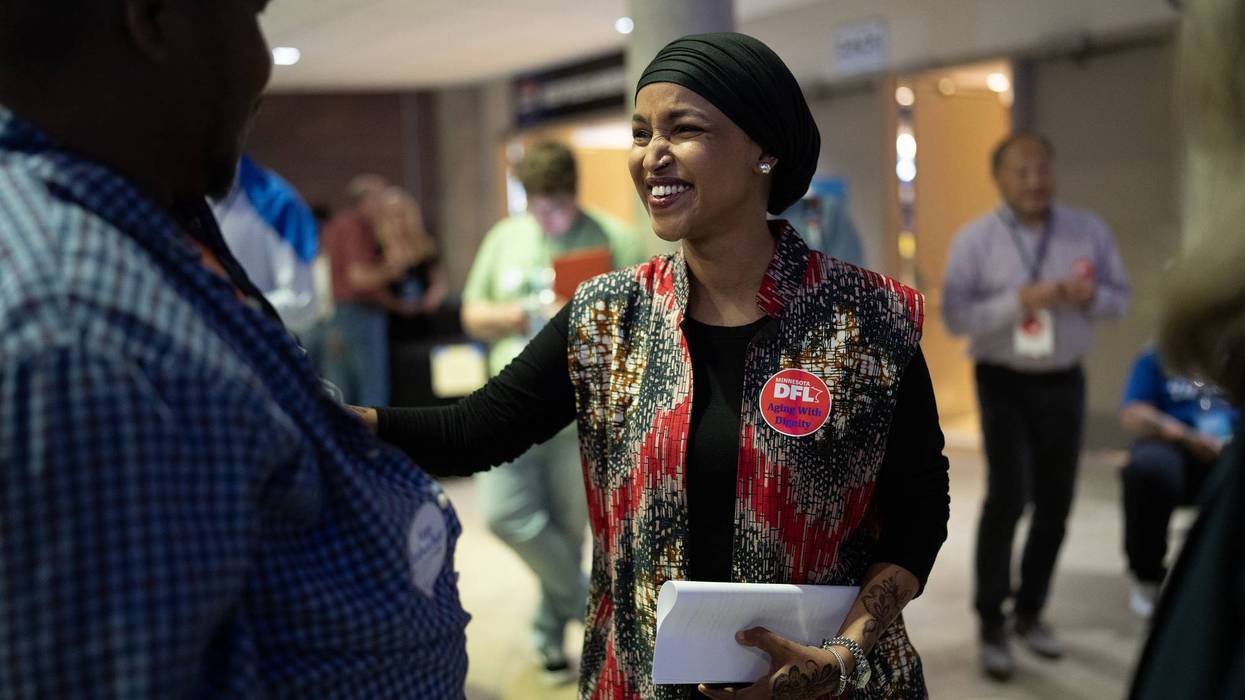
Responding to Trump's slur that Somali Americans are "all crooks," Omar said the president "uses fraud as a political cudgel while protecting his donor base and enriching himself."
US Rep. Ilhan Omar issued a blistering response to President Donald Trump's attacks on Minnesota and its Somali community on Tuesday with a Guardian opinion piece arguing that "there has never been a more brazenly corrupt president."
The Democratic Minneapolis congresswoman has weathered ceaseless personal insults from the president since first ascending to office in 2019 that have grown increasingly racist in his second term—threatening to strip her of her US citizenship and "throw her the hell out" of the country and referring to Somalis collectively as "garbage"and "very low-IQ people," who should all be deported despite mostly being legal US citizens.
"Any keen observer will recognize the pattern of inciting hostility against me and the Somali community whenever his own failures and corruption catches up to him," Omar said. "He routinely reaches for the same tired playbook of lies, racism, and deflection."
Trump called me “crooked as hell” while spreading lies about the fraud in Minnesota.He's not interested in fighting fraud. He's interested in using fraud as a political weapon while enriching himself and his allies.My op-ed in the @theguardian.com ⬇️
[image or embed]
— Ilhan Omar (@ilhanmn.bsky.social) June 2, 2026 at 11:38 AM
During a Cabinet meeting last week, Trump launched into yet another tirade: “The Somalians, what they’ve done to Minnesota, the Somalians, crooked as hell. Ilhan Omar, crooked as hell,” he said. “They’re all crooks, and we got them, we got them. Now we’re putting the clamps on."
Trump was referring to a series of fraud cases in the state, in which organizations—many of which were run by Somali Americans—were found to have diverted hundreds of millions of dollars in federal funds meant for food assistance, disability, and childcare, mostly in investigations that began during the Biden administration.
But as Omar wrote on Tuesday, Trump "uses fraud as a political cudgel while protecting his donor base and enriching himself."
"The truth is, Trump doesn’t care about addressing fraud," she said. "He has repeatedly pardoned and rewarded some of the most brazen financial criminals."
As Omar detailed:
He pardoned Philip Esformes, convicted in what his own Department of Justice described as the “largest healthcare fraud scheme ever charged.”
He granted clemency to Lawrence Duran after a $205 million fraud conviction. He commuted Jason Galanis’ sentence and pardoned Devon Archer, who were both tied to tens of millions in fraud, and also pardoned Joseph Schwartz for a $38 million fraud scheme, and reality stars Todd and Julie Chrisley for multimillion-dollar bank fraud. He’s now defrauding the American people further by creating a $1.8 billion slush fund of taxpayer dollars to compensate people he pardoned for beating cops and ransacking the US Capitol on January 6 after they pleaded guilty or were convicted of such crimes.
After losing a court case and facing bipartisan backlash in Congress, acting Attorney General Todd Blanche confirmed on Tuesday that the administration was backing off the $1.8 billion fund.
Omar acknowledged the fraud cases in Minnesota, such as the Feeding Our Future nonprofit scandal, in which 65 people connected to the scheme have been convicted of stealing money intended to feed children during the Covid-19 pandemic.
"We should all collectively care about the damage that these criminals have done to public faith in programs that save lives and feed children," Omar said. "But instead of addressing the fraud equally and without exception, Trump and his cronies have turned combating fraud into a partisan spectacle defined by a level of racist vitriol that just years ago would have shocked most Republicans, not to mention the American people at large."
"While Minnesota leaders were prosecuting thieves, Trump was letting them out of prison," she added. "He enriches himself, his family profits from crypto deals, and world leaders understand that the presidency is now for sale. His underhanded operation racks up billions for his family and friends while working Americans struggle to afford basic necessities."
The Trump administration has used fraud cases in Minnesota to inflict a sort of collective economic punishment on its poorest residents.
Using outlandish allegations that Somalis were looting tens of billions from Medicaid, the administration has frozen more than $350 million in federal Medicaid reimbursements owed to Minnesota and threatened to withhold more than $2 billion annually, which state officials have warned will destabilize benefits for the 1.2 million Minnesotans who rely on the program.
"The reality is that Trump and Republicans are not interested in combating fraud and corruption or having a real conversation to address it. They are interested in ransacking the public good for their own profit," Omar said. "They are interested in clicks, outrage, and theatrics in order to deflect from their own corruption. The American people deserve better than a president who uses the pretense of accountability to punish his opponents and reward his allies."

“In Minnesota, we believe in equal justice under the law," said Minnesota Attorney General Keith Ellison. "That means nobody is above the law, including agents of the federal government."
A US Immigration and Customs Enforcement agent was arrested in Texas on Friday after he was charged by Minnesota officials for allegedly shooting a Venezuelan immigrant during an ICE operation in Minneapolis and lying about what happened.
Christian Castro, 52, was deployed as part of President Donald Trump’s mass deportation push in the Twin Cities, dubbed “Operation Metro Surge,” and was charged by Hennepin County Attorney Mary Moriarty earlier this month with four counts of felony assault and one count of falsely reporting a crime.
The charges stem from the shooting of Venezuelan national Julio Cesar Sosa-Celis at his home on January 14 as ICE agents pursued his roommate, another Venezuelan immigrant named Alfredo Alejandro Aljorna.
According to The New York Times, Castro was arrested Friday after being tracked down by investigators with the Minnesota Bureau of Criminal Apprehension (BCA). Texas Rangers and agents with the Department of Homeland Security Office of the Inspector General carried out the arrest, according to the Minnesota-based Sahan Journal.
“Today’s arrest is a critical step forward in our prosecution of Mr. Castro,” Moriarty said. “The BCA’s investigative work was instrumental in this process, and we’re grateful for their collaboration as we pursue accountability for this incident on behalf of Mr. Sosa-Celis, his family, and our community.”
Sosa-Celis and Aljorna were originally charged by the US Department of Justice (DOJ), after Castro claimed that he had shot in self-defense when the men assaulted him with a broom and a shovel, claims that were parroted by then-Department of Homeland Security (DHS) Secretary Kristi Noem and department spokesperson Tricia McLaughlin.
But the charges were later dropped after video of the incident and an examination of X-ray evidence demonstrated that Castro's claims were false. Castro and another agent were subsequently placed on administrative leave by DHS while they were investigated internally for lying under oath.
“In Minnesota, we believe in equal justice under the law. That means nobody is above the law, including agents of the federal government,” said Minnesota Attorney General Keith Ellison following news of Castro's arrest on Friday. “I am pleased to hear Christian Castro has been taken into custody and will stand trial for the crimes he allegedly committed in Minnesota. Justice demands no less.”
Castro is the second ICE agent to be charged by Moriarty's office for their role in Operation Metro Surge, which civil rights groups and Minnesota officials have characterized as a lawless immigration crackdown involving racial profiling, warrantless arrests, violent raids, and multiple shootings by federal agents.
Another agent, Gregory Morgan Jr., was charged last month with two counts of felony second-degree assault after he allegedly pulled a gun on two local residents during a traffic stop. Morgan turned himself in to local authorities last week and was released on bond.
Ellison also sued the Trump administration in March for refusing to cooperate with the state investigation into the shooting of Sosa-Celis, and other probes into the fatal shootings of two US citizens.
Moriarty's office has not yet brought charges against ICE officer Jonathan Ross, who fatally shot Minneapolis mother Renee Good in January, or Border Patrol agent Jesus Ochoa and Customs and Border Protection officer Raymundo Gutierrez in connection with the deadly shooting of Department of Veterans Affairs nurse Alex Pretti later that month.

"The American people deserve a Department of Justice that fights for us, and it's a tremendous shame that Trump's DOJ would rather sell us out to Big Oil," said Minnesota Attorney General Keith Ellison.
Just weeks after the Minnesota Supreme Court allowed the state's climate deception lawsuit against the fossil fuel industry to move into discovery, President Donald Trump's Department of Justice took action in federal court on Monday to block the case.
Minnesota Attorney General Keith Ellison first sued the American Petroleum Institute, ExxonMobil, Koch Industries, and its subsidiary Flint Hills Resources in state court for orchestrating and executing a "campaign of deception" regarding the fossil fuel-driven climate emergency "with disturbing success" in 2020.
The industry has been fighting to kill the case since then, and the DOJ on Monday filed a complaint in the District of Minnesota against both the state and Ellison. In a related statement, Associate Attorney General Stanley Woodward declared that "President Trump promised to unleash American energy dominance, and Minnesota officials cannot undermine his directive by mandating that their woke climate preferences become the uniform policy of our nation."
"Minnesota's attempt to impose a national regulation on global greenhouse gas emissions not only is preempted by federal law, but also undermines affordable and reliable American energy, weakening the national and economic security of the United States," Woodward continued, summarizing the argument made in the new federal filing.
While the fossil fuel entities targeted by Minnesota welcomed the Trump DOJ's intervention, Ellison made clear that he was undeterred.
"In 2020, I sued Big Oil for lying to Minnesotans about the true causes of climate change, then sticking us with the bill for the harms it is causing," Ellison said. "Six years later, we are still waiting to go to trial because Big Oil has pulled every procedural trick in the book to delay facing the consequences of their unlawful actions."
"This frivolous and meritless lawsuit is just their latest attempt to hide from accountability, and I will move to have it dismissed immediately," he pledged. "The American people deserve a Department of Justice that fights for us, and it's a tremendous shame that Trump's DOJ would rather sell us out to Big Oil."
Richard Wiles, president of the Center for Climate Integrity, which supports cases against polluters, also ripped the federal filing.
"This is a desperate effort to shield the architects of Big Oil's decadeslong climate deception from facing accountability," said Wiles. "Big Oil and the Trump administration are clearly terrified that Minnesota's lawsuit will reveal exactly how these defendants defrauded the public about the dangers of fossil fuels. Federal courts dismissed the Trump administration's last two attempts to stop states from taking Big Oil companies to court. This naked political intimidation tactic should meet the same fate."
Trump was backed by Big Oil during the 2024 election and campaigned on a promise to "drill, baby, drill." Since returning to office, he's aimed to serve industry interests in a range of ways, including last year's executive order directing the US attorney general to protect "American energy from state overreach."
The Justice Department noted in its Monday statement that last year, its Environment and Natural Resources Division "filed complaints against Hawaii, Michigan, New York, and Vermont to stop those states' unconstitutional climate actions."
Dozens of state and local governments have filed cases similar to Ellison's in Minnesota. The US Supreme Court is preparing to hear arguments related to one from Colorado that dates back to 2018: Suncor Energy Inc. v. County Commissioners of Boulder County.
Meanwhile, Trump and Big Oil's allies in Congress are also working to protect polluters. Last month, Sen. Ted Cruz (R-Texas) introduced a bill that, if passed, would "prohibit liability against those engaged in the mining, extraction, production, refinement, transportation, distribution, marketing, manufacture, or sale of energy for damages or injunctive or other relief from the use of their products, and for other purposes."
Wiles noted at the time that "Big Oil companies have raked in massive profits at the pump while lying to the American people about the catastrophic harm of their products, and now they want to deny Americans their rightful day in court and stick taxpayers with the bill for the mess they made."
"If fossil fuel companies have done nothing wrong," he asked, "why do they need immunity?"
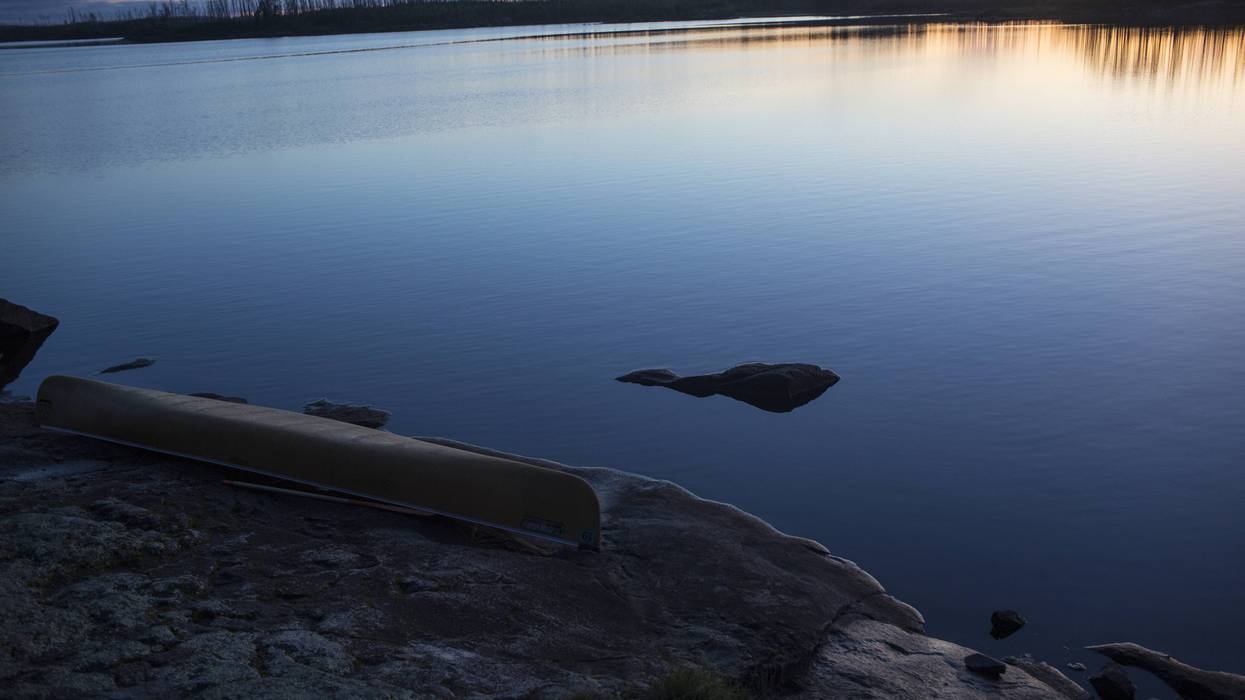
"We don’t allow mining in Yellowstone, Yosemite, Zion, Acadia, Glacier, or any of our nation’s revered national parks—and we shouldn’t allow it in the watershed of the Boundary Waters, either," said one congresswoman.
Democratic lawmakers and environmental protection groups condemned Senate Republicans on Thursday for their "heartbreaking" passage of a House resolution to overturn a 20-year moratorium on mining in the watershed of Minnesota's Boundary Waters Canoe Area Wilderness, the nation's most visited wilderness area—a vote that critics said was the result of years of lobbying by a foreign-owned mining firm.
House Joint Resolution 140 now heads to President Donald Trump's desk, nearly a decade after Chilean conglomerate Antofagasta, the owner of Twin Metals Minnesota, began discussing with Trump's first administration its desire to build a copper mine over the pristine area.
"Because of this extremely short-sighted vote, our nation’s most-visited wilderness area faces the threat of permanent toxic pollution," said Rep. Betty McCollum (D-Minn.). "Why? So Antofagasta, a Chilean corporation that owns Twin Metals, can mine American copper and ship it to China to be smelted and sold on the global market. Twin Metals has been lobbying President Trump and Republicans in Congress for over ten years to remove the protections from this watershed and renew their mine plans to extract American minerals at the expense of freshwater for future generations."
The 50-49 vote in the Senate, said Environment America, puts the 1.1 million-acre wilderness area for heavy metals leaching into the soil and water through acid mine drainage.
Toxic runoff from copper mining, said the group, "ultimately poisons the land and water surrounding a mine, making the ecosystem unlivable for wildlife."
Leda Huta, vice president of government relations for American Rivers, called the vote "a betrayal of the public trust."
“We share in the deep disappointment of millions of Americans who expect our elected leaders to protect our clean water, our abundant wildlife, and access for all to unmatched outdoor recreation spaces," said Huta. "This is a heartbreaking moment.”
Amanda Hefner, manager of Save the Boundary Waters Action Fund, wrote in a column in Minnesota Reformer last October that "in a water-rich environment like the Boundary Waters, with its low buffering capacity, pollution would spread quickly through interconnected lakes and streams." She also wrote that it was "reckless" to risk the preserve's 17,000 jobs and over $1 billion in annual revenue "for a foreign-owned mine that would pollute and leave toxic waste for generations."
According to Jacobin, Antofagasta spent $200,000 on lobbying in the final quarter of 2024 and $230,000 in the first quarter of 2025 "on issues including federal leases for Twin Metals." The Chilean company is owned by billionaire Andrónico Luksic, who rented out his $5.5 million mansion in Washington, DC to Trump's daughter Ivanka and her husband, then-White House adviser Jared Kushner, from 2017-21.
The Sierra Club noted that to pass the mining ban reversal, Senate Republicans "utilized a baseless interpretation of the Congressional Review Act (CRA)."
"The CRA only allows Congress to disapprove of administrative rules," said the group. "No previous administration has considered mineral withdrawals to be 'rules' that are subject to the CRA."
Athan Manuel, director of the Sierra Club's Lands Protection Program, said that "allowing a foreign company to open a toxic mine on its doorstep puts a fragile ecosystem at risk and shows the Trump Administration will always act to benefit corporations over the American people.”
“The Boundary Waters is one of the country’s most iconic wilderness areas, visited by thousands every year. It should be a place for recreation and conservation, not for pollution and exploitation," said Manuel.
Despite Trump's refrain, "America First," Rep. Ilhan Omar (D-Minn.) said the vote made clear that "for the GOP, it’s foreign billionaires first, America last."
McCollum warned that the mining moratorium was "the only way to protect this wilderness, which is home to some of the cleanest water in the entire world.
"We don’t allow mining in Yellowstone, Yosemite, Zion, Acadia, Glacier, or any of our nation’s revered national parks—and we shouldn’t allow it in the watershed of the Boundary Waters, either," said the congresswoman. "One hundred percent of copper mines have failed, leading to polluted waters. This case will be no different."
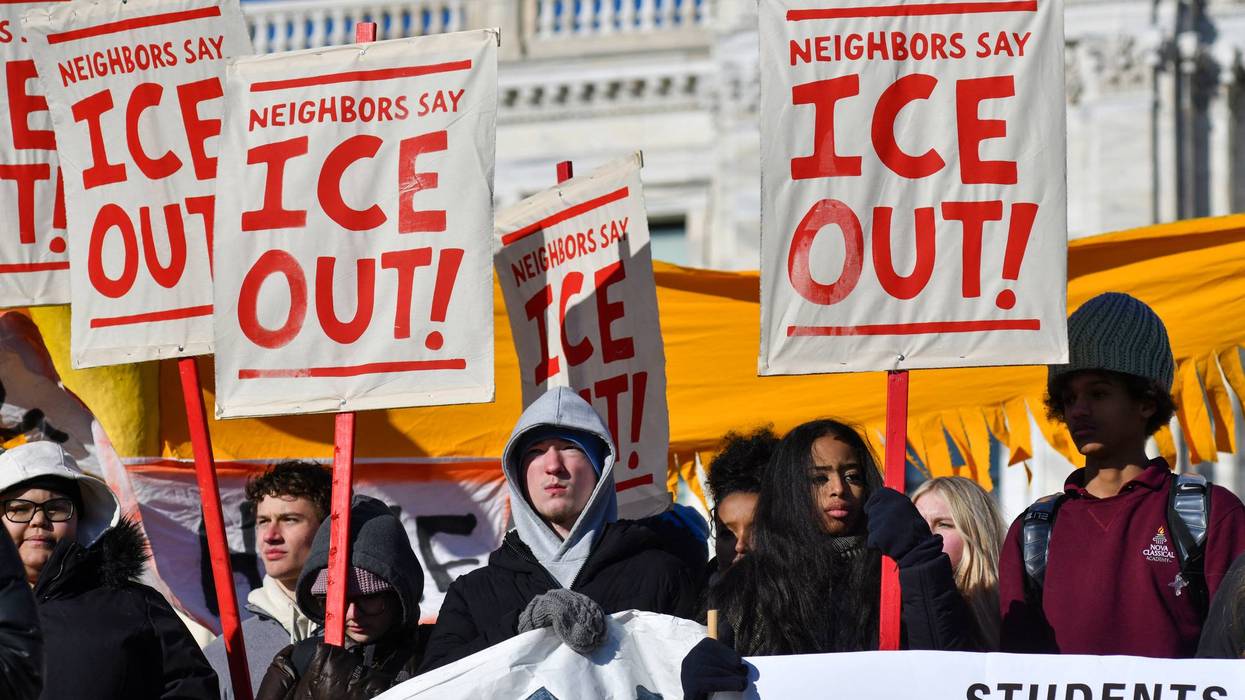
"Today's charges reflect an important milestone in our efforts to seek accountability for the harms inflicted on our community," said Hennepin County Attorney Mary Moriarty.
Prosecutors in Minnesota charged a federal immigration enforcement agent with assault on Thursday for pulling a gun on two local residents during a February traffic dispute.
The Hennepin County prosecutor's office charged US Immigration and Customs Enforcement officer Gregory Donnell Morgan Jr., a resident of Maryland, with two counts of felony assault for the incident that took place along Highway 62 on February 5.
During a press conference, Hennepin County Attorney Mary Moriarty alleged that Morgan was driving a rented, unmarked Ford Expedition illegally along the shoulder of Highway 62.
The alleged victims, objecting to Morgan illegally driving on the highway shoulder, swerved in front of him briefly to block him, then pulled back into the regular lane.
Morgan then allegedly sped up his vehicle, pulled up alongside the victims' car, and drew his gun on them.
Moriarty said that Morgan's alleged actions were unjustified and outside the course of his duties, which would be enough for the state to avoid violating the US Constitution's Supremacy Clause that prevents state governments from infringing upon the federal government's sovereignty.
"Our opinion is that illegally driving on a shoulder, pulling up to a car and pointing a gun at the heads of two community members who are not doing anything at the time, is well beyond the scope of their authority as federal agents," said Moriarty. "So they may say that, but we will litigate that in court. And there is no such thing as absolute immunity for federal agents who violate the law in the State of Minnesota or any other state."
Moriarty also brushed off concerns about the federal government retaliating against Minnesota for criminally charging ICE agents.
"Not a concern of ours," she said. "Our role, by the way, is to hold people accountable if they violate the laws of the state of Minnesota. And in this particular case, we feel strongly that this agent committed second-degree assault against both of these victims. We have charged the case and our intent is to hold them accountable."
Hennepin County Attorney Mary Moriarty: "Are we concerned as to whether there would be federal blowback? Not a concern of ours. Our role is to hold people accountable if they violate the laws of Minnesota. We feel strongly that this ICE agent committed 2nd degree assault." pic.twitter.com/G6aPyewU3q
— Aaron Rupar (@atrupar) April 16, 2026
The case against Morgan is the first state prosecution related to Operation Metro Surge, the federal immigration enforcement operation that targeted the Twin Cities earlier this year and generated unprecedented mass protests that included a one-day general strike.
Morgan's prosecution may also be a preview of future cases, as there have been calls for months to prosecute the federal immigration officers who fatally shot Minneapolis residents Renee Good and Alex Pretti.
While speaking with reporters, Moriarty emphasized that "today's charges reflect an important milestone in our efforts to seek accountability for the harms inflicted on our community during Operation Metro Surge," vowing "we will not rest until we get the answers we seek about federal agent conduct across Hennepin County, and accountability is delivered wherever appropriate."