

SUBSCRIBE TO OUR FREE NEWSLETTER
Daily news & progressive opinion—funded by the people, not the corporations—delivered straight to your inbox.
5
#000000
#FFFFFF
To donate by check, phone, or other method, see our More Ways to Give page.
Daily news & progressive opinion—funded by the people, not the corporations—delivered straight to your inbox.
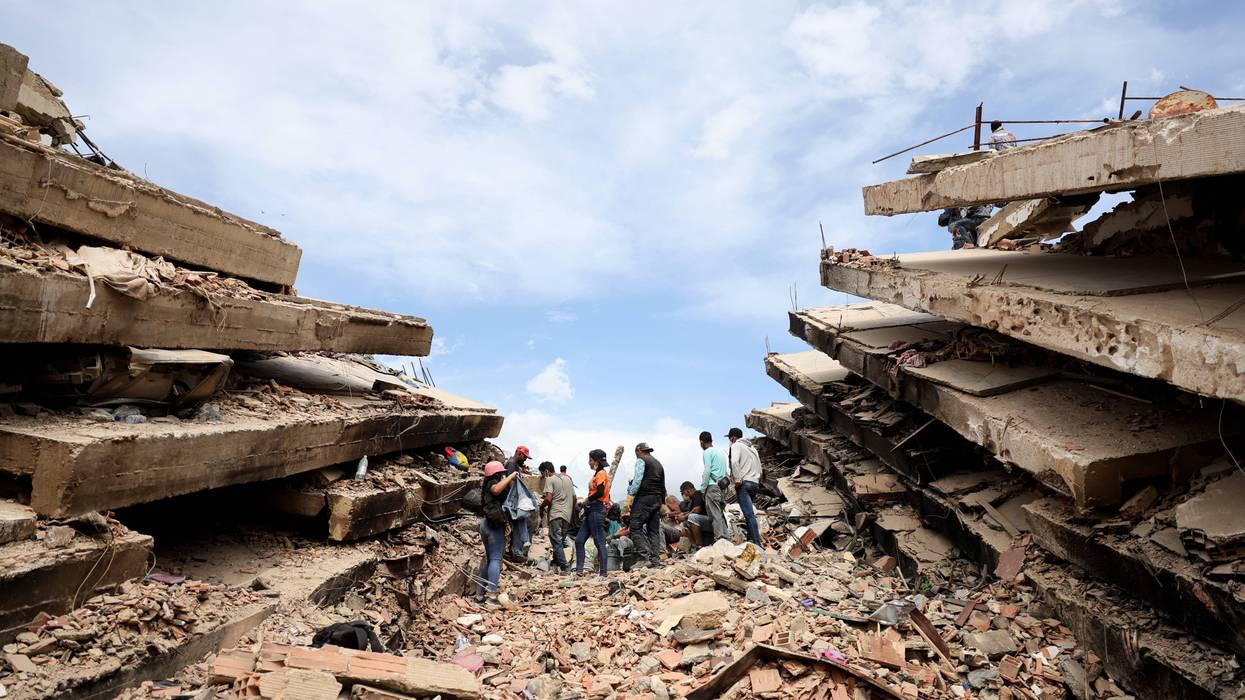
As the death toll continued to rise, the US Department of Homeland Security said that "when an individual is no longer in ICE custody, ICE is no longer responsible for them."
Tens of thousands of people still haven't been found after a pair of devastating earthquakes in Venezuela last week—including some Venezuelans who had just been deported from the United States as part of President Donald Trump's mass deportation push and were being held in a hotel when the temblors hit, The Associated Press revealed Monday.
There were 146 Venezuelans, including 19 women and seven children, on a deportation flight that arrived just hours before the 7.2- and 7.5-magnitude earthquakes, the AP reported, citing a Human Rights First initiative that has tracked thousands of such flights under Trump. They were brought to Hotel Santuario La Llanada in La Guaira, which collapsed because of the quakes.
"Lisbeth Portillo, 58, said she escaped the rubble from the hotel with about 20 other deportees who walked the streets looking for help. They saw people running, some naked and others barefoot as they emerged from the rubble of the building," according to the outlet.
Another deportee who survived, 24-year-old Jenny Rodriguez, told Telemundo: "I was trapped under the rubble. A colleague who had been on the same flight came by; I managed to free my hand from the debris, grabbed him by the trousers, and begged for help... Thanks to God—and to him—I was able to get out of there."
Oswadeliz Núñez Ramírez is still "frantically searching for her son," 28-year-old Daniel Alejandro Núñez Ramírez, who was also on the deportation flight and at the hotel, the Miami Herald reported Monday. A member of the Bolivarian National Intelligence Service who called himself "Jonathan" told her that he had pulled her son from the rubble, but, "skeptical of the official account, his mother has searched every hospital, clinic, and sector of La Guaira and Caracas without success."
While US Immigration and Customs Enforcement did not respond to the AP's request for comment, a spokesperson for the Department of Homeland Security, which oversees the agency, told the Herald: "This flight safely reached Venezuela, and all illegal aliens on board were returned home. When an individual is no longer in ICE custody, ICE is no longer responsible for them."
Venezuelan National Assembly President Jorge Rodríguez said Monday that the earthquake has left at least 1,719 dead, 5,034 injured, and 15,866 displaced from their homes.
UN News noted Monday that the ongoing search and rescue effort involves more than 2,000 workers from over two dozen countries, plus over 160 dogs, and Gianluca Rampolla, the United Nations resident coordinator in Venezuela, "reported that the UN and Venezuelan authorities had agreed to procure 10,000 body bags in anticipation of the death toll rising further."
Rampolla said that "together with the search and rescue operations, we are focusing, together with the government, on providing emergency healthcare, shelter, food assistance, water and sanitation, and logistical support to ensure not only the storage but also the distribution of all the supplies arriving in the country, as well as protection."
As of Monday evening, more than 44,000 people remained missing, according to a reunion website for families. As NBC News detailed Monday:
Even as the chances of finding survivors diminished with every passing hour, Venezuelans continued using shovels, ropes, and their bare hands as they dug through mountains of collapsed concrete.
They were joined by a growing number of international rescue teams, who pulled multiple survivors from the wreckage, offering desperate families a rare glimmer of hope.
Among the rescues, teams from the United States, France, and Venezuela pulled a man and his son from the ruins Sunday morning after they had spent four days trapped beneath the rubble.
Organizations including US-based peace group CodePink and the Center for Economic and Policy Research, a Washington, DC-based think tank, have called on the US and allied countries to lift all sanctions against Venezuela in the wake of the earthquakes.
Trump earlier this year directed an illegal invasion of Venezuela, during which US forces killed scores of people and abducted President Nicolás Maduro, then seized control of the South American country's nationalized oil industry.
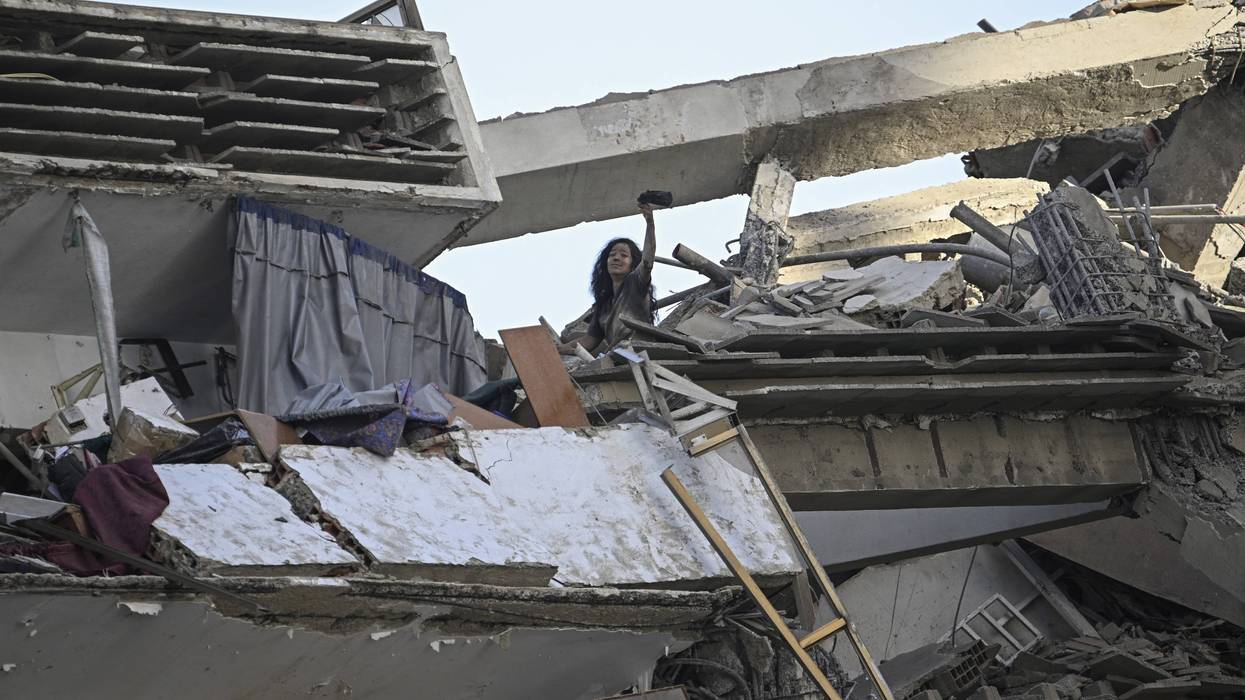
One resident of Venezuela's capital described the scene in her area as "like a horror movie" as rescue teams searched the rubble of collapsed buildings for survivors.
Emergency workers rushed to search the rubble of collapsed buildings in and near the Venezuelan capital of Caracas on Thursday after back-to-back powerful earthquakes rocked the country, killing at least 164 people—a toll that's expected to reach the thousands as victims' bodies are recovered from the wreckage.
The disaster began on Wednesday afternoon local time as a 7.2-magnitude earthquake hit around 100 miles west of Caracas. Just 39 seconds later, a 7.5-magnitude quake struck, compounding the damage. One Caracas resident told Reuters that the aftermath of the quakes "was like a horror movie."
The Associated Press reported that rescue teams were seen "using power tools to work their way into piles of rubble where buildings once stood."
"Panicked residents of the capital were sent pouring into the streets, and after the quakes many people walked among the debris searching for the missing among collapsed buildings and toppled electric poles," the outlet added. "Footage on state TV showed three children, covered in dust but alive, pulled from the rubble in La Guaira state... one of the areas hardest hit by the quakes because of the large number of collapsed buildings."
Video captured the first moments of two powerful earthquakes striking Venezuela, triggering panic as people fled for safety as buildings collapsed around them. pic.twitter.com/ZadZ6VNrNo
— Al Jazeera Breaking News (@AJENews) June 25, 2026
Acting Venezuelan President Delcy Rodríguez, who took charge following the US abduction of President Nicolás Maduro in January, said that "dozens of buildings have collapsed" in La Guaira.
"We are currently carrying out intensive rescue operations to save lives," Rodríguez added.
Venezuela looks like it was BOMBED after two MASSIVE 7.1 and 7.5 magnitude earthquakes.
Pray for the people, this is really bad pic.twitter.com/pIw8ywXzYe
— Ryan Rozbiani (@RyanRozbiani) June 25, 2026
US President Donald Trump, who authorized the illegal assault on Venezuela and kidnapping of Maduro earlier this year, wrote on social media that his administration "stands ready, willing, and able to help."
"I have instructed all agencies of our government to get ready to move quickly," Trump wrote. "We will be there for our new and great friends. Early reports are not good!!!"
Tom Fletcher, the United Nations' emergency relief coordinator, said in a statement Thursday that "we are fully mobilized to support the people of Venezuela following the deadly and devastating earthquakes that hit the country."
"The coming days will require a massive collective effort to support the government-led response and help communities," Fletcher added. "Even before these earthquakes, nearly 8 million people in Venezuela were in need of humanitarian support. This disaster risks deepening existing vulnerabilities. Sustained international support for humanitarian organizations responding on the ground is essential and urgent."
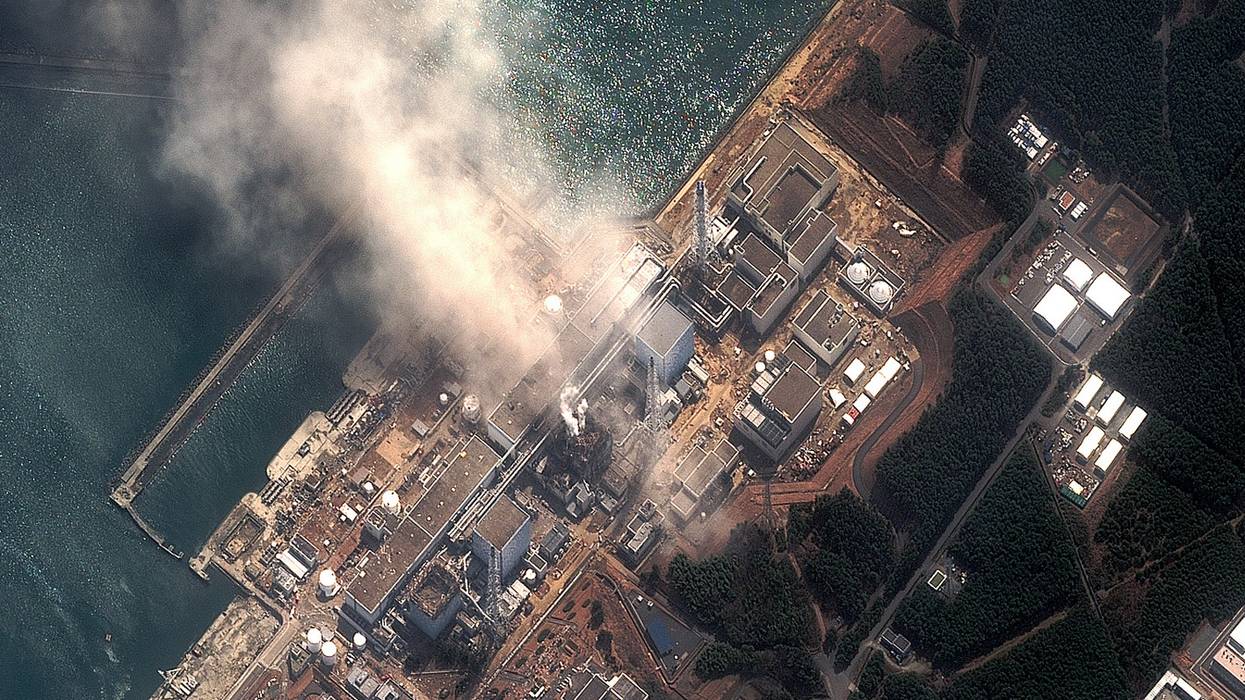
With nine nuclear-armed nations and roughly 12,000 nuclear warheads on this planet, worries about nuclear war are unavoidable. However, the danger of a nuclear disaster at a seemingly “peaceful” nuclear facility is often ignored.
Nine countries now possess nuclear weapons and we have just seen the start of a new war in the Middle East over one more nation supposedly trying to acquire them. While we consider the dangers of such weapons and their capacity to cause massive destruction, we often overlook the risks associated with what still passes for “peaceful” nuclear power. With that in mind, let me revisit a moment when that reality should have become far clearer.
I had crawled into bed on March 10, 2011, opened my phone, and scrolled through my Instagram feed. The app was still fairly new then, and I was only following a dozen or so accounts, several from Japan. One amateur photographer there had posted photos minutes earlier of a fractured sidewalk and a toppled bookshelf. A massive earthquake had just rattled Tokyo.
A news article confirmed that a magnitude 7.9 quake had indeed struck 80 miles off the coast of Japan. Later, it was upgraded to 9.0, 1,000 times more powerful in terms of energy released. Holy shit, I thought. That’s huge! Worried, I emailed my old college friend Ichiro, who lived in Tokyo, to make sure his family was safe. A short while later, he replied that they were fine, but that a massive tsunami had indeed flooded the Tohoku region north of Tokyo. Many were dead.
“It’s horrible. It’s chaos,” he wrote me.
The nuclear industry has a reasonably polite name for a disaster like the one that was rocking Fukushima. They refer to it as a “beyond design-basis accident” because no single nuclear plant design can account for every possible problem it might encounter in its lifetime.
By the time Ichiro’s message arrived, distressing images of the tsunami were already circulating online and the death toll was rising fast, though the floodwaters were by then receding. As I watched heartbreaking videos of screaming onlookers, capsized boats, floating debris, and cars submerged like toys in a bathtub, another tragedy was unfolding that few, even inside the Japanese government, were aware of. A nuclear plant in Fukushima, operated by TEPCO (the Tokyo Electric Power Company), had been swamped by the tremendous flooding and lost all power.
The Fukushima Daiichi nuclear plant, built by General Electric (GE) in the mid-1960s, was designed to withstand natural disasters, but its creators never foresaw an earthquake like that. When the plant’s sensors detected the quake, its reactors automatically shut down. That emergency shutdown (or scram) halted its fission process, triggering backup power to keep cold seawater flowing through the reactors and spent-fuel containers to prevent overheating. Things at Fukushima were going according to plan until that massive tsunami battered the plant, washing away transmission towers and damaging electrical systems. There were backup generators in the basement, but those, too, had been inundated by waves of seawater, and an already bad situation was about to get far worse.
A power outage at a nuclear power plant is known as a “station blackout.” As you might imagine, it’s one of the worst scenarios any nuclear facility could possibly experience. If all electricity is lost, that means water is no longer being pumped into the reactor’s scalding-hot core to cool it down. And if that core isn’t constantly being cooled, one thing is certain: Disaster will ensue. The fission process itself may be complicated, but that’s basic physics. To make matters worse, there were three operating reactors at Fukushima Daiichi. Luckily, three others had already been shut down for maintenance. If power wasn’t restored in short order, that would mean that all three of Fukushima’s reactors were in very big trouble.
We would later learn that no one—not at TEPCO, GE, or among Japanese regulators—had ever considered the possibility that all the reactors might lose electricity at once. They had only drawn up plans for one reactor to go down, in which case the others could keep the plant running. But all of them offline, and every generator out of commission? There was no precedent or playbook for that.
The nuclear industry has a reasonably polite name for a disaster like the one that was rocking Fukushima. They refer to it as a “beyond design-basis accident” because no single nuclear plant design can account for every possible problem it might encounter in its lifetime. The fact that there’s a term for this should make you anxious.
Over the next several days, the emergency at Fukushima Daiichi only worsened. Every effort to restore power to its reactors hit a dead end. On-site radiation-detection equipment, which would have triggered warnings and guided evacuation efforts for those in danger, was no longer functioning. Plans to pump water into the reactors to cool them had faltered. Their cores kept overheating, and the boiling pools of spent fuel were at risk of drying out, potentially triggering a massive fire that would release extreme amounts of radiation.
Within three days, following a series of fires, hydrogen explosions, and panic among those aware of what was happening, Fukushima’s Units 1, 2, and 3 experienced full-scale core meltdowns. Over 150,000 people within an 18-mile radius had already been forced to evacuate, and radiation plumes would take two weeks to spread across the northern hemisphere, although the Japanese government wouldn’t admit publicly that any meltdown had occurred until June 2011, three months later.
The only good news for the 13 million people living 150 miles south in Tokyo was that, during and immediately after the meltdowns, prevailing winds carried much of Fukushima’s radioactive material away from the smoldering reactors and out to sea. It’s estimated that 80% of the fallout from Fukushima ended up in the ocean, meaning most of it headed east rather than toward population centers to the south and west. The other fortunate news was that the spent fuel containers had somehow survived it all. If their water levels in the pools had been drained, far more radiation would have been released.
But Tokyo wasn’t completely spared. After years of research, scientists discovered that cesium-rich microparticles had blanketed the greater Tokyo area, an unpopular discovery that drew backlash and threats of academic censorship. Areas around the Fukushima exclusion zones recorded the highest radiation levels. Japanese government officials continually downplayed the dangers of the accident and were reluctant to even classify the event as a Level 7 nuclear disaster, the highest rating on the International Nuclear Event Scale, which would have placed it on a par with the 1986 Chernobyl nuclear disaster. Japanese officials have also failed to conduct long-term epidemiological studies that would include baseline measurements of cancer rates, which has cast doubt on thyroid screenings that found troubling incidents of cancer far higher than researchers expected.
Prior to the earthquake, the ocean’s cesium-137 levels near Fukushima were 2 Becquerels (a unit of radioactivity) per cubic meter, well below the recommended drinking water threshold of 10,000 Becquerels. Just after March 11, 2011, cesium-137 levels there spiked to 50 million before decreasing as sea currents dispersed the radioactive particles away from the coast. The ocean, however, had been poisoned.
In the years that followed the Fukushima nuclear disaster, researchers documented a frightening, yet predictable trend. Radioactive isotopes in seawater were taken up by marine plants (phytoplankton), which then moved up the food chain into tiny marine animals (zooplankton) and, eventually, to fish. Cesium-137 consumed by fish can reside in their bodies for months, while Strontium-90 remains in their bones for years. If humans then eat such fish, they will also be exposed to those radioactive particles. The more contaminated fish they eat, the greater the radioactive buildup will be.
In 2023, over a decade after the incident, radiation levels remained sky-high in black rockfish caught off the Fukushima coast. Other bottom-dwelling species have been found to be laden with radioactivity, too, including eel and rock trout. Further concerns have been raised about the treated radioactive water that TEPCO continued to release into the ocean, prompting China to suspend seafood imports from Japan. Aside from those findings, there have been very few studies examining the effects of Fukushima’s radiation on ecosystems or on the people of Japan.
The world is unpredictable, and even the safest nuclear power plant can’t guarantee that it will hold up against whatever tragedy is coming next.
“Japan has clamped down on scientific efforts to study the nuclear catastrophe,” claims pediatrician Alex Rosen of International Physicians for the Prevention of Nuclear War. “There is hardly any literature, any publicized research, on the health effects on humans, and those that are published come from a small group of researchers at Fukushima Medical University.”
Recognizing such levels of radiation, even if confined to the waters near Fukushima, would cast the country’s nuclear industry as a significant threat—not only to Japan but globally. Any admission that Fukushima’s radiation is linked to increased cancer rates would raise broader concerns about nuclear power’s future viability. Radiation exposure is cumulative and, although Fukushima didn’t immediately cause mass casualties, it wasn’t a benign accident either. It took decades before it was accepted that Chernobyl had caused tens of thousands of excess cancer deaths. It may take even longer to completely understand Fukushima’s full effects. In the meantime, the still ongoing cleanup of the burned-out facilities may cost as much as 80 trillion yen ($500 billion).
It’s been 15 years since Fukushima’s reactors experienced those meltdowns, and we still don’t fully understand their long-term repercussions. Nuclear power advocates will argue that Fukushima wasn’t a serious incident and that nuclear technology is still safe. They’ll minimize radiation threats, remain optimistic that new reactor designs will never falter, dismiss the fact that there’s simply no permanent solution for radioactive waste, and overlook the inseparable connection between nuclear power and atomic weapons. After all, among other things, we’ll undoubtedly need nuclear energy to help power the artificial intelligence craze, right?
The operators and regulators at Fukushima were wholly unprepared for what unfolded on that fateful day in 2011. They never imagined that an earthquake of such magnitude could trigger a tsunami so immense that it would destroy the power grid, knock out water pumps, and disable backup generators. Likewise, no one can guarantee that nuclear plants or radioactive storage tanks are safe in war zones, or that the rivers and lakes needed to cool reactors globally won’t one day run dry or become too hot to do so—something that has already happened in Europe. Ultimately, we can’t anticipate every mishap, human error, or—especially in the age of climate chaos—every natural disaster that may come down the pike. The world is unpredictable, and even the safest nuclear power plant can’t guarantee that it will hold up against whatever tragedy is coming next.
Fifty miles south of where I live in Southern California, an old nuclear facility sits idle on the Pacific Coast in an earthquake-and-tsunami-hazard zone, not unlike the site where Fukushima was built. It’s not the only such plant in California, but it’s the one I often visit. When I’m there, I think about Fukushima and imagine what would happen if a similar, unexpected disaster reached California’s shores and how such an event would forever alter this land.
The morning light was peaking over the sandstone bluff, and the offshore breeze was soft and brisk. I’m barefoot in a wetsuit, trudging my surfboard down a dirt road at San Onofre, a state park in northern San Diego County, for a “dawn patrol” surf session. A series of high tides—likely made more extreme by rising sea levels—has eroded a large portion of the parking lot below, so the beach can only be reached on foot or by bike. I’m not complaining. It’s worth the short trek. The absence of vehicles down here also means fewer surfers in the water.
San O, as it’s lovingly referred to, has a rich surf history spanning 100 years. Duke Kahanamoku, the “father of modern surfing,” who popularized the ancient Hawaiian sport in Southern California and often visited San O in the 1940s, helped to solidify it as one of the region’s premier breaks and an early hub of SoCal surf culture. The waves are long and rolling thanks to an extensive cobblestone reef. It’s a magical place.
Things around here have changed quite a bit, however, since “The Duke” first paddled his heavy wooden board into the surf. Just down the beach, the San Onofre Nuclear Generating Station sits precariously perched 100 feet from the water. Its two large domes are an ominous sight. Constructed in the 1960s, the plant is no longer producing electricity, but the station’s 123 large concrete-and-steel storage vessels remain, housing 3.6 million pounds of highly radioactive waste. Since nobody wants the toxic stuff, it just sits there, looming, awaiting the next big earthquake like the one that shook Fukushima. San Onofre is designed to withstand a 7.0 shaker, but scientists believe the area is capable of producing one 10 times larger and 32 times stronger. With 8.4 million people living within a 50-mile radius, any geological upheaval at San O could make a hell of a mess. It’s a worrisome thought I’d rather not dwell on.
Although it is a state park, the ground that San Onofre sits upon is leased from the federal government because it lies within the 195-square-mile boundary of the Camp Pendleton Marine Corps base. More than a base, Camp Pendleton is a testing ground, where heavy artillery often booms in the distance. An occasional mock raid can occupy the beaches; helicopters sometimes swarm, and Amphibious Combat Vehicles crawl ashore. There’s even a faux Afghan village that was built at Camp Pendleton, costing taxpayers $170 million, where Marines can imagine terrorizing towns from Iran to Gaza. So strange that amid all this madness, San Onofre is where I search for solace.
In 2013, a radioactive gas leak from one of the nuclear plant’s steam generators, which are also within the military reserve, led to its closure. Southern California Edison (SCE), which operates the facility, reassured the public that there was nothing to be concerned about. Few, however, would consider SCE a trustworthy source. Over the years, the company has been caught in a series of lies about the safety of San Onofre, including falsifying firewatch records and grossly mishandling waste. Not dissimilar to TEPCO’s Fukushima deceit.
Like all nuclear power plants, San Onofre needed a lot of water to cool its three reactors, sucking in an astonishing 2.4 billion gallons of seawater a day. As you can imagine, that thirst had a serious impact on ocean ecology, killing fish and wrecking kelp beds. It’s taken over a decade, but some of what was destroyed is finally coming back to life after years of restoration. Despite the progress, discharge pipes still release radioactive effluent laced with cesium-137, cobalt-60, and tritium—a mile offshore 170 times a year. But SCE says there’s nothing to worry about. They also insist they don’t have much of a choice. All that leftover waste needs to be kept from overheating, and using seawater is the only option available.
It’s better not to think too much about a future Armageddon or what might be swimming beneath me while I’m out there bobbing between sets of waves. Surfing is supposed to help relieve my anxiety, not exacerbate it. It’s a little like backpacking in the wilds of Montana, which I also love to do, without constantly worrying about being chomped by a grizzly bear while in my sleeping bag. There are hazards to living in this crazy world—the worst of which, I’ve come to believe, are of the man-made variety.
As I slide my surfboard into the back of my van and peel off my wetsuit, I glance at San Onofre’s domes, which will start to be dismantled this year, and ponder the horrors still affecting Japan, fearing that someday a destructive tsunami may batter this beach, too. Sadly, it’s almost inevitable.
With nine nuclear-armed nations and roughly 12,000 nuclear warheads on this planet, worries about nuclear war are unavoidable. However, the danger of a nuclear disaster at a seemingly “peaceful” nuclear facility is often ignored. The future of atomic energy remains uncertain, but it is our duty to eliminate this hazardous energy source before another Fukushima triggers a war-like catastrophe all its own.
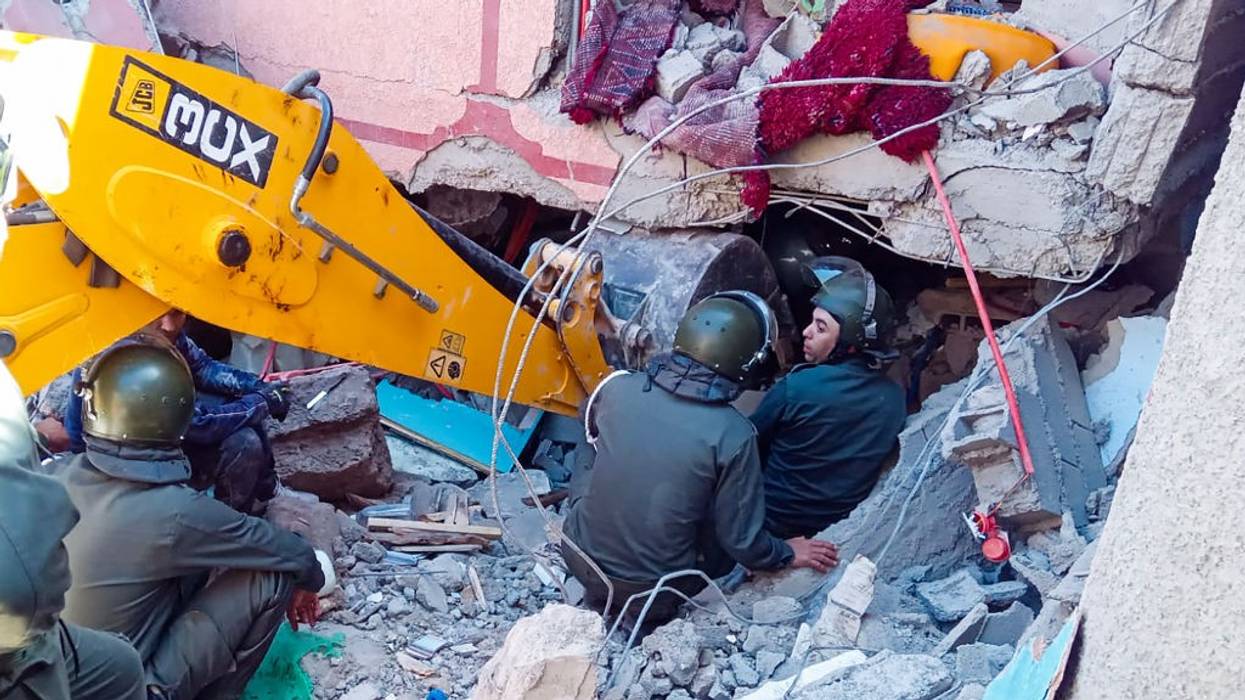
Death toll expected to climb as emergency workers search for survivors in Marrakesh and other impacted villages and cities.
This is a developing story... Check back for updates...
The strongest earthquake to hit the country of Morocco in more than 120 years has left over 800 people dead and many thousands more trapped, missing, or injured.
The quake registered 6.8 on the Richter scale with the epicenter located in the Atlas Mountains and not far the city of Marrakesh where historic buildings—many built of mortar and stone not designed to withstand such tremors—collapsed and the streets filled with people overnight trying to flee the destruction and danger.
"The problem is that where destructive earthquakes are rare, buildings are simply not constructed robustly enough to cope with strong ground shaking, so many collapse resulting in high casualties," Bill McGuire, professor emeritus of geophysical and climate hazards at University College London, told the Associated Press. "I would expect the final death toll to climb into the thousands once more is known. As with any big quake, aftershocks are likely, which will lead to further casualties and hinder search and rescue."
Morocco's interior ministry put the death toll at 822 as of Saturday morning, with 672 injured, but later revised those numbers to reflect that over 1,000 people are confirmed dead and more than 1,200 injured. Both numbers are almost certain to keep rising. Though the stronger impacts were closer to Marakesh, the earthquake was felt across the country, including in Casablance, Essaouira, and the capital city of Rabat.
Large nations, including both the United States and China, sent their well wishes to the people of Morocco.
"I am deeply saddened by the loss of life and devastation caused by the earthquake in Morocco," said U.S. President Joe Biden in an overnight statement. "Our thoughts and prayers are with all those impacted by this terrible hardship."
Biden said his administration as in contact with Moroccan officials and willing to send whatever help might be necessary. "We are working expeditiously to ensure American citizens in Morocco are safe," Biden said, "and stand ready to provide any necessary assistance for the Moroccan people."
"On behalf of the Chinese government and people, I would like to express my deep grief for the victims and sincere condolences to the families," said China's President Xi Jinping.
Dr. Mohammad Kashani, associate professor of structural and earthquake engineering at the University of Southampton, spoke with the Guardian to offer his analysis of the disaster.
"The earthquake was magnitude 6.8 with 18.5km depth, which is quite shallow," explained Kashani. "The shallow earthquakes are normally more destructive. The location is at the boundary of the Eurasian and African plates. Almost all earthquakes occur at the boundary of tectonic plates due to their movement."
"It is too early to see the extent of damage," he continued. "However, from what I’ve seen in photos and videos this very similar to the earthquake that occurred in February in Turkey. The area is full of old and historical buildings, which are mainly masonry. The collapsed reinforced concrete structures that I saw in the photos were either old or substandard."
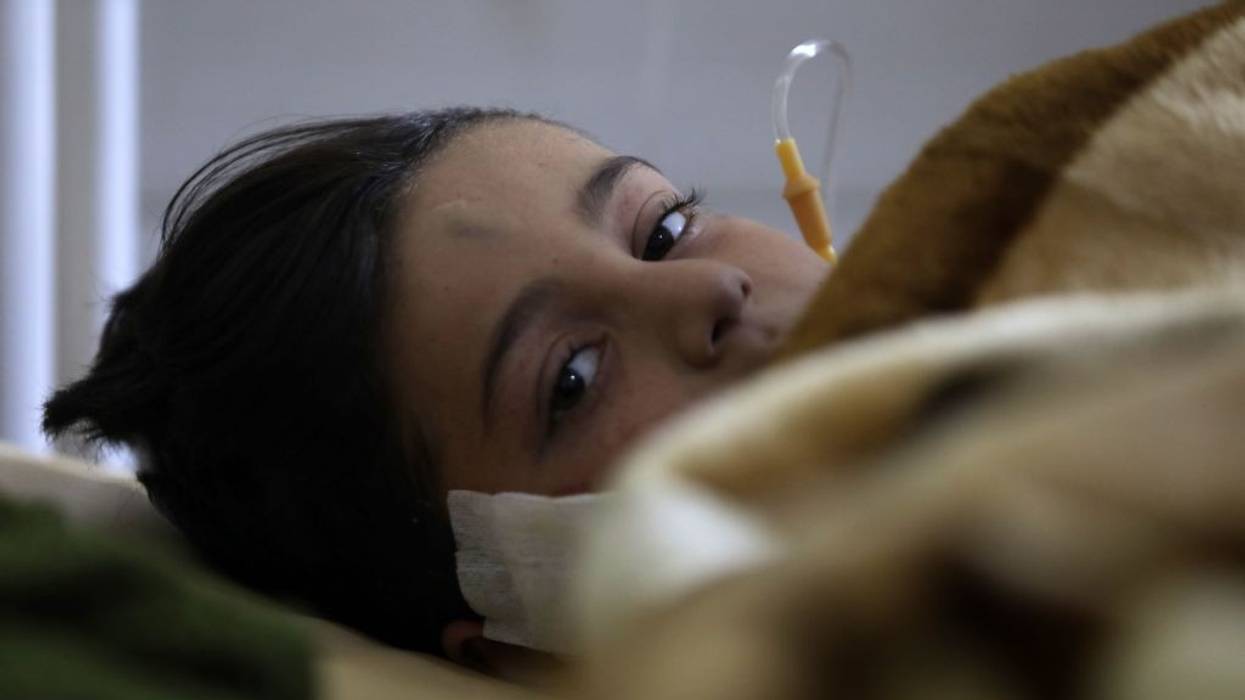
The Syrian children and people need attention—they deserve dignified shelters, access to healthcare, a good education, and proper nutrition.
Nothing could have prepared us for what we sawin the wake of the Türkiye-Syria earthquake.
As physicians who regularly deploy to areas in need, we are no strangers to crisis situations. In the last few years, we have volunteered in war zones from Yemen to Ukraine, building resilience in the local communities, improving access to healthcare, providing emergency response, and strengthening health care systems in crisis or low-resource-affected countries. Wars and natural disasters are the enemies of health. They destroy lives, neighborhoods, and infrastructure. They displace populations and disrupt public health infrastructure. They increase mortality, worsening chronic diseases, and infectious outbreaks. They maim physically and leave unseen psychological scars.
When we touched down last month, our team of physicians was shocked by the endless piles of rubble littering the streets. We knew the former inhabitants of these buildings were either dead or injured. The lucky ones were left displaced in temporary shelters with deep psychological scars that will take a long time to heal. Scattered among the rubble, we saw signs of normal life: chemistry homework, blankets, pillows, colorful plastic cars, dolls. Each represented a person lost to the earthquake.
By conservative estimates, the earthquake has impacted 23 million people, killing more than 45,000 civilians in Türkiye and at least 8,500 in Syria. This figure will sadly continue to climb in the weeks and months ahead. For many victims, this crisis is not their first –10% of those killed in Türkiye were Syrian refugees.
Immediately after a crisis, aid providers and policymakers take stock of the most pressing needs but often fail to think past the emergency to what will strengthen a community in the long run and ensure they are prepared for the next emergency that may come their way.This is especially the case in Syria, which just entered its 13th year of civil war.
Because of the ongoing war, our organizationMedGlobal already had teams present on the ground. Victims flooded into our hospitals in Darkush, Syria just hours after the earthquake. Our surgeons performed more than 600 surgeries, deployed mobile clinics to treat the displaced in the temporary shelters, and distributed much-needed medical supplies to hospitals. But even then, the sheer enormity of the crisis demanded more. For two weeks, we joined eight other physicians from the U.S. to complement the emergency response with training and resilience building.
Building resilience is harder and more complicated compared to the initial emergency phase. It goes beyond addressing immediate needs and focuses on bridging gaps in the system itself. It means training local providers and equipping them with the tools and technology to weather the storm and serve their communities.
Investing in public health infrastructure is as important as emergency response. Countries like Syria, which continue to face crisis after crisis, desperately need humanitarian aid groups and the broader international community to prioritize both emergency response and long-term capacity building, including training healthcare workers, focusing on secondary and tertiary medical care, and improving health governance.There are also significant needs for shelter, food, and medicine. The destruction of water and sanitation infrastructure has led to widespread contamination and worsened the cholera outbreak in the country.
Further, psychological trauma from ongoing war, displacement, and isolation is rampant, as is drug abuse, especially among young men. Our organization runs one of two hospitals in the region for patients with advanced psychiatric disease, as well as a primitive drug rehabilitation center. There are no community resources for dealing with patients with serious mental health problems, and there is a shortage of psychiatric medications. Our drug rehabilitation center is similarly not adequately resourced to deal with the scale of the crisis. The center director told us that 25% of young men are addicted to drugs, including crystal meth, captagon, and opioids. Health care providers are not equipped to deal with this crisis boiling under the surface. Syria has become a narco-state, and more resources must be directed toward this serious problem before things spiral out of control.
Here is the harsh reality: 90% of people in Syria live in poverty and two million Syrian children have been displaced from schools. The earthquake has exacerbated years of violent conflict and economic blockade. Idlib is an open-air prison, cut off from the outside world. Half of its population is displaced from other regions in Syria, fleeing bombs, chemical weapons, and torture.
Syria needs sustained support – which requires political solutions. Humanitarian aid sent to Damascus seldom gets to Northwest Syria. With Russia's help, the Assad regime has weaponized humanitarian aid to deprive populations hostile to its rule of getting food and medicine. Building resilience in war-torn communities starts by making sure they’re resourced. For that to happen, there should be a continuation of UN-run cross-border relief through the three border crossings temporarily open in the wake of the earthquake. Access to resources should be sustained – not only relegated to times of great crisis.The public health capacity we built through in-person trainings and providing resources was crucial, but this work needs to be scaled by international aid agencies, NGOs, and global leaders.
While in Syria, our team took care of Hasan, a four-year-old boy rescued from the rubble of his family house in Salkin after 44 hours. He lost his mother and siblings. Our surgeon had to amputate part of his left foot because it was severely crushed. He was deeply traumatized, like tens of thousands of other children who lost family members, shelter, and any sense of safety and security.
Children like Hasan will need long-term care, not only for physical injuries but for psychological trauma. More than anything, Hasan and the Syrian children and people need attention – they deserve dignified shelters, access to healthcare, a good education, and proper nutrition. They deserve a sense of normalcy and a resolution to the long war and compounded disasters.

"You and Apple and the Hedge Fund Titans are not known for your charitable giving... Yet, if asked 'Do you believe in the Golden Rule?' You would probably say 'Yes'—at least in public."
The victims of the devastating 7.8-magnitude earthquake in Turkey and Syria need your help now. The surviving families and children and those rescued alive from the rubble are in serious danger in affected wintertime impoverished regions. Refugees in other places fleeing their war-torn homelands are also suffering. International aid agencies are grossly insufficient for these immediate humanitarian necessities.
What are you Big Business Titans doing sitting on massive pay, profits, and tax escapes? Awakening your consciousness for your fellow human beings may be a modest form of redemption. Further, you have access to logistics specialists, delivery systems, communication facilities, and many other contacts and resources. You get your calls returned! Fast!
Tim Cook, you have been making $833 a MINUTE (plus lavish benefits). Remarkably, your compensation is not even in the top ten of operating company CEOs. Moreover, your own cultivated sense of envy knows that there are Hedge Fund Goliaths, who in some recent years, made off with over $2,500 per MINUTE on a forty-hour week.
Tim, you and the Apple corporation are known to pay few taxes given what tax attorneys and tax accountants do for you (especially with Apple taking advantage of foreign tax havens while receiving the fruits of Washington's free government R&D over the years). Your company has so much leftover money, flowing from the deprivation of a million serf laborers in China, and so few productive outlets for this mass of capital that you have set records for stock buybacks—over $400 billion in the last decade.
You and Apple and the Hedge Fund Titans are not known for your charitable giving as a percent of your adjusted gross income. Yet, if asked "Do you believe in the Golden Rule?" you would probably say "Yes"—at least in public.
Use your wealth and newfound empathy to organize direct relief for these earthquake victims and other major refugee areas such as the starving children of Somalia. Deliver food, medicine, clothing, shelter, mobile clinics, and many other available airlifted essentials. Hire skilled people to make it happen. Give your new organization a prominent logo for permanence and for setting an example for other super-rich to emulate.
Your isolation from the public expectation that you enter the above engagements in a significant way is quite remarkable. That should trouble you and your public relations advisors.
Just this week National Public Radio (NPR) featured a startling compilation of what producers of movies and TV shows believe appeals to their viewers. It is no longer awe or envy of the 'rich and famous.' It is no longer the Horatio Alger myth. It is encapsulated in NPR's headline: Why "eat the rich" storylines are taking over TV and movies.
As Bob Dylan sang, "the times, they are a-changin'."
NPR reporter Kristin Schwab related:
Hollywood's depictions of the wealthy—and perhaps societal attitudes toward them—have changed.… The moment isn't random. Think about the extreme economic events we've been through. There's the pandemic, when essential workers kept the country running while the richest 1% amassed a huge sum of wealth—twice as much as the rest of the world put together (her emphasis), according to the non-profit Oxfam. And before that was The Great Recession, which is how we got the term "the 1%."
Mr. Cook, Apple is reportedly making a contribution to the Turkey/Syria relief effort. Are you personally making a contribution? Your Big Business Titan comrades may think they can get away with gated, cold-blooded mentalities. They may be right about that if the mass media doesn't turn its steely gaze toward their hoards of gold and question their "don't give a damn" attitude.
Maybe they just can't help themselves—so busy are they counting their lucre. Here is an idea: ask them to ask their grandchildren, 12 and under, what they want them to do. Absorb their moral authority and MOVE FAST TO HELP THOSE IN NEED!

For the U.S., maintaining these failed sanctions while pledging to be "a partner to the people of Syria" is contradictory and counterproductive.
The devastating earthquake in Turkey and Syria has killed over 40,000 people, a number the United Nations has warned may escalate. The destruction is unfathomable.
According to the UN, at least 870,000 people across Turkey and Syria are in urgent need of hot meals. In Syria, around 5.3 million people are in need of shelter. Over 1 million people in Turkey are living in temporary shelters.
As a Syrian American whose family hails from Aleppo, it’s been painful for me to process the earthquake’s aftermath.
It feels like another punch in the gut after the horrors and anguish Syrians have already endured through years of war, displacement, and sanctions. Historic cultural treasures like Aleppo’s ancient Citadel, which greeted my parents on their way to school when they were growing up, have suffered significant damage.
Heartbreaking stories have emerged from Turkey and Syria. In one widely shared image, photographer Adem Altan memorialized the anguish of a father as he sat alone amidst the rubble, holding onto his deceased 15-year-old daughter’s hand.
Stories of rescue have also ignited flickers of hope amid such profound despair. Rescuers pulled a 10-year-old girl to safety after she was trapped for 147 hours beneath a collapsed building. A newborn baby was rescued from the rubble after relatives found her still tied by her umbilical cord to her mother, who had sadly passed away.
This earthquake is the latest crisis within a larger crisis in Syria, already fractured by tremors from political fault lines for over a decade now. Over 300,000 people have been killed there since war broke out in 2011.
Prior to the earthquake, an estimated 6.7 million people were already internally displaced. Millions more were impoverished by U.S. and European sanctions designed to strangle the economy and oust Syrian President Bashar al-Assad.
Additional U.S. sanctions since 2020 have targeted key sectors, including the Central Bank, oil, energy, and construction. They have also blocked food, medicine, medical equipment, and other necessities.
These sanctions have failed. Instead of removing Assad from power, they’ve collectively punished innocent Syrians. Ninety percent of Syrians now live in poverty, and 12 million are food insecure. With more than half of Syria’s infrastructure either destroyed or severely damaged by war, sanctions have made reconstruction and economic recovery impossible.
This was the situation before the earthquake struck.
Months earlier, UN envoy Alena Douhan called for an end to sanctions: “I urge the immediate lifting of all unilateral sanctions that severely harm human rights and prevent any efforts for early recovery, rebuilding, and reconstruction,” she said. Her recommendation has even greater urgency today.
In a de facto admission that sanctions are hurting civilians, the U.S. Department of Treasury recently agreed to open a 180-day window authorizing transactions “related to earthquake relief efforts” in Syria. Although a welcome development, it’s only a short-term reprieve from these sanctions’ far-reaching catastrophic impacts.
For the U.S., maintaining these failed sanctions while pledging to be “a partner to the people of Syria” is contradictory and counterproductive.
They should be permanently lifted to allow Syrians the chance to finally catch their breath and begin to rebuild from these crises with dignity. The U.S. and international community must also redouble their diplomatic efforts toward ending the war, instead of prolonging it. Tragedy should transcend political divisions, not reinforce them.
Turkey and Syria both face a long road to recovery. We should extend compassion and support to the earthquake victims. Sustained international aid is needed in both the immediate and long term.
Beyond aid, only an end to the war will bring lasting relief for Syrians.

"We welcome the decision by the U.S. Department of Treasury to issue a broad General License on Syria sanctions," said one advocate.
In the face of mounting pressure from rights groups and relief organizations on the ground, the Biden administration on Thursday issued a temporary license authorizing "all transactions related to earthquake relief that would be otherwise prohibited" by U.S. sanctions on Syria.
The move, announced by the Treasury Department on Thursday evening, amounts to a tacit admission that U.S. sanctions could have impacted the delivery of humanitarian aid to the country following the massive earthquake and dozens of aftershocks that killed more than 21,000 people in Syria and neighboring Turkey.
"As international allies and humanitarian partners mobilize to help those affected, I want to make very clear that U.S. sanctions in Syria will not stand in the way of lifesaving efforts for the Syrian people," said Deputy Treasury Secretary Wally Adeyemo. "While U.S. sanctions programs already contain robust exemptions for humanitarian efforts, today Treasury is issuing a blanket General License to authorize earthquake relief efforts so that those providing assistance can focus on what's needed most: saving lives and rebuilding."
The sanctions relief, which will be in effect for 180 days, came after U.S. officials repeatedly denied that the restrictions would impact humanitarian aid. Earlier Thursday, U.S. State Department spokesperson Ned Price said during a press briefing that "there are many hurdles to overcome when providing humanitarian assistance in Syria and especially after devastating earthquakes this week, but our Syrian sanctions policy is not among them."
But reporting and accounts from humanitarian leaders indicate that U.S. and European sanctions—which have long harmed Syrian civilians despite ostensibly being targeted at the Assad government—have hampered early aid and recovery efforts, compounding existing difficulties surrounding the delivery of emergency supplies to rebel-held areas of Syria. Freezing weather has also complicated aid and rescue operations.
Khaled Hboubati, the director of Syria's Red Crescent, said earlier this week that "we need heavy equipment, ambulances, and firefighting vehicles to continue to rescue and remove the rubble, and this entails lifting sanctions on Syria as soon as possible."
In a statement Tuesday, the Middle East Council of Churches called for "the immediate lifting of sanctions on Syria and allowing access to all materials, so sanctions may not turn into a crime against humanity."
The Associated Press reported that "in theory, aid operations in government areas should not be blocked by sanctions, since both the U.S. and EU have exemptions for humanitarian aid."
"But the reality on the ground is sometimes different," the outlet noted. "Banks might block transfers to pay suppliers or local workers for aid organizations for fear of running afoul of sanctions, despite the exemptions. Also, U.S. sanctions and to some extent E.U. ones try to prevent rebuilding of damaged infrastructure and property in government-held areas in the absence of a political solution, which could hamper post-earthquake recovery."
Abed Ayoub, director of the American-Arab Anti-Discrimination Committee, wrote on Twitter that "we welcome the decision by the U.S. Department of Treasury to issue a broad General License on Syria sanctions."
"This will ease sanctions and allow for much-needed additional aid into the country," Ayoub added.

"We need heavy equipment, ambulances, and firefighting vehicles to continue to rescue and remove the rubble, and this entails lifting sanctions on Syria as soon as possible," said the head of a leading humanitarian group.
A disaster response expert has implored the United States to lift its economic sanctions against Syria, warning that the restrictions are hampering rescue and relief operations in the earthquake-ravaged country.
"We need heavy equipment, ambulances, and firefighting vehicles to continue to rescue and remove the rubble, and this entails lifting sanctions on Syria as soon as possible," Khaled Hboubati, president of the Syrian Arab Red Crescent, said Tuesday at a press conference.
"The number of victims is likely to rise, and a number of buildings are still at risk of collapsing. The results of the earthquake are disastrous, and our volunteers are ready, but we lack equipment," said Hboubati. "We call on donor countries to cooperate to lift the blockade."
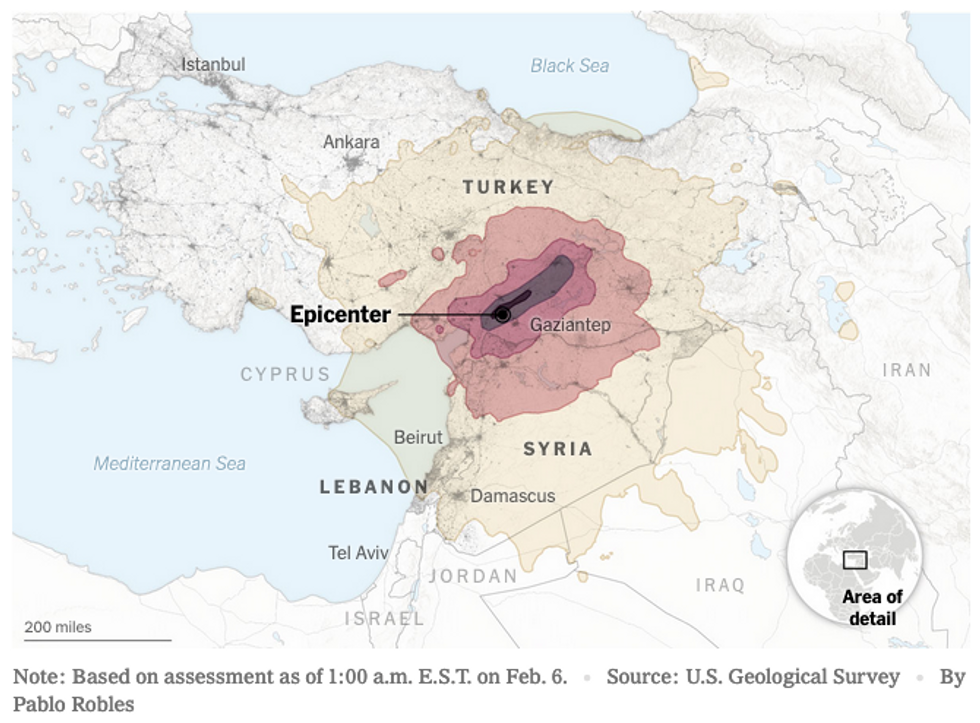
A 7.8 magnitude earthquake and at least 54 powerful aftershocks, including a 7.5 magnitude earthquake, struck southeastern Turkey and northern Syria on Monday, causing massive damage to both countries. At least 9,057 people in Turkey and 2,530 people in Syria have died so far and tens of thousands are injured. The United Nations emphasizes that the full scale of the disaster is still coming into view as thousands remain trapped under rubble.
An estimated 10.9 million people, many of whom are refugees already displaced by armed conflicts, have been affected by the earthquake catastrophe in the northern Syrian provinces of Hama, Latakia, Idlib, Aleppo, and Tartus. Roughly 100,000 people are now believed to be homeless in Aleppo alone, according to the U.N., which says that just 30,000 have found shelter in schools and mosques, leaving 70,000 vulnerable to newly arrived snow.
"Lift the economic sanctions imposed on Syria and the Syrian people. Open the way for us. We are ready to provide assistance."
While "several countries including the U.S. and its allies have extended their support to Turkey in its relief and rescue work, they have refused to extend similar assistance to Syria," Peoples Dispatch reported Tuesday. "The U.S. State Department made it clear on Monday that it was only willing to support some work carried out in Syria by NGOs, but that it would have no dealings with the Bashar al-Assad government."
As Al Jazeera reported, State Department spokesperson Ned Price told reporters on Monday that "it would be quite ironic—if not even counterproductive—for us to reach out to a government that has brutalized its people over the course of a dozen years now."
"Instead, we have humanitarian partners on the ground who can provide the type of assistance in the aftermath of these tragic earthquakes," said Price.
But experts have pointed out that leaving sanctions intact impedes the ability of NGOs to swiftly deliver aid to devastated populations in Syria.
As the American-Arab Anti-Discrimination Committee (ADC) explained Monday: "Currently any U.S.-based aid and relief efforts are required to ensure that they follow the Department of Treasury's Office of Foreign Asset Control (OFAC) guidance, or risk prosecution. This adds unnecessary and inhumane delays to organizations and individuals looking to support those in immediate need."
"We commend and are thankful to existing organizations on the ground providing immediate humanitarian aid and relief to those in Syria, Turkey, and across the region," said ADC director Abed Ayoub director. "The reality is more aid and relief is needed, and time is of the essence. Lifting of the sanctions will open the doors for additional and supplemental aid that will provide immediate relief to those in need."
Syrian Foreign Minister Faisal Mekdad told Al-Mayadeen on Monday that the government is willing "to provide all the required facilities to international organizations so they can give Syrians humanitarian aid."
Price, however, indicated that Washington has no plans to soften its stance toward the government of Syrian President Bashar al-Assad, which it deems illegitimate due to accusations of war crimes and human rights violations committed during an ongoing civil war that erupted after Assad brutally repressed pro-democracy protests in 2011.
“This is a regime that has never shown any inclination to put the welfare, the well-being, the interests of its people first," the U.S. diplomat said Monday. "Now that its people are suffering even more, we're going to continue doing what has proven effective over the course of the past dozen years or so—providing significant amounts of humanitarian assistance to partners on the ground."
Meanwhile, humanitarian groups on the ground continue to question the effectiveness of Washington's approach.
"Lift the economic sanctions imposed on Syria and the Syrian people," Hboubati said Tuesday. "Open the way for us. We are ready to provide assistance. We are ready to provide aid through the crossline and to send aid convoys to Idlib."
Hboubati stressed that the Syrian Arab Red Crescent does "not differentiate between any of the Syrian people" and called on the U.N., the European Union, and the U.S. Agency for International Development to support its mission.
Since the Caesar Act, passed by the U.S. Congress and signed into law by former President Donald Trump, went into effect in 2020, "any group or company doing business with the Syrian government faces sanctions," Peoples Dispatch reported. "The act extends the scope of the previously existing sanctions on Syria, imposed by the U.S. and its European allies since the beginning of the war in the country in 2011."
"The impact of sanctions on Syria's health and other social sectors and its overall economic recovery has been criticized by the U.N. on several occasions in the past," the outlet noted. "The U.N. has also demanded that all unilateral punitive measures against Syria be lifted."

Thousands of buildings flattened with the death toll certain to rise as rescue crews attempt to reach those trapped in the rubble.
Thousands of collapsed buildings, widespread destruction, and deep anguish were reported alongside over 2,300 dead and thousands more injured after a pair of earthquakes—an initial 7.8 tremor on the Richter scale in the early morning and another that measured 7.5—devastated Syria and Turkey on Monday.
Amid dozens of aftershocks—and the quakes being also felt in Cyprus, Israel, Lebanon, Egypt, and the Occupied Palestinian Territories—the full scale of the destruction and the ultimate death toll remains unknown, though early estimates of the dead and wounded were rising by the hour.
According to Turkey's Hurriyet Daily, President Recep Tayyip Erdoğan described the quakes as the most severe in the nation since 1939.
The first quake occurred just after 4:00 am local time in Kahramanmaras province, north of Gaziantep, near the Syrian border, while the second took place in the southeastern Turkey.
One television crew was reporting on the first quake in the city of Malatya, when the second one hit:
According to Al-Jazeera:
Rescuers were digging through the rubble of levelled buildings in the city of Kahramanmaras and neighbouring Gaziantep. Crumbled buildings were also reported in Adiyaman, Malatya and Diyarbakir.
The death toll in government-held areas of Syria climbed to 339, according to Syrian state media, with deaths reported in the cities of Aleppo, Hama, Latakia and Tartous.
Around the globe, human rights champions and political leaders offered sympathy to those impacted by the disaster and vowed emergency assistance to both Turkey and Syria.
Agnes Callamard, head of Amnesty International, said her organization was "in deep sorrow" following news of the disaster.
"We extend our deepest condolences to all those who have lost loved ones, and call for the Governments and international community to provide speedy search and relief," Callamard said.
Filippo Grandi, High Commissioner for Refugees at the United Nations, said, "We at UNHCR stand in solidarity with the people of Türkiye and Syria affected by today's devastating earthquake and are ready to help provide urgent relief to the survivors through our field teams wherever possible."