

SUBSCRIBE TO OUR FREE NEWSLETTER
Daily news & progressive opinion—funded by the people, not the corporations—delivered straight to your inbox.
5
#000000
#FFFFFF
To donate by check, phone, or other method, see our More Ways to Give page.
Daily news & progressive opinion—funded by the people, not the corporations—delivered straight to your inbox.
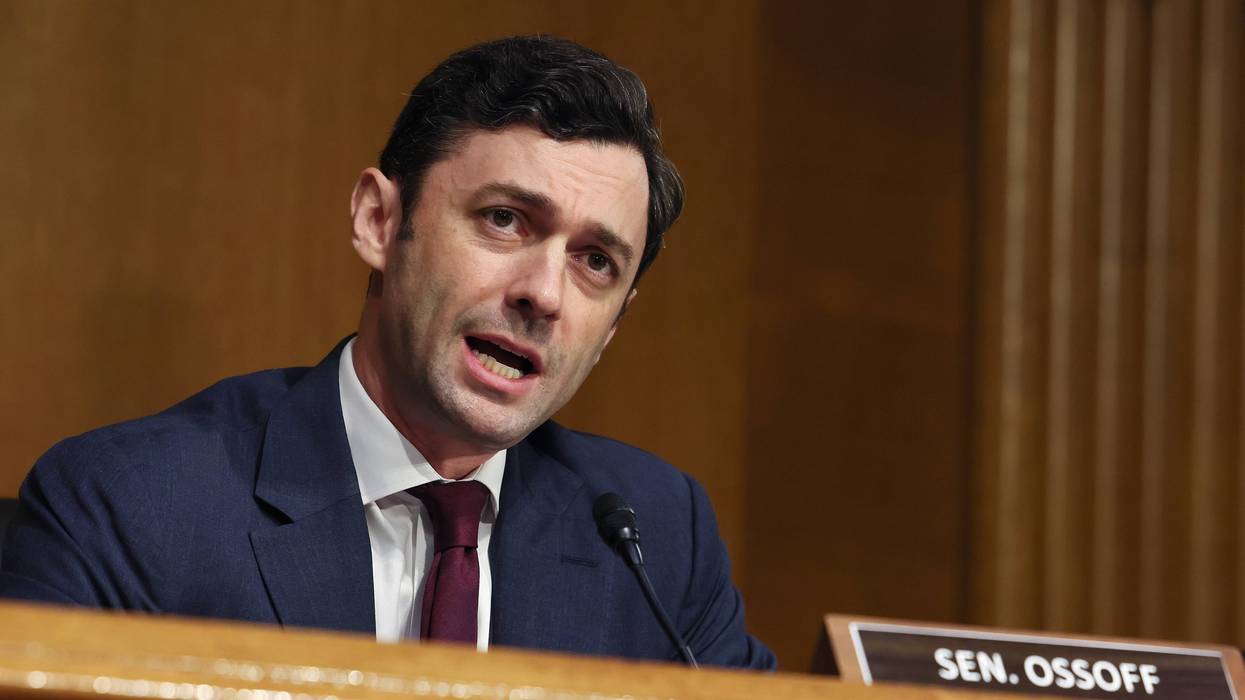
"If the president declares Georgia's elections illegitimate, or if the president declares Georgia's sitting United States senators illegitimate, he is declaring Georgia voters illegitimate."
Sen. Jon Ossoff on Thursday delivered a preemptive rebuttal to President Donald Trump's planned Thursday night speech on election security in the United States.
While speaking with reporters, Ossoff (D-Ga.) predicted that Trump would use the speech to once again peddle lies about the 2020 presidential election, which he lost to former President Joe Biden.
"Here's what's going to happen tonight," Ossoff began. "The world's most famous sore loser will deliver a primetime presidential sour-grapes address to pursue his six-year-old grievances about the 2020 election, while his war in the Middle East spirals out of control, the cost of living continues to rise for Americans across the country."
Ossoff: "Here's what's going to happen tonight: the world's most famous sore loser will deliver a prime-time presidential sour grapes address to pursue his 6-year-old grievances about the 2020 election, while his war in the Middle East spirals out of control and the cost of… pic.twitter.com/isF9qqrLz0
— Aaron Rupar (@atrupar) July 16, 2026
The Georgia Democrat said he expected Trump to "reheat debunked conspiracy theories" about the 2020 election, while all but daring the president to declare the results in his home state illegitimate.
"Let me be very clear about this," said Ossoff, who was elected in 2020 and is up for reelection this year. "If the president declares Georgia's elections illegitimate, or if the president declares Georgia's sitting United States senators illegitimate, he is declaring Georgia voters illegitimate."
Ossoff then reminded reporters that it was Trump who attempted to steal the 2020 election when he called Republican Georgia Secretary of State Brad Raffensperger and asked him to "find" the votes necessary to overturn Biden's victory in the state.
"It's Donald Trump who tried to defraud Georgia voters in that election," the senator said, "Donald Trump who tried to commit election fraud."
Ossoff's broadside against Trump's 2020 election lies came one day after he cornered Jay Clayton, Trump's nominee to be the next director of national intelligence, during a Senate confirmation hearing over his refusal to say who won the 2020 election.
"Isn’t it humiliating to be unable to answer this question?" Ossoff asked Clayton at one point. "To have to indulge the president’s delusions?"
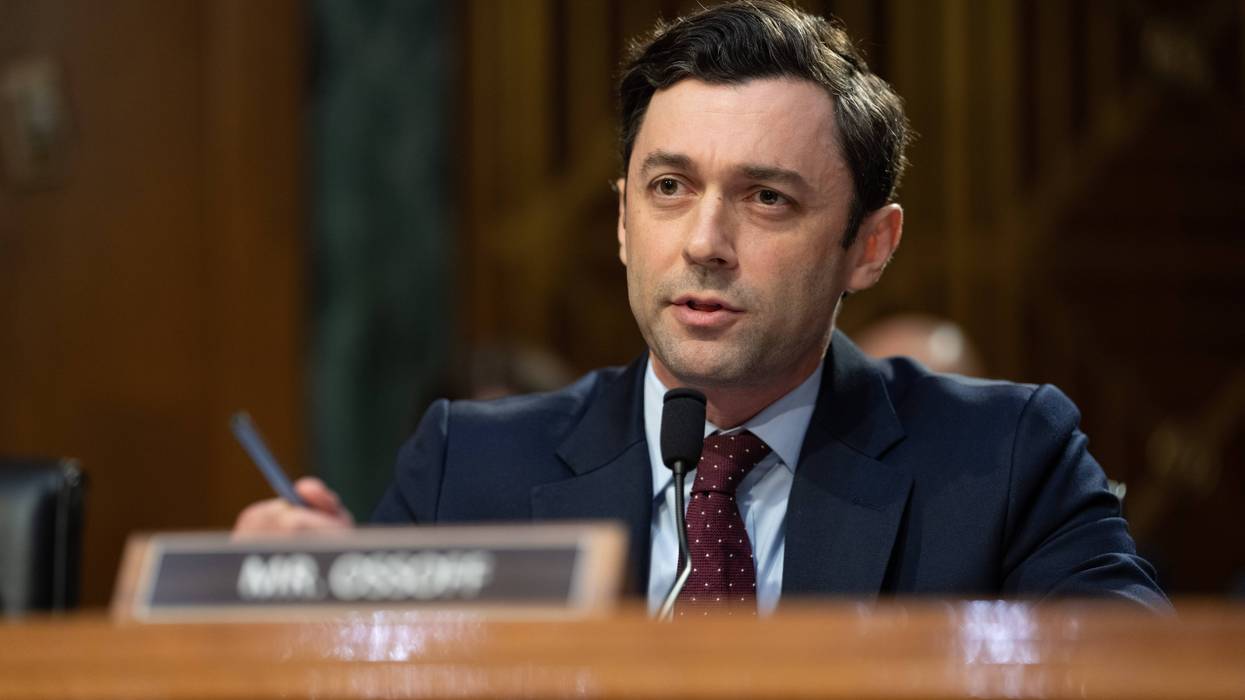
"You refuse to answer a basic question about who won a presidential election, but you asked to lead America's intelligence community?"
Sen. Jon Ossoff on Wednesday put President Donald Trump's nominee to be the next director of national intelligence on the spot by asking him about the results of the 2020 presidential election.
During a confirmation hearing before the Senate Intelligence Committee, Ossoff (D-Ga.) asked Jay Clayton, nominated by Trump to replace former DNI Tulsi Gabbard, who won the 2020 election.
"I'm not going to do this with you," Clayton replied.
Sen. Ossoff asks Trump's Director of National Intelligence nominee who won the 2020 election. pic.twitter.com/J3u5mqHqTt
— Ossoff's Office (@SenOssoff) July 15, 2026
"This is a job interview," Ossoff said. "We have established that you have an obligation to be honest and forthright with the committee, yes? You do have an obligation to honest and forthright with the committee?"
"Yes," Clayton said.
"Who won the 2020 election?" Ossoff pressed.
"Like I said, I'm not going to get into that with you," Clayton said.
After former President Joe Biden won the 2020 election, Trump refused to concede, told multiple lies to sow doubt about the results, tried to enlist officials including Georgia Secretary of State Brad Raffensperger and former Vice President Mike Pence to illegally overturn it, and then incited a violent riot at the US Capitol when those efforts failed.
Ossoff told Clayton that he would keep asking him about the 2020 election results because "you're not being honest and forthright with the committee."
"I'm not going to engage in the theater," Clayton shot back.
After being pressed by Ossoff again, Clayton simply sat in silence, which appeared to make the Georgia Democrat incredulous.
"You refuse to answer a basic question about who won a presidential election," Ossoff said, "but you asked to lead America's intelligence community? Isn't it humiliating to be unable to answer this question, to have to indulge the president's delusions?"
"We know, you know, everybody in this room knows the truthful answer to that question," Ossoff continued. "Why can you not give it?"
Sean Vitka, executive director for Demand Progress, said after the hearing that Clayton's refusal to answer Ossoff's question was disqualifying.
"Clayton’s trainwreck hearing showed us that he is willing to deny objective reality to avoid upsetting the president," Vitka said. "Someone like that must not be allowed to be the director of national intelligence, who wields vast power and must lead the intelligence community with nonpartisan integrity and independence from political pressure."
Vitka added that Democrats serving on congressional intelligence committees need to understand "the clear danger someone like Clayton would pose as Trump’s point man on government surveillance."
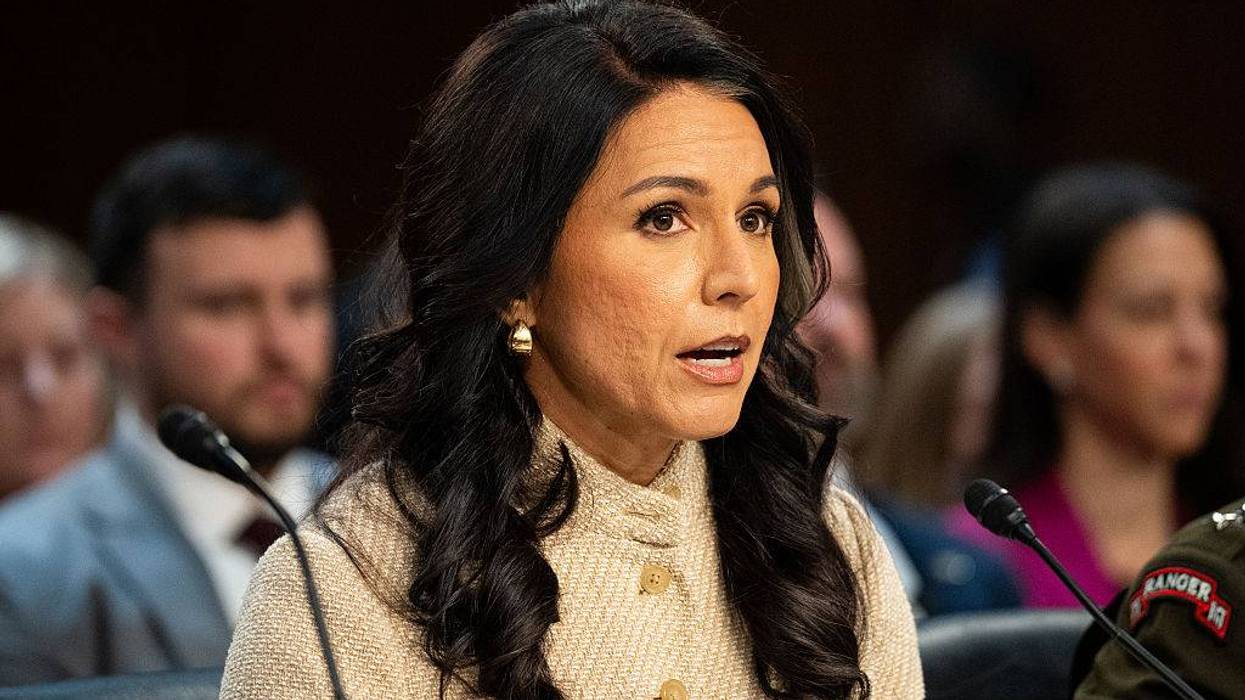
Sen. Jon Ossoff questioned how Iran could pose an "imminent nuclear threat" despite the purported "obliteration" of its nuclear program.
Sen. Jon Ossoff on Wednesday cornered Director of National Intelligence Tulsi Gabbard over President Donald Trump's false claims that he launched a war with Iran because it was an "imminent" threat to US national security.
During a Senate Select Intelligence Committee hearing, Ossoff (D-Ga.) questioned Gabbard about how any purported threat from Iran could possibly be deemed "imminent" given past administration statements about the state of its nuclear weapons program.
Ossoff began by noting that Gabbard's opening statement given to the committee ahead of the meeting claimed that "Iran's nuclear enrichment program was obliterated" as a result of airstrikes launched last year by the US.
"So the assessment of the intelligence community is that Iran's nuclear enrichment program was obliterated by last summer's airstrikes?" he asked.
"Yes," replied Gabbard, who prior to joining the Trump administration had a long history of advocating against launching a regime change war against Iran.
OSSOFF: Your opening statement stated that as a result of last summer's airstrikes, Iran's nuclear enrichment program was 'obliterated.' Correct?
GABBARD: That's right
OSSOFF: The WH stated on March 1 that this war was launched to 'eliminate the imminent nuclear threat posed by… pic.twitter.com/3rPVnmZVTb
— Aaron Rupar (@atrupar) March 18, 2026
"The opening statement you submitted to the community last night also stated, 'There has been no effort since then to try to rebuild their enrichment capability,' correct?" Ossoff continued.
"That's right," Gabbard replied.
"The White House stated on March 4 of this year that this war... was a 'military campaign to eliminate the imminent nuclear threat posed by the Iranian regime,'" Ossoff said. "That's a statement from the White House: 'The imminent nuclear threat posed by the Iranian regime.' Was it the assessment of the intelligence community that there was an imminent nuclear threat posed by the Iranian regime?"
Gabbard briefly paused and then responded that "the intelligence community assessed that Iran maintained the intention to rebuild and to continue to grow their nuclear enrichment capabilities."
At this point, Ossoff interjected.
"Was it the assessment of the intelligence community that there was an 'imminent nuclear threat' posted by the Iranian regime, yes or no?" he pressed.
"Senator, the only person who can determine what is or is not an imminent threat is the president," Gabbard said.
"False," Ossoff shot back. "This is the worldwide threats hearing where you present to Congress national intelligence... you've stated today that the intelligence community's assessment is that Iran's nuclear enrichment program was 'obliterated,' and that there 'had been no efforts since then to try to enrich their capability.'"
Ossoff then asked Gabbard if the intelligence community believed Iran posed an "imminent nuclear threat" despite the purported "obliteration" of its nuclear program.
"It is not the intelligence community's responsibility to determined what is and is not an imminent threat," Gabbard said.
"It is precisely your responsibility to determine what constitutes a threat to the United States," Ossoff countered. "This is the worldwide threats hearing."
"This should have people across the country absolutely shook," said Sen. Jon Ossoff.
The FBI's Wednesday raid on an elections center in Fulton County, Georgia is raising alarms about President Donald Trump's plans to disrupt the 2026 midterm elections.
Shortly after FBI agents executed a search warrant at the Fulton County Election Hub and Operations center to search for materials related to the 2020 presidential election, Fulton County Commissioner Mo Ivory warned that this kind of operation would likely be spreading to other counties and states.
"Fulton County is right now the target, the only county right now fighting over an election that already happened," she said, referring to Trump's election loss that he has refused to concede more than five years after it happened. "But it is coming to a place near you. This is the beginning of the chaos of 2026 that is about to ensue."
Commissioner Mo Ivory: Fulton County is right now the target, the only county right now fighting over an election that already happened. But it is coming to a place near you. This is the beginning of the chaos of 2026 that is about to ensue. pic.twitter.com/0HvPMMoQO8
— Blue Georgia (@BlueATLGeorgia) January 28, 2026
In a Wednesday interview on MSNOW, Sen. Jon Ossoff (D-Ga.) described the raid on the elections center as a "seismic event" that should be a flashing red light for US voters.
"This should have people across the country absolutely shook," Ossoff said. "This is a huge deal. This is an FBI raid on the Fulton County Elections office. [Trump's] conspiracy theories about the 2020 election have been based in Georgia from the very start... this is a shot across the bow at the midterm elections. He tried to steal power when he lost it in 2020. We have to be prepared for all kinds of schemes and shenanigans."
Ossoff: "This is a seismic event. This should have people across the country absolutely shook. This is a huge deal. This is an FBI raid on the Fulton County Elections office ... This is a shot across the bow at the midterm elections. He tried to steal power when he lost it in… pic.twitter.com/vb8YwcP3Pa
— Aaron Rupar (@atrupar) January 29, 2026
Sen. Mark Warner (D-Va.) noted that US Director of National Intelligence Tulsi Gabbard was spotted at the elections center during the FBI raid, which he said was wholly unprecedented given that her job is supposed to be focused on foreign national security threats.
Warner then posited two explanations for her presence on the ground in Fulton County.
"Director Gabbard believes there was a legitimate foreign intelligence nexus," Warner wrote in a social media post, "in which case she is in clear violation of her obligation under the law to keep the intelligence committees 'fully and currently informed' of relevant national security concerns."
The other option, said Warner, is that Gabbard "is once again demonstrating her utter lack of fitness for the office that she holds by injecting the nonpartisan intelligence community she is supposed to be leading into a domestic political stunt designed to legitimize conspiracy theories that undermine our democracy."
ProPublica published a report on Thursday that dove into the specifics of the search warrant executed at the Fulton County election center that allowed federal agents to seize 2020 election ballots, tabulator tapes, digital data, and voter rolls.
Rick Hasen, a law professor at the University of California, Los Angeles, told ProPublica that he has never seen a search warrant of this nature.
"The idea that federal officials would seize ballots in an attempt to prove fraud is especially dangerous in this context," said Hasen, "when we know there is no fraud because the Georgia 2020 election has been extensively counted, recounted, and investigated."
Derek Clinger, a senior counsel at the State Democracy Research Initiative, an institute at the University of Wisconsin Law School, told ProPublica that the sweeping search warrant marked "a dramatic escalation in the Trump administration’s efforts to expand federal control over our country’s historically state-run election infrastructure."
The bill, noted one opponent, "has some egregious provisions that will have dramatic consequences beyond its stated goal of locking up undocumented individuals like the man who murdered Laken Riley."
A dozen U.S. Senate Democrats on Monday helped the GOP pass the Laken Riley Act—an immigration bill decried as a far-right power grab—just hours after Republican President Donald Trump was sworn in for a second term.
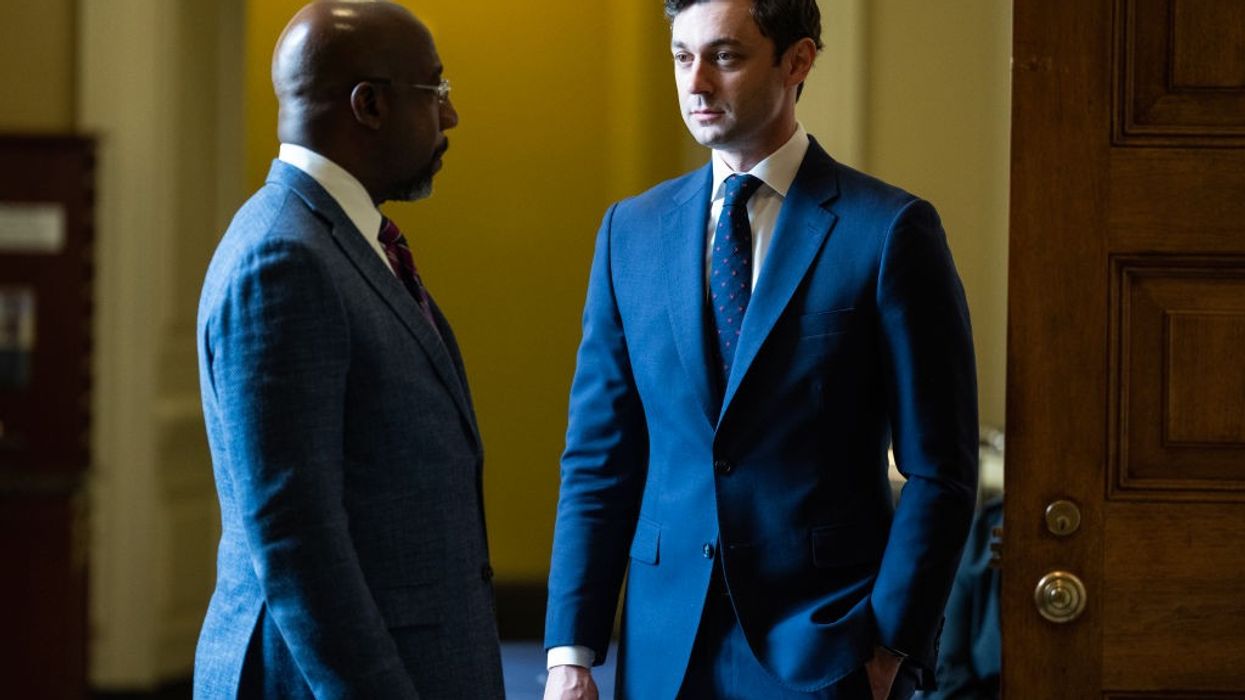
Those 12 Democrats are Sens. Catherine Cortez Masto (Nev.), John Fetterman (D-Pa.), Ruben Gallego (Ariz.), Maggie Hassan (N.H.), Mark Kelly (Ariz.), Jon Ossoff (Ga.), Gary Peters (Mich.), Jacky Rosen (Nev.), Jeanne Shaheen (N.H.), Elissa Slotkin (Mich.), Mark Warner (Va.), and Raphael Warnock (Ga.). Fetterman and Gallego co-sponsored the bill.
A version of the legislation—named for a 22-year-old woman murdered by a Venezuelan migrant in Georgia last year—was passed by the House of Representatives earlier this month in a 264-159 vote, with support from 48 Democrats. However, it must be approved by the chamber again before it will head to Trump's desk.
"I just voted against the Laken Riley Act," said Senate Judiciary Committee Ranking Member Dick Durbin (D-Ill.). "This bill won't accomplish its goals. I'm disappointed in its passage as it stands, and I'm deeply concerned about how it will be implemented."
Writing to members of Congress ahead of the Senate's 64-35 vote, over 70 national groups said that "the senselessness of the murder of Laken Riley does not justify making unprecedented changes to immigration detention laws that—like all mandatory incarceration provisions—will only result in more discrimination while doing little to increase public safety."
Urging lawmakers to oppose the bill the coalition explained:
S. 5 would require the mandatory detention—without any possibility of bond—of undocumented persons who are merely arrested for or charged with certain offenses, including misdemeanor shoplifting. It does not require conviction. There is no statute of limitations, and the bill does not specify any process by which a person might contest either their immigration detention or the underlying criminal charges (if charges are even pursued). Mandatory immigration detention on the basis of a mere arrest is unprecedented, and it would invite abuses that almost certainly would disproportionately impact people of color.
We are also concerned with language in the bill that would give states standing to sue the federal government over any allegation that the federal government is improperly implementing immigration laws, such as detention and removal provisions, visa provisions, or its discretionary parole authority. This language would open the floodgates to litigation, and it would enable individual states to shape federal immigration policies.
"Laken Riley should be with us today. Her murder is a tragedy, and the perpetrator should be held fully accountable," said Sen. Jeff Merkley (D-Ore.) after the vote. "The Laken Riley Act, however, has some egregious provisions that will have dramatic consequences beyond its stated goal of locking up undocumented individuals like the man who murdered Laken Riley. Specifically, it requires mandatory imprisonment for undocumented children who have never been charged with or convicted of a crime. This is twisted."
"We've seen time and again the damage the federal government can cause our children with dangerous immigration policies like this," he added. "I will continue to champion proposals that keep all of us safe, fix America's broken immigration system, and strengthen our border security. Our families and communities demand nothing less."
The Senate vote came as Trump began imposing his anti-immigrant agenda with a slew of executive orders. The Republican, who campaigned on mass deportations and ending birthright citizenship, is expected to sign the Laken Riley Act once it reaches him.
"Trump's first actions as president show us exactly who he is and what he believes about America," said Congresswoman Delia Ramirez (D-Ill.). "While he talked about unity, he used his first moment in the office to stoke fear and fuel division. While he talked about a 'golden age,' he signed unconstitutional and un-American executive orders that gut equality initiatives, criminalize immigrants, end asylum, roll back climate protections, and endanger our national security. There is nothing great about an America that denies peoples' civil rights, refuses refuge to the persecuted, or denies future generations clean air and water."
"I believe America is greatest when we pursue justice, equality, and peace and honor our shared humanity," she added. "This daughter of immigrants, citizen by birthright, and congresista from a district that celebrates our diversity, stands ready to fight for the soul of our nation. Regardless of who is president, I will continue to fight for the policies working people demand: affordable housing and healthcare, good-paying jobs, clean air and water, public safety, and comprehensive immigration reform."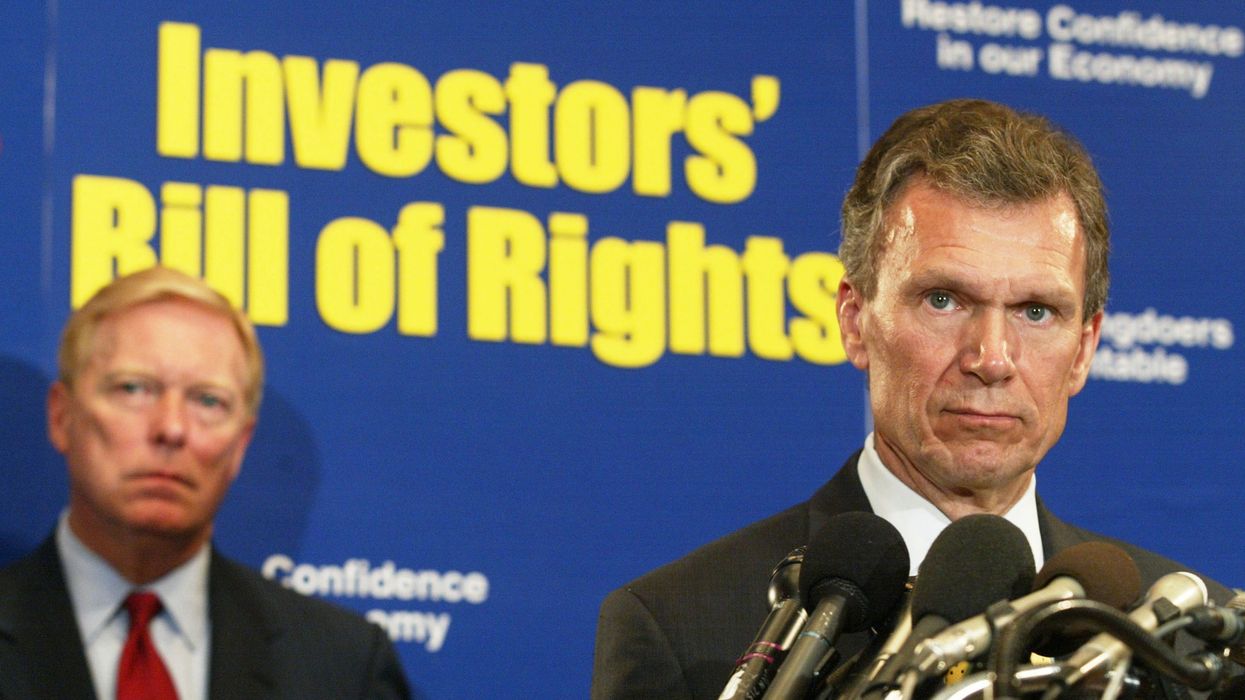
More than 40 former members of Congress said the ETHICS Act is sorely needed because it "addresses pressing issues, especially low levels of trust in Congress and the appearance of insider trading."
A bipartisan group of more than 40 former federal lawmakers on Monday urged the U.S. Senate to vote on proposed legislation that would ban sitting members of Congress from buying or selling stocks and other financial holdings.
"We, the undersigned bipartisan former public officials, many of whom served in Congress, write to urge Senate leadership to bring the amended Ending Trading and Holdings In Congressional Stocks (ETHICS) Act to a floor vote before it is set to sunset at the end of the 118th Congress," the letter's signers wrote in a letter to Senate Majority Leader Chuck Schumer (D-N.Y.) and Minority Leader Mitch McConnell (R-Ky.).
Signatories include former Sens. Tom Daschle (D-S.D.) and Chuck Hagel (R-Neb.) along with Reps. Barbara Comstock (R-Va.), Donna Edwards (D-Md.), Dick Gephardt (D-Mo.), and Leon Panetta (D-Calif.).
"Notably," the ex-lawmakers said, "we propose attaching this crucial legislation to any 'must-pass' package. This legislation merits inclusion in such a package because it addresses pressing issues, especially low levels of trust in Congress and the appearance of insider trading."
The letter continues:
As you are both aware, the discussion of how elected officials trade stocks has been intensifying both inside and outside the Congress for years. In 2022, members of Congress made more than 12,700 individual trades, with dozens of members making above-average gains. A 2022 New York Times investigation reported that a fifth of all lawmakers were trading in companies directly related to their work on a congressional committee.
Critics have long decried existing legislation—including the Ethics in Government Act of 1978 and the Stop Trading Congressional Knowledge (STOCK) Act of 2012, which require annual financial disclosures by members of Congress—as largely toothless window dressing. Advocates of measures like the ETHICS Act have pushed for more stringent safeguards against self-dealing by members of Congress.
The ETHICS Act—which was introduced in July by Sens. Jeff Merkley (D-Ore.), Jon Ossoff (D-Ga.), Gary Peters (D-Mich.), and Josh Hawley (R-Mo.)—would ban members of Congress, the president, and vice president from buying and selling securities, commodities, futures, options, trusts, and other holdings. It would also prohibit their spouses and dependent children from divesting covered assets starting in 2027. The bill contains robust enforcement mechanisms and noncompliance penalties.
Calls for a vote on the ETHICS Act mounted after last week's revelation that more than 50 U.S. lawmakers held stocks in companies related to the military-industrial complex—even as those same firms received hundreds of billions of dollars in annual business via congressional legislation.
After 18 months of bipartisan investigation, the United States Senate on Tuesday published a report and held a hearing on the medical abuse of women jailed in Georgia by U.S. Immigration and Customs Enforcement, which has been accused of covering up the widespread mistreatment by deporting survivors and witnesses.
"Irwin is the worst place I have ever been in my life."
The report, which pertains specifically to ICE's Irwin County Detention Center (ICDC) in Ocilla, Georgia, was written by the Senate Committee on Homeland Security and Governmental Affairs' Permanent Subcommittee on Investigations, which is chaired by Sen. Jon Ossoff (D-Ga.).
The subcommittee investigated numerous allegations of medical abuse at the private prison--which is owned by LaSalle Southeast LLC--including alleged "high rates" of forced hysterectomies performed by Dr. Mahendra Amin, excessive and unnecessary gynecological procedures, medical neglect, and other mistreatment. LaSalle--which claims to be "run with family values"--has come under fire for proven and alleged negligent homicide, beatings, sexual assault, discrimination, and other crimes and mistreatment by staff at several of its prisons.
While the Senate panel found no evidence of mass forced sterilizations--the two hysterectomies performed by Amin between 2017 and 2019 were deemed medically necessary--it did corroborate many other claims of detainee abuse.
Among the report's key findings:
"This is one of the most outrageous things this subcommittee has investigated over the past two years," Ossoff said during the hearing. "This is an extraordinarily disturbing finding, and in my view represents a catastrophic failure by the federal government to respect basic human rights."
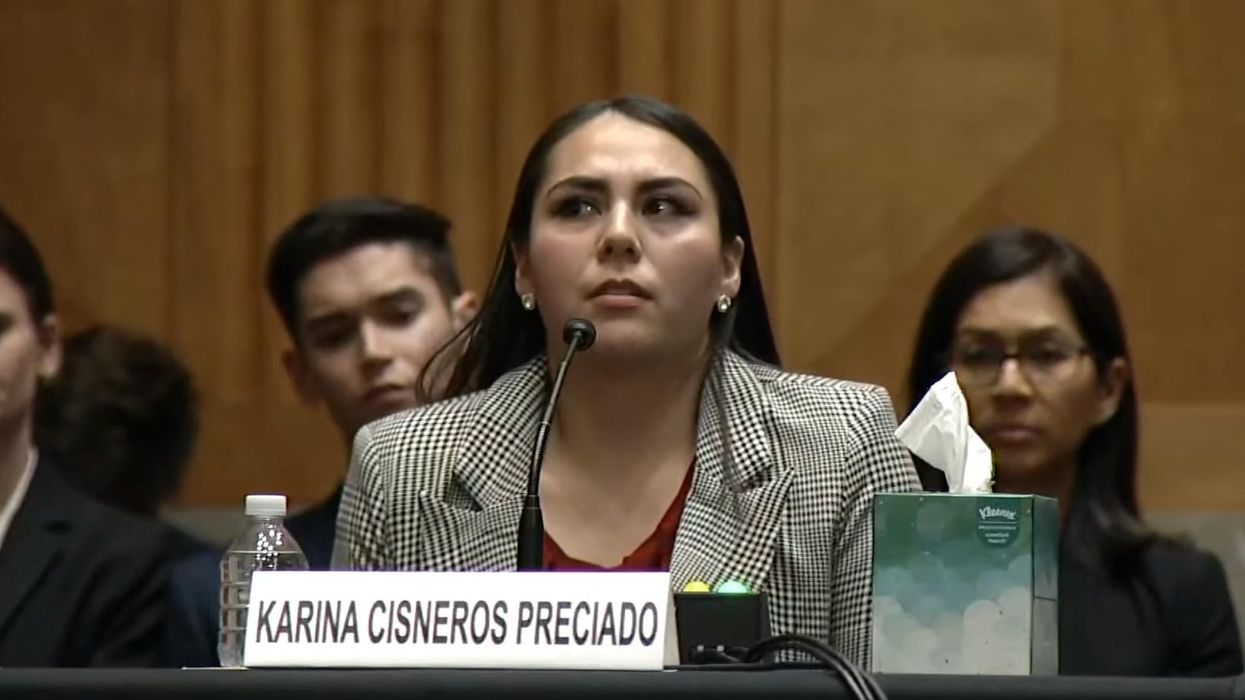
Karina Cisneros Preciado, a 23-year-old mother of two who was brought to the United States when she was eight years old and was arrested after reporting her domestic abuser, testified during the hearing that Amin attempted to force her to undergo ovarian surgery to which she did not consent and gave her a birth control injection without telling her what it was or asking permission.
"I had no control over my body," she said. "Before this experience, I had suffered sexual assault before, as a child. So... the experience with Dr. Amin made me feel the same thing I felt, it made me feel like I had no control over my body, no say, no vote."
"Irwin is the worst place I have ever been in my life," Cisneros said. "I went from being Karina, a mother, to just being 72176. They didn't care about what we felt, they didn't care about our names, they didn't care about none of that."
Cisneros said she was held at ICDC for nearly seven months, and when she was finally reunited with her daughter--an infant at the time of her arrest--the child was "already walking" and "didn't know who I was."
In related news, Common Dreams reported Tuesday that The Intercept obtained and published video footage of a hunger-striking asylum-seeker detained by ICE being force-fed--a possible violation of international law--in 2019.
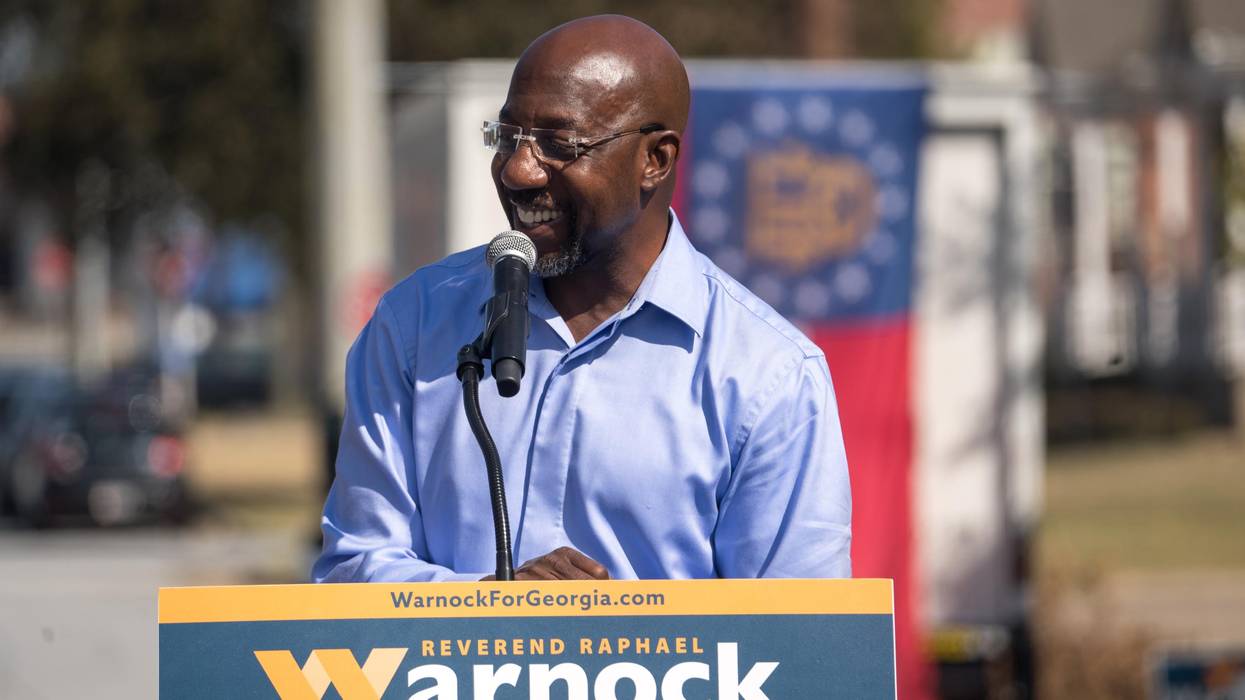
On the heels of a dramatic Friday night debate, U.S. Sen. Raphael Warnock's campaign took aim at his Republican opponent for refusing to commit to facing off again in Atlanta Sunday evening.
"If Herschel Walker can't show up for a debate, he can't be trusted to show up for Georgians in the U.S. Senate."
While Warnock (D-Ga.) and Libertarian Chase Oliver plan to attend the 7:00 pm ET debate hosted by the Atlanta Press Club, the controversial Republican candidate, Herschel Walker, has not accepted an invitation.
Warnock's campaign said in a statement Sunday that Walker "denying Georgians multiple opportunities" to see the difference between the candidates reaffirms that "he is not ready to represent the people of Georgia."
"On Friday night, Rev. Warnock showed voters the clear choice Georgians have in this election, and while he will do the same tonight in Atlanta, Herschel Walker won't be there because he's refusing Georgians that opportunity," said Quentin Fulks, the Democrat's campaign manager.
"If Herschel Walker can't show up for a debate," Fulks added, "he can't be trusted to show up for Georgians in the U.S. Senate."
Warnock and fellow Georgia Democrat Sen. Jon Ossoff both won crucial runoff races last year, giving their party narrow control of the upper chamber. Only Warnock is up for reelection this year. Early voting for next month's midterms begins on Monday in the state.
Recent polling shows Warnock winning over Walker, but in several cases that lead has been within the survey's margin of error. The Georgia race is one of a few--along with contests in Nevada, Pennsylvania, and Wisconsin--expected to determine whether Democrats retain Senate control.
Walker and Warnock have so far only debated once--last Friday. During that meeting, the incumbent stressed that his GOP challenger--a former professional football player with a history of domestic violence and a dissociative identity disorder diagnosis--"has a problem with the truth."
Referencing incidents from Walker's past, Warnock said Friday, "One thing I have not done--I've never pretended to be a police officer, and I've never threatened a shootout with the police."
In a move that has since garnered national headlines, Walker insisted on defending his previous claims of a career in law enforcement and took out an honorary badge--prompting an argument with a debate moderator, who stressed that props were not allowed.
Citing Walker campaign spokesperson Will Kiley, The New York Times reported that "the badge was given to him in recognition of community service work he had done with the Cobb County sheriff's department," and he has another from Johnson County, which includes his hometown.
The newspaper noted that representatives for both departments were unavailable to comment but spoke to other state sources who put the honorary badge into context:
"Georgia sheriffs were seriously handing out those badges like candy in a candy dish," J.Tom Morgan, a former district attorney in DeKalb County, Georgia, who was elected as a Democrat, said in an interview on Saturday. "That badge gives you no law enforcement authority. He doesn't have the power to write a traffic ticket."
Mr. Morgan, who is now a professor at Western Carolina University, said the badges became so widely abused that the Georgia Sheriffs' Association curtailed the practice of giving them out.
"What would happen is somebody would get stopped for speeding, and they would whip out one of those badges," he said. "And there were people charged with impersonating a police officer."
Walker was widely ridiculed for the onstage stunt.
Media Matters for America's Matthew Gertz said of the badge-flashing that "Republican leaders are willing to accept dumb antics like this because they know Herschel Walker will be a vote for cutting Social Security, Medicare, and Medicaid, and banning abortion nationwide."
An ex-girlfriend recently claimed that Walker reimbursed her for an abortion he encouraged her to have--providing The Daily Beast with a clinic receipt, a "get well" card from the anti-choice candidate, and a bank deposit slip. She then told the Times that he unsuccessfully pressured her to terminate a second pregnancy, resulting in a now-10-year-old son.
Walker declined to comment on the Times report but has repeatedly denied that he paid for the woman's abortion, calling it "a lie" at the debate. In contrast with previous comments on the topic, Walker also claimed Friday he does not back a federal ban on abortion and instead supports Georgia's law that prohibits terminating a pregnancy after around six weeks, with limited exceptions.
Since Friday, Warnock's campaign and supporters of the Democrat have highlighted various moments from the debate, from the badge incident to the Democrat's comments in support of abortion rights.
Walker, while addressing his opposition to federal legislation capping the cost of insulin, said Friday that "I believe in reducing insulin, but at the same time, you gotta eat right... Unless you have eating right, insulin is doing you no good."
Some critics of Walker noted that while diet and exercise may help some people prevent Type 2 diabetes, there are no known ways to prevent Type 1 diabetes, and those with it must take insulin daily to survive.
Meanwhile, Warnock argued that Georgia should expand Medicaid under the Affordable Care Act and "needs a senator who believes, like I do, that healthcare is a human right."
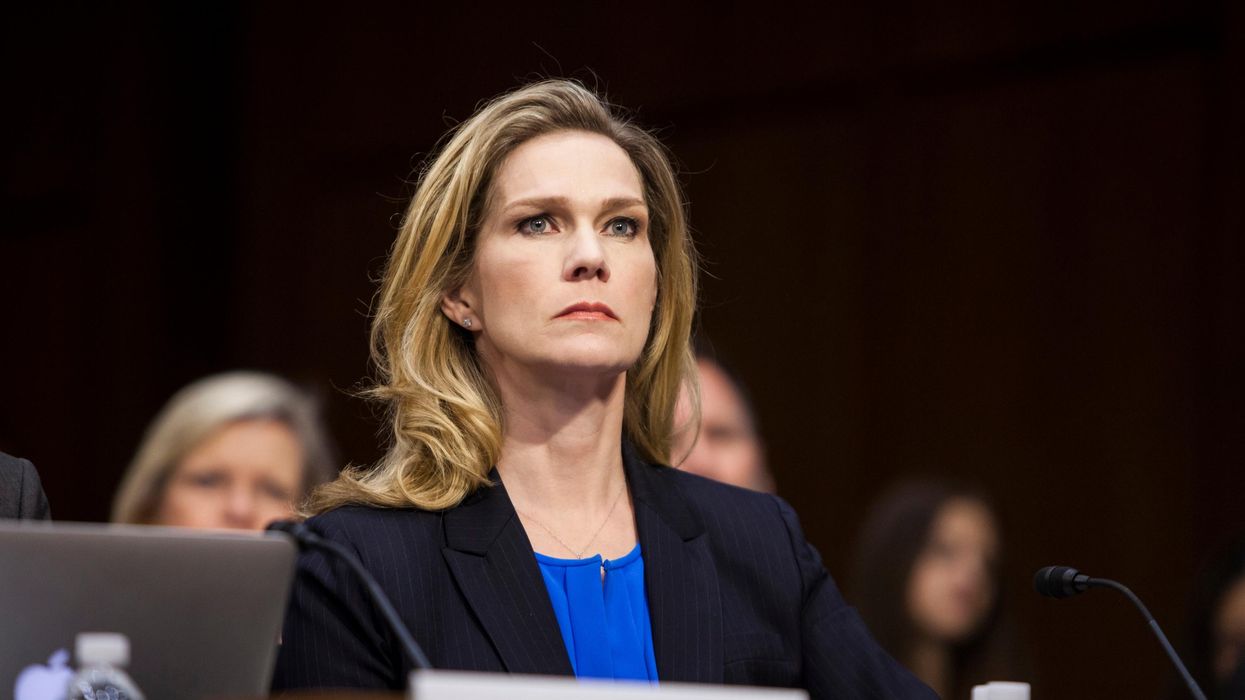
With less than a month before the U.S. midterm elections, a watchdog group on Monday sued the federal regulatory agency responsible for enforcing campaign finance law over "failing to protect Georgia voters."
"This is yet another example of the FEC refusing to enforce our nation's campaign finance laws."
The Campaign Legal Center Action (CLCA) filed suit against the Federal Election Commission (FEC) in the U.S. District Court for the District of Columbia on behalf of Common Cause Georgia.
The lawsuit follows the FEC's three GOP commissioners dismissing a March 2021 complaint from CLCA and Common Cause Georgia alleging illegal coordination between the nonprofit True the Vote--founded by Catherine Engelbrecht, who's known for spreading voter fraud conspiracy theories--and the state Republican Party during the 2021 U.S. Senate runoff.
"The FEC's dismissal of this administrative complaint was based on critical errors of law and cannot be sustained," argued Megan McAllen, director of campaign finance litigation at CLCA, in a Tuesday statement. "This is yet another example of the FEC refusing to enforce our nation's campaign finance laws even in the face of significant evidence the law was violated."
"Failing to hold political actors accountable for their abuses of campaign finance law does immense damage to the anti-corruption and transparency objectives that those laws were designed to serve," she continued. "We urge the court to recognize that this dismissal was contrary to law and send the case back to the FEC so the agency can do its job."
FEC Chairman Allen Dickerson, along with Commissioners Sean Cooksey and Trey Trainor, blocked an investigation into the allegations against True the Vote and the Georgia Republican Party.
Dickerson and Trainor said in a statement explaining their decision that True the Vote's "election integrity initiatives were equally available to all" and evidence shows the group "was pursuing these initiatives--and would have continued to do so--regardless of Engelbrecht's meeting with the Georgia GOP."
Referencing True the Vote's post-meeting public comments about partnering with the Georgia Republican Party to "ensure that the law is upheld and law-abiding voters have their voices heard," Dickerson and Trainor claimed the language "had a colloquial and not a legal significance" and there is nothing to suggest the group "undertook any of its activities 'in cooperation, consultation, or concert with, or at the request or suggestion of' the Georgia GOP."
As Insider reported last month:
The FEC's nonpartisan legal office reached a markedly different conclusion.
In a 56-page report recommending an investigation, the FEC general counsel pointed to past statements in which Engelbrecht said True the Vote's efforts were intended to "assist with the Senate runoff election process" and were motivated by "what happened in November," an apparent reference to the 2020 presidential election.
"True the Vote's efforts were undertaken in partnership with the Georgia GOP, a committee whose fundamental purpose is to help Republicans win elections in Georgia, and it appears that a goal of these particular efforts was to influence the election by challenging absentee voter registrations," the FEC general counsel's office said.
Insider noted that "representatives from True the Vote did not immediately respond to requests for comment."
Common Cause Georgia executive director Aunna Dennis said Tuesday that "we were pleased that the FEC's nonpartisan Office of General Counsel agreed that there was reason to believe violations occurred."
"The FEC's three Republican commissioners rejected that recommendation, however, and failed to stand up for hundreds of thousands of Georgia voters by letting True the Vote off the hook for their illegal attempts to undermine people's votes in 2021," she asserted.
Dennis added that "we have another important election just weeks away and Georgia voters need reassurance that their rights to vote will always be respected and that our federal institutions won't neglect their duties to enforce the law."
The Democratic candidates, Jon Ossoff and Raphael Warnock, won Georgia's U.S. Senate seats in 2021, giving their party narrow control of the chamber. Warnock is up for reelection this year and is locked in a tight race against his scandal-plagued GOP opponent, Herschel Walker.

A leading government ethics watchdog on Monday renewed calls to ban members of Congress from trading stocks during their terms in office, a move that came ahead of a major New York Times investigation revealing that nearly 100 U.S. lawmakers reported trades in companies influenced by their committees.
"People wonder why it's so difficult for Democrats to convince voters that they'll improve outlooks for working families."
"We need more action on legislation that would ban congressional stock trading. And fewer members of Congress in violation of the rules already on the books," Citizens for Responsibility and Ethics in Washington (CREW) tweeted earlier this week. "It's time we ban them from buying and trading stocks while in office."
Sen. Elizabeth Warren (D-Mass.) agreed, tweeting that "it's long past time to ban members of Congress and their spouses from owning and trading individual stocks."
Tuesday's Times report detailed how at least 97 members of the House and Senate "bought or sold stock, bonds, or other financial assets that intersected with their congressional work or reported similar transactions by their spouse or a dependent child."
"The potential for conflicts in stock trading by members of Congress--and their choice so far not to impose stricter limits on themselves--has long drawn criticism, especially when particularly blatant cases emerge," Kate Kelly, Adam Playford, and Alicia Parlapiano wrote in their report.
"But the Times analysis demonstrates the scale of the issue," the reporters added. "Over the three-year period, more than 3,700 trades reported by lawmakers from both parties posed potential conflicts between their public responsibilities and private finances."
The lawmakers are almost evenly split along party lines. According to the Times:
Senator Tommy Tuberville, Republican of Alabama and a member of the agriculture committee, regularly reported buying and selling contracts tied to cattle prices starting last year, even as the panel, by Mr. Tuberville's own account, had "been talking about the cattle markets."
Representative Bob Gibbs, an Ohio Republican on the House Oversight Committee, reported buying shares of the pharmaceutical company AbbVie in 2020 and 2021, while the committee was investigating AbbVie and five rivals over high drug prices.
Among Democrats, profiled lawmakers range from conservative Reps. Josh Gottheimer of New Jersey (trades involving 326 companies and 43 potential conflicts of interest) and Minnesota's Dean Phillips (276 trades, 34 potential conflicts) to progressives including Rep. Ro Khanna of California, who attributed 897 reported trades--which involve 149 potential conflicts of interest--to relatives' transactions.
Notably absent from the new report is House Speaker Nancy Pelosi (D-Calif.), who--despite her husband trading as much as $81 million worth of assets between 2019 and 2021, including in numerous companies subject to congressional scrutiny--was excluded because she does not sit on any regulatory committee.
Khanna told the Times that a "highly diversified trust" that is independently managed--such as the one used by his family--is an ethical solution.
"No one should ever have to wonder whether their member of Congress is working for the public interest or their own financial interest."
"If someone's coming into a marriage with independent resources, I think that's the appropriate way to deal with the conflict," the Silicon Valley multimillionaire said.
Under the 2012 STOCK Act, members of Congress are permitted to buy and sell stocks, bonds, and other financial instruments but they cannot trade on inside information and they must disclose within 45 days any transactions worth more than $1,000 that they or their immediate family members made.
However, as a running investigation by Insider shows, 72 members of Congress have violated the STOCK Act in recent years, with the website reporting Monday that Rep. Chris Jacobs (R-N.Y.) is the latest to get caught breaking the law.
Furthermore, the STOCK Act has been criticized for its loopholes and relative toothlessness. In a bid to address these issues, Democratic Sens. Jon Ossoff of Georgia and Mark Kelly of Arizona earlier this year introduced the Ban Congressional Stock Trading Act, which if passed would compel members of Congress, their spouses, and dependent children to place certain investments into blind trusts or divest them.
Despite support from Pelosi and Senate Majority Leader Chuck Schumer (D-N.Y.), the proposed legislation has stalled, as no version that can garner the support of 60 senators--whose ranks include corporate Democrats like Joe Manchin of West Virginia and Arizona's Kyrsten Sinema--has yet emerged.
Related Content

A separate bipartisan measure introduced in February by Sens. Warren and Steve Daines (R-Mont.) along with Reps. Pramila Jayapal (D-Wash.) and Matt Rosendale (R-Mont.) would, if passed, ban U.S. lawmakers and their spouses from owning or trading stocks.
"No one should ever have to wonder," Warren said at the time, "whether their member of Congress is working for the public interest or their own financial interest."
This article has been updated to clarify that CREW's call preceded the Times investigation.