November, 01 2010, 02:21pm EDT
Previewing Latino Turnout: Parties' Immigration Stances Offer Plenty of Reasons to Vote
Latest Latino Decisions Tracking Poll Shows Uptick in Enthusiasm as Sen. Reid Plans Action on DREAM & GOP Doubles Down on Enforcement-Only
WASHINGTON
In an election season filled with races in which Latino voters could make a difference, Latino Decisions' final weekly tracking pollshows that Latino voters have become more engaged and enthusiastic about voting in the final weeks. While some of this is undoubtedly attributable to increased talk about the election and significant mobilization efforts by non-partisan groups, both parties' recent actions and promises on immigration are offering Latinos plenty of reasons to vote, and making it clear what's at stake on Election Day when it comes to the immigration debate.
In its recap of the final pre-election polling, Latino Decisions writes, "we find a Latino vote more energized, more enthused, and significantly more Democratic than at the start of the general election campaign...The percentage of Latinos reporting a certainty of voting has climbed to 76.9%, its highest level in the entire track, more than five points higher than where we were eight weeks back and more than 10 points higher than the low point in Wave 5."
According to Frank Sharry, Executive Director of America's Voice, "Latino voters are poised to surprise the political class with an unprecedented mid-term turnout. They could prove to be the decisive factor in a number of high-profile races - in California, Nevada, Colorado and Florida."
As evidenced by the Latino Decisions polling and developments in key races, immigration is playing an important role in shaping Latino voter perceptions of both parties and intention to vote. The parties' immigration stances are a major reason that Latino Decisions found, "Overall, with undecided voters pushed to make a decision, we report 70% vote intention for Democrats, and 30% for Republicans, on the generic ballot midterm question."
On one side of the ledger, Senate Majority Leader Harry Reid (D-NV) announced his intention to bring the DREAM Act up for a Senate vote during the post-election legislative session. Reid's re-election race, in addition to high-profile races like the California gubernatorial race between Jerry Brown and Meg Whitman and the California Senate race between Barbara Boxer and Carly Fiorina, have featured sharp partisan distinctions over immigration. If the Democrats win, Latino voters will have played a starring role in their victories.
On the other side of the ledger, all seven Republican members of the Senate Judiciary Committee gave a preview of what to expect if they are running the show the next Congress. In a letter sent to the U.S. Department of Homeland Security (DHS), the Republicans asked DHS "how much money it needs to deport every illegal immigrant the government encounters." As an unnamed Obama Administration official rightfully pointed out, "This isn't about doing this job better in the end. This is about scoring political points, which is exactly what's wrong with the immigration debate right now."
In addition, anti-immigrant forces on the ground are mobilizing in a direct assault on the democratic process and citizens' rights to vote. The zealously anti-immigrant organization Ban Amnesty Now and Arizona Sheriff Joe Arpaio (R) announced plans to mobilize a "grassroots army" focused on "stopping illegal immigrants from trying to vote"-code for voter intimidation against Latinos. Given these and other threats, the U.S. Department of Justice is sending monitors to Maricopa County, AZ as well as other locations across the nation. Arpaio is now distancing himself from the threats from Ban Amnesty Now, saying the organization's email alert that bore his name was sent without his authorization. But he can't distance himself from his long record of abuse and threatening tactics toward Latinos in Arizona.
According to Sharry, "For many Latino voters, there are plenty of reasons to vote and stark choices between the candidates. We'll be watching to see where and how the Latino vote made a difference and what the 2010 elections mean for the future of sensible immigration reform."
The day after the midterm elections, Latino Decisions and experts in Latino civic participation and immigration reform will release a new series of polls that detail how Latino citizens voted in eight states crucial to determining the balance of power in Congress. The polls, which utilize a new model to reach likely voters, will reveal who Latinos voted for in key races for House, Senate, and Governor, and what motivated their vote. The research will include data on naturalized citizen voters as well as other subgroups. The polling and analysis will be discussed on a call with reporters on November 3rd at 1 PM Eastern. To access, Dial In: 1-800-895-0198, Password: "POLITICS"
More Resources on Latino Voters and the Politics of Immigration in the 2010 Elections:
- The Power of the Latino Vote in America - Analysis of Latino voting trends in recent years, and the role of immigration in Latino political engagement
- Voter Guide to the Candidates - Candidates' positions on immigration in fifty-four competitive 2010 races in nineteen states across the country
- The Immigration "Dirty Dozen" - Twelve of the most outrageous statements about immigrants in the 2010 election cycle
- Latino Decisions' Weekly Tracking Polls of Latino Public Opinion: Latino voter views on immigration and other issues in the 2010 election cycle
- Polling Roundup on Immigration - An overview of recent public opinion on immigration issues
- The New Constituents - How Latinos are shaping the results of congressional reapportionment based on the 2010 Census
America's Voice -- Harnessing the power of American voices and American values to win common sense immigration reform. The mission of America's Voice is to realize the promise of workable and humane comprehensive immigration reform. Our goal is to build the public support and create the political momentum for reforms that will transform a dysfunctional immigration system that does not work into a regulatory system that does.
LATEST NEWS
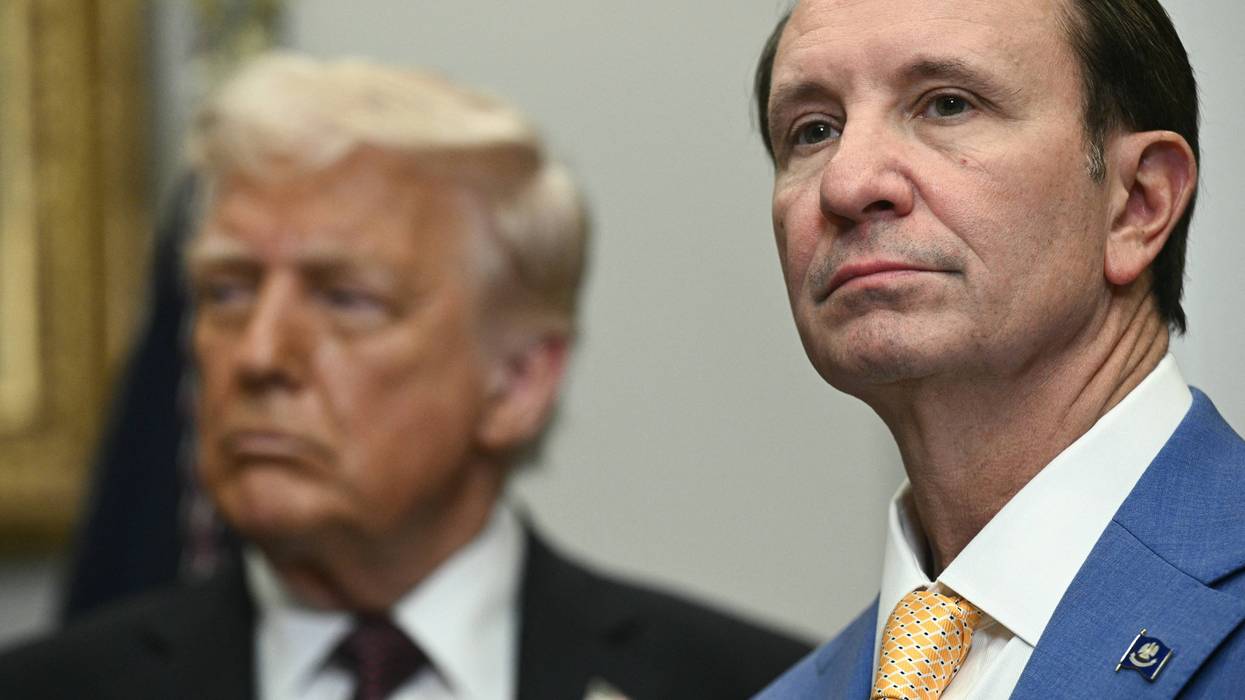
'Colluding in Broad Daylight': Trump Praises Louisiana Governor for Suspending Elections
"The MAGA court made their decision to gut voting rights just in the nick of time for Louisiana Republicans to postpone the scheduled primaries to slice and dice voting maps."
May 01, 2026
Louisiana's Republican governor issued an order on Thursday suspending his state's US House primaries to allow lawmakers to draw up a new congressional map, citing the Supreme Court's decision earlier this week that gutted Section 2 of the Voting Rights Act.
Gov. Jeff Landry published his executive order just as early voting was set to begin in Louisiana's congressional primaries—and after some absentee ballots had already been cast. The order states that the US House primaries are "suspended for the duration of the May 16, 2026 and June 27, 2026 election cycles and until July 15, 2026 or until such time as determined by the Legislature," which is instructed to "pass legislation to enact new congressional maps."
The order was met with immediate alarm and outrage. Joel Payne, spokesperson for MoveOn Civic Action, said that "Republicans are colluding in broad daylight to try to rig the election and silence Black voters."
"The MAGA court made their decision to gut voting rights just in the nick of time for Louisiana Republicans to postpone the scheduled primaries to slice and dice voting maps to pick and choose voters of their liking," said Payne. "MoveOn members will fight like hell against MAGA’s extreme power play in Louisiana and push for stronger voting rights to ensure we the people have the final say in our elections.”
Heather Williams, president of the Democratic Legislative Campaign Committee (DLCC), said the conservative-dominated Supreme Court has "opened the floodgates for racial gerrymandering in states across the South" with its decision in Louisiana v. Callais, which severely narrowed the 1965 Voting Rights Act's protections against racial discrimination.
"Even in ruby red states, Republicans see the writing on the wall that voters will hold them accountable for soaring costs this November, which is why they’re rigging the system to dodge accountability," said Williams. "The DLCC stands with Louisiana Democrats in their fight against Republicans’ egregious actions to suppress votes, and the mission to transform the landscape of state legislative power has never mattered more."
The Washington Post reported that Landry, an ally of President Donald Trump who took office in 2024, privately notified Republican US House candidates on Wednesday that he planned to suspend the Louisiana primaries.
"A new Louisiana map would position Republicans to gain one or two seats in the midterms," the Post noted.
In a Truth Social post on Thursday, Trump praised Landry for "moving so quickly" to suspend elections and order the redrawing of Louisiana's maps in the wake of the Supreme Court's latest assault on the Voting Rights Act. The Supreme Court's ruling struck down Louisiana's current map, which included two majority-Black districts.
"What is happening in Louisiana right now," warned Democracy Docket's Marc Elias, "is both a redistricting power grab and a dry run for authoritarian election subversion this fall."
If there is one thing the Republican Party should learn from President @realDonaldTrump— it’s to FIGHT!
That’s exactly what we are doing in Louisiana. Thank you for your support Mr. President! pic.twitter.com/W4rbcTuPp9
— Governor Jeff Landry (@LAGovJeffLandry) April 30, 2026
Trump, who has repeatedly floated the idea of canceling elections, also said Thursday that he spoke to Tennessee's Republican governor and secured a commitment to "work hard to correct" the state's maps following the Supreme Court's ruling.
US House Speaker Mike Johnson (R-La.) voiced support for the large-scale redrawing of congressional maps in light of the Supreme Court's decision.
"I think they should do it before the midterms," Johnson said Thursday.
Landry's order in Louisiana is already facing legal action from state residents, who argued the governor's move would disenfranchise voters.
"These harms are not speculative," warns a lawsuit filed Thursday. "They are imminent: early in-person voting commences on Saturday, May 2, 2026. They are irreparable: once an election day passes, no monetary remedy can restore the franchise."
Keep ReadingShow Less
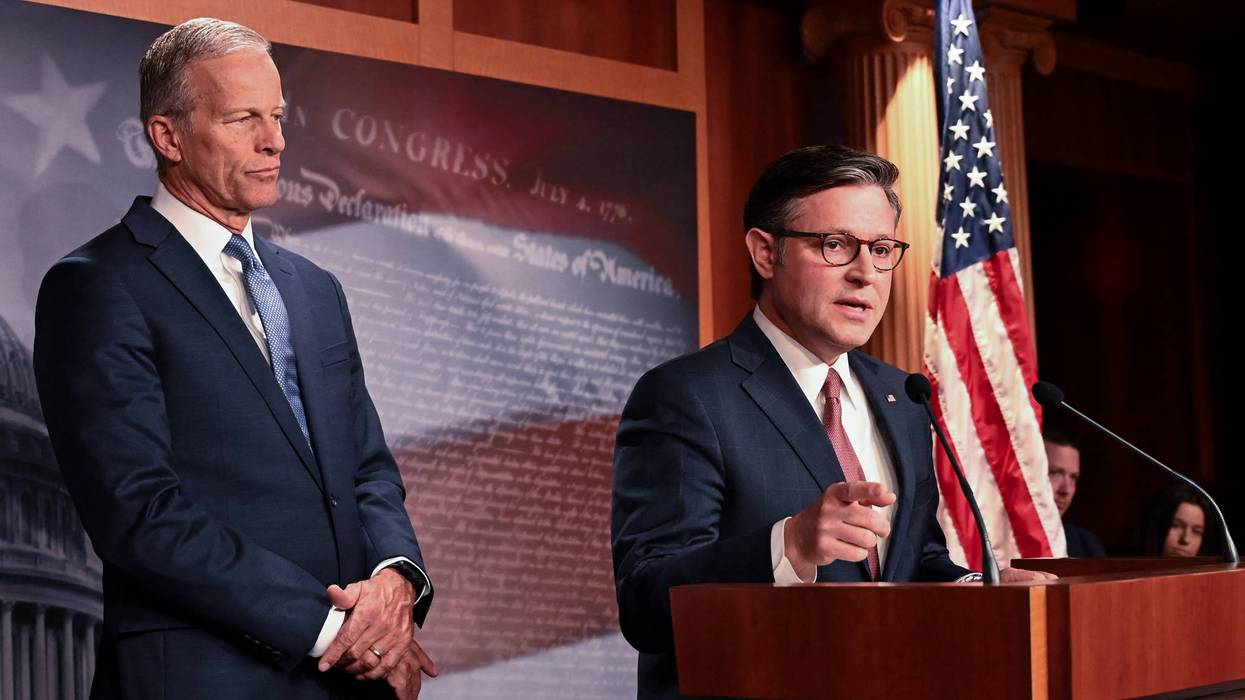
Privacy Advocates Relieved Trump Allies 'Can't Get Their Warrantless FISA Reauthorization Across the Finish Line'
"Our bipartisan movement in defense of civil liberties is holding strong," a Demand Progress campaigner said after Congress passed a short-term extension to continue talks on a longer renewal.
Apr 30, 2026
Just a day after Democrats in the GOP-controlled US House of Representatives helped Republicans send a major spying bill to the Senate, despite warnings that it was dead on arrival there, both chambers on Thursday passed a 45-day extension to continue negotiations.
The Senate approved the stopgap bill for Section 702 of the Foreign Intelligence Surveillance Act (FISA)—which allows the federal government to spy on electronic communications of noncitizens located outside the United States without a warrant—by a voice vote. The House signed off with a 261-11 vote, just hours before a previous short-term extension was set to expire.
President Donald Trump and his homeland security adviser, Stephen Miller, have been demanding a "clean" extension of the program, while critical lawmakers from both parties and over 100 civil society groups have called for privacy reforms to protect Americans whose data is swept up in federal surveillance efforts.
Hajar Hammado, senior policy adviser at Demand Progress, one of the organizations leading reform calls, said in a Thursday statement that "intelligence agencies, the White House, and their allies in Congress have tried every trick in the book from fearmongering to misinformation, but they still can't get their warrantless FISA reauthorization across the finish line."
"The reason we keep ending up at this point is congressional leaders' refusal to allow votes on overwhelmingly popular, bipartisan reforms," she continued. "This 'my way or the highway' approach needs to stop."
According to Politico, US Senate Majority Leader John Thune (R-SD) told reporters on Thursday that he and House Speaker Mike Johnson (R-La.) discussed the short-term extension during a closed-door meeting the previous day.
"I think there's already a pretty substantial dialog going on" between key Democrats and Republicans in both chambers, Thune added. "We're interested in looking at some ways in which it can be reformed... So we're entertaining those ideas at the moment."
Hammado declared that "when Congress returns, Speaker Johnson and Leader Thune must allow votes on amendments for real privacy protections or we'll keep repeating this farce over and over again. Our bipartisan movement in defense of civil liberties is holding strong, and we won't accept anything less."
Sen. Ron Wyden (D-Ore.), a longtime defender of privacy rights who had threatened to block the extension, highlighted on social media Thursday that he "secured a commitment that the FISA court opinion revealing abuses of Americans' rights will be DECLASSIFIED before Congress votes on reauthorization."
"The more Americans know about these abuses," he said, "the more they'll demand real reforms."
Keep ReadingShow Less
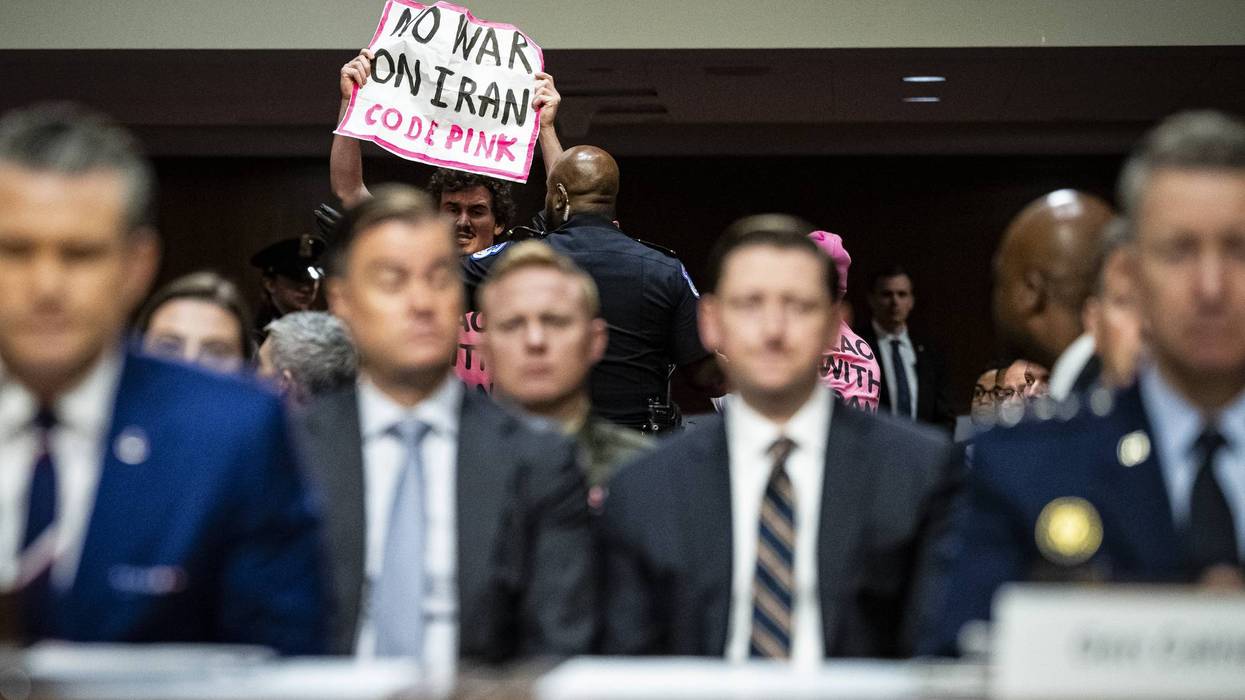
'War Criminal' Pete Hegseth Hammered on True Costs of Iran Debacle During Senate Hearing
"The greatest obstacle to peace is the incompetence of the secretary of defense and of the president of the United States," declared Senate Minority Leader Chuck Schumer.
Apr 30, 2026
"Pete Hegseth, you're a war criminal. You should be arrested!" an anti-war activist shouted at the US secretary of defense, who was on Capitol Hill Thursday to testify at a Senate Armed Services Committee hearing about the administration's unprecedented Pentagon budget request, President Donald Trump's illegal war on Iran, and more.
"What you're doing is despicable," the CodePink activist, Gus, told Hegseth as he was escorted out of the hearing and arrested. "The American people do not want to go into this war. We don't want to fight a war with Israel!"
As civilian casualties across the Middle East and gasoline prices across the United States have soared, so has the US public's disapproval of Trump and Israel's war on Iran. There are ceasefire agreements in place for both that assault and Israel's related attacks supposedly targeting Hezbollah in Lebanon—but, as Amnesty International noted in a Wednesday statement demanding international action to promote sustainable peace in the region, those deals are "fragile, temporary, and in danger of collapse at any moment."
Hegseth—whose controversial Senate confirmation required a tiebreaking vote from Vice President JD Vance—last appeared before the Senate committee in June. As the panel's ranking member, Sen. Jack Reed (D-RI) pointed out to the Pentagon chief in his opening remarks Thursday, since then, "you and President Trump have unwisely taken the United States to war with Iran."
That war has killed at least 3,375 Iranians, and injured another 25,000, while recent Israeli attacks on Lebanon have killed more than 2,200 people and wounded over 7,500, according to Amnesty. Iran and Hezbollah's retaliatory strikes have killed at least 21 civilians in Israel, four Palestinians in the illegally occupied West Bank, and 29 people across the Gulf, including 13 US service members.
The Department of War—as Hegseth and Trump call it—estimated that the first six days of the Iran assault cost an average of $1.88 billion per day, and Pentagon comptroller Jules "Jay" Hurst told Congress on Wednesday that it cost $25 billion in total, though some lawmakers and experts believe the figure could be far higher.
Beyond the Middle East, Hegseth has led a US attack on Venezuela and directed an "ongoing illegal boat strike campaign in the Caribbean and Pacific," Reed noted. At the defense secretary's direction, the senator continued, "our forces have bombed Yemen, Somalia, Iraq, Syria, Nigeria, and Ecuador."
"In the United States, you have deployed thousands of troops to cities like Washington, Los Angeles, Chicago, and Portland to police American citizens," Reed told Hegseth. "And you have personally intervened to end the careers of dozens of military leaders. without explanation."
Reed went on to express skepticism about Trump's massive defense budget request and rip the president's incoherent strategy on the Iran war. He also acknowledged various costs of the conflict, stressing that "American families are bearing the cost of a war they wanted nothing to do with, and have gained nothing from."
Other standout moments from the hearing included Sen. Elizabeth Warren (D-Mass.) grilling Hegseth about others' suspicious bets related to the Iran war and oil prices, as well as his own investments—the latter of which drew hostile responses from the secretary.
Sen. Mark Kelly (D-Ariz.) has had a contentious relationship with Hegseth since the retired US Navy captain participated in a November video advising military service members that they have a duty to disobey unlawful orders, which drew legally dubious retaliation from the Pentagon secretary.
On Thursday, Kelly questioned Hegseth about his March declaration that "no quarter" will be given to "our enemies" in Iran—which was similar to previous comments from the secretary, who said last September that "we also don't fight with stupid rules of engagement. We untie the hands of our warfighters to intimidate, demoralize, hunt, and kill the enemies of our country. No more politically correct and overbearing rules of engagement, just common sense, maximum lethality, and authority for warfighters."
Sen. Elissa Slotkin (Mich.), a former Central Intelligence Agency analyst who joined Kelly in the video to service members, questioned Hegseth about how he would handle Trump directing him to have troops seize ballots or voting machines during the 2026 midterm elections.
Hegseth was openly dismissive of Slotkin, chuckling at her, calling her question "yet another 'gotcha' hypothetical, which is your specialty," and accusing the senator of "performing for cable news."
As Hegseth, Hurst, and Joint Chiefs of Staff Chairman Gen. Dan Caine testified on Capitol Hill for the second day in a row—they also appeared before the House Armed Services Committee on Wednesday—the United States' largest Muslim civil rights and advocacy group sent Congress a report calling for the defense secretary's impeachment.
"The record presented here establishes that military operations carried out under Secretary Hegseth's leadership constituted war crimes under US and international law, including the killing of civilians, the destruction of infrastructure indispensable to civilian survival, and the targeting of protected religious and other civilian sites," states the foreword of the report from the Council on American-Islamic Relations and CAIR Action.
"These crimes were not accidental," the foreword continues. "They followed deliberate decisions to strip away legal oversight, weaken operational restraints, and dismantle civilian harm mitigation structures, even as senior Trump administration officials warned President Trump that a US-Israel war on Iran was not feasible and risked broader regional escalation."
CAIR Action executive director Basim Elkarra, the report's co-author, said in a statement that Hegseth's record not only "establishes a basis for impeachment," but also "raises serious questions of criminal liability."
While testifying to House panel about Trump's Iran War, Hegseth claimed that "the biggest challenge—the biggest adversary we face at this point—are the reckless, feckless, and defeatist words of congressional Democrats and some Republicans."
Responding on Thursday, Senate Minority Leader Chuck Schumer (D-NY) said on the floor: "Take a look in the mirror. Our greatest challenge in Iran is Donald Trump and Secretary Hegseth, and Americans know it. The war is unpopular, they blame Trump for it of course. The greatest obstacle to peace is the incompetence of the secretary of defense and of the president of the United States."
Hegseth's Senate testimony came on the eve of a key deadline that increases pressure on Congress to pass a war powers resolution ending Trump's assault on Iran. So far, multiple efforts in both Republican-controlled chambers have failed—though Democrats haven't stopped trying.
"Tomorrow marks 60 days since Donald Trump officially notified Congress about his attack on Iran. After we cross that 60-day threshold, there can be no more doubts that he's violating the War Powers Act," Schumer stressed. "Republicans are out of hollow excuses, they're out of hiding places. End this war, Republicans. Bring our troops home, stop bleeding taxpayers dry, support our war powers resolution."
Keep ReadingShow Less
Most Popular