

SUBSCRIBE TO OUR FREE NEWSLETTER
Daily news & progressive opinion—funded by the people, not the corporations—delivered straight to your inbox.
5
#000000
#FFFFFF
To donate by check, phone, or other method, see our More Ways to Give page.
Daily news & progressive opinion—funded by the people, not the corporations—delivered straight to your inbox.
Alison Omens / Zack Pesavento 202-637-5018
Across the country, union volunteers are speaking to workers at hundreds of worksites to discuss the importance of passing the Employee Free Choice Act as a key to rebuilding the middle class. The leaflet mobilization includes a call to reach out to elected officials and allies on the positive community impact of the legislation. Participants are detailing what the Employee Free Choice Act will do to level the playing field between workers and corporations and restore workers' choice on how to form unions in their workplaces.
International Human Rights Day commemorates the signing of the U.N. Universal Declaration on Human Rights, which enshrines the freedom to organize and bargain as one of four fundamental freedoms for workers. This year marks the 60th anniversary of the declaration.
"International Human Rights Day is an opportunity for workers to highlight just how far we have to go to restoring the freedom of workers' to form unions and bargain for a better life," said AFL-CIO President John Sweeney. "In the midst of the economic crisis, workers need the freedom to bargain for healthcare and retirement security as CEOs walk away with million dollar holiday bonuses."
Under the current system, employers routinely harass, intimidate and even fire workers for exercising their freedom to form unions and bargain for a better life. Recent research from Cornell University has shown that, in one out of four union election campaigns, at least one worker is fired for supporting unionization while current labor law is powerless to prevent it.
The Employee Free Choice Act would restore a sense of balance to the workplace by providing employees, not corporations, the choice of how they want to form a union through the option of majority sign-up. The legislation also increases penalties for companies that violate workers' freedom while trying to form a union and requires that once workers indicate they want a union, they will get a contract.
In recent years, advocates for workers' freedom have used International Human Rights Day as an opportunity to highlight the long way to go in restoring and establishing workers' freedom of association. In 2005, eleven Nobel Peace Prize recipients, including President Carter, Lech Walesa, founder of the Polish Solidarnosc movement, His Holiness the Dalai Lama and Archbishop Desmond Tutu signed "A Global Call for Human Rights in the Workplace" that states:
"We are deeply gratified that some of the world's most recognized and esteemed advocates for peace and social justice have joined together to promote workers' rights as a major international human rights issue. It is incumbent upon our elected leaders in the U.S. to make a firm, unequivocal commitment to protect workers' rights' to organize unions and engage in collective bargaining and set an example for the rest of the world to follow."
For more information on the Employee Free Choice Act or to speak to workers who've been impacted by the current system, contact the AFL-CIO Media Outreach Department at 202-637-5018.
The American Federation of Labor and Congress of Industrial Organizations (AFL-CIO) works tirelessly to improve the lives of working people. We are the democratic, voluntary federation of 56 national and international labor unions that represent 12.5 million working men and women.

"We have trade and energy agreements with Iran. We will respect and honor them and expect others not to meddle in our affairs."
Although President Donald Trump has ordered the US military to enforce a blockade around the Strait of Hormuz, Chinese Defense Minister Dong Jun warned on Monday against any effort to obstruct Chinese vessels.
As reported by Business Today, the Chinese defense minister emphasized that his country and Iran have reached an arrangement allowing the safe transportation of Chinese ships through the strait, and he said the US should not subject them to its blockade.
"Our ships are moving in and out of the waters of the Strait of Hormuz," the defense minister said. "We have trade and energy agreements with Iran. We will respect and honor them and expect others not to meddle in our affairs. Iran controls the Strait of Hormuz, and it is open for us."
Chinese Defense Minister Admiral Dong Jun:
"We have trade and energy agreements with Iran; we expect others not to interfere in our affairs. The Strait of Hormuz is open to us."
China is issuing a warning to the US. pic.twitter.com/oIQK9845Ty
— Daily Iran News (@DailyIranNews) April 13, 2026
Trump announced a blockade on the Strait of Hormuz on Sunday, saying the US would not allow any ships that had cut deals with Iran for safe passage to be let through.
The blockade announcement came after US negotiators, led by Vice President JD Vance, failed to reach a peace agreement with their Iranian counterparts to bring an end to the conflict, which Trump launched illegally without any congressional approval six weeks ago.
The failure to reach a peace deal sent the price of oil upward yet again, as the price of Brent crude oil futures and WTI crude oil futures approached $100 per barrel.
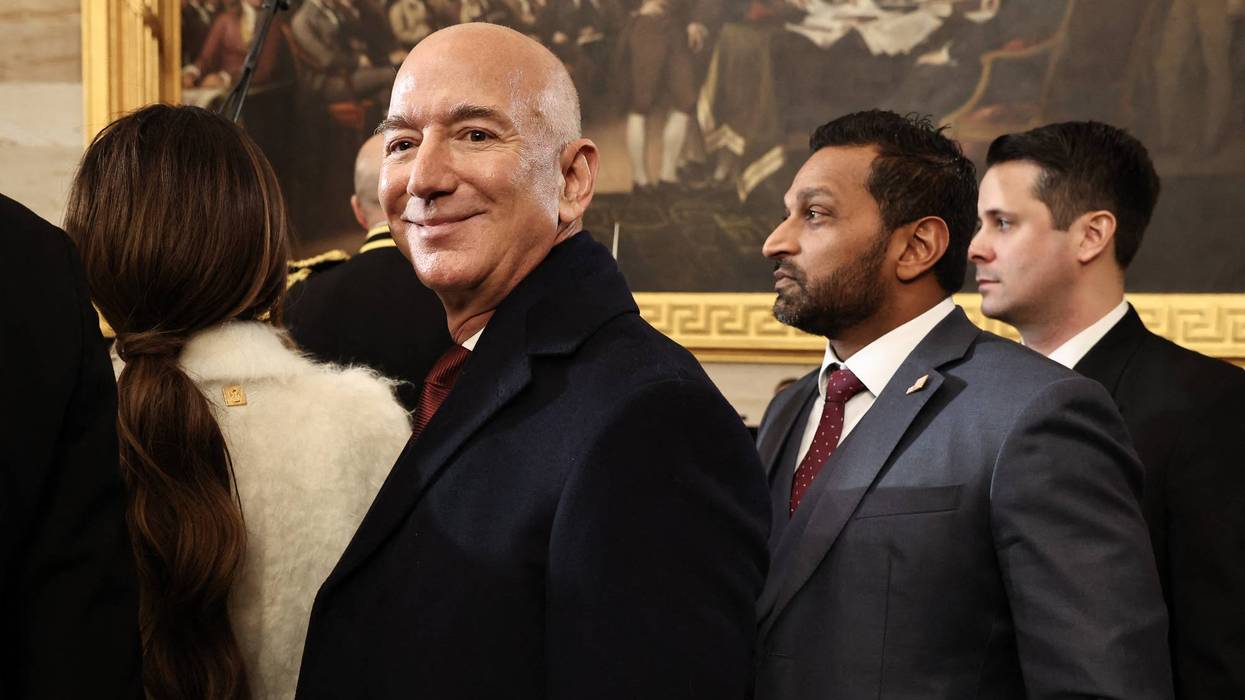
Crystal Carey, general counsel at the National Labor Relations Board, represented Amazon during her time at one of the biggest management-side law firms in the country.
National Labor Relations Board General Counsel Crystal Carey proposed a settlement on Sunday that would unwind a major case against the e-commerce behemoth Amazon—a company that Carey represented when she worked in the private sector for corporate clients.
Carey, whom President Donald Trump nominated after firing the Biden-era NLRB general counsel last year, sent her proposed settlement terms to the judge overseeing the labor agency's case against Amazon, which originated in the final year of the Biden administration. According to Bloomberg, Carey proposed that Amazon provide two weeks' worth of pay to dozens of drivers who were previously employed by Battle-Tested Strategies (BTS), formerly one of Amazon's delivery service partners (DSPs).
Amazon, in turn, would not be required to admit to unfair labor practices or be "found liable as a joint employer." The Biden-era NLRB argued that Amazon was a joint employer of the BTS delivery drivers and thus required to recognize and collectively bargain with their union—something Amazon has refused to do.
Bloomberg noted that, if decided against Amazon, the case Carey wants to settle "could have led for the first time to an agency judge, the NLRB members in Washington, and, eventually, federal appeals court judges ruling that Amazon was the joint employer of drivers for one of its delivery service partners."
"Amazon contracts with thousands of such partners to manage hundreds of thousands of delivery workers," Bloomberg observed.
Before Trump nominated her to replace labor champion Jennifer Abruzzo as general counsel of the NLRB, Carey was a partner at Morgan Lewis, one of the biggest management-side law firms in the country. The Economic Policy Institute noted following Carey's Senate confirmation last year that Morgan Lewis "represents corporations known for violating workers’ rights, including Amazon, SpaceX, Apple, and Tesla."
"Morgan Lewis is also pursuing the legal challenge that the NLRB is unconstitutional, despite several former NLRB members being employed at the firm," EPI noted. (Amazon has also argued in court that the labor board is unconstitutional.)
Amazon donated $1 million to Trump's inaugural fund, and the company's founder, mega-billionaire Jeff Bezos, attended the inauguration ceremony alongside other big-name tech executives.
Despite her ties to Amazon via her tenure at Morgan Lewis, Carey argued that she was not required to recuse herself from the case she's working to settle. According to Bloomberg, Carey said in an interview that "because a year had passed since she herself represented Amazon and because Morgan Lewis wasn’t representing the company in the [ongoing joint employer] case, she didn’t need to recuse herself."
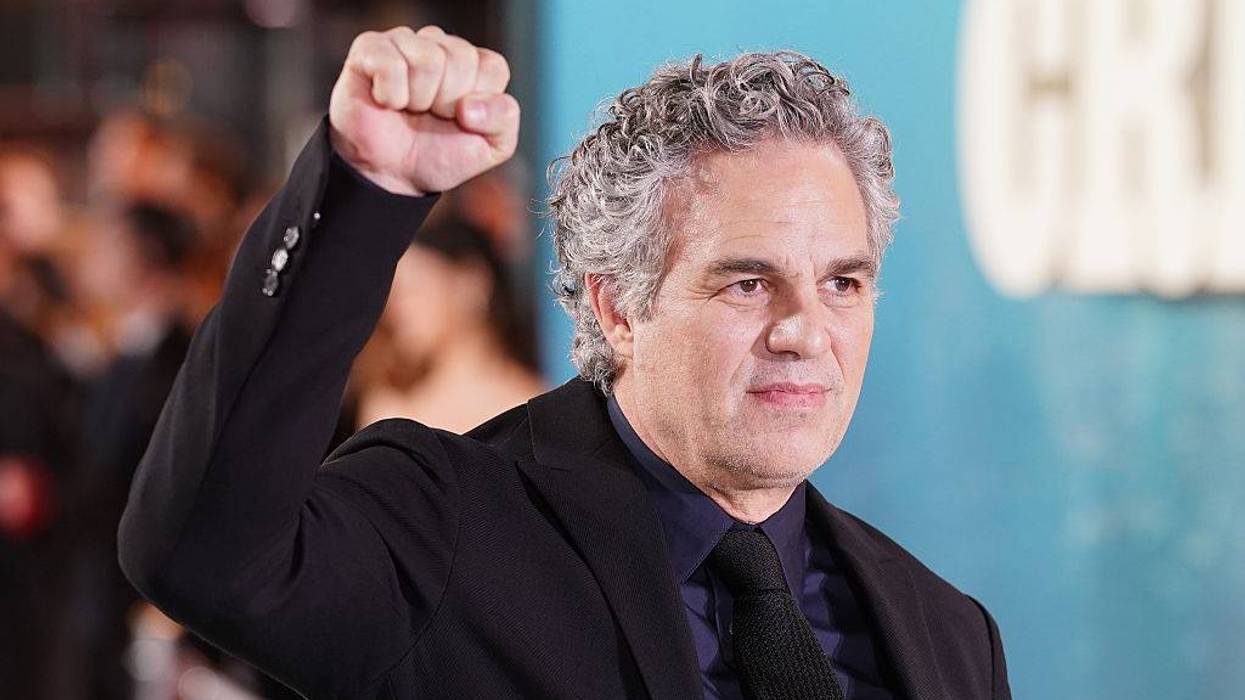
"The result will be fewer opportunities for creators, fewer jobs across the production ecosystem, higher costs, and less choice for audiences."
A group of Hollywood actors, directors, and producers on Monday published an open letter demanding the proposed merger between Paramount and Warner Bros. Discovery be blocked.
In their letter, the Hollywood heavyweights outlined the harms that would come from allowing Paramount—which is owned by David Ellison, son of billionaire Trump donor Larry Ellison—to acquire Warner Bros. Discovery.
"This transaction would further consolidate an already concentrated media landscape, reducing competition at a moment when our industries—and the audiences we serve—can least afford it," the letter states. "The result will be fewer opportunities for creators, fewer jobs across the production ecosystem, higher costs, and less choice for audiences in the United States and around the world. Alarmingly, this merger would reduce the number of major US film studios to just four."
The letter goes on to describe how consolidation in the entertainment industry has already "accelerated the disappearance of the mid-budget film, the erosion of independent distribution, the collapse of the international sales market, the elimination of meaningful profit participation, and the weakening of screen credit integrity."
Looking at the bigger picture, the letter notes that "competition is essential for a healthy economy and a healthy democracy," then goes on to praise California Attorney General Rob Bonta and other state AGs for filing legal actions aimed at blocking the merger amid fears that the Trump administration could rubber-stamp it.
"We are grateful for their leadership," the letter concludes, "and stand ready to support all efforts to preserve competition, protect jobs, and ensure a vibrant future for our industry, for American culture, and for our single most significant export."
Actor Mark Ruffalo, a signatory of the letter, published an article on his Substack page outlining his own reasons for opposing the merger, which he described as "the epitome of crony capitalism and the oligarchs consolidating more corporations and media power to shape the outcome of their business interests."
Ruffalo also said he's spoken with others in Hollywood who were reluctant to sign the letter over concerns about retaliation from Trump or Ellison should the attempt to block the merger fail.
"The people pushing monopolies such as this one use fear to keep the workers in line," Ruffalo said. "I have heard it time and time again from my fellows, they are afraid of retribution. Some didn’t want to sign because they are afraid. How sad is that? In America the artists are afraid to speak out against power."
Actress Jane Fonda, founder of the modern Committee for the First Amendment, said that the proposed Paramount-Warner Bros. merger "would be one of the most destructive threats to free speech and creative expression in our history," because it would put "unprecedented power in the hands of a single corporation that already appears to have proven itself willing to sacrifice integrity for political favor."
The letter earned praise from democracy and antitrust advocates, who argued that blocking the merger was necessary to stopping President Donald Trump's ambitions for a right-wing takeover of US media.
“The future of free media and a strong entertainment industry in America is at stake here,” said Norm Eisen, co-founder and executive chair of Democracy Defenders Fund. “This proposed merger would not only harm competition and creativity, it would erode the very bedrock of our democracy."
Matt Stoller, director of research at the American Economic Liberties Project, noted that "consolidation in Hollywood has been a disaster, and has led to the weak state of the industry," and said the Paramount-Warner Bros. merger needed to be blocked to prevent further damage.
"Not only does this kind of concentration hollow out creative markets," said Stoller, "it concentrates control over culture and information in the hands of a few unaccountable executives, and in this case totalitarian Gulf countries, undermining a free and pluralistic media ecosystem that democracy depends on."