

SUBSCRIBE TO OUR FREE NEWSLETTER
Daily news & progressive opinion—funded by the people, not the corporations—delivered straight to your inbox.
5
#000000
#FFFFFF
To donate by check, phone, or other method, see our More Ways to Give page.
Daily news & progressive opinion—funded by the people, not the corporations—delivered straight to your inbox.
Phone: 202-332-9110
Despite its public statements and pledges to help combat childhood
obesity, the overwhelming majority of foods marketed by the children's
media giant Nickelodeon are of poor nutritional quality, according to
an analysis conducted by the nonprofit Center for Science in the Public
Interest.
CSPI first analyzed Nickelodeon food marketing in 2005, and
found that 88 percent of foods marketed to children were nutritionally
poor. Despite the threat of litigation, an industry-wide self
regulatory initiative, and new interest in food marketing on the part
of Congress and the Federal Trade Commission, the company has improved
its practices only marginally: In 2008,
79 percent of the foods it markets to children are foods like sugary
cereal, candy, sugary drinks with little or no fruit juice, and fast
food. And the percentage of food packages sporting Viacom characters
such as SpongeBob SquarePants, Dora the Explorer, and Shrek contain
increasingly unhealthy foods.
Today Nickelodeon executive Marva Smalls
will defend its practices in testimony before a joint Senate
Appropriations subcommittee meeting convened by Senators Tom Harkin
(D-IA) and Sam Brownback (R-KS). In 2005 Smalls told the Federal Trade
Commission that Nick would use its characters to promote spinach,
oranges, and other health foods, but advertisements for those foods are
totally absent from the company's airwaves and magazine ads.
"Nickelodeon is something of a pariah in that they haven't
set any basic nutrition standards for the foods it will expose children
to via its television or magazine advertising or its licensed
characters," said CSPI nutrition policy director Margo G. Wootan.
"There is literally no food, no matter how junky, that Nickelodeon
won't advertise on its airwaves or in its magazine or slap one of its
characters on. Just relying on the food industry's own initiative to
improve practices has only made a small difference at Nick."
CSPI reviewed 28 hours of children's television programming
on Nickelodeon, during which 819 commercials and public service
announcements were shown. Of the 185 food ads, 177 had nutrition
information available, and 138, or 78 percent, of those were for foods
of poor nutritional quality, including Apple Jacks, Cookie Crisp
cereal, Airhead candy, artificial fruit-flavored snacks, and Chuck E.
Cheese's, where 89 percent of its menu items are nutritionally poor.
Some of the healthier foods advertised included yogurts and pasta.
Similarly, 77 percent, or 24 of 31 food ads published in
Nickelodeon magazine were for junk foods like SweetTarts, Gummy Bugs,
Laffy Taffy, Yogos Bits, or Burger King meals. During the study period,
three fast-food restaurants were running tie-ins with Viacom,
Nickelodeon's corporate parent: McDonald's with The Spiderwick
Chronicles, Subway with The Naked Brothers Band, and Chuck E. Cheese's
with Bee Movie.
In 2006, the Council of Better Business Bureaus convened 10 major food companies to join a Children's Food and Beverage Advertising Initiative
in which companies pledge to shift their advertising and marketing to
healthier foods. Today Dannon will announce that it is joining the
initiative, bringing the Initiative's ranks to 15 major food companies,
including Coca-Cola, Nestle, General Mills, Kellogg, Kraft, McDonald's,
and Unilever. The pledges, which each have different nutrition
standards and marketing policies, have yet to take full effect but
should by the end of 2008.
"Despite the sky-high rates of childhood obesity,
Nickelodeon continues to bombard children with junk-food marketing,"
said Wootan. "Media companies such as Nick are gatekeepers, and should
set their own standards for marketing food to children."
Since 1971, the Center for Science in the Public Interest has been a strong advocate for nutrition and health, food safety, alcohol policy, and sound science.

Minnesota Attorney General Keith Ellison called the verdict "a win for everyone who thinks concert tickets are too damn expensive."
Antitrust advocates celebrated on Wednesday after a jury found that Live Nation and is subsidiary Ticketmaster were illegal monopolies who for decades systematically overcharged customers for concert tickets.
As reported by The Associated Press, the verdict against Live Nation and Ticketmaster could cost the two entities "hundreds of millions of dollars, just for the $1.72 per ticket that the jury found Ticketmaster had overcharged consumers in 22 states," and they could be forced to sell off some of the venues they own.
The case against Live Nation, which was brought by 33 states and the District of Columbia, was initially led by the US Department of Justice. However, under President Donald Trump, the DOJ last month reached a last-minute settlement with the company that would not require it to be broken up.
The state attorneys general, however, vowed to see the case through and were rewarded with a big verdict in their favor.
New York Attorney General Letitia James celebrated the verdict, describing it as "a landmark victory to protect New Yorkers from harmful monopolies."
Minnesota Attorney General Keith Ellison called the verdict "a win for everyone who thinks concert tickets are too damn expensive," and declared himself "proud to have brought this lawsuit."
District of Columbia Attorney General Brian Schwalb noted Live Nation "has raked in billions in profits from an illegal monopoly that coerces venues, restricts artists, and exploits fans," and called the verdict "a massive win in the fight for fairness for local venues, artists, and fans."
Lina Khan, former chair of the Federal Trade Commission under President Joe Biden, hailed the verdict, but said it was just "a key first step towards ending Live Nation’s monopolistic control and securing real relief for those it harmed."
Lee Hepner, senior legal counsel at the American Economic Liberties Project, said the verdict was "decades in the making," and he cited iconic Seattle band Pearl Jam's fight against Ticketmaster in the 1990s to illustrate just how long it's taken to hold the company accountable.
"Pour one out for Pearl Jam, who testified before Congress in 1993 about Ticketmaster's abuse of the live concert industry," he commented.
The Roosevelt Institute took a shot at the Trump DOJ for bailing on the case, and noted the verdict against Live Nation "only happened because state AGs kept pushing after a federal settlement that let the companies off the hook."
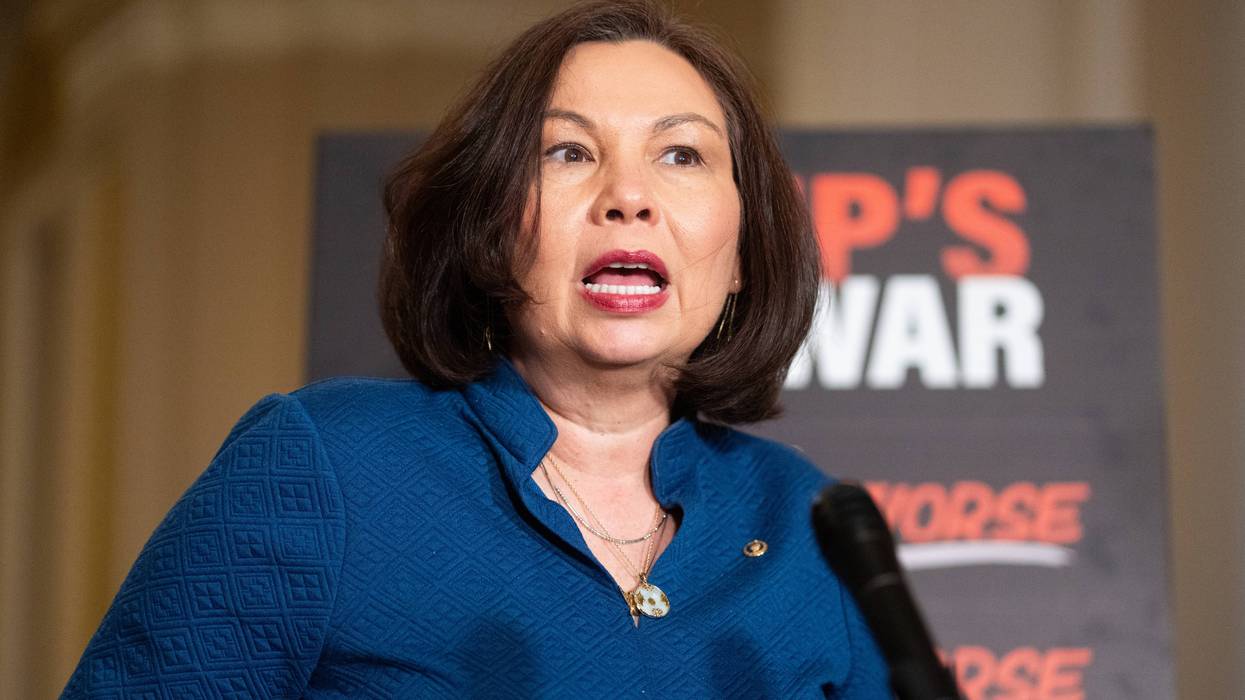
"Trump’s war of choice in Iran is a moral tragedy and economic disaster playing out before our eyes. It is only making the United States and the world less safe," said Sen. Ed Markey.
Senate Republicans on Wednesday once again narrowly stymied a Democrat-led resolution aimed at reining in President Donald Trump's power to wage war against Iran.
Although the war launched by the US and Israel in late February has killed more than 1,700 civilians and sparked a global fuel crisis that has sent prices skyrocketing, that was not enough for 52 Republican senators—every one except libertarian Sen. Rand Paul (R-Ky.)—who voted to back the president even as the war further erodes his approval rating.
The Democratic caucus was similarly unified, with every member voting for the war powers resolution except the pro-Israel hawk Sen. John Fetterman (D-Pa.).
It was the fourth war powers resolution to fail in the Senate since Trump launched the war on February 28, The last measure in late March fell short by a nearly identical margin.
Sen. Cynthia Lummis (R-Wyo.) called Democrats' continued attempts to check Trump's war powers "exhausting" in comments to reporters on Tuesday. "Doing a war powers resolution just undermines the president. I don’t believe [the Democrats] would do that if the president had a ‘D’ behind his name.”
After more than two weeks of delay, a similar bill will be brought to the floor in the House of Representatives on Thursday. Its sponsor, Rep. Gregory Meeks (D-NY), the ranking member of the House Foreign Affairs Committee, said it has a good chance of passing.
But without a similar bill passing the Senate, it would remain a purely symbolic gesture, with no ability to limit Trump's power as he sends thousands more troops to the region immediately after saying the war was "close to over."
"Trump’s war of choice in Iran is a moral tragedy and economic disaster playing out before our eyes. It is only making the United States and the world less safe," said Sen. Ed Markey (D-Mass.) after voting for the war powers resolution. “We have seen thousands of civilian deaths in Iran and Lebanon. More than 100 Iranian schoolgirls were killed by American weapons, and 13 American servicemembers were killed, and hundreds have been injured."
He added, "This dangerous, unnecessary, and expensive war has cost American taxpayers around $50 billion so far, with the Trump administration seeking hundreds of billions of dollars more as part of a $1.5 trillion military budget."
Sen. Tammy Duckworth (D-Ill.), an Army National Guard veteran who sponsored the blocked resolution, suggested in her remarks before the vote that Republicans who opposed the resolution would be putting "Trump’s ego first" ahead of American interests and enabling more "chaos."
The two-week ceasefire agreement is set to expire on April 21. A week later, the war will hit the 60-day mark, after which troops must be withdrawn unless their deployment is approved by Congress, though the White House can request a 30-day extension by citing "national security" concerns.
According to Politico, some Republicans—even those who voted against the war powers resolution on Wednesday—have indicated that the 60-day mark may be a turning point for them.
Sen. Thom Tillis (R-NC), who is retiring after the next election, said that the administration "has got to start answering questions" about the war's trajectory, especially as it requests tens of billions of dollars in emergency funding.
Duckworth, on the other hand, said she has seen more than enough.
"After one half-assed day of so-called 'negotiations,' he’s whipsawed to his next idea: a dangerous, complex, partial military blockade of the Strait of Hormuz—once again launching a risky new front in this war at our service members’ expense… with no justification, explanation, or even ‘concept of a plan’ of how to get to an end-state," she said.
She added, "As our troops continue to sacrifice whatever is asked of them, we senators need to do the absolute minimum required of us."
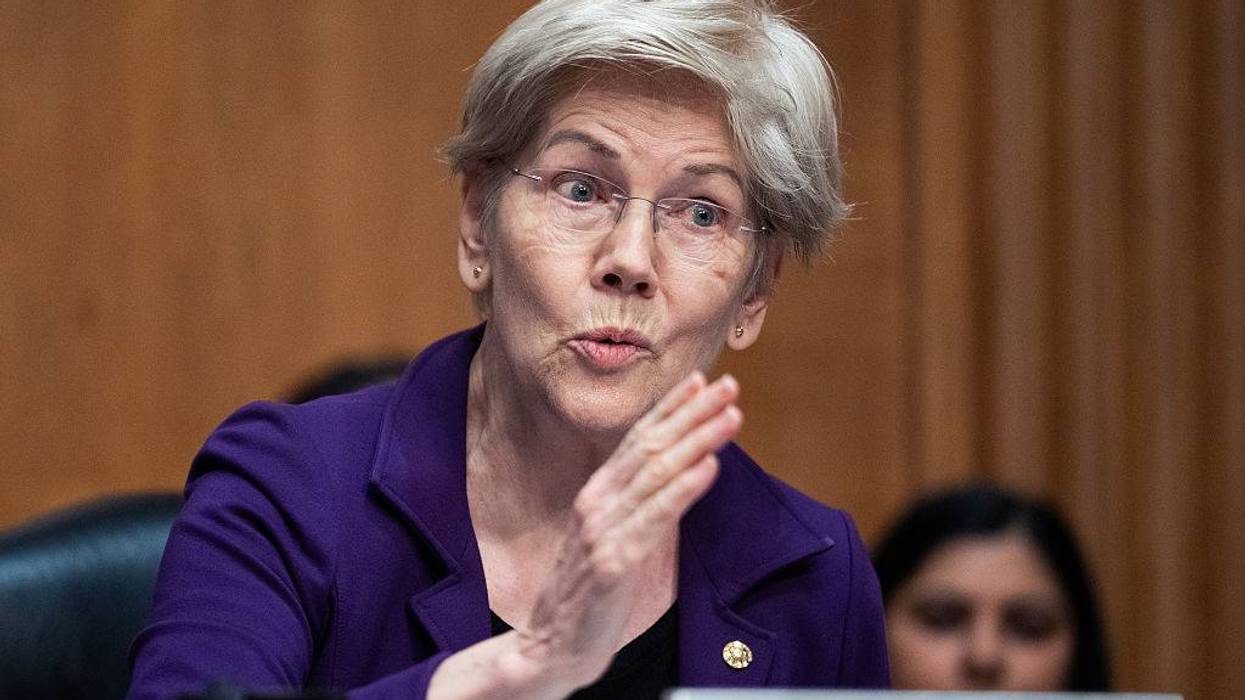
Sen. Elizabeth Warren said the bill would stop Trump from "trying to snatch up billions of taxpayer dollars to line his own pockets and settle personal scores."
Four Democratic lawmakers on Wednesday unveiled legislation aimed at ending what they described as President Donald Trump's "plunder" of US taxpayers.
The Ban Presidential Plunder of Taxpayer Funds Act—cosponsored by Sens. Chuck Schumer (D-NY) and Elizabeth Warren (D-Mass.) and Reps. Jamie Raskin (D-Md.) and Dave Min (D-Calif.)—was crafted in response to Trump's effort to get the federal Internal Revenue Service to hand him a $10 billion settlement for the 2020 leak of his tax records and his demand that the US Department of Justice (DOJ) pay him $230 million over its past criminal investigations of him.
Among other things, the bill would bar both the president and the vice president, as well as their immediate family members, from collecting settlement payments from the federal government while in office.
The proposed legislation would also prohibit both the president and the vice president from filing administrative claims for damages while in office, and would only allow presidents and vice presidents to "collect compensatory damages awarded by a federal court if the court appoints an independent counsel to represent the agency and makes all proceedings public."
The bill allows former presidents and vice presidents to collect damages from the federal government, but only if the agency being sued "appoints career expert staff to lead the agency’s review or adjudication of any administrative claim brought by the former president/VP, and no official appointed by any president/VP is involved in handling the claim."
Additionally, any settlement made to a former president or vice president must be made public within seven days.
Warren said that the legislation was necessary to stop Trump from "trying to snatch up billions of taxpayer dollars to line his own pockets and settle personal scores."
Raskin accused Trump of exploiting the power of his office to "loot billions of dollars from American taxpayers," an operation that he described as the "ongoing scandal of this ruthlessly corrupt administration."
"The ‘Ban Presidential Plunder of Taxpayer Funds Act’ will prevent the president from pursuing the emerging MAGA grift of suing the government as a ‘plaintiff’ on bogus grounds," Raskin added, "and then settling the suit as ‘defendant’ for big bucks, a collusive settlement scam they recently executed with the disgraced former National Security Adviser Michael Flynn, who waltzed off with more than a million dollars for a bogus claim already dismissed by a federal court."
Flynn settled with the DOJ last month in a case in which he accused the government of "improperly and politically" targeting him, after he was charged with making false statements to the FBI in 2017.
The Democrats' bill has earned the endorsements of government watchdogs Democracy Defenders Action, Common Cause, Citizens for Responsibility and Ethics in Washington (CREW), and the Project on Government Oversight (POGO).
Debra Perlin, vice president of policy at CREW, praised the bill for establishing "common sense guardrails to protect against corrupt payouts to the president and the vice president during their terms in office and after they depart."
"Since returning to office, Donald Trump keeps finding troubling new ways to enrich himself at the taxpayers' expense," Perlin noted. "The president’s lawsuit against the IRS for $10 billion is emblematic of a pattern of self-dealing and corruption that appears pervasive in his administration."