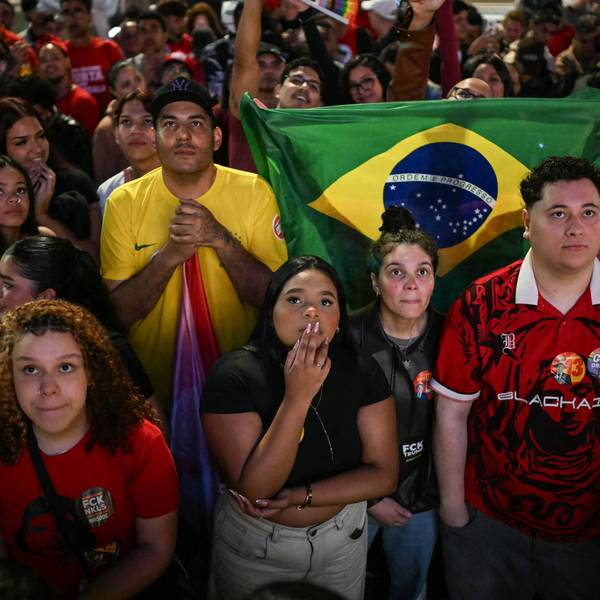
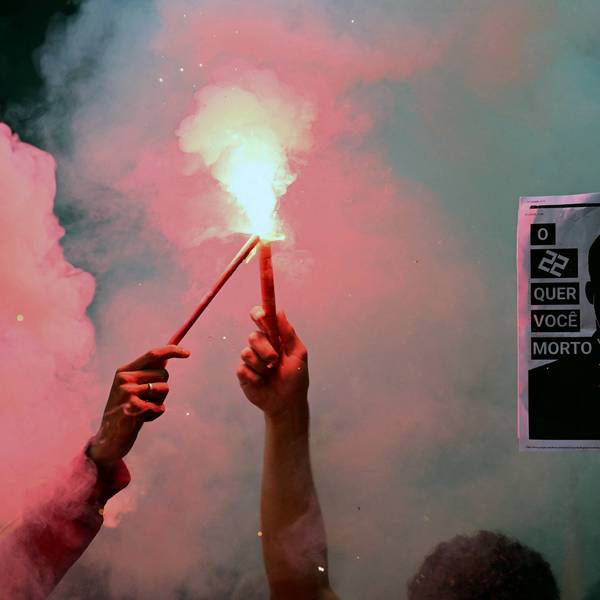
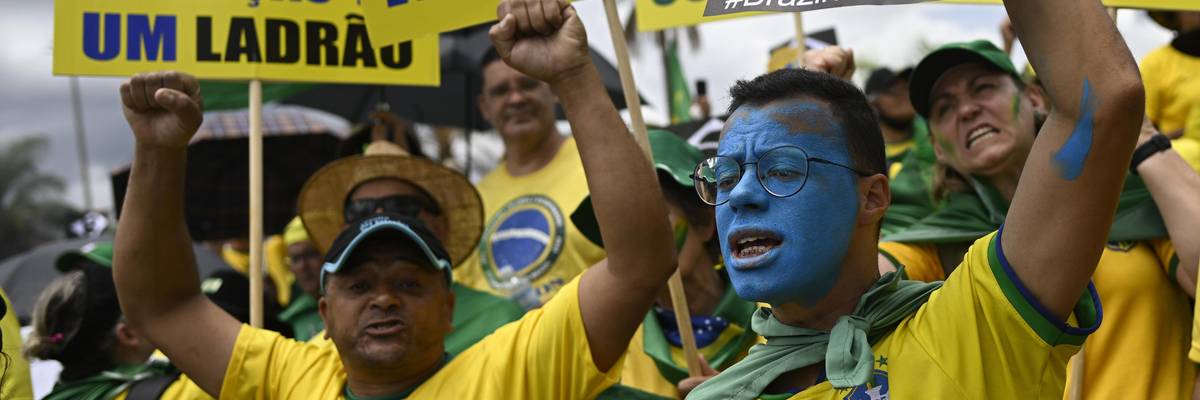
Supporters of outgoing Brazilian President Jair Bolsonaro protest President-elect Luiz Inacio Lula da Silva's victory in front of the Army headquarters in Brasilia on November 15, 2022.
Lula Sues Bolsonaro for Abuse of Power and Baseless Attacks on Brazil's Voting System
"Brazil cannot move forward, and leave political violence behind, without holding Bolsonaro and his cronies to account," wrote one journalist.
Brazilian President-elect Luiz Inacio Lula da Silva's election team on Thursday sued outgoing far-right President Jair Bolsonaro, his running mate, and two of his sons for attacking the country's voting system and attempting to bribe voters.
Both lawsuits, filed in Brazil's electoral court, seek to ban all four men from running for public office in the future. Lula, a Workers' Party member who previously served as Brazil's president from 2003 to 2010 and takes office again on January 1, defeated Bolsonaro by more than 2.1 million votes in a runoff election in late October.
Following his loss, supporters of Bolsonaro blocked hundreds of roads across the country and demanded that the military intervene to keep the incumbent and his vice presidential candidate, retired army general Walter Braga Netto, in power.
Rampant lies that the Brazilian presidential election was "stolen" came after Bolsonaro--a vocal admirer of Brazil's former U.S.-backed military dictatorship, in which he served as an army officer--and his inner circle spent months criticizing the country's electronic voting system and threatening to reject the results unless he won.
Taking a cue from their ally, former U.S. President Donald Trump--whose unfounded but relentless assault on the integrity of mail-in ballots has convinced millions of Republican voters that U.S. President Joe Biden's 2020 victory was illegitimate and even sparked a deadly right-wing insurrection--Bolsonaro, his sons, and Braga Netto claimed without evidence that Brazil's voting infrastructure was vulnerable to fraud and refused to commit to accepting a loss, contributing to post-election calls for a coup.
According to Reuters, "One lawsuit accused Bolsonaro, Braga Netto, and two of the president's sons--Sen. Flavio Bolsonaro and Congressman Eduardo Bolsonaro--of interfering with the elections by repeatedly attacking the electoral system and trying to build support for a military coup."
The news outlet reported that "the second lawsuit accuses Bolsonaro of power abuse by illegally granting financial benefits to citizens during the campaign with the 'clear intention of gaining votes and, therefore, influencing the choice of Brazilian voters, so as to harm the smoothness of the election.'"
Two days after Lula's victory, Bolsonaro allowed the presidential transition process to proceed but refused to concede defeat to his leftist challenger. Just over two weeks ago, Bolsonaro officially contested his loss, citing a software bug in Brazil's electronic voting machines that independent experts say had no effect on the outcome of the race.
In an Al Jazeera opinion piece published Friday, Brazilian journalist Raphael Tsavkko Garcia detailed steps that Bolsonaro took during his four-year tenure to undermine democratic institutions, incite violence against those "not blindly supportive of his government," and ensure that the most dangerous sectors of his far-right support base had "easier access to weapons."
"All these efforts led to the 2022 elections being the most violent in Brazil's recent history with countless incidents of election-related intimidation, abuse of authority, aggression, and even a few cases of murder being recorded across the country," wrote Garcia. "And since Bolsonaro definitively lost the election, there is no sign that the chaos and violence that engulfed the country will come to an end any time soon."
He continued:
Some argue that to avoid further chaos and to bring Bolsonaristas back into the national fold, Brazil needs to embark on a process of reconciliation. But as the president and his supporters are clearly uninterested in participating in democracy and coexisting with others in Brazilian society peacefully, reconciliation will take the country nowhere. What Brazil needs today is a process of de-radicalization, that can only be successfully completed if Bolsonaro and those financing and promoting acts of political violence in his name are punished.
Such a process has already begun. Late last month, Supreme Court Justice Alexandre de Moraes, who heads the country's electoral court, fined Bolsonaro's Liberal Party, as well as his former coalition partners Progressive and Republican parties, 22.9 million reais ($4.27 million) for insisting on a "bad faith" lawsuit challenging the election result.
"No fine can be a sufficient punishment for a president and a political movement that brought Brazil to the brink of collapse, but this is still an important step in the right direction," Garcia concluded. "Brazil cannot move forward, and leave political violence behind, without holding Bolsonaro and his cronies to account for the pain they inflicted on the people."
During his time in office, Bolsonaro intensified the destruction of the Amazon rainforest--endangering the future of the planet--and responded so poorly to the Covid-19 pandemic that Brazil's Congress has accused him of crimes against humanity.
By contrast, Lula significantly curbed deforestation and inequality and enjoyed approval ratings of over 80% when he left office in 2010. Bolsonaro may not have won the 2018 presidential contest had Lula, who was leading the polls at the time, not been imprisoned in the wake of criminal proceedings that the United Nations Human Rights Committee said violated his due process rights.
Lula maintained that the corruption charges resulting in his 18-month incarceration were fabricated by right-wing operatives intent on pulling off a political coup. He was vindicated when the conviction was later annulled by Brazil's top court, which ruled the presiding judge had been biased and conspired with prosecutors.
We are at a crossroads
This country and this world are at a monumental crossroads. In a few short weeks, US voters will have an opportunity to beat back the forces of fascism and confront the billionaires who are rigging the economy, our media system, and our democracy, making it increasingly impossible for ordinary people to get by. We’re not just talking about the election. We’re talking about what must be done once these fascist elements are vanquished from power. We need a bolder set of solutions than what either major party has so far been willing to offer and a working-class movement ready to fight like hell for it. Trump didn't emerge from nowhere. The conditions that fueled MAGA authoritarianism were created by decades of radical neoliberal economic policies and a corrupt political system dominated by corporate interests. They slashed taxes on the super-rich, promising that the benefits would trickle down. They said giveaways to the corporate titans would make life more affordable for the rest of us. It was all bullshit. And when a bitter, betrayed populace searches for someone to blame, right-wing demagogues have little trouble finding scapegoats. People know when they're being lied to, but you won't hear any of this from the corporate media. Only independent journalism—powered and funded by people who believe in building a better world—can deliver truly trustworthy daily news. Our Fall Campaign is underway, and we need your help. To power our newsroom through the rest of the year, we need to raise $125,000 by midnight on October 31. So if you share our vision, please contribute whatever you can to sustain our work. |
Brazilian President-elect Luiz Inacio Lula da Silva's election team on Thursday sued outgoing far-right President Jair Bolsonaro, his running mate, and two of his sons for attacking the country's voting system and attempting to bribe voters.
Both lawsuits, filed in Brazil's electoral court, seek to ban all four men from running for public office in the future. Lula, a Workers' Party member who previously served as Brazil's president from 2003 to 2010 and takes office again on January 1, defeated Bolsonaro by more than 2.1 million votes in a runoff election in late October.
Following his loss, supporters of Bolsonaro blocked hundreds of roads across the country and demanded that the military intervene to keep the incumbent and his vice presidential candidate, retired army general Walter Braga Netto, in power.
Rampant lies that the Brazilian presidential election was "stolen" came after Bolsonaro--a vocal admirer of Brazil's former U.S.-backed military dictatorship, in which he served as an army officer--and his inner circle spent months criticizing the country's electronic voting system and threatening to reject the results unless he won.
Taking a cue from their ally, former U.S. President Donald Trump--whose unfounded but relentless assault on the integrity of mail-in ballots has convinced millions of Republican voters that U.S. President Joe Biden's 2020 victory was illegitimate and even sparked a deadly right-wing insurrection--Bolsonaro, his sons, and Braga Netto claimed without evidence that Brazil's voting infrastructure was vulnerable to fraud and refused to commit to accepting a loss, contributing to post-election calls for a coup.
According to Reuters, "One lawsuit accused Bolsonaro, Braga Netto, and two of the president's sons--Sen. Flavio Bolsonaro and Congressman Eduardo Bolsonaro--of interfering with the elections by repeatedly attacking the electoral system and trying to build support for a military coup."
The news outlet reported that "the second lawsuit accuses Bolsonaro of power abuse by illegally granting financial benefits to citizens during the campaign with the 'clear intention of gaining votes and, therefore, influencing the choice of Brazilian voters, so as to harm the smoothness of the election.'"
Two days after Lula's victory, Bolsonaro allowed the presidential transition process to proceed but refused to concede defeat to his leftist challenger. Just over two weeks ago, Bolsonaro officially contested his loss, citing a software bug in Brazil's electronic voting machines that independent experts say had no effect on the outcome of the race.
In an Al Jazeera opinion piece published Friday, Brazilian journalist Raphael Tsavkko Garcia detailed steps that Bolsonaro took during his four-year tenure to undermine democratic institutions, incite violence against those "not blindly supportive of his government," and ensure that the most dangerous sectors of his far-right support base had "easier access to weapons."
"All these efforts led to the 2022 elections being the most violent in Brazil's recent history with countless incidents of election-related intimidation, abuse of authority, aggression, and even a few cases of murder being recorded across the country," wrote Garcia. "And since Bolsonaro definitively lost the election, there is no sign that the chaos and violence that engulfed the country will come to an end any time soon."
He continued:
Some argue that to avoid further chaos and to bring Bolsonaristas back into the national fold, Brazil needs to embark on a process of reconciliation. But as the president and his supporters are clearly uninterested in participating in democracy and coexisting with others in Brazilian society peacefully, reconciliation will take the country nowhere. What Brazil needs today is a process of de-radicalization, that can only be successfully completed if Bolsonaro and those financing and promoting acts of political violence in his name are punished.
Such a process has already begun. Late last month, Supreme Court Justice Alexandre de Moraes, who heads the country's electoral court, fined Bolsonaro's Liberal Party, as well as his former coalition partners Progressive and Republican parties, 22.9 million reais ($4.27 million) for insisting on a "bad faith" lawsuit challenging the election result.
"No fine can be a sufficient punishment for a president and a political movement that brought Brazil to the brink of collapse, but this is still an important step in the right direction," Garcia concluded. "Brazil cannot move forward, and leave political violence behind, without holding Bolsonaro and his cronies to account for the pain they inflicted on the people."
During his time in office, Bolsonaro intensified the destruction of the Amazon rainforest--endangering the future of the planet--and responded so poorly to the Covid-19 pandemic that Brazil's Congress has accused him of crimes against humanity.
By contrast, Lula significantly curbed deforestation and inequality and enjoyed approval ratings of over 80% when he left office in 2010. Bolsonaro may not have won the 2018 presidential contest had Lula, who was leading the polls at the time, not been imprisoned in the wake of criminal proceedings that the United Nations Human Rights Committee said violated his due process rights.
Lula maintained that the corruption charges resulting in his 18-month incarceration were fabricated by right-wing operatives intent on pulling off a political coup. He was vindicated when the conviction was later annulled by Brazil's top court, which ruled the presiding judge had been biased and conspired with prosecutors.
- Warnings of Right-Wing Violence Mount as Bolsonaro's Son Claims 'Biggest Electoral Fraud Ever' ›
- Brazil Ramps Up Security for Lula Inauguration Amid Concerns Over Right-Wing 'Terrorists' ›
- 'Historic Day' as Brazilian Court Hits Bolsonaro With 8-Year Political Ban Over Election Lies ›
- Opinion | By Delivering a Shortened Workweek, Lula Proves He's Still in the Running | Common Dreams ›
Brazilian President-elect Luiz Inacio Lula da Silva's election team on Thursday sued outgoing far-right President Jair Bolsonaro, his running mate, and two of his sons for attacking the country's voting system and attempting to bribe voters.
Both lawsuits, filed in Brazil's electoral court, seek to ban all four men from running for public office in the future. Lula, a Workers' Party member who previously served as Brazil's president from 2003 to 2010 and takes office again on January 1, defeated Bolsonaro by more than 2.1 million votes in a runoff election in late October.
Following his loss, supporters of Bolsonaro blocked hundreds of roads across the country and demanded that the military intervene to keep the incumbent and his vice presidential candidate, retired army general Walter Braga Netto, in power.
Rampant lies that the Brazilian presidential election was "stolen" came after Bolsonaro--a vocal admirer of Brazil's former U.S.-backed military dictatorship, in which he served as an army officer--and his inner circle spent months criticizing the country's electronic voting system and threatening to reject the results unless he won.
Taking a cue from their ally, former U.S. President Donald Trump--whose unfounded but relentless assault on the integrity of mail-in ballots has convinced millions of Republican voters that U.S. President Joe Biden's 2020 victory was illegitimate and even sparked a deadly right-wing insurrection--Bolsonaro, his sons, and Braga Netto claimed without evidence that Brazil's voting infrastructure was vulnerable to fraud and refused to commit to accepting a loss, contributing to post-election calls for a coup.
According to Reuters, "One lawsuit accused Bolsonaro, Braga Netto, and two of the president's sons--Sen. Flavio Bolsonaro and Congressman Eduardo Bolsonaro--of interfering with the elections by repeatedly attacking the electoral system and trying to build support for a military coup."
The news outlet reported that "the second lawsuit accuses Bolsonaro of power abuse by illegally granting financial benefits to citizens during the campaign with the 'clear intention of gaining votes and, therefore, influencing the choice of Brazilian voters, so as to harm the smoothness of the election.'"
Two days after Lula's victory, Bolsonaro allowed the presidential transition process to proceed but refused to concede defeat to his leftist challenger. Just over two weeks ago, Bolsonaro officially contested his loss, citing a software bug in Brazil's electronic voting machines that independent experts say had no effect on the outcome of the race.
In an Al Jazeera opinion piece published Friday, Brazilian journalist Raphael Tsavkko Garcia detailed steps that Bolsonaro took during his four-year tenure to undermine democratic institutions, incite violence against those "not blindly supportive of his government," and ensure that the most dangerous sectors of his far-right support base had "easier access to weapons."
"All these efforts led to the 2022 elections being the most violent in Brazil's recent history with countless incidents of election-related intimidation, abuse of authority, aggression, and even a few cases of murder being recorded across the country," wrote Garcia. "And since Bolsonaro definitively lost the election, there is no sign that the chaos and violence that engulfed the country will come to an end any time soon."
He continued:
Some argue that to avoid further chaos and to bring Bolsonaristas back into the national fold, Brazil needs to embark on a process of reconciliation. But as the president and his supporters are clearly uninterested in participating in democracy and coexisting with others in Brazilian society peacefully, reconciliation will take the country nowhere. What Brazil needs today is a process of de-radicalization, that can only be successfully completed if Bolsonaro and those financing and promoting acts of political violence in his name are punished.
Such a process has already begun. Late last month, Supreme Court Justice Alexandre de Moraes, who heads the country's electoral court, fined Bolsonaro's Liberal Party, as well as his former coalition partners Progressive and Republican parties, 22.9 million reais ($4.27 million) for insisting on a "bad faith" lawsuit challenging the election result.
"No fine can be a sufficient punishment for a president and a political movement that brought Brazil to the brink of collapse, but this is still an important step in the right direction," Garcia concluded. "Brazil cannot move forward, and leave political violence behind, without holding Bolsonaro and his cronies to account for the pain they inflicted on the people."
During his time in office, Bolsonaro intensified the destruction of the Amazon rainforest--endangering the future of the planet--and responded so poorly to the Covid-19 pandemic that Brazil's Congress has accused him of crimes against humanity.
By contrast, Lula significantly curbed deforestation and inequality and enjoyed approval ratings of over 80% when he left office in 2010. Bolsonaro may not have won the 2018 presidential contest had Lula, who was leading the polls at the time, not been imprisoned in the wake of criminal proceedings that the United Nations Human Rights Committee said violated his due process rights.
Lula maintained that the corruption charges resulting in his 18-month incarceration were fabricated by right-wing operatives intent on pulling off a political coup. He was vindicated when the conviction was later annulled by Brazil's top court, which ruled the presiding judge had been biased and conspired with prosecutors.
- Warnings of Right-Wing Violence Mount as Bolsonaro's Son Claims 'Biggest Electoral Fraud Ever' ›
- Brazil Ramps Up Security for Lula Inauguration Amid Concerns Over Right-Wing 'Terrorists' ›
- 'Historic Day' as Brazilian Court Hits Bolsonaro With 8-Year Political Ban Over Election Lies ›
- Opinion | By Delivering a Shortened Workweek, Lula Proves He's Still in the Running | Common Dreams ›