SUBSCRIBE TO OUR FREE NEWSLETTER
Daily news & progressive opinion—funded by the people, not the corporations—delivered straight to your inbox.
5
#000000
#FFFFFF
To donate by check, phone, or other method, see our More Ways to Give page.
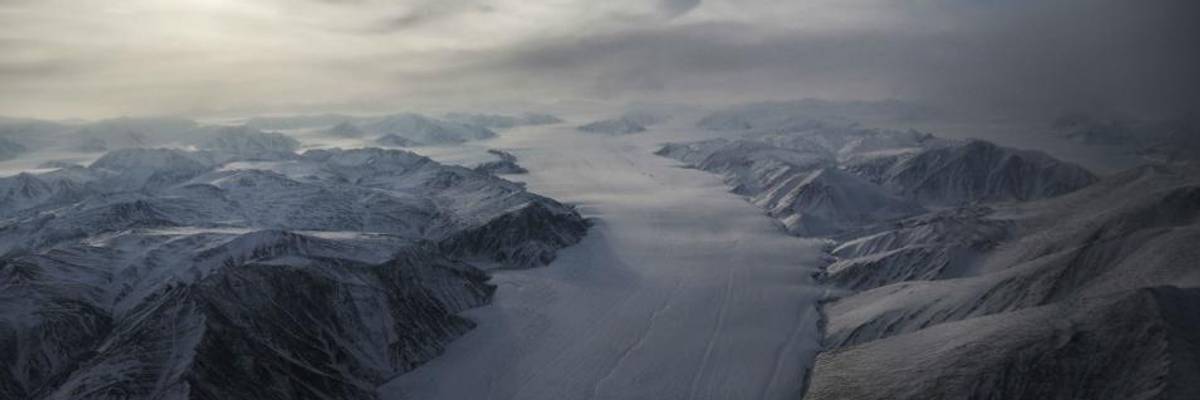
A new United Nations report warns that winter temperatures in the Arctic are still "locked in" to rise 3-5degC by 2050 and 5-9degC by 2080--with devastating consequences for the region and global sea levels--even if the international community cuts planet-warming emissions in line with the goals of the Paris climate agreement.
Global Linkages: A Graphic Look at the Changing Arctic (pdf) features maps and graphics about climate change, pollution prevention, and biodiversity conservation in the region. While the visual aids have an Arctic focus, they draw connections between what happens in the Arctic and the rest of the world.
The report was prepared by U.N. Environment (UNEP) and the Norwegian foundation GRID-Arendal, in close consultation with the Arctic Council. It is a product of the UNEP's Sixth Global Environmental Outlook (GEO-6), a comprehensive assessment released Wednesday, as U.N. Environment Assembly (UNEA-4) is held in Nairobi, Kenya.
Both Global Linkages and the GEO-6 underscore the vital importance of policymakers pursuing a coordinated global effort to drive down greenhouse gas emissions (GHGs). As the report points out, "even if we stopped all emissions overnight, winter temperatures in the Arctic will still increase by 4 to 5degC compared to the late twentieth century."
While human-generated GHGs boost temperatures on a global scale, warming occurs faster in the Arctic. That's because of a phenomenon called Arctic or polar amplification--which, the report explains, "causes higher temperatures near the poles compared to the planetary average because of a combination of feedback processes."

Rising temperatures, along with ocean acidification, pollution, and thawing permafrost threaten the Arctic--and the more than four million people who inhabit it, including 10 percent who are Indigenous. But, as UNEP acting executive director Joyce Msuya noted Wednesday, "What happens in the Arctic does not stay in the Arctic."
Elaborating, Msuya said: "We have the science; now more urgent climate action is needed to steer away from tipping points that could be even worse for our planet than we first thought."
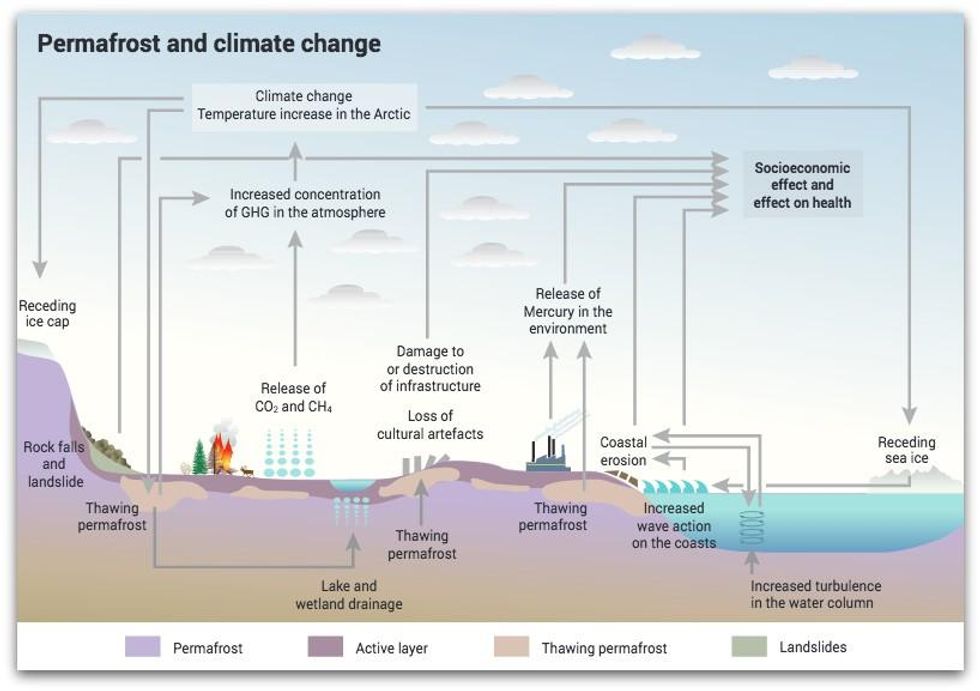
These worrisome tipping points include the thawing of permafrost, or ground that traps carbon as long as it remains frozen. Comparing permafrost thaw to awakening a "sleeping giant," the report warns that the process "could release large amounts of carbon into the atmosphere and derail efforts to meet the long-term goal of the Paris agreement."
In addition to demanding that world leaders work together to meet the Paris agreement's goals, the report also calls for various locally focused efforts, including: adaptation that integrates and respects local and Indigenous knowledge; strengthening global mechanisms to prevent chemical and plastic pollution in the region; international coordination to protect migratory species; and further research that examines climate change, pollution, and biodiversity in the Arctic.
Politicians, experts, and activists responded to the report with both alarm and renewed demands for rapidly reforming unsustainable human activities, such as burning fossil fuels, that lead to global warming:
"The urgency to achieve the goals of the Paris agreement is clearly manifested in the Arctic, because it is one of the most vulnerable and rapidly changing regions in the world," Finland's environmental minister Kimmo Tiilikainen said in a statement. "We need to make substantial near-term cuts in greenhouse gas emissions, black carbon, and other so-called short-lived climate pollutants all over the world."
A new United Nations report warns that winter temperatures in the Arctic are still "locked in" to rise 3-5degC by 2050 and 5-9degC by 2080--with devastating consequences for the region and global sea levels--even if the international community cuts planet-warming emissions in line with the goals of the Paris climate agreement.
Global Linkages: A Graphic Look at the Changing Arctic (pdf) features maps and graphics about climate change, pollution prevention, and biodiversity conservation in the region. While the visual aids have an Arctic focus, they draw connections between what happens in the Arctic and the rest of the world.
The report was prepared by U.N. Environment (UNEP) and the Norwegian foundation GRID-Arendal, in close consultation with the Arctic Council. It is a product of the UNEP's Sixth Global Environmental Outlook (GEO-6), a comprehensive assessment released Wednesday, as U.N. Environment Assembly (UNEA-4) is held in Nairobi, Kenya.
Both Global Linkages and the GEO-6 underscore the vital importance of policymakers pursuing a coordinated global effort to drive down greenhouse gas emissions (GHGs). As the report points out, "even if we stopped all emissions overnight, winter temperatures in the Arctic will still increase by 4 to 5degC compared to the late twentieth century."
While human-generated GHGs boost temperatures on a global scale, warming occurs faster in the Arctic. That's because of a phenomenon called Arctic or polar amplification--which, the report explains, "causes higher temperatures near the poles compared to the planetary average because of a combination of feedback processes."
Rising temperatures, along with ocean acidification, pollution, and thawing permafrost threaten the Arctic--and the more than four million people who inhabit it, including 10 percent who are Indigenous. But, as UNEP acting executive director Joyce Msuya noted Wednesday, "What happens in the Arctic does not stay in the Arctic."
Elaborating, Msuya said: "We have the science; now more urgent climate action is needed to steer away from tipping points that could be even worse for our planet than we first thought."
These worrisome tipping points include the thawing of permafrost, or ground that traps carbon as long as it remains frozen. Comparing permafrost thaw to awakening a "sleeping giant," the report warns that the process "could release large amounts of carbon into the atmosphere and derail efforts to meet the long-term goal of the Paris agreement."
In addition to demanding that world leaders work together to meet the Paris agreement's goals, the report also calls for various locally focused efforts, including: adaptation that integrates and respects local and Indigenous knowledge; strengthening global mechanisms to prevent chemical and plastic pollution in the region; international coordination to protect migratory species; and further research that examines climate change, pollution, and biodiversity in the Arctic.
Politicians, experts, and activists responded to the report with both alarm and renewed demands for rapidly reforming unsustainable human activities, such as burning fossil fuels, that lead to global warming:
"The urgency to achieve the goals of the Paris agreement is clearly manifested in the Arctic, because it is one of the most vulnerable and rapidly changing regions in the world," Finland's environmental minister Kimmo Tiilikainen said in a statement. "We need to make substantial near-term cuts in greenhouse gas emissions, black carbon, and other so-called short-lived climate pollutants all over the world."
A new United Nations report warns that winter temperatures in the Arctic are still "locked in" to rise 3-5degC by 2050 and 5-9degC by 2080--with devastating consequences for the region and global sea levels--even if the international community cuts planet-warming emissions in line with the goals of the Paris climate agreement.
Global Linkages: A Graphic Look at the Changing Arctic (pdf) features maps and graphics about climate change, pollution prevention, and biodiversity conservation in the region. While the visual aids have an Arctic focus, they draw connections between what happens in the Arctic and the rest of the world.
The report was prepared by U.N. Environment (UNEP) and the Norwegian foundation GRID-Arendal, in close consultation with the Arctic Council. It is a product of the UNEP's Sixth Global Environmental Outlook (GEO-6), a comprehensive assessment released Wednesday, as U.N. Environment Assembly (UNEA-4) is held in Nairobi, Kenya.
Both Global Linkages and the GEO-6 underscore the vital importance of policymakers pursuing a coordinated global effort to drive down greenhouse gas emissions (GHGs). As the report points out, "even if we stopped all emissions overnight, winter temperatures in the Arctic will still increase by 4 to 5degC compared to the late twentieth century."
While human-generated GHGs boost temperatures on a global scale, warming occurs faster in the Arctic. That's because of a phenomenon called Arctic or polar amplification--which, the report explains, "causes higher temperatures near the poles compared to the planetary average because of a combination of feedback processes."
Rising temperatures, along with ocean acidification, pollution, and thawing permafrost threaten the Arctic--and the more than four million people who inhabit it, including 10 percent who are Indigenous. But, as UNEP acting executive director Joyce Msuya noted Wednesday, "What happens in the Arctic does not stay in the Arctic."
Elaborating, Msuya said: "We have the science; now more urgent climate action is needed to steer away from tipping points that could be even worse for our planet than we first thought."
These worrisome tipping points include the thawing of permafrost, or ground that traps carbon as long as it remains frozen. Comparing permafrost thaw to awakening a "sleeping giant," the report warns that the process "could release large amounts of carbon into the atmosphere and derail efforts to meet the long-term goal of the Paris agreement."
In addition to demanding that world leaders work together to meet the Paris agreement's goals, the report also calls for various locally focused efforts, including: adaptation that integrates and respects local and Indigenous knowledge; strengthening global mechanisms to prevent chemical and plastic pollution in the region; international coordination to protect migratory species; and further research that examines climate change, pollution, and biodiversity in the Arctic.
Politicians, experts, and activists responded to the report with both alarm and renewed demands for rapidly reforming unsustainable human activities, such as burning fossil fuels, that lead to global warming:
"The urgency to achieve the goals of the Paris agreement is clearly manifested in the Arctic, because it is one of the most vulnerable and rapidly changing regions in the world," Finland's environmental minister Kimmo Tiilikainen said in a statement. "We need to make substantial near-term cuts in greenhouse gas emissions, black carbon, and other so-called short-lived climate pollutants all over the world."