
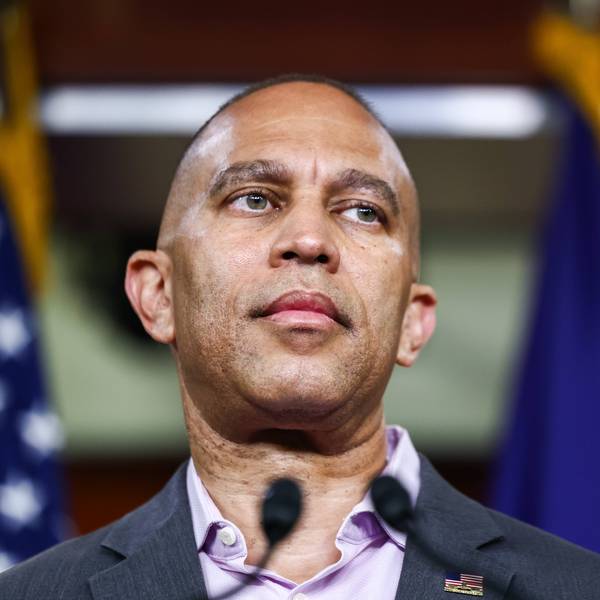
Speaking on Sunday, House Speaker John Boehner indicated that he may again try to tie the Keystone XL pipeline project to the payroll tax cut.
The Huffington Post reports this morning on Boehner speaking with "Fox News Sunday" on trying to bring back the pipeline project:

"The Keystone pipeline is the prime example of a shovel-ready project that has been through every approval process here in Washington," he told "Fox News Sunday." "Every option is on the table. We are going to do everything we can to try to make sure that this Keystone pipeline is, in fact, approved."
Asked by host Chris Wallace whether he would try to "link" the pipeline to extending the payroll tax holiday for an additional 10 months after it expires at the end of February, Boehner replied,"We may. But as I said, all options are on the table."
Dow Jones newswires report:
Congressional lawmakers hope to reach an agreement soon on how to extend a reduced federal payroll tax rate as well as jobless benefits for long-term unemployed people. The current tax rate and benefits program both expire at the end of February.
At the same time, Republicans are urging President Barack Obama to approve the construction of the so-called Keystone XL pipeline that would transport oil and natural gas from Alberta down to refineries in Texas.
Boehner may have been hinting at the possibility of Congress using powers to pass the proposal despite Obama's executive power. The Hill explains the Congressional Research Service's (CRS) findings:
The Jan. 20 CRS legal analysis notes that while the executive branch has historically handled the approval of border-crossing facilities, it doesn't have to be that way. "[I]f Congress chose to assert its authority in the area of border crossing facilities, this would likely be considered within its Constitutionally enumerated authority to regulate foreign commerce," the analysis states.
Republicans are highly unlikely to have enough political support to win Senate passage of bills that require a permit, let alone Obama's signature. But the CRS analysis may buoy Republicans rallying around the bills to attack Obama's Jan. 18 denial of TransCanada Corp.'s permit application.
The four CRS attorneys write that their review "suggests that legislation related to cross-border facility permitting is unlikely to raise significant constitutional questions, despite the fact that such permits have traditionally been handled by the executive branch alone pursuant to its constitutional 'foreign affairs' authority."
A House Energy and Commerce Committee panel will hold a hearing next Wednesday on Rep. Lee Terry's (R-Neb.) bill that takes review of the pipeline away from the State Department and instead requires the independent Federal Energy Regulatory Commission to issue a permit.
Sen. John Hoeven (R-N.D.), who is planning a separate bill to put approval in the hands of Congress, requested the study.
"I think this confirms what we have been saying all along - Congress has the authority under the Constitution to approve the Keystone pipeline," said Ryan Bernstein, Hoeven's deputy chief of staff and legal counsel. "It gives great weight to not only our bill but any bill Congress considers," he added.
Speaking on Sunday, House Speaker John Boehner indicated that he may again try to tie the Keystone XL pipeline project to the payroll tax cut.
The Huffington Post reports this morning on Boehner speaking with "Fox News Sunday" on trying to bring back the pipeline project:
"The Keystone pipeline is the prime example of a shovel-ready project that has been through every approval process here in Washington," he told "Fox News Sunday." "Every option is on the table. We are going to do everything we can to try to make sure that this Keystone pipeline is, in fact, approved."
Asked by host Chris Wallace whether he would try to "link" the pipeline to extending the payroll tax holiday for an additional 10 months after it expires at the end of February, Boehner replied,"We may. But as I said, all options are on the table."
Dow Jones newswires report:
Congressional lawmakers hope to reach an agreement soon on how to extend a reduced federal payroll tax rate as well as jobless benefits for long-term unemployed people. The current tax rate and benefits program both expire at the end of February.
At the same time, Republicans are urging President Barack Obama to approve the construction of the so-called Keystone XL pipeline that would transport oil and natural gas from Alberta down to refineries in Texas.
Boehner may have been hinting at the possibility of Congress using powers to pass the proposal despite Obama's executive power. The Hill explains the Congressional Research Service's (CRS) findings:
The Jan. 20 CRS legal analysis notes that while the executive branch has historically handled the approval of border-crossing facilities, it doesn't have to be that way. "[I]f Congress chose to assert its authority in the area of border crossing facilities, this would likely be considered within its Constitutionally enumerated authority to regulate foreign commerce," the analysis states.
Republicans are highly unlikely to have enough political support to win Senate passage of bills that require a permit, let alone Obama's signature. But the CRS analysis may buoy Republicans rallying around the bills to attack Obama's Jan. 18 denial of TransCanada Corp.'s permit application.
The four CRS attorneys write that their review "suggests that legislation related to cross-border facility permitting is unlikely to raise significant constitutional questions, despite the fact that such permits have traditionally been handled by the executive branch alone pursuant to its constitutional 'foreign affairs' authority."
A House Energy and Commerce Committee panel will hold a hearing next Wednesday on Rep. Lee Terry's (R-Neb.) bill that takes review of the pipeline away from the State Department and instead requires the independent Federal Energy Regulatory Commission to issue a permit.
Sen. John Hoeven (R-N.D.), who is planning a separate bill to put approval in the hands of Congress, requested the study.
"I think this confirms what we have been saying all along - Congress has the authority under the Constitution to approve the Keystone pipeline," said Ryan Bernstein, Hoeven's deputy chief of staff and legal counsel. "It gives great weight to not only our bill but any bill Congress considers," he added.
Speaking on Sunday, House Speaker John Boehner indicated that he may again try to tie the Keystone XL pipeline project to the payroll tax cut.
The Huffington Post reports this morning on Boehner speaking with "Fox News Sunday" on trying to bring back the pipeline project:
"The Keystone pipeline is the prime example of a shovel-ready project that has been through every approval process here in Washington," he told "Fox News Sunday." "Every option is on the table. We are going to do everything we can to try to make sure that this Keystone pipeline is, in fact, approved."
Asked by host Chris Wallace whether he would try to "link" the pipeline to extending the payroll tax holiday for an additional 10 months after it expires at the end of February, Boehner replied,"We may. But as I said, all options are on the table."
Dow Jones newswires report:
Congressional lawmakers hope to reach an agreement soon on how to extend a reduced federal payroll tax rate as well as jobless benefits for long-term unemployed people. The current tax rate and benefits program both expire at the end of February.
At the same time, Republicans are urging President Barack Obama to approve the construction of the so-called Keystone XL pipeline that would transport oil and natural gas from Alberta down to refineries in Texas.
Boehner may have been hinting at the possibility of Congress using powers to pass the proposal despite Obama's executive power. The Hill explains the Congressional Research Service's (CRS) findings:
The Jan. 20 CRS legal analysis notes that while the executive branch has historically handled the approval of border-crossing facilities, it doesn't have to be that way. "[I]f Congress chose to assert its authority in the area of border crossing facilities, this would likely be considered within its Constitutionally enumerated authority to regulate foreign commerce," the analysis states.
Republicans are highly unlikely to have enough political support to win Senate passage of bills that require a permit, let alone Obama's signature. But the CRS analysis may buoy Republicans rallying around the bills to attack Obama's Jan. 18 denial of TransCanada Corp.'s permit application.
The four CRS attorneys write that their review "suggests that legislation related to cross-border facility permitting is unlikely to raise significant constitutional questions, despite the fact that such permits have traditionally been handled by the executive branch alone pursuant to its constitutional 'foreign affairs' authority."
A House Energy and Commerce Committee panel will hold a hearing next Wednesday on Rep. Lee Terry's (R-Neb.) bill that takes review of the pipeline away from the State Department and instead requires the independent Federal Energy Regulatory Commission to issue a permit.
Sen. John Hoeven (R-N.D.), who is planning a separate bill to put approval in the hands of Congress, requested the study.
"I think this confirms what we have been saying all along - Congress has the authority under the Constitution to approve the Keystone pipeline," said Ryan Bernstein, Hoeven's deputy chief of staff and legal counsel. "It gives great weight to not only our bill but any bill Congress considers," he added.