

SUBSCRIBE TO OUR FREE NEWSLETTER
Daily news & progressive opinion—funded by the people, not the corporations—delivered straight to your inbox.
5
#000000
#FFFFFF
To donate by check, phone, or other method, see our More Ways to Give page.
Daily news & progressive opinion—funded by the people, not the corporations—delivered straight to your inbox.
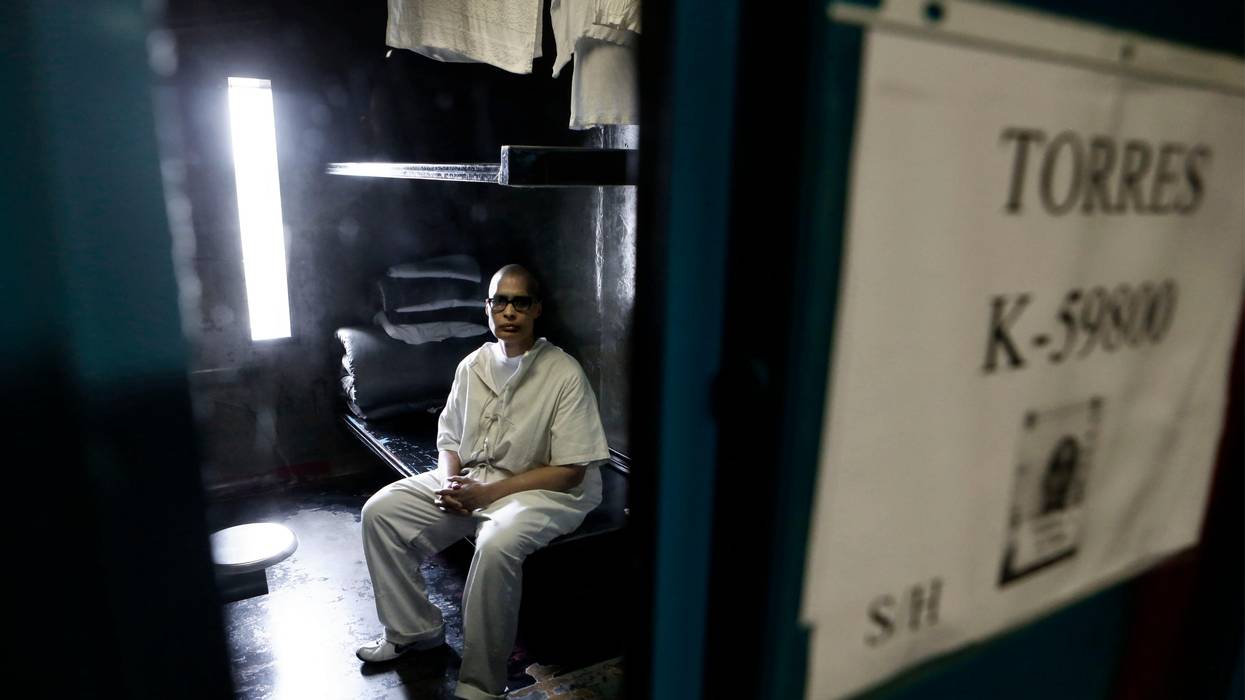
Eddy Nalon bled to death in a segregation cell at Millhaven Penitentiary on this day in 1974. For every year since, prisoners have courageously marked Aug. 10 as Prisoners Justice Day.
Despite this international standard and the admonishments of Canadian courts, Canada continues to practice this form of abuse.
They fast, refuse to work and think about all prisoners who have died. Long before the medical science backed them up, prisoners knew that being locked alone in a cell indeterminately would undermine sanity and drive them toward suicide.
The consciousness of Canadians has caught up with what prisoners have known for years. Prolonged solitary confinement is torture. Canadian appellate courts in B.C. and Ontario have now held that indeterminate periods of isolated confinement violate Charter rights. Class action lawsuits have been successful resulting in damages for the cruelty prisoners experienced for being held in segregated confinement for more than 15 days straight.
The United Nations defines solitary confinement as 22 hours or more alone in a cell without meaningful human contact. More than 15 consecutive days of it has been prohibited as cruel and a form of torture. Yet, despite this international standard and the admonishments of Canadian courts, Canada continues to practice this form of abuse.
In 2019, Canada repealed legislation permitting administrative segregation, one form of solitary confinement. Ministers said this would be the end of solitary confinement in Canada. They were wrong.
Confinement in cells for more than 22 hours without meaningful human contact continues under different names. From dry celling to lockdowns to medical observation--the list is long. Solitary has worsened over the last two years with a ready public health justification for cruel confinement.
Most concerning is that structured intervention units (SIUs) that were billed as the answer to abusive solitary confinement now perpetuate it. Prof. Doob and Sprott's analysis of the SIUs revealed that 10 per cent (195) of SIU placements result in prohibited, prolonged, solitary confinement or torture. This finding was accepted by the minister of Public Safety before a Parliamentary Committee.
When Parliamentarians learn that Canadians are being tortured right here at home, the practice should be stopped immediately. Canadians should not tolerate other Canadians being tortured by state officials.
Stopping this is not difficult: Direct and legislate correctional authorities to cap solitary confinement at 15 consecutive days; ratify the optional protocol against torture; and denounce torture in all forms, particularly in our own backyard.
The correctional investigator, auditor general, senators, and advocates have raised countless failings in our correctional system. They are frustrated that recommended reforms have been ignored.
It would take a wholesale transformation of the federal correctional system to fully respect the rule of law and provide prisoners with the rights and justice to which they are entitled--but surely, stopping practices that are recognized in international human rights documents and by our courts as cruel and torturous is not too much to hope for on this Prisoners Justice Day.
How many more Eddy Nalons will Canada fail?
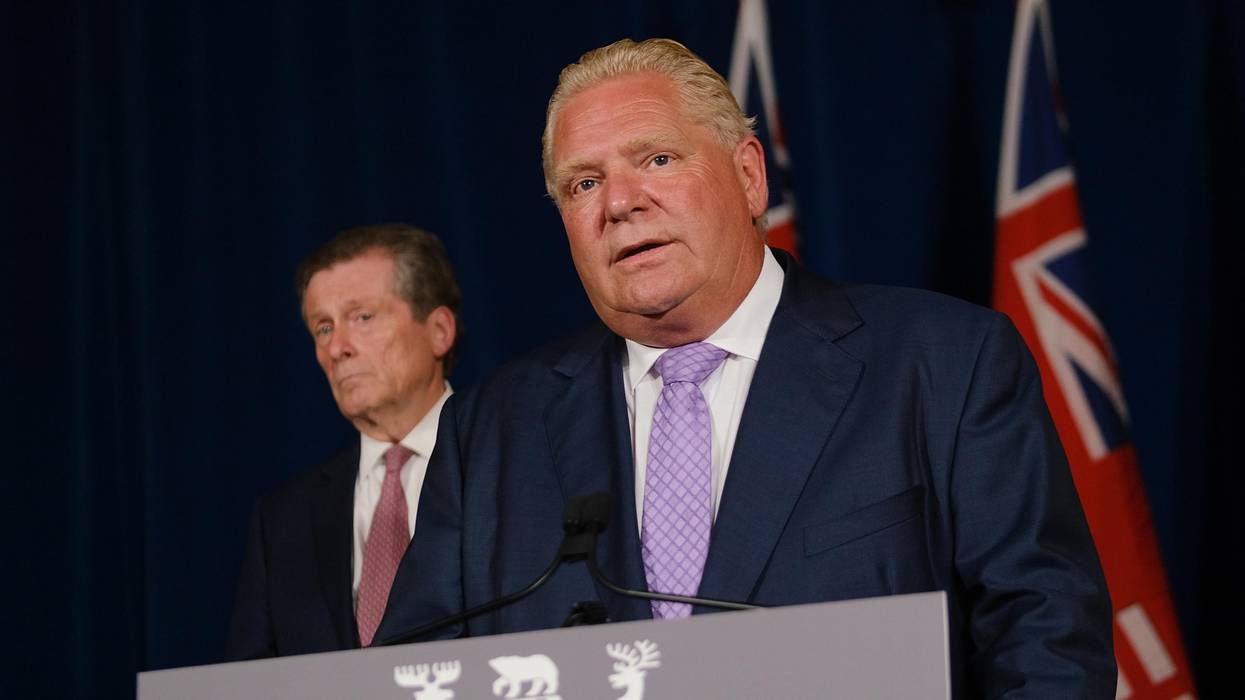
Now that it's clear Premier Doug Ford will rule over Ontario for another four years, we can begin to survey the damage he's likely to do in some key areas--like health care.
It takes decades of careful planning and wilful treachery to devise a health-care system as wretched as the American one.
Somehow, Ford managed to get through the recent provincial election campaign with almost no scrutiny of his health-care plans.
The media is largely to blame. Media outlets mostly ignored the most significant thing Ford's Progressive Conservatives revealed during the campaign about their health-care plans: that they intend to expand private health care as a way to deal with the huge medical backlog created by the pandemic.
In other words, COVID will be the cover for doing what they want to do anyway.
Now, this doesn't mean we'll end up with a disastrous health-care system like the largely private one south of the border. It takes decades of careful planning and wilful treachery to devise a health-care system as wretched as the American one.
Instead, we'll maintain our basic public system, but more medical entrepreneurs will be allowed to operate private clinics, often as part of corporate chains. One thing is clear: these private operators will make a good profit for themselves, so that a growing portion of our public health-care dollars will go to enriching them.
In many cases, the private operators will offer faster access to medical services for their paying clients, rather than determining access to medical care based on who is sickest, as the public system requires.
It's easy to sympathize with private clients wanting to get treated as fast as possible. But faster service for them means slower access--or no access at all--for others.
That's because there are a limited number of medical professionals, and they all work within the same broad, publicly subsidized system.
The public system pays for the education of doctors and nurses employed by the private clinics, and it provides the high-level medical infrastructure of publicly funded hospitals, which are essential in case things go wrong at the clinics.
If the private operators were obliged to cover the full costs of providing their services--paying to educate their medical professionals and providing the sophisticated health-care infrastructure needed as backup--their costs would be astronomical and their business model wouldn't be viable.
Instead, private operators take full advantage of the public system, and then use their power within it to move their clients to the front of the line, ahead of sicker people who haven't paid them a fee.
In effect, the private clinics are, leeching off the public system. They couldn't exist without it. But even as they rely on the public system to function, they subvert its key goal of prioritizing patients by sickness.
In the process, the sickest patients are kicked to the curb.
If we reject this corporate freeloading, it doesn't mean we have to accept overrun emergency departments or endless waits for medical treatment.
Much of what ails our system can be fixed--not through the self-serving private solutions always being peddled, but by adequately funding our public system.
Ottawa definitely needs to increase its health-care funding. But so does Ontario--a rich province but a cheapskate when it comes to health care.
Ontario actually spends less per person on health care than any other province, according to Ontario's Financial Accountability Office, the province's independent financial watchdog.
It's this underfunding that creates a demand for private health care.
Consider this: if Ontario just spent as much as the average of the other provinces--which isn't setting the bar unduly high--it would mean an extra $7.6 billion a year for health care, notes Ricardo Tranjan, a political economist at the Canadian Centre for Policy Alternatives.
Imagine what could be done with that money! With even a small portion of it--$2 billion--Ontario could hire an additional 24,000 registered nurses.
I'd wager that an extra 24,000 registered nurses would do more to reinvigorate our overwhelmed emergency rooms than an influx of medical entrepreneurs, driven by a desire to redirect a big chunk of our public health dollars to themselves.

In many ways, the long-running battle to save medicare from privatization is a battle for the soul of Canada. And it's a battle that's about to heat up.
Public health care is much more cost-effective than private health care--as illustrated by the fact that the mostly private U.S. system is far more expensive than the mostly public systems in Canada and Europe.
On one side are a large number of Canadians, for whom medicare stands out like a sparkling jewel--a nationwide system dedicated to the proposition that access to health care be based on need, not money.
On the other side are some highly organized, right-wing groups that object in principle to collective, egalitarian solutions like medicare. Among these well-funded groups are the Fraser Institute and the Canadian Constitutional Foundation, a fiercely anti-government organization that raises funds for court challenges to medicare.
And now there's a new right-wing opponent of medicare--SecondStreet, which is closely affiliated with the ultra-conservative Canadian Taxpayers Federation and has recently financed polls that purport to show Canadians warming to private health care.
Allied with these right-wing ideologues are business interests that want to open up the potentially lucrative Canadian health-care market to private enterprise.
The anti-medicare crowd, which usually faces an uphill battle due to the popularity of medicare in Canada, is sniffing opportunity in the air these days--largely due to the pandemic.
After months of hospitals being overwhelmed with COVID patients, the backlog of delayed medical procedures is enormous--roughly a million surgeries and 20 million non-surgical procedures.
The obvious solution to this massive backlog would be a significant increase in government funding and better use of existing public facilities. That's because public health care is much more cost-effective than private health care--as illustrated by the fact that the mostly private U.S. system is far more expensive than the mostly public systems in Canada and Europe.
If Ontario turns to the private sector to help with the backlog, the procedures will still be paid for by government (that is, taxpayers); it will just cost us a lot more.
But Premier Doug Ford, who rarely believes a problem can't be solved through privatization, seems oblivious to this higher cost when the money is to be funnelled to private interests.
Ontario currently has about 1,000 private clinics, officially called "independent health facilities," which mostly carry out diagnostic procedures like ultrasounds and x-rays.
But, with the chaos created by COVID as a cover, the Ford government seems poised to allow a considerable expansion of private health care in the province.
In remarks at a press briefing in Ajax last month, with the premier standing directly behind her, Health Minister Christine Elliott mentioned "private hospitals" as among the facilities that will be dealing with the backlog.
"We're opening up pediatric surgeries, cancer screenings, making sure that we can let independent health facilities operate private hospitals, all of those things that are possible," said Elliott.
Her reference to "private hospitals" was brief but, for veterans of health care battles, it stood out like a bleeding appendage.
That's because private hospitals have been banned in the province since 1973, a year after OHIP was created. (Private hospitals that were operating at the time were grandfathered. A few, such as the Shouldice Hernia Hospital, still operate today, providing services paid for by the province.)
But prying open the long-sealed door to permit the creation of new private hospitals would be a dramatic development, allowing hospitals--the centrepieces of our health-care system--to be governed by corporate boards that prioritize profits, as in the U.S.
Elliott's statement attracted little media interest, but it certainly caught the attention of Natalie Mehra, executive director of the Ontario Health Coalition, who called it a "bombshell."
Mehra argues that private hospitals would undermine medicare by enabling well-to-do patients to gain faster access to treatment. And she points to the disastrous impact privatization has had on long-term care homes, now largely consolidated into corporate chains, where COVID death rates have been significantly higher than in non-profit homes.
The strong attachment of Canadians to medicare has survived over time, even in today's corporate-dominated society.
Indeed, in a world where the rich can buy their way to the front of just about every line, there's something inspiring about a health-care system where they can't.
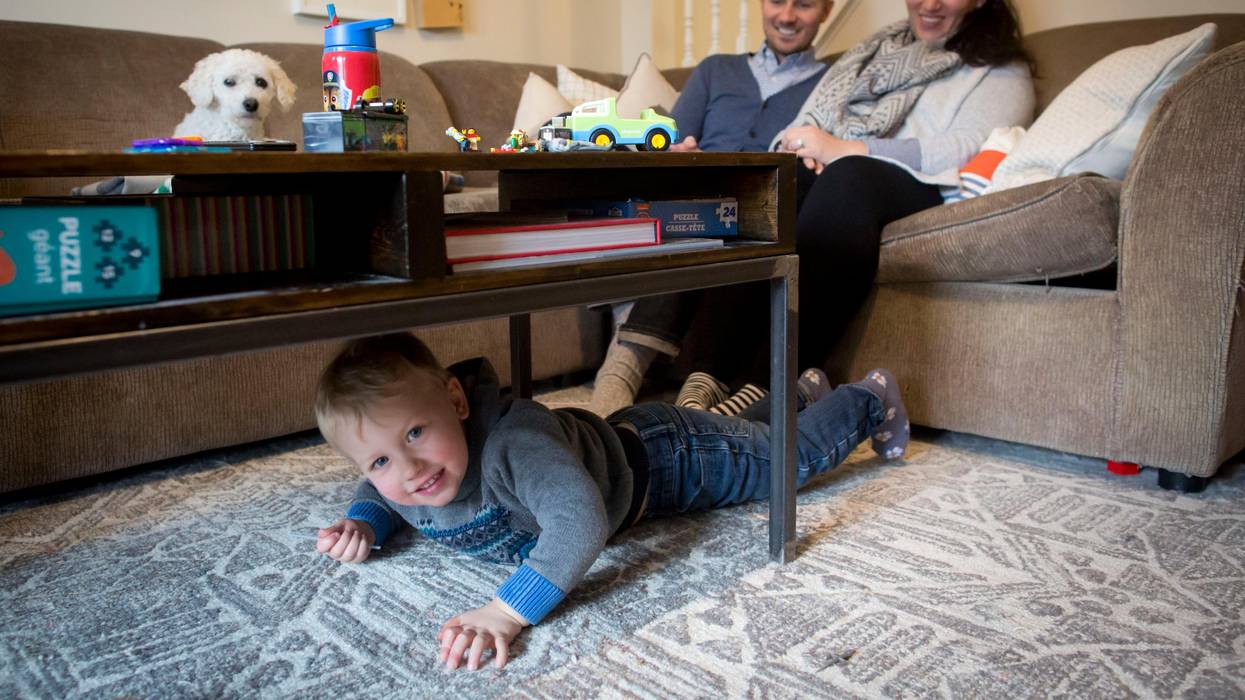
After decades of contentiousness, it's surprising how quickly Canada's new national child-care program has become as familiar and comfortable as your dog's favourite squeeze-toy.
Or maybe it isn't surprising. Why wouldn't Canadians welcome a program that makes their lives as parents so much easier, giving them the freedom to work if they want while sparing them the exorbitant costs--often compared to a second mortgage--of child care?
The success of Scandinavian-style child care stems from the fact that it is a truly public system--like our school system--with no place for private profit-making, which leads to cutting corners on staff and resources.
Now that it's arrived, the $30-billion national child-care program, announced by the Trudeau government last April after years of Liberal stalling and Conservative opposition, seems like a no-brainer. The aim is to provide $10-a-day child care across the country by 2026.
The plan is being hailed as an important first step that could lead to the development a strong, public child-care system--with strict limits on private profit-making.
So far, even provinces with Conservative governments are on board with the new plan.
Ontario is the lone provincial holdout, but the Doug Ford government has signalled negotiations with the feds are going well and a deal is likely soon.
This has prompted accusations that Ford is deliberately stalling negotiations so the new program can be announced closer to the provincial election this spring.
But hold it! Is it possible that Ford--always keen to cut government spending--wants to ensure he gets credit for bringing the province into a new program that dramatically expands the role of government?
Apparently, yes. Similarly, hard-right Alberta Premier Jason Kenney signed a child-care deal with Ottawa last November.
Right-wing ideologues like Kenney and Ford typically resist any suggestion of expanding social programs.
But when the idea turns into a concrete plan with $30 billion attached to it, offering such clear advantages that ordinary citizens get excited at the prospect--even conservative premiers have trouble saying no. Their desire to win re-election trumps their inner ideologue.
And, of course, once implemented, social programs quickly become popular, making it difficult for conservative governments to scale them back.
That's why right-wing think-tanks and business groups try to derail social program expansion while it's still on the drawing boards, by insisting we can't afford it--an objection that is never raised against government plans to spend enormous sums on, say, military jets.
We hear little about how popular and generous social programs are in Europe, particularly in Scandinavian countries, where child care isn't just affordable but is actually spectacular--housed in beautiful buildings with well-designed play spaces indoors and outdoors, and providing warm and tasty meals.
Compare this to Canada, where child care, when available, is often housed in makeshift quarters, with few resources and underpaid staff.
It's weird that we put such a low priority on providing for our children.
Of course, right-wingers argue that child care should be an individual responsibility. That's fine for families that can afford expensive child care or even live-in nannies. But if the goal is to provide excellent care for all children, a public system is the most cost-effective; it's really the only viable option.
And now that it's clear a national child-care system is politically viable, it will be up to the Trudeau government to ensure that the one it's started to build is strong--and public.
The success of Scandinavian-style child care stems from the fact that it is a truly public system--like our school system--with no place for private profit-making, which leads to cutting corners on staff and resources.
But child care is a big international business, and a growing portion of Canada's child care is provided by corporate chains that are anxious to expand here.
The real test for the Trudeau government will be whether the billions it's investing in child care will be used to build a strong public system--or get scooped up by child-care multinationals spotting an easy and reliable source of cash.
What do former Health Minister, Allan Rock; Senator Mohamed-Iqbal Ravalia; former Lieutenant Governor of Ontario, David Onley; professional dancer, Luca Patuelli; 'Mincome' economist Evelyn Forget; best-selling author, Tara Ross; the CEO of Community Foundations of Canada, Andrew Chunilall; singer-song writer, Christa Couture; disability activists, Ali Mohammed and Meenu Sikand; several order of Canada recipients, noted physicians and academics--along with most major disability organizations from across the country--all have in common?
Economists predict that poverty in Canada would be reduced by as much as 40 per cent overall by eliminating disability poverty.
They are among the more than 200 political personalities, academics, artists, non-profit and business leaders that have signed an open letter asking the federal government to fast track the Canada Disability Benefit--and to do so with the active and genuine involvement of disabled people every step of the way.
People with disabilities make up 41 per cent of our population living in poverty.
The Canada Disability Benefit was first introduced by the federal government in the Speech from the Throne a year ago and is the direct result of years of advocacy from the disability community. Legislation tabled before Parliament recessed last summer promised a first: a federally funded income support for persons with disabilities--that would not replace provincial programs and other supports but complement it--so that they are no longer consigned to a life lived in poverty.
Economists predict that poverty in Canada would be reduced by as much as 40 per cent overall by eliminating disability poverty. It's an historic opportunity--something no government in the world has ever committed to.
It's time now to make the Canada Disability Benefit a reality.
The good news is that Canadians across the political spectrum support the idea. In a recent Angus Reid survey, 89 percent of Canadians say it's time to end poverty for people with disabilities. And in the recent federal election, all of the major political parties included the needs of persons with disabilities in their platforms.
There is a new awakening, a new dawn in our consciousness with Canadians calling for a recalculating of fairness and justice--and working toward a better future for all, including for people living with disabilities experiencing poverty.
There is no need to study the problem for years first as the federal government has indicated they might do in the last Parliament; we have oodles of data, we have public support, and political will across party lines--now we need action.
As our governments prepare for economic recovery post-pandemic, the sad reality is that people with disabilities may be left even further behind. COVID-19 was especially hard on people with disabilities.
We expect all-party support for fast action on the Canada Disability Benefit--to make Canada the first country in the world to provide a livable income supplement for people with disabilities.
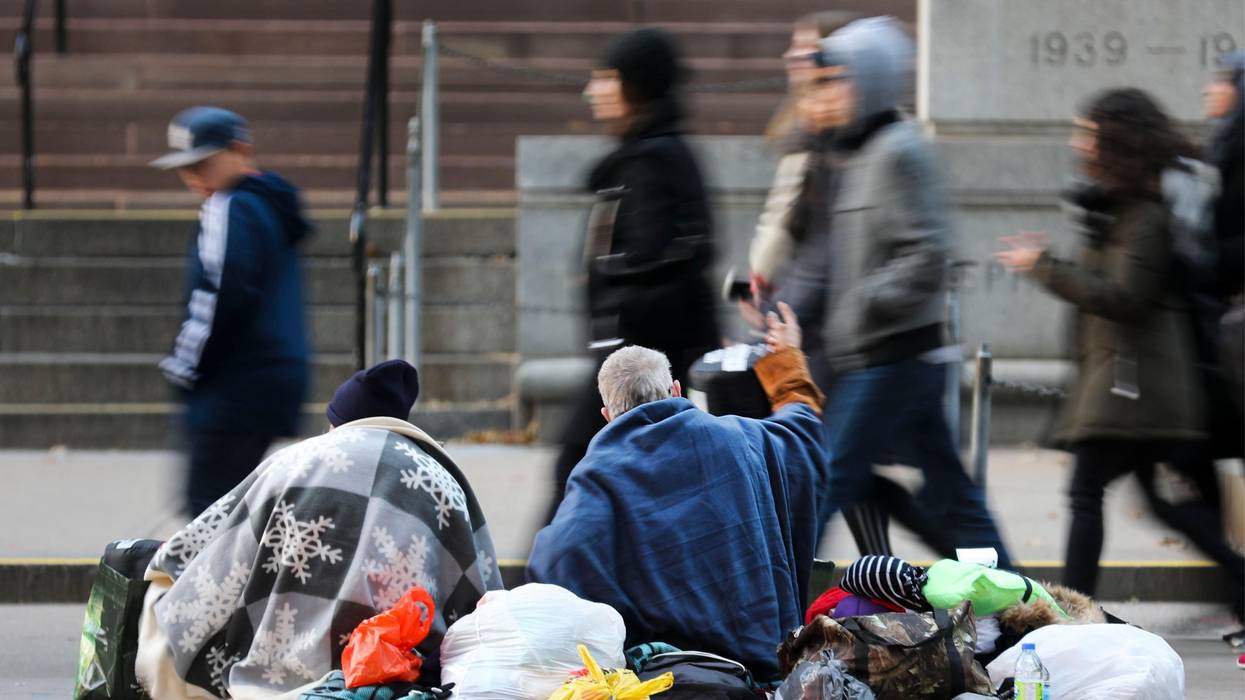
Currently, a disproportionate number of people with disabilities in Canada are depending on food banks and finding themselves homeless. They are finding themselves without adequate daily living supports. Provincial disability benefits are failing them, falling well below the poverty line. Too many people with disabilities are considering dying from despair.
Canada is a prosperous nation--among the richest in the world. But in the heart of business affluence in this country, not too far away from Bay Street, there are people with disabilities like Ryan begging money to buy food. There is Mariam living in an inaccessible apartment as her disability progresses toward needing a wheelchair full-time. And there is Precious, whose mental health is deteriorating because she has no job to go back to as a result of the pandemic.
People with disabilities, their families, friends and fellow Canadians want Canada's 44th parliament to make history and leave a cross-partisan legacy. We expect all-party support for fast action on the Canada Disability Benefit--to make Canada the first country in the world to provide a livable income supplement for people with disabilities.
People with disabilities are ready to work together with the federal government to fast-track consultation, provide the research and move quickly to implement the Canada Disability Benefit.
Let's work together and make this happen.
The open letter was coordinated by Disability Without Poverty, March of Dimes Canada, the Multiple Sclerosis Society of Canada, Race & Disability Canada and can be found here.

In a recent article, a young freelance journalist expressed the familiar lament that she and other millennials won't be able to own their own homes or have financial security.
But in a surprise twist, she went on to embrace her reduced circumstances, and suggest other millennials do likewise.
The NDP might well have sufficient leverage to push the Liberals, ever anxious to prove their chops with progressives, to at least establish a parliamentary committee--with full public hearings--to study a wealth tax.
"We need to adjust to a new reality and remove the archaic expectations from previous generations about home ownership, investing and saving," Brianna Bell wrote in The Globe and Mail. "But that doesn't mean we should feel ashamed or guilty ... it's time we admit that's OK."
Well, I'm no millennial, but I respectfully disagree. It's not OK. It's outrageous.
The fact that so many millennials--and other Canadians--have little prospect of experiencing the prosperity and financial security widely enjoyed in the early postwar years isn't due to some unknowable development.
But there's no economic law that decrees only the rich should own homes or that a tiny group at the top should be allowed to siphon off an ever larger share of what we all collectively produce.
In this week's federal election, the party platform that came closest to addressing today's grotesque inequality was the NDP's proposal for an annual net wealth tax--a modest version of the wealth taxes advocated by U.S. Senators Bernie Sanders and Elizabeth Warren.
Making the tax the centrepiece of their campaign--as an indispensable tool for financing universal programs and distributing resources more fairly--the New Democrats have established the wealth tax as a serious subject in the Canadian political debate.
Anyone scoffing at the notion Canadians take taxing the wealthy seriously should look at polls showing the incredible level of public support for a wealth tax--89 per cent, including substantial support even among Conservative voters, according to an Abacus poll last month.
Of course, the NDP ended up winning only one additional seat in the election, giving them insufficient clout to force the minority Trudeau government to introduce the tax. But the NDP might well have sufficient leverage to push the Liberals, ever anxious to prove their chops with progressives, to at least establish a parliamentary committee--with full public hearings--to study a wealth tax.
That could be more consequential than it sounds, particularly because the tax is already hugely popular.
Public hearings could raise awareness and galvanize support for taxing the ultra-rich--particularly as members of this privileged set start decrying pandemic-inflated deficits, and insisting that the only way to reduce them is to drastically cut government spending.
Against a backdrop of calls for a return to full-blown austerity, Canadians might well be interested to learn that the NDP's proposed 1 per cent tax on wealth-holdings worth more than $10 million would only affect the wealthiest 75,000 families, but would raise $17 billion a year, according to Alex Hemingway, an economist at the Canadian Centre for Policy Alternatives.
Canadians might also be curious to learn just how wealthy those 75,000 families have become, particularly since the pandemic. (Spoiler: Canadian billionaires increased their wealth by $78 billion during the pandemic.)
Another intriguing fact is that our current tax system leaves the wealthiest Canadians largely untaxed. As long as they don't sell their stockholdings, they can avoid paying income tax on this wealth, even as it increases in value. They can finance their lavish lifestyles by borrowing against it, and avoid income taxes for decades.
It turns out a wealth tax isn't about punishing the ultra-wealthy; it's simply the only way to tax their vast fortunes, which account for a significant share of Canada's wealth.
While some millennials are resigned to their diminished circumstances, others appear resentful, such as Kristen Darch, who wrote a recent article entitled "Boomers, stop bragging about your second homes."
Both these millennials, the resigned and the resentful, seem to feel there's not much they can do about their plight. Imagine if they heard about the wealth tax.
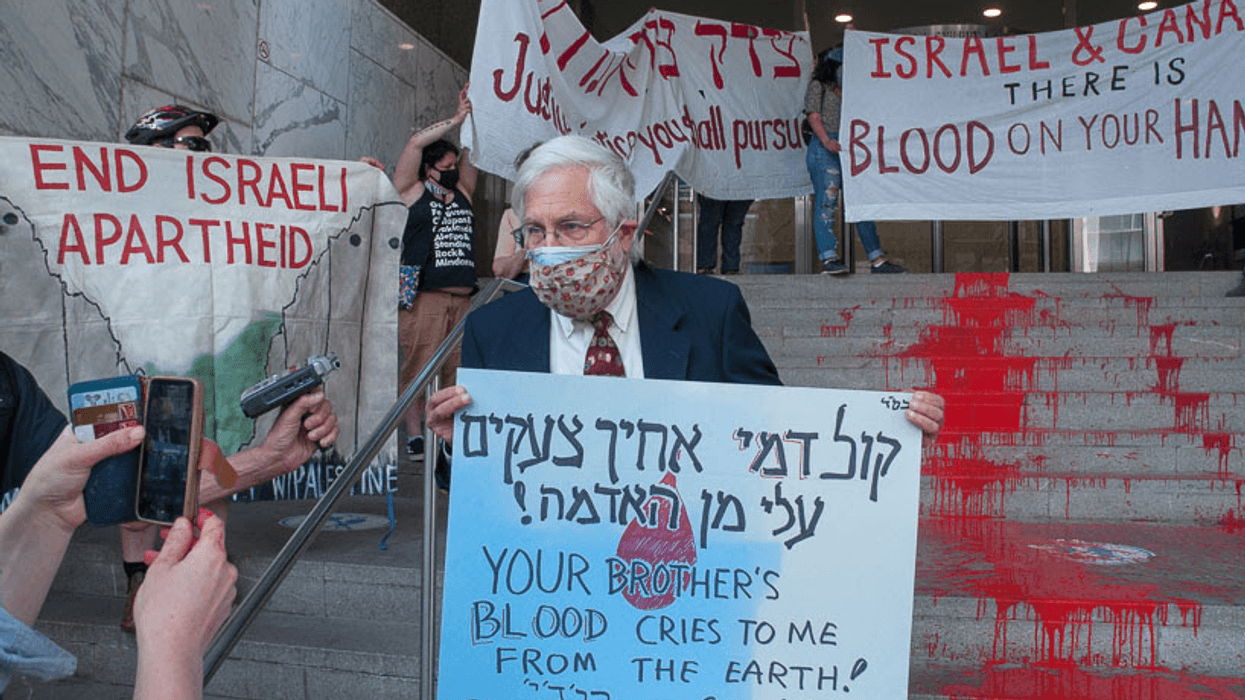
Jewish Canadians and allies on Friday symbolically poured a "river of blood" on the steps of the Israeli consulate in Toronto to represent the human carnage in Gaza over recent days--and across historic Palestine for decades--as they demanded the Canadian government end its support for the Israeli government's violent policies.
The demonstration was led by World Beyond War, Independent Jewish Voices, Just Peace Advocates, and the Canadian Foreign Policy Institute.
"We are making the violence of Israel's brutal occupation, military attacks, and ethnic cleansing visible right here on the consulate's doorstep."
--Rachel Small, World Beyond War
The protest came a day after diplomats brokered a ceasefire between the Israel Defense Forces (IDF) and Hamas--a temporary reprieve that was desperately needed following an 11-day assault in which more than 230 Palestinians, including 65 children, were killed and nearly 2,000 wounded. According to Israeli authorities, 12 people were killed in recent days by Hamas rockets.
While the ceasefire was welcomed by Canadian advocates for Palestinian rights, Rabbi David Mivasair of Independent Jewish Voices said, "the ceasefire doesn't end the injustice and oppression."
"It can no longer be business as normal at Israel's consulates in Canada," said Mivasair. "The death and destruction inflicted by Israel in Gaza, as well as the heightened violence by Israel across Palestine, cannot be washed away. This belligerence is the latest in an ongoing aggressive 73-year settler-colonization project by Israel across historic Palestine."
"Red paint streaming from the Israeli consulate onto the street in Toronto represents the blood of massacred innocent Palestinian civilians, the blood on Israel's hands," said the groups in a joint statement. "As Canadians, we demand that our government holds Israel accountable for war crimes and stops the Canada-Israel arms trade."
Canada has exported $57 million in weapons to Israel since 2015, including $16 million in bomb-making materials. The Canadian government also recently signed a contract to buy drones from the same Israeli company that supplies 85% of the drones used by the IDF to surveil and attack Palestinians in the occupied West Bank and Gaza.
"Jews in our communities in Canada are overcome with grief and anger," said Mivasair. "Many of us stand in solidarity with our Palestinian siblings. We say loud and clear, 'not in our name.' Israel can no longer continue to commit these atrocities in the name of the Jewish people."
By pouring red paint on the steps of the Israeli consulate, said Rachel Small, an organizer with World Beyond War, "We are making it impossible for anyone to enter and exit Israeli government offices here without directly confronting the violence and bloodshed they are complicit in."
"We are making the violence of Israel's brutal occupation, military attacks, and ethnic cleansing visible right here on the consulate's doorstep," Small said.

The U.S. surprised the world last week by throwing its weight behind waiving intellectual property rights for COVID-19 vaccines. Under pressure to respond similarly, Prime Minister Justin Trudeau said: "I can assure you Canada is not interfering or blocking. Canada is very much working to find a solution."
This is typical non-confrontational Canadian prevarication. "Not blocking" in this case still functions as a block.
Callous capitalism dictates that we get what we pay for. Ergo, the rich get more, the poor ... bring their suffering on themselves. The proposal to waive certain patents on vaccines and medicines was brought forward in October by South Africa and India, well before any vaccines had been approved to prevent COVID-19. It has the support of some 100 nations, but the World Trade Organization works by "consensus," meaning every one of its 164 members has to agree to the proposal. If you're ever looking for the quintessential definition of structural discrimination, this is it. Create a coalition in the name of progress, but build in foundational structural barriers to equal access.
All this is happening against the backdrop of rich nations over-ordering vaccines, hoarding them, while blocking badly hit poor nations from accessing them.
By some counts, Canada has ordered enough vaccines to inoculate our population four times over. Meanwhile, where the virus feasts on humans, it continues to mutate dangerously making life unsafe for all -- and exposing our myopic decision-making in the bargain.
So when Trudeau says he wants Canada to play mediator, to bring about a balance between protecting companies and improving vaccine access to poorer countries, he's talking about a balance between profit and life. "Our" profit, "their" lives.
Callous capitalism dictates that we get what we pay for. Ergo, the rich get more, the poor ... bring their suffering on themselves.
Except, the pharmaceutical companies claiming ownership to the recipes to the vaccines didn't even bring these products to the market with their own funds. The COVID-19 vaccine production process fails its own capitalist sniff test.
As intellectual property rights expert Achal Prabhala outlines on The Dig podcast, the U.S. and other rich nations gave companies such as Pfizer, Moderna, AstraZeneca billions of dollars -- billions -- in no-strings-attached grants to do the research, meaning no risk to the companies if they failed. Then they paid the companies billions of dollars -- billions -- in preorders so the companies were guaranteed buyers even before coming into the market. Now, they enjoy a global monopoly -- largely funded by taxpayer labor.
As a result, poorer countries might not get vaccinated until 2023, according to some estimates.
We've seen this circus before with the same criminal consequences.
In 1996, antiviral therapy for HIV/AIDS was developed but was inaccessible to about 95 percent of the world's people living with HIV, according to The Lancet.
That's because one year prior, the creation of the World Trade Organization allowed companies to turn what were domestic patents into global ones. Nongeneric drugs cost about $10,000 a year at the turn of the century and were well out of the reach of many people. Calls for affordable generic antiretroviral drugs met by threats and lawsuits from pharmaceutical corporations. It took years to battle monopoly rights and finally make therapy affordable.
Meanwhile, people simply died.
In the case of smallpox, another deadly disease eradicated from the West but ravaging the developing world, it took a 1965 pledge by then U.S. President Lyndon Johnson to fund a program to wipe the disease off the Earth.
What about COVAX, the COVID-19 Vaccines Global Access program, that is supposed to offer equitable access to vaccines? The U.S. and G7 nations committed to vaccinating at least 20 percent of developing countries by the end of 2021, but herd immunity requires 70 to 85 percent of the people to be vaccinated.
COVAX is so underfunded the vaccines don't even reach front-line workers in poor countries. It has also been undermined by rich nations that jumped to the front of the queue by striking their own bilateral deals with pharmaceutical companies.
Opposition to the patent waiver has come with healthy doses of paternalism: Is this really the answer to the problem? Nations outside the U.S. and Europe don't have the know-how to produce it. The waiver process is so long, it's not worth it. And so it goes.
Look deeper and it gets messier.
The Indian government halted all exports of vaccines to combat its own deadly surge, leaving 91 countries depending on it in the lurch. "This colossal mess was entirely predictable, and could have been avoided at every turn," Prabhala and pharmaceutical lawyer Leena Menghaney wrote in The Guardian. If only rich nations had nipped vaccine monopolies in the bud, they say.
Meanwhile, thousands die of this disease, daily. The patents remain in place. Canada is still "considering" supporting the waiver.

Israeli bombs and artillery shells are raining down on Gaza. Yet again, the world watches silently.
A 14-story highrise building collapses, one tower complex at a time into piles of rubble and dirt, 9/11-style.
A Doctors Without Borders physician reports from the front lines of Jerusalem: her patient, a 14-year-old Palestinian boy is shot in the face with a rubber bullet, the wound less than a centimeter away from his left eye.
A young Palestinian woman is being treated in a tent the injured after being shot in the buttock. The impact of the shot causes her to fall, injuring her elbow. She's then sprayed with "skunk water," a chemical agent that Israeli police routinely fire from water cannons that smells like excrement and rotting flesh. The scent causes her to vomit.
They are the luckier ones. Too many others have lost their lives.
Early Saturday, the Shati refugee camp was hit, killing 10 Palestinians and eight children. An entire family was wiped out, except for an infant named Omar.
A few days earlier, Ali Aymen Saleh, 15, was shot dead in the stomach on his birthday while watching a protest against Israeli occupation in his village.
Sajid Mizher, 17, was also shot in the stomach while volunteering with medics at a refugee camp, despite wearing a clearly marked vest.
There are so many more. But not enough, it seems, amid the deafening silence.
Because even as airstrikes continue to strike the already crippled Gaza Strip, Israel still, according to U.S President Joe Biden, "has a right to defend itself" against rockets fired from the coastal Palestinian territory.
Even as mobs of far-right Israelis smash Arab-owned businesses and drag a man who they believe is Arab from his car and beat him unconscious, Israel "has a right to defend itself."
Even as the UN warns of an all-out war breaking out -- a war, that is, between a state-backed by the world's largest arms supplier and a dispossessed population -- Israel still "has the right to defend itself."
It's a line we've heard over and over from Israeli leaders and their allies. But the death toll tells a different story, as it did after Israel's last brutal offensive in Gaza in 2014. On the Palestinian side according to a 2015 UN report, 2,251 people, of whom 1,462 were civilians, were killed. On the Israeli side, 67 soldiers were killed along with six civilians.
As of Sunday morning, at least 188 Palestinians have been killed in Gaza, including 55 children and 33 women, with 1,230 people wounded. Eight people in Israel have been killed, including a five-year-old boy and a soldier.
"The right to defend itself" argument makes little sense in the context of current realities on the ground. Palestinians living in the occupied territories are not at war with Israel, they live at the mercy of their occupiers. In his book, "The Ethnic Cleansing of Palestine" Israeli historian Ilan Pappe describes how the foundations of Israel are rooted in a colonial project that continues to subject its Indigenous Palestinian population to military occupation, land dispossession and unequal rights.
Destroy, displace and kill. It's been the (arguably unofficial) policy of Israeli Prime Minister Benjamin Netanyahu's government since he was elected 25 years ago.
Meanwhile, Hamas, the Palestinian group that governs the Gaza Strip, has fired over 1,000 rockets from Gaza towards Israel over the last week, of which 200 have actually landed (most have been intercepted by Israel's Iron Dome anti-missile system). While death and suffering inflicted on Israeli civilians is as troubling as it is on the Palestinian side, any violent retaliation has to be viewed in context: Israel's Defence Forces (IDF) is supported with billions of dollars of American aid, a powerful air force and intelligence-gathering system.
It's also hard to believe that the IDF is on a mission to rid the Gaza Strip solely of "violent attackers and terrorists" when they try to use international media to provoke insurgency. Leading Israeli news outlets began reporting on Saturday that an earlier IDF proclamation about Israeli ground troops entering Gaza on Friday -- news that made headlines worldwide -- was an elaborate ploy to dupe Hamas into thinking that an invasion had begun so they could respond with even more lethal attacks on Palestinians. In fact, no invasion had taken place.
In response, Israel's military spokesman, Lt. Col. Jonathan Conricus, insisted it was an honest mistake during the fog of war. Was it an honest mistake too, then, when media offices belonging to the Associated Press and Al Jazeera were destroyed Saturday afternoon?
"Many journalists and editors have come to understand that critical coverage of Israel can result at minimum in a professional headache, and at worst in career damage."How are we, in a year of racial awakening, still not able to recognize Israel's half-century military occupation and deepening grip over Palestinian life? Why does a culture of impunity exist when it comes to Israeli aggression?
The silencing of Israeli crimes and exclusion of Palestinian voices has been felt acutely in Canada for years, most recently when the University of Toronto's law faculty controversially decided to rescind a hiring offer to a human rights lawyer because of concerns that her scholarship criticized Israeli human rights violations of Palestinians.
Canadian journalists are getting fed up too. An open letter to newsrooms signed by over a thousand people, including news editors, reporters, academics, lawyers and citizens are calling for more equitable coverage of Israel balanced with historical and social context, which hasn't happened. As former CBC Middle East correspondent Neil Macdonald said around the hesitation felt by reporters to cover Israel and Palestine three years ago: "Many journalists and editors have come to understand that critical coverage of Israel can result at minimum in a professional headache, and at worst in career damage."
Critics of the Israeli government are not Israel-haters or anti-Semites. We all know that political conflict results in devastating suffering on both sides. But we are also pushing against the narrative that the victims of this violence -- children and teenagers -- are somehow deserving of it.

With the Biden administration's withdrawal from Afghanistan up to 12% complete, a report released Wednesday sheds light on the prices that U.S. allies have paid in lives and dollars for the so-called War on Terror launched after the 9/11 attacks in 2001.
"U.S. allies... deployed troops, lost service members, and spent tax dollars on wars that were of little concern to their own national security. They did so largely because of the value they placed on their alliances with the U.S."
--Costs of War Project
While acknowledging that the "Afghan and Iraqi government security forces have incurred the highest human costs of these wars," the new paper (pdf) by Jason Davidson, a professor of political science and international affairs at the University of Mary Washington, focuses on the often-ignored human and financial tolls for top allies.
The report was published by the Costs of War Project at Brown University's Watson Institute for International and Public Affairs and Boston University's Frederick S. Pardee Center for the Study of the Longer-Range Future. It follows a recent update from the project on U.S. lives and dollars lost on two decades of seemingly endless war in Afghanistan.
"The United States' Western allies have been significantly impacted by the post-9/11 wars," project co-director Stephanie Savell said in statement Wednesday. "The lives they lost and the dollars they spent are part of the costs of these wars and should be counted as such."
The paper's section on Afghanistan says that "at the coalition's peak size (in terms of troop totals) in February 2011, the U.S. deployed roughly 100,000 troops and all other allies' deployments totaled 41,893 troops."
While 47 countries had service members deployed to Afghanistan at the time, the top non-U.S. suppliers of troops to the International Security Assistance Force (ISAF) of the North Atlantic Treaty Organization (NATO) were the United Kingdom at 9,500, Germany at 4,920, France at 4,000, Italy at 3,770, and Canada at 2,905.
The U.S. had the highest number of allied fatalities in Afghanistan between October 2001 and September 2017--2,316--but the U.K. and Canada had higher losses as a percentage of peak deployment. During that period, 455 troops from the U.K. died, along with 158 Canadians, 86 French, 54 Germans, and 48 Italians.
All five top allies "also spent significant sums of money on their military presence in Afghanistan," the paper points out. From 2001 to 2018, while the U.S. spent $730 billion, the U.K. spent $28.2 billion, Canada $12.7 billion, Germany $11.1 billion, Italy $8.9 billion, and France $3.9 billion. Each nation also provided millions and in some cases billion of dollars in foreign aid to Afghanistan--which, as the report notes, "is one of the world's poorest countries, a fact connected with the devastation of decades of war."
U.S. President Joe Biden--who, as senator, voted for the 2001 resolution that authorized the use of military force against nations, groups, or people then-President George W. Bush deemed responsible for the 9/11 attacks--announced last month that all American troops will be out of Afghanistan by this September 11, which misses by months the May 1 withdrawal deadline agreed to by his predecessor.
The Associated Press reports that "there are at least 3,300 American troops and special operations forces there now; hundreds more have gone in to provide security and logistical help for the withdrawal."
Davidson told The Guardian--which published an exclusive report on the new paper early Wednesday--that "Americans do not fully understand, do not acknowledge, the sacrifices that allies made in Afghanistan."
"It's something that not only doesn't get attention from those who are critics of the allies," he said. "It doesn't even get the attention that it deserves from those who are generally cheerleaders for allies, like the current administration. I would like to see more American policymaker acknowledgment and discussion with the public of the costs that America's allies have incurred in these wars."
The Guardian pointed out that the paper's findings echo a December study by the U.K.-based group Action on Armed Violence showing that the United Kingdom's troops were 12% more likely to have been killed than U.S. troops in the Iraq and Afghanistan wars.
"It is clear that Afghanistan proved to be a significant burden for U.K. troops," said Iain Overton, editor of that study. "The U.K. military suffered almost three-quarters of its total deaths there in the last two decades."
According to the Costs of War Project paper, "At the coalition's peak deployment in December 2005, the U.S. had 160,000 troops in Iraq and the allies had 20,998 troops deployed."
After the U.S. and U.K., which had 8,500 soldiers deployed in January 2006, the top troop suppliers during the peak of the Iraq War were South Korea with 3,200, Italy with 2,600, Poland with 1,400, and Australia with 900.
Between March 2003 and January 2012, 4,487 American soldiers were killed in Iraq. The U.K. lost 179 service members, followed by Italy with 33, Poland with 23, Australia with two, and South Korea with one.
The U.S. spent $756 billion in Iraq from 2003 to 2018. Other top suppliers of military funding were the U.K. with $9.9 billion, Italy with $3 billion, Australia with $1.7 billion, South Korea with $613 million, and Poland with $449 million. Over that same period, as the U.S. provided over $43 billion in foreign aid to Iraq, Italy gave $2.1 billion, the U.K. gave $1.88 billion, and other nations gave millions to the country.
"It is important to recognize the costs that allies incurred in both wars," the report says. "The U.S. allies discussed here deployed troops, lost service members, and spent tax dollars on wars that were of little concern to their own national security. They did so largely because of the value they placed on their alliances with the U.S."
"When U.S. policymakers pressure allies to spend more on defense partnerships," the report concludes, "they should take into account the price that allies have already paid for America's wars."

Indigenous rights and climate action groups are set to hold an "Evict Enbridge" celebration on Wednesday and Thursday to mark Michigan Gov. Gretchen Whitmer's deadline for Canadian oil and gas company Enbridge to shut down its Line 5 pipeline.
Ahead of Wednesday's deadline, which Whitmer set last November, the Democratic governor called Enbridge's continued use of the Straits of Mackinac--under which Line 5 has carried more than half of Ontario's oil supply since 1953--a "ticking time bomb."
"Their continued presence violates the public trust and poses a grave threat to Michigan's environment and economy," Whitmer said in a statement this week.
Whitmer, who campaigned on shutting down Line 5, announced last November that she was revoking an easement granted by the state of Michigan nearly 70 years ago, saying Enbridge has violated safety requirements.
Although no oil or gas leaks from Line 5--which carries 540,000 barrels of oil per day--have been reported, the pipeline has been struck by boat anchors and other equipment in recent years. Last year, the line was shut down temporarily after an anchor support sustained damage.
Whitmer said last year that Enbridge violated a rule prohibiting unsupported gaps beneath the pipeline, and another pipeline run by the company spilled more than 845,000 gallons of oil in 2010, affecting the Kalamazoo River.
According to a 2017 National Wildlife Federation report, more than two dozen spills from other sections of Enbridge's pipelines exceeded one million gallons.
A 2018 poll of Michigan residents found that 54% of the state wants Line 5 shut down and 87% are concerned about the pipeline spilling into the Straits of Mackinac.
At the Evict Enbridge event in Mackinaw City this week, environmental justice advocate Winona LaDuke will be among the speakers.
"Will Enbridge shut [Line 5] down or will the public do it for them?" said Honor the Earth, LaDuke's organization, on social media Monday.
Enbridge has "imposed on the people of Michigan an unacceptable risk of a catastrophic oil spill in the Great Lakes that could devastate our economy and way of life," Whitmer said when announcing the easement, which was granted despite the fact that the federal government generally regulates oil pipelines.
In February, a federal court ordered state officials and Enbridge to enter mediation, and the company has vowed to continue running Line 5 while the dispute is resolved. Canadian Resources Minister Seamus O'Regan said last month that the continued operation of the pipeline is "non-negotiable."
Michigan Attorney General Dana Nessel denounced the company and the Canadian government for putting the state "in a position where Canada stands to gain nearly all the benefit and the state of Michigan bears all the risks."
According to the Michigan Advance, state officials will need a court order to shut down the pipeline on Wednesday, as Enbridge says it will not comply with Whitmer and Canadian officials have lined up behind the company.
"Our Great Lakes are more important than Canadian fossil fuel profit using the Straits of Mackinac as a shortcut," said Michigan group Clean Water Action. "Enbridge had a 50 year easement--it's been nearly 68 years now. Michigan has given them more than enough time."