

SUBSCRIBE TO OUR FREE NEWSLETTER
Daily news & progressive opinion—funded by the people, not the corporations—delivered straight to your inbox.
5
#000000
#FFFFFF
To donate by check, phone, or other method, see our More Ways to Give page.
Daily news & progressive opinion—funded by the people, not the corporations—delivered straight to your inbox.
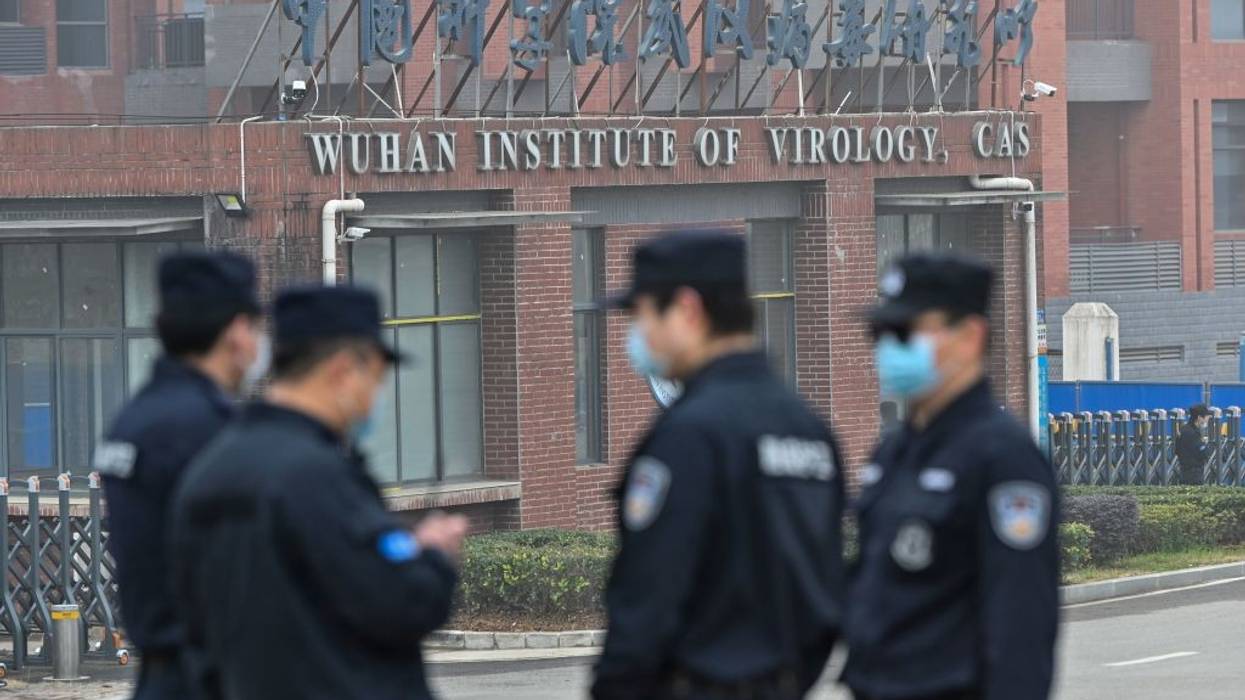
A US-funded laboratory origin of Covid-19 would certainly constitute the most significant case of governmental gross negligence in history. The people of the world deserve transparency and factual answers on vital questions.
The US government (USG) funded and supported a program of dangerous laboratory research that may have resulted in the creation and accidental laboratory release of SARS-CoV-2, the virus that caused the Covid-19 pandemic. Following the outbreak, the USG lied in order to cover up its possible role. The US Government should correct the lies, find the facts, and make amends with the rest of the world.
A group of intrepid truth-seekers—journalists, scientists, whistleblowers—have uncovered a vast amount of information pointing to the likely laboratory origin of SARS-CoV-2. Most important has been the intrepid work of the The Intercept and US Right to Know (USRTK), especially investigative reporter Emily Kopp at USRTK.
Based on this investigative work, the Republican-led House Committee on Oversight and Accountability is now carrying out an important investigation in a Select Subcommittee on the Coronavirus Pandemic. In the Senate, the leading voice for transparency, honesty, and reason in investigating the origin of SARS-Cov-2 has been Republican Senator Rand Paul.
The evidence of a possible laboratory creation revolves around a multi-year US-led research program that involved US and Chinese scientists. The research was designed by US scientists, funded mainly by the National Institutes of Health (NIH) and the Department of Defense, and administered by a US organization, the EcoHealth Alliance (EHA), with much of the work taking place at the Wuhan Institute of Virology (WIV).
The US owes the full truth, and perhaps ample financial compensation, to the rest of the world, depending on what the facts ultimately reveal.
Here are facts that we know as of today.
First, the NIH became the home for biodefense research starting in 2001. In other words, the NIH became a research arm of the military and intelligence communities. Biodefense funding from the Defense Department budget went to Dr. Anthony Fauci’s division, the National Institute for Allergies and Infectious Diseases (NIAID).
Second, NIAID and DARPA (in the Defense Department) supported extensive research on potential pathogens for biowarfare and biodefense, and for the design of vaccines to protect against biowarfare or accidental laboratory releases of natural or manipulated pathogens. Some of the work was carried out at the Rocky Mountain Laboratories of the NIH, which manipulated and tested viruses using its in-house bat colony.
Third, NIAID became a large-scale financial supporter of Gain of Function (GoF) research, meaning laboratory experiments designed to genetically alter pathogens to make them even more pathogenic, such as viruses that are easier to transmit and/or more likely to kill infected individuals. This kind of research is inherently dangerous, both because it aims to create more dangerous pathogens and because those new pathogens can escape from the laboratory, either accidentally or deliberately (e.g., as an act of biowarfare or terrorism).
Fourth, many leading US scientists opposed GoF research. One of the leading opponents inside the government was Dr. Robert Redfield, an Army virologist who would later be the Director of the Centers for Disease Control (CDC) at the start of the pandemic. Redfield suspected from the start that the pandemic resulted from NIH-supported research, but says that he was sidelined by Fauci.
Fifth, because of the very high risks associated with GoF research, the US Government added additional biosafety regulations in 2017. GoF research would have to be carried out in highly secure laboratories, meaning at Biosafety Level 3 (BSL-3) or Biosafety Level 4 (BSL-4). Work in a BSL-3 or 4 facility is more expensive and time-consuming than work in a BSL-2 facility because of the added controls against an escape of the pathogen from the facility.
Sixth, one NIH-backed research group, EcoHealth Alliance (EHA), proposed to move some of its GoF research to the Wuhan Institute of Virology (WIV). In 2017, EHA submitted a proposal to the US Government’s Defense Advanced Research Projects (DARPA) for GoF work at WIV. The proposal, named DEFUSE, was a veritable “cookbook” for making viruses like SARS-CoV-2 in the laboratory. The DEFUSE plan was to investigate more than 180 previously unreported strains of Betacoronavirus that had been collected by WIV, and to use GoF techniques to make these viruses more dangerous. Specifically, the project proposed to add protease sites like the furin cleavage site (FCS) to natural viruses in order to enhance the infectivity and transmissibility of the virus.
Seventh, in the draft proposal, the EHA director boasted that “the BSL2 nature of work on SARSr-CoVs makes our system highly cost effective relative to other bat-virus systems,” prompting the lead scientist on the EHA proposal to comment that US scientists would “freak out” if they learned of US government support for GoF research at WIV in a BSL2 facility.
Eighth, the Defense Department rejected the DEFUSE proposal in 2018, yet NIAID funding for EHA covered the key scientists of the DEFUSE project. EHA therefore had ongoing NIH funding to carry out the DEFUSE research program.
Ninth, when the outbreak was first noted in Wuhan in late 2019 and January 2020, key US virologists associated with NIH believed that the SARS-CoV-2 had most likely emerged from GoF research, and said so on a phone call with Fauci on February 1, 2020. The most striking clue for these scientists was the presence of the FCS in SARS-CoV-2, with the FCS appearing at exactly the location in the virus (the S1/S2 junction) that had been proposed in the DEFUSE program.
Tenth, the top NIH officials, including Director Francis Collins and NIAID Director Fauci, tried to hide the NIH-supported GoF research, and promoted the publication of a scientific paper (“The Proximal Origin of SARS-CoV-2”) in March 2020 declaring a natural origin of the virus. The paper completely ignored the DEFUSE proposal.
Eleventh, some US officials began to point their fingers at WIV as the source of the laboratory leak while hiding the NIH-funding and EHA-led research program that may have led to the virus.
Twelfth, the above facts have come to light only as a result of intrepid investigative reporting, whistleblowers, and leaks from inside the US Government, including the leak of the DEFUSE proposal. The Inspector General of the Department of Health and Human Services determined in 2023 that NIH did not adequately oversee the EHA grants.
Thirteenth, investigators have also realized in retrospect that researchers at Rocky Mountain Labs, together with key scientists associated with EHA, were infecting the RML Egyptian fruit bats with SARS-like viruses in experiments closely linked to those proposed in DEFUSE.
Fourteenth, the FBI and Department of Energy have reported their assessments that the laboratory escape of SARS-CoV-2 is the most likely explanation of the virus.
Fifteenth, a whistleblower from inside the CIA has recently charged that the CIA team investigating the outbreak concluded that SARS-CoV-2 most likely emerged from the laboratory, but that senior CIA officials bribed the team to report a natural origin of the virus.
The sum of the evidence – and the absence of reliable evidence pointing to a natural origin (see here and here) – adds up to the possibility that the US funded and implemented a dangerous GoF research program that led to the creation of SARS-CoV-2 and then to a worldwide pandemic. A powerful recent assessment by mathematical biologist Alex Washburne reaches the conclusion “beyond reasonable doubt that SARS-CoV-2 emerged from a lab…” He also notes that the collaborators “proceeded to mount what can legitimately be called a disinformation campaign” to hide the laboratory origin.
A US-funded laboratory origin of Covid-19 would certainly constitute the most significant case of governmental gross negligence in world history. Moreover, there is a high likelihood that the US Government continues to this day to fund dangerous GoF work as part of its biodefense program. The US owes the full truth, and perhaps ample financial compensation, to the rest of the world, depending on what the facts ultimately reveal.
We need three urgent actions. The first is an independent scientific investigation in which all laboratories involved in the EHA research program in the US and China fully open their books and records to the independent investigators. The second is a worldwide halt on GoF research until an independent global scientific body sets grounds rules for biosafety. The third is for the UN General Assembly to establish rigorous legal and financial accountability for governments that violate international safety norms through dangerous research activities that threaten the health and security of the rest of the world.
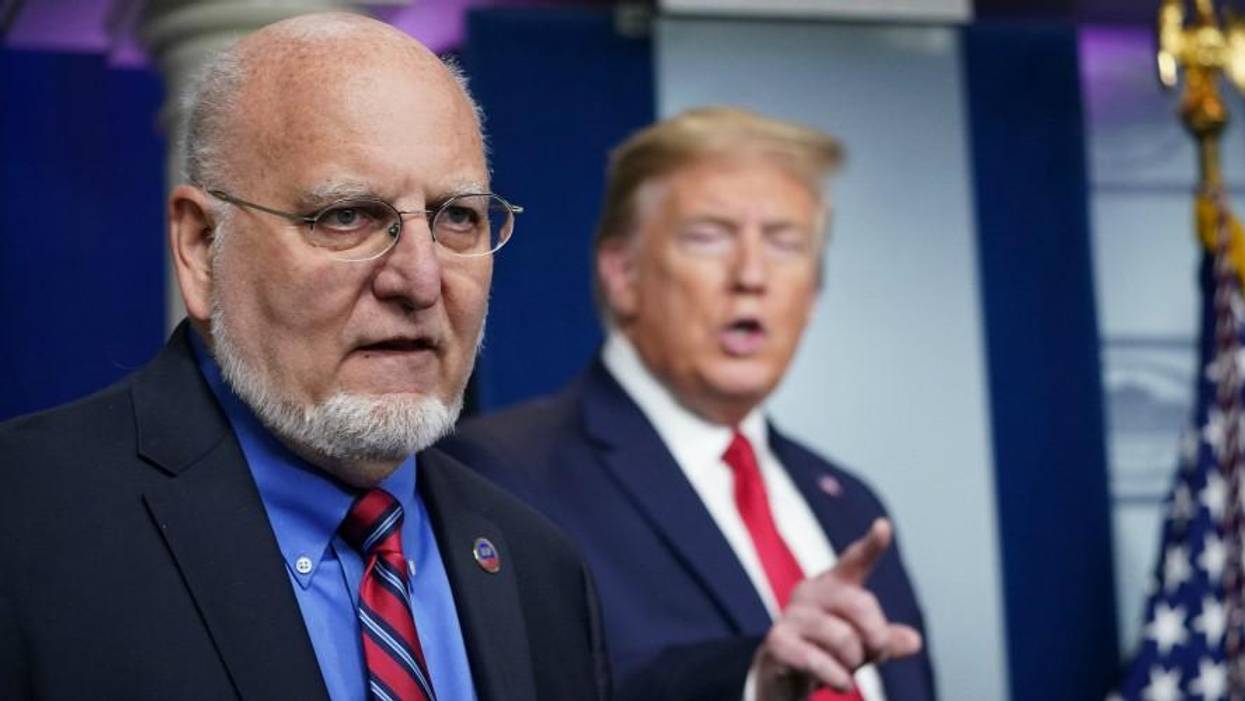
The director of the U.S. Centers for Disease Control and Prevention allegedly ordered agency staff to delete an email sent by a political appointee of President Donald Trump seeking to alter a scientific report on corovanirus health risks in children, a CDC official told Congress this week.
The Hill reports Charlotte Kent, the CDC official responsible for the agency's Morbidity and Mortality Weekly Reports (MMWRs), told the House Select Subcommittee on the Coronavirus Crisis in a transcribed interview on Monday that she was instructed to delete an email regarding Covid-19 risk to young people.
The August 8, 2020 email (pdf) was sent by Paul Alexander, the former science adviser to Department of Health and Human Services (HHS) assistant secretary for public affairs Michael Caputo. According to Kent, it concerned an effort to interfere in a CDC report on Covid-19 risks to children and teens during the period when President Donald Trump was pushing school districts across the nation to reopen.
"I was instructed to delete the email," Kent said, adding that she found the directive "very unusual." Kent added she was told the order to destroy the evidence came from CDC Director Robert Redfield, although she said she did not speak directly with him about the matter.
When Kent went to delete the email, she found it was already gone; although she said she did not know who deleted it.
In a Thursday letter to Redfield and his boss, HHS Secretary Alex Azar, Rep. James Clyburn, (D-S.C.), the subcommittee chair, voiced his "serious concern about what may be deliberate efforts by the Trump administration to conceal and destroy evidence that senior political appointees interfered with career officials' response to the coronavirus crisis at the Centers for Disease Control and Prevention."
"Federal employees have affirmative obligations to preserve documents, and destruction of federal records is potentially illegal," Clyburn warned. "Federal law also provides for up to three years of imprisonment for willful destruction of federal records."
Kent also told the subcommittee that the CDC postponed the release of a report on a Covid-19 outbreak at a summer camp in Georgia until after Redfield appeared before Congress on July 31 to promote the administration's desired school reopenings.
Alexander, who no longer works at HHS, joined the agency in late March and took a leading role in controlling its coronavirus messaging to reflect Trump's downplaying of the pandemic threats. In September, he tried to prevent Dr. Anthony Fauci, the government's top infectious disease expert, from publicly speaking about the risk of the virus to children.

More than 1,000 current and former officers of "an elite disease fighting program" at the U.S. Centers for Disease Control and Prevention have signed an open letter denouncing President Donald Trump and the federal government's disastrous response to the Covid-19 pandemic and demanding that the prestigious public health agency be allowed to resume its crucial role in protecting the health of the nation's people.
"The absence of national leadership on Covid-19 is unprecedented and dangerous," wrote 1,044 physicians, nurses, scientists, and other health professionals who once were or now are Epidemic Intelligence Service (EIS) officers at the CDC.
Hundreds of retired and active EIS officers, sometimes called "disease detectives," have signed the letter to publicly share their "concern about the ominous politicization and silencing of the nation's health protection agency during the ongoing Covid-19 pandemic."
"It doesn't take 1,000 EIS officers to see that the Trump administration has made a catastrophic mess of its pandemic response," said Carl Bergstrom, a biology professor at the University of Washington, on social media. But when they do, he added, "the people in charge damn well better pay attention."
"Bravo!" tweeted Dr. Rick Bright, the former director of the Biomedical Advanced Research and Development Authority at the Department of Health and Human Services, in response to the letter.
As Common Dreams reported earlier this month, Bright publicly announced his resignation from the National Institute of Health on October 7 in a scathing statement condemning Trump's deadly ineptitude.
"It's time to speak up," Bright said this weekend on social media. "Silence is complicity."
Dr. William Foege, a world-renowned epidemiologist and former director of the CDC, has also been an outspoken advocate of whistleblowing to shed light on the Trump administration's refusal to respond adequately to the pandemic.
In late September, Foege sent a letter (pdf) to current CDC director Robert Redfield, urging him to risk his job by speaking publicly about the White House's epic failure to mitigate the coronavirus crisis, as Common Dreams reported.
While Redfield has not taken up Foege's call, the letter signed by over 1,000 former or current CDC "disease detectives" does begin to expose how Trump has undermined the once highly regarded public health agency, jeopardizing thousands of lives in the process.
The letter explains:
In previous public health crises, CDC provided the best available information and straightforward recommendations directly to the public. It was widely respected for effectively synthesizing and applying scientific evidence from epidemiologists and biomedical researchers at CDC and worldwide. Its historic credibility was based on incomparable expertise and 70+ years of institutional memory. That focus and organization is hardly recognizable today.
The U.S. epidemic is sustained by deadly chains of transmission that crisscross the entire country. Yet states and territories have been left to invent their own differing systems for defining, diagnosing and reporting cases of this highly contagious disease. Inconsistent contact tracing efforts are confined within each state's borders--while coronavirus infections sadly are not. Such chaos is what CDC customarily avoided by its long history of collaboration with state and local health authorities in developing national systems for disease surveillance and coordinated control.
When the letter was originally drafted in May, the country's Covid-19 death toll had already surpassed 100,000. "The devastation continues," the signatories wrote, "with an end not yet in sight."
Now, nearly 220,000 lives have been lost to the pandemic in the U.S. alone.
"CDC should be at the forefront of a successful response to this global public health emergency," said the retired and active EIS officers. "We urgently call upon the American people to demand and our nation's leaders to allow CDC to resume its indispensable role."

In a scathing letter sent late last month as coronavirus cases and deaths surged across the United States, renowned epidemiologist and former CDC chief Dr. William Foege called on the agency's current director to publicly speak out about the Trump administration's catastrophic failure to combat the pandemic and apologize for caving to the White House's influence--even if it means risking his job.
"You could upfront, acknowledge the tragedy of responding poorly, apologize for what has happened and your role in acquiescing, set a course for how CDC would now lead the country if there was no political interference, give them the ability to report such interference to a neutral ombudsman, and assure them that you will defend their attempts to save this country," Foege wrote in a September 23 letter (pdf) to Dr. Robert Redfield, who was appointed by President Donald Trump.
"Don't shy away from the fact this has been an unacceptable toll on our country. It is a slaughter and not just a political dispute."
--Dr. William Foege
"Don't shy away from the fact this has been an unacceptable toll on our country," the former CDC head added in the letter, which was published late Tuesday by USA Today. "It is a slaughter and not just a political dispute."
Foege, who served as CDC director under both Carter and Reagan, acknowledged that denouncing the White House would prompt a furious response and likely result in his firing. "When they fire you," Foege wrote, "this will be a multi-week story and you can hold your head high. That will take exceptional courage on your part."
But the risks of saying and doing nothing in the face of the Trump administration's deadly handling of the pandemic far too high, Foege said.
"Despite the White House spin attempts, this will go down as a colossal failure of the public health system of this country," Foege wrote. "The biggest challenge in a century and we let the country down."
Since Foege sent his letter last month, coronavirus infections have continued to rise across the U.S. and the nation's death toll has surpassed 210,000--a fact that prompted no change in policy or rhetoric from the Trump administration, which has repeatedly meddled in the work of government scientists, downplayed the pandemic, and ignored the advice of public health experts.
"The public health texts of the future will use this as a lesson on how not to handle an infectious disease pandemic," wrote Foege. "The cause will be the incompetence and illogic of the White House program."

Esteemed medical journal The Lancet on Friday took an unusual step towards calling on American voters to remove President Donald Trump from office in November, condemning the Trump administration's "incoherent" response to the coronavirus pandemic and expressing shock at the CDC's inability to cope with the public health crisis.
The journal's frustration with Trump centered on the president's downplaying of the pandemic and his refusal to coordinate a robust national effort of social distancing, lockdown orders, and a testing regime to stem the Covid-19 outbreak.
"The administration is obsessed with magic bullets--vaccines, new medicines, or a hope that the virus will simply disappear," wrote the editors. "But only a steadfast reliance on basic public health principles, like test, trace, and isolate, will see the emergency brought to an end, and this requires an effective national public health agency."
Washington Post journalist Christopher Ingraham called the editorial a "scathing indictment" of the Trump administration's approach to the pandemic.
Public health experts including Dr. Anthony Fauci, director of the National Institute of Allergy and Infectious Diseases, and Dr. Rick Bright, a whistleblower at the Health and Human Services Department who was ignored by leaders in January when he pushed to procure medical supplies, have issued dire warnings in recent days about the need to ramp up testing and avoid reopening the economy too quickly.
But the CDC, once a "national pillar of public health," has been "marginalized" and undermined by the Trump administration since even before the pandemic began, hampering its ability to lead the nation's response, The Lancet editorial reads.
CDC Director Robert Redfield is heard from infrequently at press briefings, and in April joined Trump in suggesting the anti-malarial drug hydroxychloroquine could be useful as an experimental treatment for Covid-19 patients, saying "I think I would be confident to try hydroxychloroquine" and that the drug "does appear to be safe."
"The CDC needs a director who can provide leadership without the threat of being silenced and who has the technical capacity to lead today's complicated effort," wrote The Lancet editors. Last summer, an "intelligence vacuum" was left at the United States' CDC office in China when the administration called back the last remaining officer there, months before the first case of Covid-19 was reported in Wuhan.
The director of the agency's National Center for Immunization and Respiratory Diseases, Nancy Messonnier, has not been seen at a press briefing on the pandemic since late February, when she warned that Americans should prepare for strict social distancing and disruption to their daily lives. Messonnier's message was one that Trump has consistently resisted, preferring to push for quickly reopening the country just days after the White House reluctantly enforced a shutdown in March, and complaining that governors who have pleaded for more medical equipment were doing so only to hurt Trump's reelection chances.
The CDC's failure to take control of the pandemic--including its admission in mid-February, as the virus was beginning to spread across the U.S. that the test kits the agency had developed were flawed--has left the U.S. "nowhere near able to provide the basic surveillance or laboratory testing infrastructure needed to combat the COVID-19 pandemic," wrote the editors.
The Lancet linked the CDC's ineffectiveness partially to decades of weak support for the agency by Republican presidents, including Presidents Ronald Reagan and George W. Bush, who failed to provide funding to fight HIV/AIDS and to provide global reproductive health programs.
"Funding to the CDC for a long time has been subject to conservative politics that have increasingly eroded the agency's ability to mount effective, evidence-based public health responses," wrote The Lancet. "The Trump administration's further erosion of the CDC will harm global cooperation in science and public health, as it is trying to do by defunding WHO."
The editors concluded by calling on Americans to vote Trump out of office in the general election as a way of protecting the nation from further damage to its public health response.
"Americans must put a president in the White House come January, 2021, who will understand that public health should not be guided by partisan politics," the editorial reads.
The journal's firm stance against a sitting president appeared to be "unprecedented, " wrote NPR correspondent Lulu Garcia-Navarro.
"The Lancet isn't playing. They want Trump out," wrote physician Barry Schapiro. "His anti-science, anti-intellectual, fantastical thinking that there's a magic bullet or a miracle cure has crippled our response. There is good science behind pandemic response and it's been ignored."

A reported move by the White House to indefinitely extend restrictions on crossing the border is generating accusations that President Donald Trump is "weaponizing" the coronavirus pandemic crisis to pursue the most radical elements of his anti-immigration agenda.
An order under review by the administration would extend Centers for Disease Control (CDC) restrictions on nonessential travel between the U.S. and Mexico and the U.S. and Canada, a move that would cut off migrants seeking asylum from making their claims to the humanitarian protection.
"The Trump administration must end this racist and hateful policy, which has already sent thousands of people into danger and attacked the fundamental right to seek safety," Amnesty International's advocacy director for the Americas Charanya Krishnaswami said in a statement. "Racism, xenophobia, and discrimination won't make people in this country safe from the Covid-19 pandemic."
The proposed order's existence was first reported on Wednesday evening by the New York Times, which noted the plan was "part of a broad effort, led by Stephen Miller, the architect of President Trump's immigration agenda, to aggressively use public health laws to reduce immigration as the government battles the virus."
According to the Times:
Once issued by Dr. Robert R. Redfield, the director of the CDC, the border restrictions would stay in effect until he decides the virus no longer poses a threat. The indefinite extension comes even as Mr. Trump has repeatedly pushed for states to reopen their economies, arguing that the threat from the virus will quickly recede.
[...]
While C.D.C. officials will review the dangers posed by the virus to the American public every 30 days, the new order essentially means that the border will be closed to immigrants until Mr. Redfield explicitly says otherwise--not the other way around.
The news of the proposed order, said Krishnaswami, proves that the "ban was never about the pandemic, and it was never about public health."
"The Trump administration is weaponizing Covid-19 to achieve the policy objective it's sought from day one: shutting the border to people seeking safety," she added.
The Washington Post reported Wednesday that only two people seeking humanitarian asylum have been allowed to do so since the initial order on March 21.
Only **two** people have been allowed to claim asylum since the US used COVID to shut down asylum at the border.
Meanwhile, 20,000+ people have been expelled under the ban.
The US is obligated to screen everyone for fear of harm before it expels them.
It's screened just 59. https://t.co/Av4BYprdZt
-- Charanya Krishnaswami (@charanya_k) May 13, 2020
The administration justified the restrictions to the Post as being based in concerns for public health:
Department of Homeland Security officials say the emergency protocols are needed to protect Americans -- and migrants -- by reducing the number of detainees in U.S. Border Patrol holding cells and immigration jails where infection spreads easily. But the administration has yet to publish statistics showing the impact of the measures on the thousands of migrants who arrive in the United States each year as they flee religious, political or ethnic persecution, gang violence or other urgent threats.
Immigrant rights advocates like immigration law scholar Lucas Guttentag, however, were not buying the White House argument.
"The whole purpose of asylum law is to give exhausted, traumatized, and uninformed individuals a chance to get to a full hearing in U.S. immigration courts, and this makes that almost impossible," Guttentag told the Post. "It's a shameful farce."
Bottom line, said Amnesty's Krishnaswami, is that upholding human rights shouldn't be subject to the whims of the president and his hardline advisors.
"Every person has the right to seek safety, especially during a pandemic," said Krishnaswami. "Attempts by this administration to dismantle that basic right won't fix the administration's failures in responding to the pandemic early and efficiently."
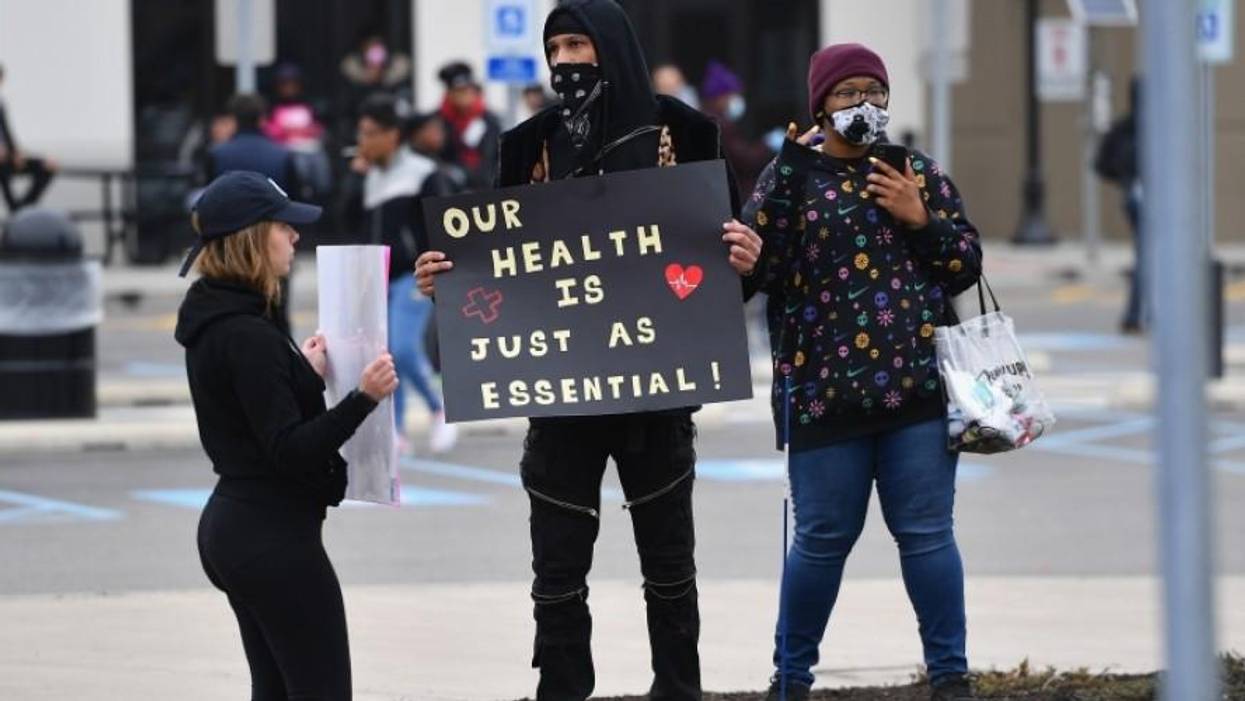
Conservative governors are now openly at odds with epidemiologists as plans move ahead for more than half the states to loosen social distancing and permit many businesses to re-open this month despite none of them meeting White House Coronavirus Taskforce guidelines.
Unlike re-openings in China, Hong Kong and South Korea where new cases fell rapidly after aggressive containment efforts, the United States, with nearly 1.4 million cases and over 81,000 COVID-19 deaths (as of May 11), must follow a different model.
Many critics blame the Trump Administration's laggard scale-up of testing for the dilemma. But studies of past emerging disease epidemics have taught us that testing alone will not prevent new outbreaks. To re-open the economy we must undertake the most massive effort to trace and isolate new infections in history.
Ironically, the states moving most rapidly to restore commerce--eg. Georgia, Texas, and Florida--not only have regions with high case loads, but also inadequate public health workers to contain new outbreaks, according to a study by Politico. In the Midwest, despite high case loads per capita in Iowa and Nebraska, officials are jumping ahead of federal criteria calling for two weeks of falling cases before relaxing stay-at-home rules. Robert Redfield, director of the Centers for Disease Control and Prevention (CDC), warns that re-opening requires not only ramped up testing, but "very aggressive" contact tracing of new cases. Such disease tracking, together with testing, was critical to controlling spread of the virus in South Korea, New Zealand, Germany and China.
An April 27 letter released by former public health officials, including Andy Slavitt, who ran Medicare and Medicaid in the Obama administration, and Scott Gottlieb, a former Food and Drug Administration chief under President Trump, estimated 180,000 contact tracers are needed to re-open the economy. Tom Frieden, who directed the CDC from 2009 to 2017, extrapolated from experiences in Asia to estimate that up to 300,000 such workers may be needed across the country. At present local health departments and the CDC have only about 2,200 professional "disease detectives," although other health staff often assist during a contagious outbreak.
Until early May, federal officials and the media have tended to ignore contact tracing despite the critical role it has played in every infectious disease outbreak. The labor-intensive nature of the task is probably why. Our chronically underfunded, and now overwhelmed, public health departments have no capacity for such a massive scale up without significant new funding.
A recent NPR survey and follow-up report on 44 state health departments turned up a total count of 11,142 workers trained in contact tracing. As a point of contrast, at the height of China's viral crisis it took 9,000 contact tracers in Wuhan alone to contain the outbreak. Officials in state health departments surveyed described a variety of plans to expand capacity, some relying on volunteers, with the goal of scaling up to 66,197. Most will need federal aid for the new hires.
Unfortunately, there is no federal health workforce or emergency fund up to the task. The closest we have to a US rapid response team might be the Medical Reserve Corps (MRC), which matches over 175,000 volunteers with public health and medical assistance needs across the country. Thousands of MRC volunteers are now deployed in call centers or administering tests during the coronavirus crisis. Some may be trained as contact tracers in coming months.
We also entered into the COVID-19 crisis with a shortage of nurses and primary care doctors. The Chinese government sent 42,000 health workers to the Wuhan from other parts of the country. Despite the likelihood that many new hot spots will crop up here as we re-open, the United States lacks a coherent mobile medical corps of professionals who can be deployed rapidly. Given the perpetual shortages of physicians in US rural areas, another program that deserves to be scaled up is the underfunded "National Health Service Corps" which ties medical school loan forgiveness to commitments by new doctors to practice for two years in underserved areas.
Our urgent need to scale up infectious disease control is not unlike the impetus for the Green New Deal (GND) jobs & infrastructure proposal to support a just energy/climate transition.
Our urgent need to scale up infectious disease control is not unlike the impetus for the Green New Deal (GND) jobs & infrastructure proposal to support a just energy/climate transition. Both ideas draw inspiration from President Franklin D. Roosevelt's response to mass unemployment in the Great Depression by creating the Works Progress Administration which hired millions of unemployed people over an eight-year period for public works projects.
Clearly the need to address the climate crisis remains urgent, but first we have to get out of the house safely. Jeremy Brecher, of the Institute for Policy Studies, has called for such an emergency GND that includes health. Such a new health corps could offer a win-win solution to our two acute (and simultaneous) dilemmas: record levels of unemployment and a vital need for more feet-on-the-ground to reduce our viral case load.
At present, many political observers predict that after the pandemic, citizens will demand more investment in health care and disease surveillance. Thus, a plan to strengthen health staffing--including new professional and community health workers--could address future needs as well as our current emergency. Besides containing new infections and providing vital paychecks to our unemployed, like other "essential" workers, new health workers would spend their funds into the economy boosting demand for goods and services.
Dr. Frieden argued in early May that lockdowns, while effective at stopping spread, are blunt tools that cause unemployment and bankruptcies. Instead, he said, "we have a sharper tool, (a strategy) to stop chains of transmission by widespread testing, isolation of cases, contact tracing and quarantine of contacts."
Frieden, who now directs the non-profit Resolve to Save Lives, gained extensive experience overseeing responses to the H1N1 influenza, Ebola and Zika epidemics while running the CDC. But the importance of contact tracers was brought home to him many years earlier in New York City. I did post-doctoral research in 1999 comparing two epidemics of resurgent multi-drug-resistant tuberculosis (MDR-TB) - one in New York City and one in Lima, Peru. I learned that Frieden, while working in the CDC's Epidemic Intelligence Service in 1991, helped demonstrate that MDR-TB was widespread in many poor neighborhoods of New York City, a finding that spurred the mayor to replace city health officials who had ignored mounting signs of the epidemic.
Frieden was appointed to lead the city's tuberculosis division and later credited for innovative policies thar brought the deadly outbreak under control. One key initiative was the hiring and training of community health workers (who did not have professional degrees) to do outreach, track cases and administer doses of anti-TB drugs, effectively cutting the chain of contagion and drug-resistance.
Community health workers were also the key to controlling MDR-TB in Peru. TB drug resistance was first identified in a barrio of Lima in the late 1990s by the Boston-based non-profit Partners in Health (PIH). Drs. Paul Farmer and Jim Yong Kim, who directed PIH, built a program at an urban clinic in Lima to address the deadly outbreak using a similar strategy of outreach and treatment with lay workers doing home visits and social programming with patients. In both the New York and Lima epidemics, a training staple for successful community outreach was cultural sensitivity and a willingness to establish relationships and trust with patients and their families. PIH's Peru work helped established a model for treating MDR-TB outbreaks in low-income countries.
PIH is now applying that experience to COVID-19 in Massachusetts where the health department recently contracted with PIH to hire 1,000 fulltime community health workers as half of a 2,000 person contingent who will do contact tracing statewide. Another model may be California which has invested in a well-designed disease tracking system, and now aims to combine hired staff and volunteers to ramp up to 10,000 contact tracers.
Since April 1 new US cases per day have exceeded 20,000 on every day except one, and have ranged as high as 38,000. Epidemic models predict the infection will continue to spread across the country in the months ahead, producing not hundreds of thousands, but millions of new infections, especially in places where social distancing is lax. Many states project using new electronic tracing systems for COVID-19 exposure which have been heavily hyped by tech companies, such as Google and Apple. But even if the serious privacy concerns raised by these apps are resolved, such systems will only be an aid, not a replacement for humans who follow-up with contacts exposed to the virus.
The work of a contact tracer, ideally hired from the same area where he or she would serve, starts with interviewing infected patients and following leads to find people that person was recently in contact with. These workers then help arrange testing for new contacts, advise them on self-isolation, and assist those who become sick with treatment and access to humane quarantine options like hotel rooms or other facilities for patients in crowded households so as to avoid infecting immune-compromised or elderly members. Support for patients in quarantine would include food and daily follow-up on medical needs. This level of support is the only way to prevent super-spreader events--such as the widely reported outbreaks at funerals or nursing homes that contributed to the US having a quarter of all reported cases globally.
When locally-based and trained well, community health workers are also the ideal outreach personnel to educate others on coronavirus prevention and treatment, including advice on chronic problems that contribute to high COVID-19 mortality rates in Latino and Black families. In the long run such a workforce could help address the long-standing shortage of primary care in the United States--including community-based programming to assist families with preventive health, nutrition, exercise, chronic diseases and mental health needs.
In their public letter, Drs. Gottlieb and Slavitt called for $46 billion in national support for states to trace contacts and isolate infected patients, with an additional $4.5 billion for quarantine facilities, including rental of otherwise vacant hotel rooms. While the last Congressional stimulus package (HR 266) contained $25 billion for state health departments, the bulk of those funds were aimed at scaling up testing, with only a small slice likely to be spent for tracing contacts.
To re-open safely, the country needs a more comprehensive approach. One promising bill, introduced by Sens. Kirsten Gillibrand (D-N.Y.) and Michael Bennet (D-Colo.), would allocate $55 billion a year for a new "Health Force"--training and hiring hundreds of thousands of new public health workers to do testing, contact tracing and eventually vaccinating the population. The Senators even cite FDR's Great Depression work program as an inspiration.
It is clear that re-opening alone will not rapidly reduce unemployment, and federal stimulus efforts to date to keep working people afloat are woefully inadequate. The country needs to look beyond welfare solutions. There is much work to be done. Why not hire the unemployed to find and stem new viral outbreaks so we can reopen without recurring waves of deadly outbreaks? Until we have an army of disease detectives, the virus will continue its massive crime wave.

Hours after President Donald Trump declared in a falsehood-riddled press conference that the U.S. has "prevailed" on Covid-19 testing as he continues to encourage states to reopen their economies, Dr. Anthony Fauci--the top infectious disease expert in the nation--is expected to warn in remote Senate testimony on Tuesday that attempting to return to business as usual too quickly will "result in needless suffering and death."
"The major message that I wish to convey to the Senate [Health, Education, Labor, and Pensions Committee] tomorrow is the danger of trying to open the country prematurely," Fauci told the New York Times in an email Monday night ahead of his hearing.
"If we skip over the checkpoints in the guidelines to 'Open America Again,' then we risk the danger of multiple outbreaks throughout the country," Fauci said. "This will not only result in needless suffering and death, but would actually set us back on our quest to return to normal."
In addition to Fauci, Centers for Disease Control and Prevention (CDC) director Robert Redfield will also testify before the Senate Tuesday morning. The hearing is scheduled to begin at 10:00 am.
Watch live:
Fauci and Redfield's testimony will come just hours after Trump claimed during a press conference in the Rose Garden of the White House Monday evening that the U.S. is prepared to "transition to greatness" in the wake of the Covid-19 pandemic, which has infected over 1.3 million people in the U.S. and killed at least 80,600.
Shortly after Trump claimed Monday that the number of Covid-19 cases is declining rapidly "all throughout the country," NBC News reported that an unreleased internal White House report shows that "coronavirus infection rates are spiking to new highs in several metropolitan areas and smaller communities" across the nation.
"The 10 top areas recorded surges of 72.4 percent or greater over a seven-day period compared to the previous week," according to NBC. "They include Nashville, Tennessee; Des Moines, Iowa; Amarillo, Texas; and--atop the list, with a 650 percent increase--Central City, Kentucky."
"The spiking infection rates suggest that the pandemic is spreading quickly outside major coastal population centers that were early hot spots," NBC noted, "while governors of some of the states that are home to new hot spots are following Trump's advice to relax stay-at-home restrictions."
Historically, in hyper-crises, local and global systems can change fundamentally. Before the coronavirus pandemic hit first China and then the rest of the globe, the question of whether the American imperial era might be faltering was already on the table, amid that country's endless wars and with the world's most capricious leader. When humanity emerges from this devastating crisis of disease, dislocation, and impoverishment, not to mention the fracturing of a global economic system created by Washington but increasingly powered by Beijing on a climate-stressed planet, the question will be: Has the Chinese dragon pushed the American eagle down to a secondary position?
To assess that question objectively in this unsettled moment, it's necessary to examine on a day-to-day basis how the two contemporary superpowers handled the Covid-19 crisis, and ask the question: Who has proved better at combating the deadliest disease of modern times, President Donald Trump or President Xi Jinping? It's chastening to note that whereas China under Xi has suppressed the latest coronavirus at the human cost of three lives per million population, the U.S. under Trump is still struggling to overpower it, having already sacrificed 145 of every million Americans.
In the afterglow of Trump's December 16, 2019, touting of a partial trade deal with China (after a lengthy trade war), a Sino-American exchange took place. George Gao, director of the Chinese Centers for Disease Control and Prevention (CCDC), spoke with his American counterpart, Robert Redfield, on January 3rd, alerting him to the arrival of an as-yet-unidentified, pneumonia-inducing virus in the city of Wuhan (news of which the Chinese government would for crucial days withhold domestically). Redfield then briefed Secretary of Health and Human Services Alex Azar on that conversation.
Ever since, the trajectories of the policies followed by Beijing and Washington have diverged by 180 degrees. Mind you, the potential prize for the winner of the contest for killer of the super-virus is the World Leadership Trophy.
Attacked by a Virulent Virus, China Fights Back
China's National Health Commission (NHC), which had dispatched a team of experts to Wuhan on December 31st, informed the World Health Organization (WHO) that cases of pneumonia of an unknown sort had been detected in that city, linked to human exposure at a 1,000-stall wholesale seafood market, selling fish and other animals, dead and alive. With that, the Chinese scientists faced two separate challenges: to isolate the pathogen causing the disease in order to set out its genome sequencing and to determine whether or not there was human-to-human transmission of the virus.
On January 3rd, the NHC centralized all testing related to the mysterious disease and, two days later, in conjunction with experts in infectious diseases caused by pathogens that jump from animals to humans, completed the sequencing of the genome of the virus. It became accessible worldwide that January 7th. And on January 10th and 11th, the WHO issued guidance notices to all its member states about collecting samples from any patients who might show symptoms of the disease, listing stringent precautions to avoid the risk of human-to-human transmission.
On January 14th, Maria Van Kerkhove, acting head of the WHO's emerging diseases unit, offered a mixed message on the situation. She told reporters that there had, so far, been only the most limited kinds of human transmission between family members in China. Nonetheless, she added, the possibility of wider human-to-human transmission should not be regarded as "surprising" given the similarity of the new virus to the ones in the earlier SARS (Severe Acute Respiratory Syndrome) and MERS (Middle East Respiratory Syndrome) outbreaks. However, Reuters and China's Xinhua News Agency also quoted her as saying that there had been only the most limited human-to-human transmission of the new coronavirus so far, mainly among small clusters of family members and that "it is very clear right now that we have no sustained human-to-human transmission."
On January 16th, scientists at the German Center for Infection Research in Berlin developed a new laboratory test to detect the novel coronavirus. This offered the possibility of diagnosing suspected cases quickly. The WHO publicized it as a guideline for diagnostic detection. The leaders of many countries adopted it, but not President Trump who, in America First-style, demanded a test produced by U.S. scientists. Only on February 29th, however, would the Food and Drug Administration allow laboratories and hospitals to conduct their own Covid-19 tests to speed up the process. That was four weeks after the WHO had started distributing its effective test globally.
On January 19th that China's National Health Commission confirmed human-to-human transmission of the novel coronavirus. On that day, it publicly confirmed the first cases of person-to-person transmission. Headed by a cabinet minister, the NHC classified the novel coronavirus as a category B infectious disease under the country's 1989 Law on Prevention and Control of Infectious Diseases (revised in 2004 and 2013). This law allows the upgrading of an infectious disease to category A subject to the decision of the cabinet. Under that classification, medical institutions are authorized to treat patients in isolation in designated places and take necessary preventive measures to discover and deal with their close contacts.
On January 20th, after chairing a cabinet meeting, Premier Li Keqiang first spoke of the necessity of controlling a coronavirus epidemic, demanding that all Communist Party and government units address the situation. While endorsing Li's call, President Xi Jinping stressed "the importance of informing the public to safeguard social stability." As one high-level Communist Party committee typically stated in a posting on WeChat, "Whoever deliberately delays or conceals reporting for the sake of their own interests will be forever nailed to history's pillar of shame."
All this happened on the eve of the week-long Chinese New Year holiday, a time when hundreds of millions of people return to their homes for celebrations. On January 22nd, three days before the New Year, the authorities suspended all rail and air links out of Wuhan.
The next day, the central government imposed a complete lockdown on that bustling city of 11 million and other large urban centers in the province of Hubei. Residents were forbidden to leave their homes, while food and other supplies were to be delivered by neighborhood committees. This set a precedent for similar measures in other cities, as in the coming weeks many areas across China imposed such "closed management" situations on communities. Up to 760 million people were subjected to travel curbs of one sort or another, while the economy was reduced to 40%-50% of its normal capacity.
During a meeting with WHO Director General Tedros Adhanom Ghebreyesus in Beijing on January 29th, President Xi assured him that he had personally overseen and directed the response to the viral outbreak and the prevention and control measures that went with it. On January 30th, with the novel coronavirus having spread to 17 countries including the United States, the World Health Organization declared the outbreak a "global health emergency." On February 11th, it labeled the disease caused by the latest coronavirus, which can culminate in death-inducing pneumonia, Covid-19.
Meanwhile, in Trumpland...
On January 29th, President Trump officially inaugurated a task force led by Health and Human Services Secretary Alex Azar to monitor, contain, and mitigate the spread of the coronavirus while also keeping Americans informed on the matter.
Azar and the Centers for Disease Control Prevention's Robert Redfield had already been involved in protecting Americans from the deadly virus. On January 7th, Redfield had established the CDC's Covid-19 Incident Management System and, on the 21st, he activated its emergency response structure. On that very day, the first lab-confirmed coronavirus case was reported in Olympia, Washington. (Earlier ones would later be detected.) The president noted the news with a tweet: "It's one person coming in from China and we have it under control. It's going to be just fine."
Inside the White House, Trump's national trade adviser, Peter Navarro addressed a warning memo to the National Security Council stating that the present "lack of protection elevates the risk of the coronavirus evolving into a full-blown pandemic, imperiling the lives of millions of Americans." He estimated that such a pandemic could kill half-a-million people and deliver a $5.7 trillion hit to the economy.
Two days later, in response to these developments, all Trump did was ban the arrival of non-US citizens who had recently traveled to China. From then on, he repeatedly touted this as evidence that he had acted early. Azar's plan to set up surveillance in five cities at the cost of $100 million fell through when, on February 21st, Nancy Messonnier, director of the CDC's National Center for Immunization and Respiratory Diseases, told reporters that problems with the kits to test for Covid-19 were still unresolved.
In the absence of meaningful testing, the number of cases in the U.S. looked small. "The coronavirus is very much under control in the USA," Trump tweeted on the 24th. "CDC & World Health [Organization] have been working hard and very smart. Stock Market starting to look very good to me!" He ignored Navarro's memo of the previous day and its warning that "there is an increasing probability of a full-blown Covid-19 pandemic that could infect as many as 100 million Americans, with a loss of life of as many as 1-2 million souls."
Instead, on February 25th, at a news conference in New Delhi during his trip to India, the president haughtily claimed that a vaccine for Covid-19 would soon be available. "Now they have it, they have studied it, they know very much, in fact, we're very close to a vaccine," he said confidently.
That same day, in a CDC briefing in Washington, Nancy Messonnier described the situation this way: "Ultimately, we expect we will see [the infected] community spread in this country... [and] disruption to everyday life may be severe. But these are things that people need to start thinking about now." That led to a staggering 1,031 point fall in the Dow Jones Industrial Average, which infuriated Trump. He promptly urged Larry Kudlow, director of the National Economic Council, to go on television and preach confidence. Accordingly, Kudlow told CNBC, "We have contained this. I won't say airtight, but it's pretty close to airtight."
On his return to Washington on February 26th, Trump replaced Azar as the head of the coronavirus task force with Vice President Mike Pence, and charged him with disseminating positive messages in order to steady a jittery stock market. The next day, the grievance-laden president complained that the media were doing all they could "to make the Caronavirus [sic] look as bad as possible, including panicking markets, if possible."
Meanwhile, Back in the Middle Kingdom
On February 10th, Chinese President Xi visited a hospital in Beijing where he held a video call with health workers in Wuhan. Coverage of it and his temperature being taken by a doctor filled the front page of the official newspaper, the People's Daily. By then, Communist Party chiefs in Wuhan and Hubei province had been "replaced" because of their poor initial response to the coronavirus.
In Wuhan, an extra 60,000 hospital beds for Covid-19 patients were created within a month by converting 16 exhibition halls and sports venues into field hospitals and constructing two brand new hospitals as well. On February 23rd, Xi teleconferenced with 170,000 local officials, describing the pandemic as the hardest public-health emergency to contain since the founding of the People's Republic. He noted that the situation remained grim and complex, while Hubei Province and significant parts of the rest of the country (as well as the economy) had been shut down.
The highest priority was given to the production of personal protective equipment. According to an official March 6th press briefing, production of protective clothing had jumped from less than 20,000 pieces daily to 500,000 pieces daily. The output of specialist N95 masks shot up eightfold to 1.6 million and ordinary masks totaled 100 million.
During a trip to Wuhan four days later, Xi praised front-line medical workers, military officers, soldiers, community workers, police officers, officials, and volunteers fighting the pandemic, as well as patients and residents in the locked-down city. The epidemic had by then caused 3,000 deaths. On March 9th, however, daily new cases in Wuhan had already dropped to 19 from thousands a day a month earlier. All the makeshift hospitals were closed. Nonetheless, Xi warned that prevention-and-control work required constant vigilance.
When 114 countries reported coronavirus cases to the World Health Organization on March 11th, it declared the Covid-19 outbreak a global pandemic.
By mid-March, the Chinese government and the Jack Ma Foundation, part of the giant corporate conglomerate Alibaba Group, had sent doctors and medical supplies to Belgium, Cambodia, France, Iran, Iraq, Italy, the Philippines, Serbia, Spain, and the United States. The foundation announced that it would ship "20,000 testing kits, 100,000 masks and 1,000 protective suits and face shields" to every country in Africa and added that Ethiopia's Prime Minister, Abiy Ahmed, would "take the lead in managing the logistics and distribution of these supplies to other African countries."
Of the 89 countries that, by March 26th, had received emergency assistance from China to fight the pandemic, 28 were in Asia, 16 in Europe, 26 in Africa, nine in the Americas, and 10 in the South Pacific. Such medical supplies mainly included testing kits, masks, protective suits, thermometer guns, and ventilators. China also invited officials and experts from more than 100 countries to a video conference on Covid-19, while President Xi conducted 26 telephone conversations with 22 foreign leaders, including French President Emmanuel Macron, Saudi King Salman bin Abdul Aziz, Spanish King Felipe VI, Italian Prime Minister Giuseppe Conte, and Donald Trump.
Trump Wakes Up
On March 13th, President Trump declared a national emergency, pledging to dramatically speed up coronavirus testing (which he disastrously failed to do). By then, he had chalked up a remarkable series of false claims and outright lies about the fast-spreading disease. Typically, on a visit to CDC headquarters in Atlanta, Georgia, on March 6th, he had boasted of his "natural ability" to understand the subject of epidemiology.
On March 13th, he falsely announced that a Google website was being developed to help people find places to get Covid-19 tests, something Google's officials turned out to know nothing about. The next day, he lined up executives from Walmart, Target, CVS, Walgreens, LabCorp, Quest Diagnostics, and Roche Diagnostics, insisting that they would help expedite testing to stop the quick-spreading virus. In fact, little happened and the nation began to shut down. Public schools closed, sports leagues postponed or cut off their seasons, people began working from home in large numbers (as others by the millions simply lost their jobs), and supplies of hand sanitizer, disinfectant wipes, and toilet paper disappeared from store shelves. A month on, very few of the president's promises had materialized, while the disease had spread dramatically and deaths had begun to soar.
Asked about the shortage of testing kits and sites, which has left America lagging far behind South Korea and other countries in dealing with the still-spreading virus, Trump couldn't have been clearer. "I don't take responsibility at all," he said. And yet, locked into his "Make America Great Again" bubble, until March 6th he blocked an offer from the Jack Ma Foundation to send 500,000 testing kits and one million masks to the U.S. to be distributed by the CDC.
By heeding the WHO's battle cry of "test, test, test," South Korea had managed to avoid the kinds of lockdowns implemented by China, many Western European countries, and some American cities. In a desperate phone call to President Moon Jae-in on March 24th, Trump begged him to rush test kits to the United States. In response, Jeong Eun-kyeong, director of the South Korean equivalent of the CDC, agreed, but only at a level that would not diminish his own country's testing capacity.
Soon after the arrival of 1,000 Chinese ventilators at John F. Kennedy International Airport on April 4th, much to the relief of a grateful Governor Andrew Cuomo, a tweet from Trump read, "USA STRONG!" His boast, however, sounded hollow, given the grim news that, between February 12th and March 11th, the Dow Jones index had dropped around 8,000 points from its historic peak, as national unemployment tripled from a low of 3.5% (with more to come).
To counter this, on April 9th, the Federal Reserve released business lending and other programs worth $2.3 trillion to steady a fast-sinking economy. It had already injected $500 billion dollars into the financial system in March, with plans for a further $1.5 trillion to come.
By March 27th, as the U.S. had gained the global status of number one in coronavirus cases, the president also signed into law the $2.2 trillion Coronavirus Preparedness and Response Supplemental Appropriations Act, passed almost unanimously by Congress, to rush federal assistance to workers and businesses. It included the payment of $1,200 to most taxpayers; enhanced unemployment benefits; a $500 billion lending program for large companies, cities, and states; and a $367 billion fund for small businesses.
Despite all this, the country's gross domestic product is expected to fall by at least 10.8% in the second quarter of 2020. China's GDP contraction of 6.8% in the first quarter of the year was a historic drop. However, at 5.9%, the jobless rate in urban areas in March 2020 was down by 0.3% from the previous month.
Passing on the World Leadership Trophy?
The question that many experts on geopolitics are now pondering is this: Have their responses to Covid-19 shifted the balance of power between China and the U.S. in a way that will matter in a post-coronavirus world? Watching the chaos of Trump's daily press conferences and his administration's failure to stop the virus effectively proved an alarming reminder that rational people can plan for anything -- except an irrational American president. After all, under his watch 746,459 Americans had contracted Covid-19, and 39,651 had died by mid-April. The comparable figures for China were 82,747 cases and 4,632 deaths.
Nathalie Tocci, an adviser to the European Union's foreign affairs chief, recently offered a pertinent historical parallel to consider. She cited the 1956 Suez crisis--Britain's unsuccessful, if conspiratorial, alliance with France and Israel to militarily topple the nationalist regime of Egypt's President Gamal Abdul Nasser. It is now considered the sunset moment for Britain's imperial power. In the present context, she speculated that the Covid-19 pandemic may prove to be a "Suez moment" for the United States.
Ignoring the warnings of scientists and public health experts, President Trump threatens to disastrously extend his coronavirus chronology from hell into an increasingly painful future by "reopening" the country too soon. By so doing, he will only accelerate the day when the World Leadership Trophy, held by America since 1946, is handed to the People's Republic of China.

President Donald Trump continued his anti-science crusade on Wednesday evening as he publicly contradicted warnings about the duration of the coronavirus crisis made by his own administration's experts, even as the World Health Organization warns that the highly infectious disease will retain its hold "for a long time" and U.S. health officials say they believe a rebound later in the year could be even harder on the nation.
Speaking at the White House Coronavirus Task Force briefing, Trump asserted that the coronavirus "may not come back at all" and claimed Centers for Disease Control and Prevention (CDC) Director Robert Redfield was "totally misquoted" by the Washington Post in an interview in which he said the coronavirus could "actually be even more difficult" in the fall when the flu season returns.
The president's effort at vindication backfired after he brought Redfield to the podium to clarify the remarks. "I didn't say that this was going to be worse," said Redfield. "I said it was going to be... more difficult and potentially complicated because we'll have flu and coronavirus circulating at the same time."
Despite Trump's interjection, Redfield was further pressed by a reporter at the briefing to clarify his position.
"Yeah," Redfield responded."That's what I was trying to say to you just a minute ago--that the issue that I was talking about, about being more difficult, is that we're going to have two viruses circulating at the same time."
The Post late Wednesday described the exchange between Redfield and Trump as a "remarkable spectacle," one which "provided another illustration of the president's tenuous relationship with his own administration's scientific and public health experts, where the unofficial message from the Oval Office is an unmistakable warning: Those who challenge the president's erratic and often inaccurate coronavirus views will be punished--or made to atone."
Evidence of that discord continued when Anthony Fauci, the director of the National Institute of Allergy and Infectious Diseases, also countered Trump's claim that the coronavirus would not be around in the fall.
While Trump claimed at the briefing, "you may not even have corona coming back" later in the year, Fauci later said the opposite: "We will have coronavirus in the fall. I am convinced of that because of the degree of... transmissibility that it has, the global nature."
Fauci also pushed back against Trump's shoulder-shrugging in response to Georgia's Republican Gov. Brian Kemp's decision to reopen some businesses as soon as Friday and more broadly against moves--as Trump has advocated--to quickly reopen the economy.
Trump said Kemp "must do what he thinks is right. I want him to do what he thinks is right, but I disagree with him on what he's doing."
But Fauci said it suggested it was unwise "to just turn the switch on and go. Because there is a danger of a rebound. And I know there's the desire to move ahead quickly--that's a natural, human nature desire--but going ahead and leapfrogging into phases where you should not be. I would advise [Kemp], as a health official and as a physician, not to do that."
Trump has also in recent days boasted the message of anti-lockdown protesters with a series of tweets saying "LIBERATE MINNESOTA!" "LIBERATE MICHIGAN!" and LIBERATE VIRGINIA" and a remark at a press briefing calling those protesters "great people."
The latest White House press conference came the same day the World Health Organization (WHO) issued a fresh warning about the likely lengthy duration of the coronavirus crisis.
"Most countries are still in the early stages of their epidemics," WHO Director-General Dr. Tedros Adhanom Ghebreyesus said at a briefing in Geneva. "Make no mistake: we have a long way to go. This virus will be with us for a long time."