
SUBSCRIBE TO OUR FREE NEWSLETTER
Daily news & progressive opinion—funded by the people, not the corporations—delivered straight to your inbox.
5
#000000
#FFFFFF
To donate by check, phone, or other method, see our More Ways to Give page.


Daily news & progressive opinion—funded by the people, not the corporations—delivered straight to your inbox.
From the highest offices in politics to the smallest janitorial offices, older Americans are delaying retirement for a host of reasons from pride to financial precarity to a fear of being left behind.
The Washington Post headline reads: “A big problem for young workers: 70- and 80-year-olds who won’t retire.” For the first time in history, reports Aden Barton, five generations are competing in the same workforce. His article laments a “demographic traffic jam” at the apexes of various employment pyramids, making it ever harder for young people “to launch their careers and get promoted” in their chosen professions. In fact, actual professors (full-time and tenure-track ones, presumably, rather than part-timers like me) are Exhibit A in his analysis. “In academia, for instance,” as he puts it, “young professionals now spend years in fellowships and postdoctoral programs waiting for professor jobs to open.”
I’ve written before about how this works in the academic world, describing college and graduate school education as a classic pyramid scheme. Those who got in early got the big payoff—job security, a book-lined office, summers off, and a “sabbatical” every seven years (a concept rooted in the Jewish understanding of the sabbath as a holy time of rest). Those who came late to the party, however, have ended up in seemingly endless post-doctoral programs, if they’re lucky, and if not, as members of the part-time teaching corps.
For the most part, I’m sympathetic to Barton’s argument. There are too many people who are old and in the way at the top of various professional institutions—including our government (where an 81-year-old, under immense pressure, just reluctantly decided not to try for a second term as president, while a 77-year-old is still stubbornly running for that same office). But I think Barton misses an important point when he claims that “older workers are postponing retirement… because they simply don’t want to quit.” That may be true for high earners in white-collar jobs, but many other people continue working because they simply can’t afford to stop. Research described in Forbes magazine a few years ago showed that more than one-fifth of workers over age 55 were then among the working poor. The figure rose to 26% for women of that age, and 30% for women 65 and older. In other words, if you’re still working in your old age, the older you are, the more likely it is that you’re poor.
Older workers also tend to be over-represented in certain low-paying employment arenas like housecleaning and home and personal healthcare. As Teresa Ghilarducci reported in that Forbes article:
Nearly one-third of home health and personal care workers are 55 or older. Another large category of workers employing a disproportionate share of older workers is maids and housekeeping cleaners, 29% of whom are 55 or older and 54% of whom are working poor. And older workers make up 34% of another hard job: janitorial services, about half of whom are working poor. (For a benchmark, 23% of all workers are 55 and up.)
We used to worry about “children having children.” Maybe now we should be more concerned about old people taking care of old people.
Why are so many older workers struggling with poverty? It doesn’t take a doctorate in sociology to figure this one out. People who can afford to retire have that option for a couple of reasons. Either they’ve worked in high-salary, non-physical jobs that come with benefits like 401(k) accounts and gold-plated health insurance. Or they’ve been lucky enough to be represented by unions that fight for their members’ retirement benefits.
However, according to the Pension Rights Center, a nonprofit organization working to expand financial security for retirees, just under half of those working in the private (non-governmental) sector have no employment-based retirement plan at all. They have only Social Security to depend on, which provides the average retiree with a measly $17,634 per year, or not much more than you’d earn working full-time at the current federal minimum wage, which has been stuck at $7.25 an hour since 2009. Worse yet, if you’ve worked at such low-paying jobs your entire life, you face multiple obstacles to a comfortable old age: pay too meager to allow you to save for retirement; lower Social Security benefits, because they’re based on your lifetime earnings; and, most likely, a body battered by decades of hard work.
Many millions of Americans in such situations work well past the retirement age, not because they “simply don’t want to quit,” but because they just can’t afford to do so.
It’s autumn in an even-numbered year, which means I’m once again in Reno, Nevada, working on an electoral campaign, alongside canvassers from UNITE-HERE, the hospitality industry union. This is my fourth stint in Washoe County, this time as the training coordinator for folks from Seed the Vote, the volunteer wing of this year’s political campaign. It’s no exaggeration to say that, in 2022, UNITE-HERE and Seed the Vote saved the Senate for the Democrats, reelecting Catherine Cortez Masto by fewer than 8,000 votes—all of them here in Washoe County.
This is a presidential year, so we’re door-knocking for Vice President Kamala Harris, along with Jacky Rosen, who’s running for reelection to Nevada’s other Senate seat.
Government, especially at the federal level, is clearly an arena where (to invert the pyramid metaphor) too many old people are clogging up the bottom of the funnel.
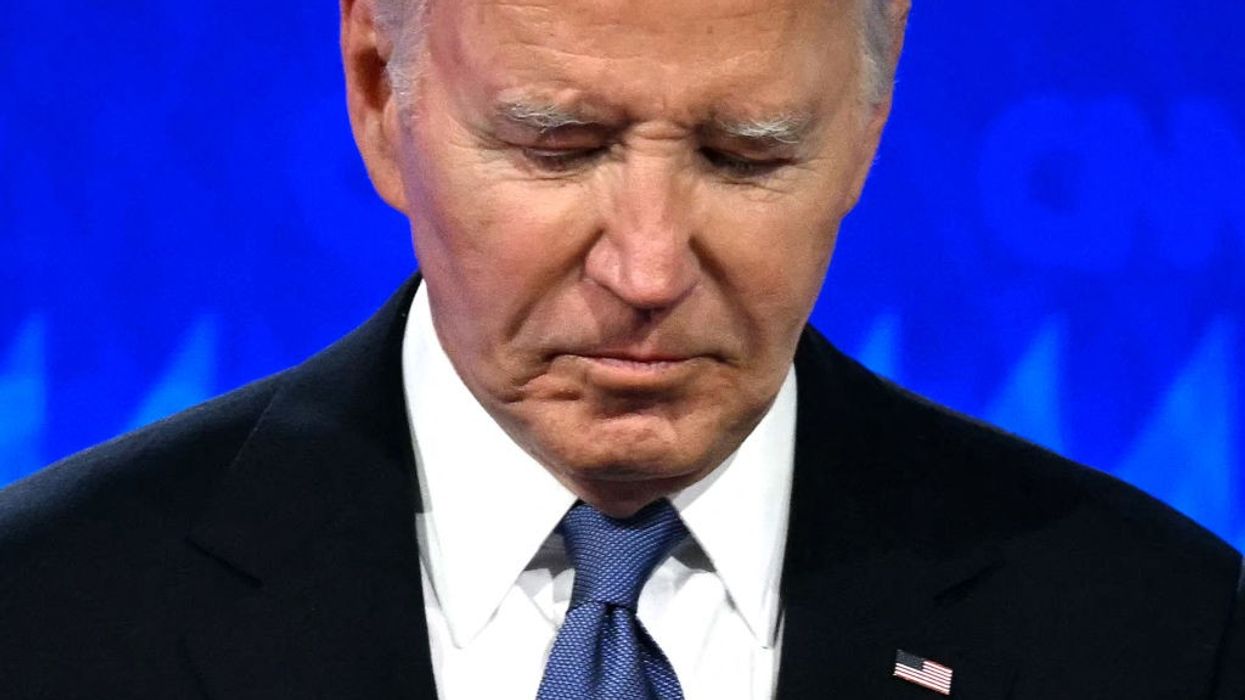
When I agreed to return to Reno, it was with a heavy heart. In my household, we’d taken to calling the effort to reelect Joe Biden “the death march.” The prospect of a contest between two elderly white men, the oldest ever to run for president, both of whom would be well over 80 by the time they finished a four-year term, was deeply depressing. While defeating Donald Trump was—and remains—an existential fight, a Biden-Trump contest was going to be hard for me to face.
Despite his age, Joe Biden has been an effective president in the domestic arena. (His refusal to take any meaningful action to restrain the Israeli military in Gaza is another story.) He made good use of Democratic strength in Congress to pass important legislation like the Inflation Reduction Act. That kitchen-sink law achieved many things, including potentially reducing this country’s greenhouse gas emissions by 40% by 2030, allowing Medicare to negotiate drug prices directly with pharmaceutical companies (while putting a $2,000 annual cap on Medicare recipients’ outlays for drugs), and lowering the price of “Obamacare” premiums for many people.
Still, Biden’s advanced age made him a “terrible, horrible, no good, very bad” candidate for president. Admittedly, a win for 59-year-old Kamala Harris in Nevada won’t be a walk in the park, but neither will it be the death march I’d envisioned.
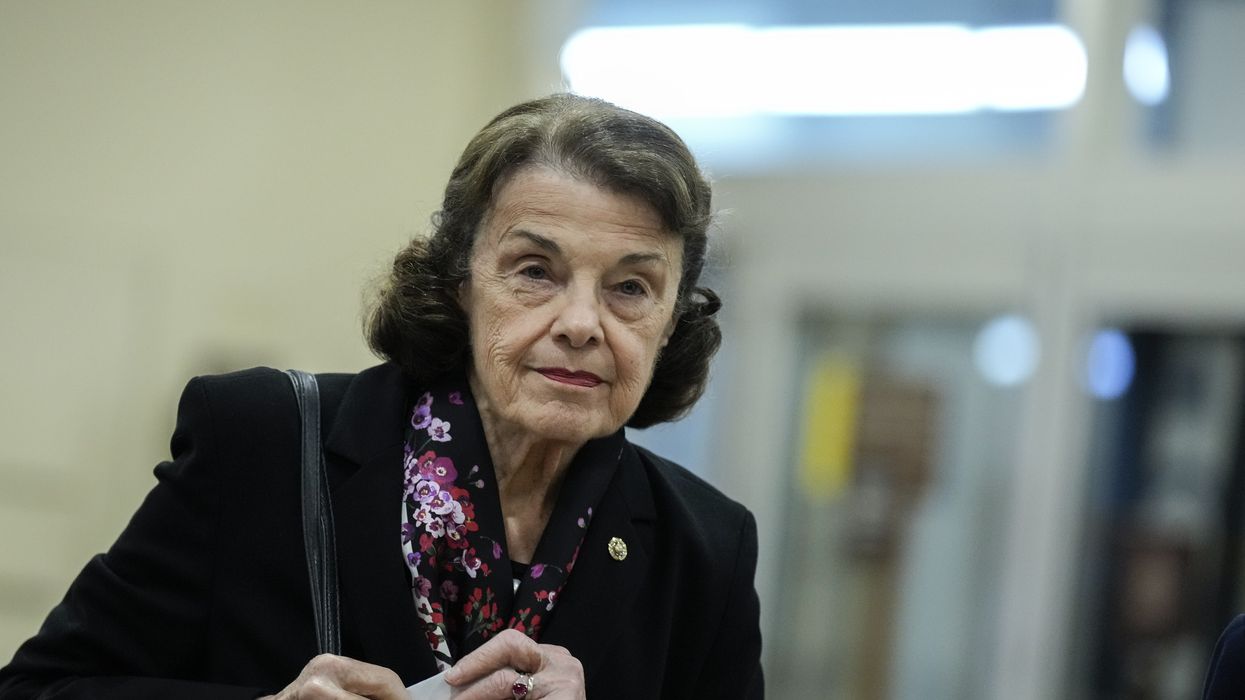
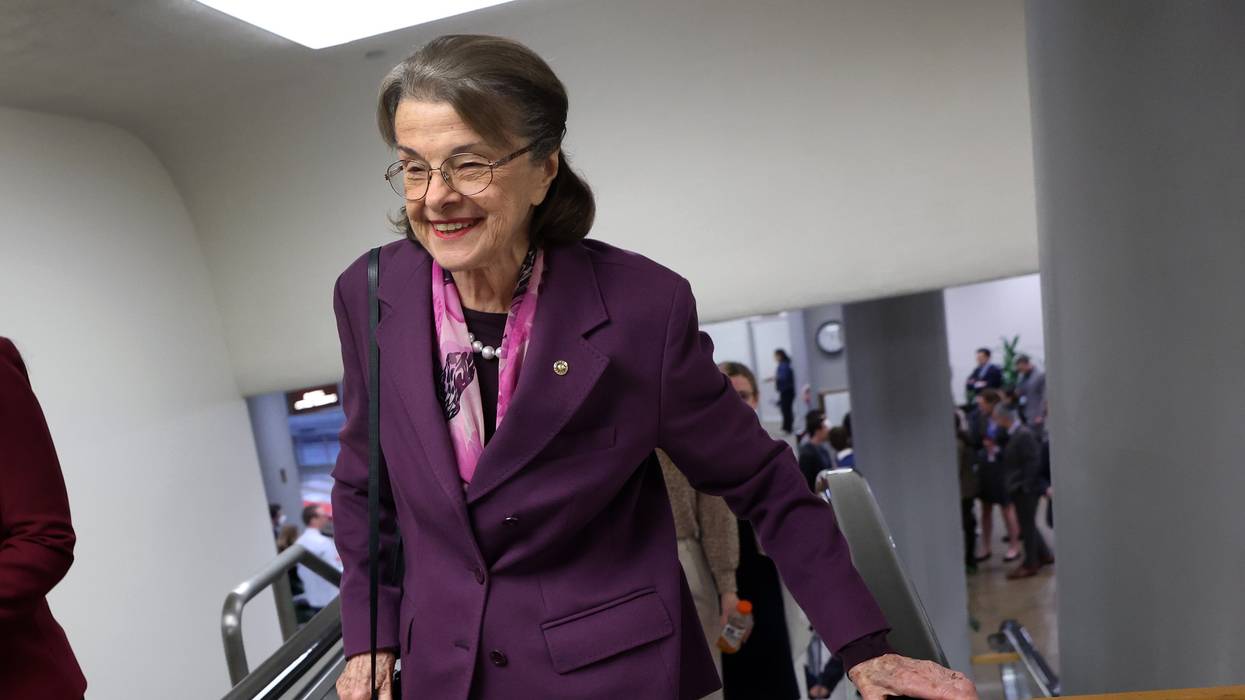
Government, especially at the federal level, is clearly an arena where (to invert the pyramid metaphor) too many old people are clogging up the bottom of the funnel. Some of them, like House Speaker emerita Nancy Pelosi (D-Calif.), remain in full possession of their considerable faculties. She’s also had the grace to pass the torch of Democratic leadership in the House to the very able (and much younger) Hakeem Jeffries, representing the 8th district of New York. Others, like former California Senator Dianne Feinstein, held on, to paraphrase Rudyard Kipling, long after they were gone. Had my own great heroine Ruth Bader Ginsberg had the grace to retire while Barack Obama was still president, we wouldn’t today be living under a Supreme Court with a six-to-three right-wing majority.
What about the situation closer to home? Have I also wedged myself into the bottom of the funnel, preventing the free flow of younger, more vigorous people? Or, to put the question differently, when is it my turn to retire?
I haven’t lived out the past three stints in Reno alone. My partner and I have always done them together, spending several months here working 18 hours a day, seven days a week. That’s what a campaign is, and it takes a lot out of you. I’m now 72 years old, while my partner is five years older. She was prepared to come to Reno again when we thought the contest would be Trump versus Biden. Once we knew that Harris would replace him, however, my partner felt enormous relief. Harris’ chances of beating Trump are—thank God—significantly better than Biden’s were. “I would have done it when it was the death march,” she told me, “but now I can be retired.”
Even when people’s material needs are met, as is the case for the luckiest retirees in this country, they can suffer profound loneliness and an unsettling disconnection from the social structures in which meaningful human activity takes place.
Until Harris stepped up, neither of us could imagine avoiding the battle to keep Trump and his woman-hating, hard-right vice presidential pick out of office. We couldn’t face a Trump victory knowing we’d done nothing to prevent it. But now my 77-year-old partner feels differently. She’s at peace with retirement in a way that, I must admit, I still find hard to imagine for myself.
I haven’t taught a college class since the spring semester of 2021. For the last few years, I’ve been telling people, “I’m sort of retired.” The truth is that while you’re part of the vast army of contingent, part-time faculty who teach the majority of college courses, it’s hard to know when you’re retired. There’s no retirement party and no “emerita” status for part-timers. Your name simply disappears from the year’s teaching roster, while your employment status remains in a strange kind of limbo.
Admittedly, I’ve already passed a few landmarks on the road to retirement. At 65, I went on Medicare (thank you, LBJ!), though I held out until I reached 70 before maximizing my Social Security benefits. But I find it very hard to admit to anyone (even possibly myself) that I’m actually retired, at least when it comes to working for pay.
For almost two decades I could explain who I am this way: “I teach ethics at the University of San Francisco.” But now I have to tell people, “I’m not teaching anymore,” before rushing to add, “but I’m still working with my union.” And it’s true. I’m part of a “kitchen cabinet” that offers advice to the younger people leading my part-time faculty union. I also serve on our contract negotiations team and have a small gig with my statewide union, the California Federation of Teachers. But this year I chose not to run for the policy board (our local’s decision-making body), because I think those positions should go to people who are still actually teaching.
Those small pieces of work are almost enough to banish the shame I’d feel acknowledging that I’m already in some sense retired. I suspect my aversion to admitting that I don’t work for pay anymore has two sources: a family that prized professional work as a key to life satisfaction and—despite my well-developed critique of capitalism—a continuing infection with the productivity virus: the belief that a person’s value can only be measured in hours of “productive” labor.
Under capitalism, a person who has no work—compensated or otherwise—can easily end up marginalized and excluded from meaningful participation in society. The political philosopher Iris Marion Young considered marginalization one of the most ominous forms of oppression in a liberal society. “Marginals,” she wrote, “are people the system of labor cannot or will not use,” a dangerous condition under which a “whole category of people is expelled from useful participation in social life and thus potentially subjected to severe material deprivation and even extermination.”
Even when people’s material needs are met, as is the case for the luckiest retirees in this country, they can suffer profound loneliness and an unsettling disconnection from the social structures in which meaningful human activity takes place. I suspect it’s the fear of this kind of disconnection that keeps me from acknowledging that I might one day actually retire.
The other fear that keeps me working with my union, joining political campaigns, and writing articles like this one is the fear of the larger threats we humans face. We live in an age of catastrophes, present or potential. These include the possible annihilation of democratic systems in this country, the potential annihilation of whole peoples (Palestinians, for example, or Sudanese), or indeed, the annihilation of our species, whether quickly in a nuclear war or more slowly through the agonizing effects of climate change.
But even in such an age, I suspect that it’s time for many of my generation to trust those coming up behind us and pass the torch. They may not be ready, but neither were most of us when someone shoved that cone of flame into our hands.
Still, if I can bring myself to let go and trust those coming after me, then maybe I’ll be ready to embrace the idea behind one of my favorite Spanish words. In that language, you can say, “I’m retired” (“retirada”), and it literally means “pulled back” from life. But in Spanish, I can also joyfully call myself “jubilada,” a usage that (like “sabbatical”) also draws on a practice found in the Hebrew scriptures, the tradition of the jubilee, the sabbath of sabbaths, the time of emancipation of the enslaved, of debt relief, and the return of the land to those who work it.
Maybe it’s time to proudly accept not my retirement, but my future jubilation. But not quite yet. We still have an election to win.
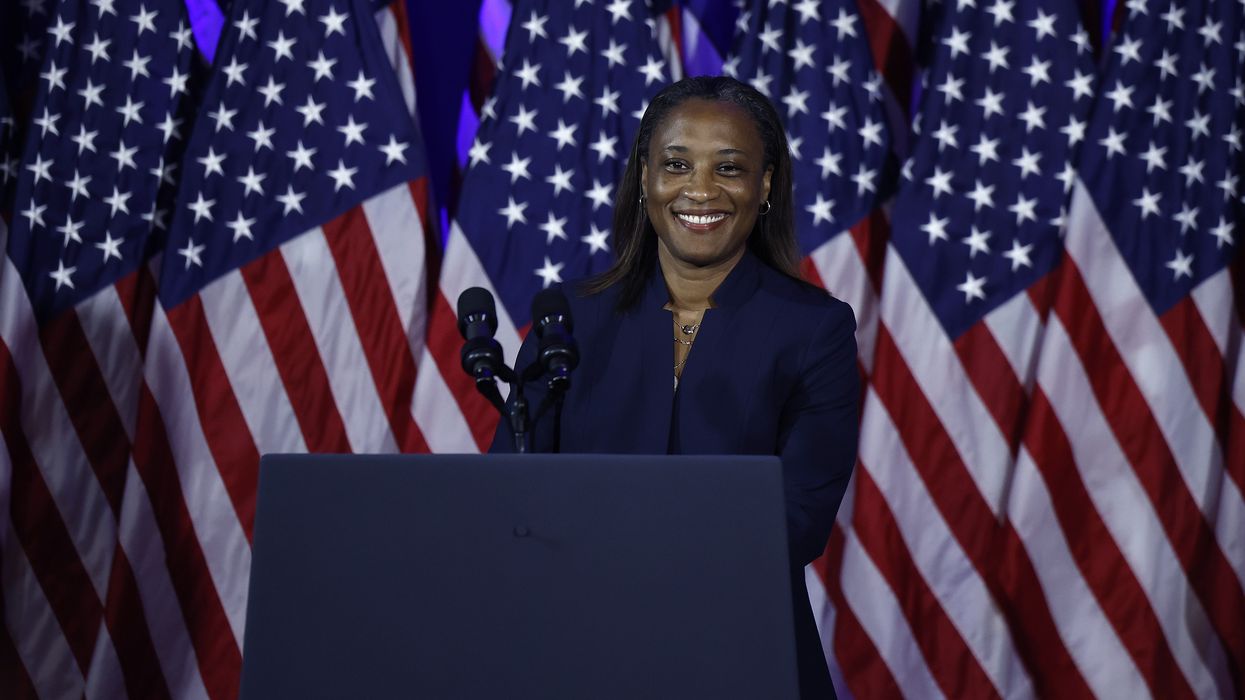
Butler previously served as the head of a major SEIU local. But she also represented Uber as it fought efforts to classify drivers as employees.
California Gov. Gavin Newsom announced late Sunday that he will appoint Laphonza Butler, president of the Democratic Party-aligned reproductive rights group
EMILY's List, to fill the U.S. Senate seat left vacant by the death of long-serving Sen. Dianne Feinstein last week.
Newsom's selection rebuffs calls from progressives and some Democratic lawmakers—including the head of the Congressional Black Caucus—to nominate Rep. Barbara Lee (D-Calif.) to fill the vacancy. Lee is one of three prominent Democrats running for Feinstein's seat in 2024.
Feinstein had planned to step down at the end of her term in January 2025.
Newsom pledged to fill any early vacancy with a Black woman, but he signaled last month that it would not be Lee, who is running against Reps. Katie Porter (D-Calif.) and Adam Schiff (D-Calif.).
"I don't want to get involved in the primary," Newsom told NBC, stressing that his selection would be an interim pick. "It would be completely unfair to the Democrats that have worked their tail off. That primary is just a matter of months away. I don't want to tip the balance of that."
In a statement late Sunday, Newsom said that "as we mourn the enormous loss of Senator Feinstein, the very freedoms she fought for—reproductive freedom, equal protection, and safety from gun violence—have never been under greater assault. Laphonza will carry the baton left by Senator Feinstein, continue to break glass ceilings, and fight for all Californians in Washington, D.C."
"An advocate for women and girls, a second-generation fighter for working people, and a trusted adviser to Vice President [Kamala] Harris," Newsom added, "Laphonza Butler represents the best of California, and she'll represent us proudly in the United States Senate."
Shortly following news of the governor's decision, journalists
noticed that EMILY's List removed the final line of Butler's bio that said she lives in Maryland with her partner and daughter. Newsom's office confirmed to California reporter Ashley Zavala that Butler moved to the Washington, D.C. area for her role at EMILY's List but owns a home in California, and will reregister to vote in the state before she is sworn in.
Prior to her stint at EMILY's List, which works to elect pro-choice Democrats, Butler served as president of Service Employees International Union (SEIU) Local 2015, the nation's largest home care and nursing home workers union.
But CalMatters noted Sunday that "despite her previous career, organized labor is likely to split on Butler."
"Many felt betrayed when she represented Uber in 2019 as the company tried to broker a deal that would avoid classifying their drivers as employees," the outlet reported.
Butler also worked as director of public policy for Airbnb.
Politico reported that "Newsom is making his appointment without putting limitations or preconditions on his pick running for the seat in 2024. That means Butler could decide to join the sprawling and competitive field of Democratic contenders seeking to succeed Feinstein, with special elections now layered on top of the March primary and November runoff."
In a letter to Newsom earlier Sunday, Congressional Black Caucus Chair Steven Horsford (D-Nev.) urged Newsom to appoint Lee to fill the vacant U.S. Senate seat, arguing that her "unparalleled legislative record, longstanding leadership in the Democratic Party, and deep commitment to justice and equality cannot be equaled."
"Barbara Lee has diagnosed a sickness in this country: greed," Horsford wrote. "And, as a former mental health professional, she has a solution: eradicate poverty, exterminate corporate welfare, and end austerity for working families. She is the only person with the courage, vision, and record to eradicate poverty, face down the fossil fuel industry, defend our democracy, and tirelessly advance the progressive agenda."
Lee, for her part, wrote in a social media post that she looks forward to working with Butler to "deliver for the Golden State."
"I am singularly focused on winning my campaign for Senate," Lee wrote. "CA deserves an experienced senator who will deliver on progressive priorities. That's exactly what I'm running to do."
California's longest-serving senator suffered a string of health crises in recent months, sparking concerns about her fitness for office and calls for her resignation.
Democratic U.S. Sen. Dianne Feinstein, California's longest-serving senator, has died at 90.
In recent months, Feinstein faced calls from fellow Democrats to step aside as she suffered a string of health crises that forced her to miss dozens of votes and compromised her party's ability to advance judicial nominees.
As the Associated Press reported, "One of Feinstein's most significant legislative accomplishments was early in her career, when the Senate approved her amendment to ban manufacturing and sales of certain types of assault weapons as part of a crime bill that President Bill Clinton signed into law in 1994."
The ban expired in 2004, and a Feinstein-led attempt to renew it in the wake of the Sandy Hook massacre was unsuccessful.
California Gov. Gavin Newsom said earlier this month that he would make an "interim appointment" to fill Feinstein's seat in the case of a vacancy.
Three prominent Democrats—Reps. Barbara Lee, Katie Porter, and Adam Schiff—are running for the seat in 2024. Newsom said he would not appoint any of them on an interim basis.
In a statement following news of Feinstein's death, Newsom said she "was many things—a powerful, trailblazing U.S. senator; an early voice for gun control; a leader in times of tragedy and chaos."
"But to me," he added, "she was a dear friend, a lifelong mentor, and a role model not only for me, but to my wife and daughters for what a powerful, effective leader looks like."
"Our system of checks and balances demands that the Senate hold the Supreme Court accountable by compelling Thomas to testify publicly," said Stand Up America's Brett Edkins.
With the Democrat-controlled U.S. Senate Judiciary Committee back at full force with the return of Sen. Dianne Feinstein, the progressive group Stand Up America declared Thursday that "it's time to subpoena Clarence Thomas and Harlan Crow," a right-wing Supreme Court justice and his billionaire friend who has spent decades lavishing him with secret gifts.
Facing calls to resign, Feinstein (D-Calif.)—who plans to retire after this term—came back to Capitol Hill this week after being absent for more than two months while recovering from shingles. Although advised by her doctors "to work a lighter schedule" for now, the 89-year-old joined the Senate panel Thursday to advance stalled judicial nominations.
"Now that Sen. Feinstein has returned, Senate Judiciary Democrats have no valid excuse not to subpoena Justice Thomas and begin an aggressive investigation into the extent of his wrongdoing," argued Brett Edkins, Stand Up America's managing director for policy and political affairs.
"Now that Sen. Feinstein has returned, Senate Judiciary Democrats have no valid excuse not to subpoena Justice Thomas."
"Our system of checks and balances demands that the Senate hold the Supreme Court accountable by compelling Thomas to testify publicly," Edkins said. "Harlan Crow, Leonard Leo, and others involved in Thomas' numerous misdeeds should also be forced to answer questions from committee members."
Recent reporting by ProPublica revealed that Crow, a GOP megadonor, has treated Thomas to luxury travel, paid for his grandnephew's private school tuition, and bought and remodeled the justice's mother's home. Crow has also notably given Republicans on the Senate Judiciary Committee more than $450,000 in campaign cash, collectively.
Amid calls for investigation and even impeachment in response to revelations about Thomas' ties to Crow, The Washington Post reported last week that the justice's wife, Ginni Thomas, received tens of thousands of dollars from a right-wing nonprofit—and Leo used his role as an adviser to the Judicial Education Project to keep her name off the financial records.
"Our nation's highest court must be free from corruption and undue influence," said Edkins. "The Senate Judiciary Committee must use the full extent of its authority to hold Justice Thomas accountable. Anything less would be a dereliction of duty."
The panel, led by Sen. Dick Durbin (D-Ill.), isn't alone in probing Crow's gifts to Thomas, which the justice did not disclose. Senate Finance Committee Chair Ron Wyden (D-Ore.) has also set his sights on their relationship.
After the billionaire's attorney rebuffed Wyden's request for a "full accounting" of gifts he provided to Thomas' family, the senator pledged Tuesday to "send a full response to Mr. Crow's attorney in the coming days" and "discuss with my committee colleagues how best to compel answers to the questions I put forward last month, including by using any of the tools at our disposal."
Concerns about potential conflicts of interest and corruption involving the nation's top court extend beyond Thomas. Reports about Chief Justice John Roberts and Justice Neil Gorsuch have also fueled calls for Congress to pass sweeping ethics rules.
Roberts last month
declined Durbin's invitation to testify before the Senate Judiciary Committee—and due to Feinstein's absence and Republicans' refusal to allow a temporary replacement on the panel, the chair could not subpoena the chief justice.
The veteran California Democrat, who plans to retire after this term, has missed 91 votes since late February.
Faced with mounting calls to resign due to the impact of her extended absence, U.S. Sen. Dianne Feinstein headed to Washington, D.C. on Tuesday after being away since late February while recovering from shingles.
The San Francisco Chronicle reported that the California Democrat "boarded a chartered private plane" and "could return to the Senate as early as Tuesday evening." Feinstein spokesperson Adam Russell confirmed her departure to the newspaper.
Senate Majority Leader Chuck Schumer (D-N.Y.) said in a statement that "I'm glad that my friend Dianne is back in the Senate and ready to roll up her sleeves and get to work. After talking with her multiple times over the past few weeks, it's clear she's back where she wants to be and ready to deliver for California."
Feinstein, who is 89, has already said she will retire at the end of the current term, and three California Democrats in the U.S. House—Reps. Barbara Lee, Katie Porter, and Adam Schiff—have launched campaigns for next year's primary.
Demands for Feinstein to step down early have been building since last spring, when the Chronicle reported that based on interactions with the senator, some of her colleagues were concerned she is mentally unfit to continue serving. During her recent absence, Feinstein has missed 91 floor votes.
The missed votes, Democrats' narrow control of the chamber, and the GOP's refusal to let Schumer temporarily replace Feinstein on the Senate Judiciary Committee so the panel can advance President Joe Biden's judicial nominees, have fueled fresh calls for her to resign—including from some members of Congress.
Ahead of the news of Feinstein's return on Tuesday, former Labor Secretary Robert Reich—who described himself as "one of her personal friends as well as one of her constituents"—wrote that "as someone in his late 70s, let me be clear. I'm not suggesting an age limit on public service. I'm only suggesting vigilance."
Feinstein "has accomplished many worthy things since she was first elected to the Senate in 1992," Reich noted, detailing some of them. "She has said she will retire at the end of 2024, but too much damage is being done in the interim. If she can no longer perform her duties, it is now time for her to step down."
"The three-month absence hurt our agenda, and time will tell on the future."
Congressman Ro Khanna (D-Calif.)—who is co-charing Lee's 2024 campaign and recently called for Feinstein's resignation—said in a statement Tuesday that he is "very glad" the senator "is feeling better and hopeful that she will be able to fulfill her duties upon her return."
"The people of California deserve strong representation and a senator who can vote to advance President Biden's judicial nominees and protect Americans' fundamental rights," he added. "The three-month absence hurt our agenda, and time will tell on the future."
The senator's return "will put two nominees in the spotlight, in part because Feinstein's absence is not the only vote holding them up," Politico noted, pointing to Biden's nomination of Michael Delaney for the 1st U.S. Circuit Court of Appeals and Julie Su for labor secretary.
Feinstein also comes back to a Congress engaged in a battle over raising the debt ceiling amid estimates that the U.S. government could run out of money to pay its bills as soon as June 1. After meeting with Biden and other congressional leaders at the White House Tuesday, House Speaker Kevin McCarthy (R-Calif.)—who is threatening a catastrophic default unless Democrats agree to huge spending cuts that would impact working people—said that "I didn't see any new movement."
"I think criticisms of that stance as 'anti-feminist' are a farce," said the New York Democrat.
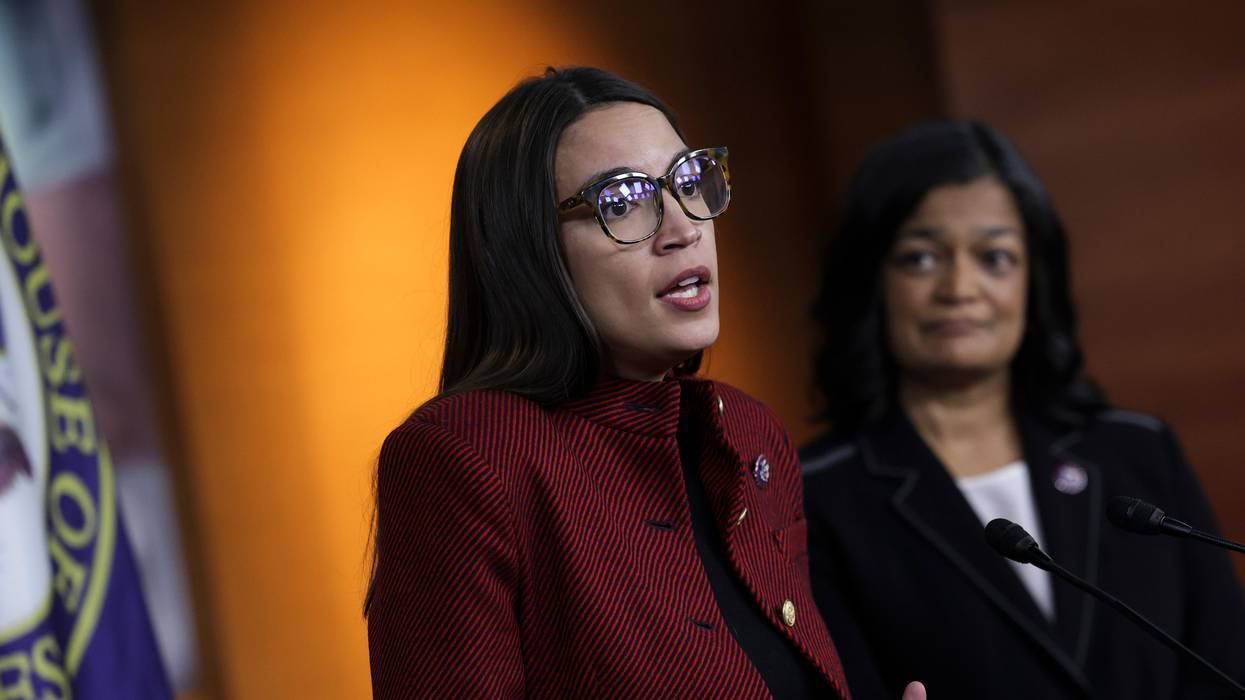
U.S. Rep. Alexandria Ocasio-Cortez on Monday night rejected claims that Sen. Dianne Feinstein is being targeted by "anti-feminist" attacks as calls mount for the 89-year-old lawmaker's retirement.
On the social media platform Bluesky, the New York Democrat said Feinstein (D-Calif.) "is causing great harm to the judiciary" with her prolonged absence from the Senate due to her recovery from shingles. Feinstein, who sits on the powerful Senate Judiciary Committee, has not been present since late February.
Her absence leaves Democrats without a majority on the panel, and therefore unable to advance President Joe Biden's judicial nominees without the support of Republicans.
Ocasio-Cortez noted that Feinstein's indefinite absence has come as right-wing federal courts are gutting reproductive rights. As of last month, there were 18 judicial nominees for circuit and district courts pending in the Senate.
Feinstein asked in April that she be temporarily replaced on the Judiciary Committee, as calls for her resignation intensified among Democratic lawmakers.
The request required unanimous consent from the Senate, and was denied after Republicans including Sens. Lindsey Graham (R-S.C.) and Susan Collins (R-Maine) refused to support removing Feinstein from the Judiciary Committee. Collins suggested she was doing so out of respect for the senator, who has served for more than 30 years.
But by keeping Feinstein tied to the committee in her absence, Collins made it less likely that judges who oppose forced pregnancy will be able to be confirmed and help to secure abortion rights—which both senators say they support and which Feinstein has counted among her signature issues.
Feinstein's absence has also left committee Chairman Dick Durbin (D-Ill.) without the power to subpoena Supreme Court Chief Justice John Roberts regarding questions about ethics on the court in the wake of revelations about the financial ties of right-wing Justices Clarence Thomas and Neil Gorsuch.
Rep. Nancy Pelosi (D-Calif.) has suggested that advocates and lawmakers who have called on Feinstein to step down are being sexist and applying a double standard, saying "I've never seen them go after a man who was sick in the Senate in that way."
The idea that calls for Feinstein to resign are anti-feminist, said Ocasio-Cortez on Monday, "are a farce," considering that proponents of her early retirement are seeking to protect the rights of women and LGBTQ+ people across the U.S. through the judiciary.
Feinstein has said she will not seek reelection next year and plans to leave the Senate when her current term ends in January 2025. She has faced questions about her health for cognitive health in recent years, before her bout with shingles.
U.S. Reps. Katie Porter, Barbara Lee, and Adam Schiff have all launched campaigns to replace the senator.
"I know she'll fight for our shared progressive values in the U.S. Senate," Rep. Pramila Jayapal said of the California congresswoman.
Congressional Progressive Caucus Chair Pramila Jayapal on Monday endorsed Rep. Barbara Lee in California's 2024 U.S. Senate race, calling the East Bay Democratic congresswoman "a champion for justice who has been a persistent progressive voice" in the House.
"As a woman of color, I know representation matters and I'm excited for Barbara to bring her voice and her lived experience as a Black woman to the chamber so all of us can have a seat at the table," Jayapal (D-Wash.) said in a statement. There are currently no Black women serving in the Senate.
"I know she'll fight for our shared progressive values in the U.S. Senate," Jayapal added.
In response to the endorsement, Lee said that she is "so grateful to have earned the trust and support of Congresswoman Jayapal."
"She is one of the strongest voices for justice in Congress and it's been my honor to fight alongside her for a more progressive future for all," Lee added. "I'm running this campaign to bring this fight to the U.S. Senate and on day one, I'm ready to use my experience and record of results to move California and our country forward."
Lee—who in 2001 was the only member of Congress to vote against authorizing the ongoing War on Terror—is widely viewed as the most progressive candidate running for the Senate seat currently held by Sen. Dianne Feinstein (D-Calif.), who says this will be her last term. Feinstein has faced growing calls to step down, with numerous commentators noting that the Senate Judiciary Committee, on which she sits, has been unable to confirm President Joe Biden's judicial nominees because the 89-year-old five-term lawmaker has missed dozens of votes.
Jayapal picked Lee over Congressional Progressive Caucus colleague Rep. Katie Porter (D-Calif.)—whose only major endorsement thus far is from Sen. Elizabeth Warren (D-Mass.), her former law school professor—and Rep. Adam Schiff (D-Calif.).
Schiff's endorsements include former House Speaker Nancy Pelosi (D-Calif.) and 19 other California congressional Democrats.
Lee, meanwhile, is backed by a wide range of Democrats, including progressive Reps. Ilhan Omar (D-Minn.) and Ro Khanna (D-Calif.)—who will co-chair Lee's campaign. Lee is also endorsed by Los Angeles Mayor Karen Bass and San Francisco Mayor London Breed, both Democrats.
"Rep. Barbara Lee has a unique perspective that is different from any other member of the U.S. Senate," Breed said Saturday at the launch of "United for Barbara Lee" in San Francisco. "California needs Barbara Lee and so does the nation."
"We are putting decorum over democracy and our values," said Congressman Ro Khanna. "It's time for Sen. Feinstein to step down gracefully."
U.S. Sen. Dianne Feinstein is facing fresh calls to resign after her extended absence—and Sen. Joe Manchin's inclination to partner with Republicans—led to the Wednesday passage of a resolution to roll back Biden administration emissions standards for heavy-duty trucks.
In a 50-49 vote, Manchin (D-W.Va.)—a fossil fuel industry beneficiary known for obstructing his own party's priorities, particularly on climate policy—joined all Senate Republicans to narrowly pass the Congressional Review Act resolution, which the White House has said President Joe Biden will veto if it is also approved by the GOP-controlled House of Representatives.
Feinstein (D-Calif.), an 89-year-old who plans to retire when her term expires in January 2025, has been away from Capitol Hill since late February recovering from shingles. She has already faced pressure to step down because without her vote on the Senate Judiciary Committee, the GOP can block Biden's judicial nominees—and Republicans have prevented Democrats from temporarily replacing her on the panel.
"Because Sen. Feinstein was absent, the Senate overturned a Biden rule that would cut pollution from heavy-duty trucks and causes harm to people's lungs. We are putting decorum over democracy and our values. It's time for Sen. Feinstein to step down gracefully," Rep. Ro Khanna (D-Calif.) said Thursday morning.
Khanna—who is supporting Congresswoman Barbara Lee, one of three California Democrats running to fill Feinstein's Senate seat next year—is one of a handful of House Democrats who have previously called for the veteran lawmaker to step down.
Democratic strategist and communications consultant Sawyer Hackett similarly said Wednesday night that "Feinstein's refusal to resign negates the expanded Senate majority Democrats overcame tremendous odds to achieve."
"Republican measures are passing in a Democratic Senate," Hackett stressed. "Step down."
Also emphasizing the Senate GOP's power under current conditions, San Francisco-based immigration attorney Jeremy Rosenberg tweeted: "Unconscionable. Yet completely avoidable. It's past time for Sen. Feinstein to step down."
Rosenberg further noted that if Feinstein were to acquiesce to resignations demands, Democratic California Gov. Gavin Newsom would be responsible for selecting her replacement.
While calls for Feinstein to exit the Senate mounted, Manchin came under fire as "a one-man pollution machine" for what one reporter described as his "warpath against his own party."
Echoing Senate Republicans, Manchin claimed Wednesday that "the Biden administration wants to burden the trucking industry with oppressive regulations that will increase prices by thousands of dollars and push truck drivers and small trucking companies out of business," and warned against enabling the U.S. Environmental Protection Agency (EPA) to "continue to seize unrestrained power."
As Roll Call detailed Wednesday:
The EPA's nitrogen oxide (NOx) rule, finalized in December, requires heavy- and medium-duty vehicles starting in model year 2027 to meet the "most stringent" emissions reduction option first proposed by the agency a year ago.
Nitrogen oxides are produced from fuel burning and mix with other pollutants in the atmosphere to create smog and acid rain. High levels of smog have been linked to respiratory diseases and asthma. The EPA estimates that the rule will reduce NOx emissions from the heavy-duty truck fleet by 48 percent by 2045.
If the most ambitious goals outlined in the rule are met by 2045, the EPA projects that early onset asthma cases among children will decline by 18,000 per year and premature deaths will go down by 2,900 annually.
Evergreen Action highlighted in a series of tweets that "heavy-duty vehicles are a MAJOR source of NOx pollution that contributes to negative health impacts like lung and heart diseases—and are especially harmful to low-income, Black, and Brown communities that live near major roads and ports."
"Meanwhile, many automakers have already committed to transitioning to zero-emissions vehicles, and the cost of electrifying heavy-duty vehicles is getting cheaper every year," the group added. "The Biden administration has also already committed to vetoing the resolution if it passes the House, but it is still shameful to see Republicans trying to undermine the right of every American to breathe clean air."
"The lack of options for real accountability highlights why we so desperately need robust judicial ethics reform—now," said one ethics watchdog.
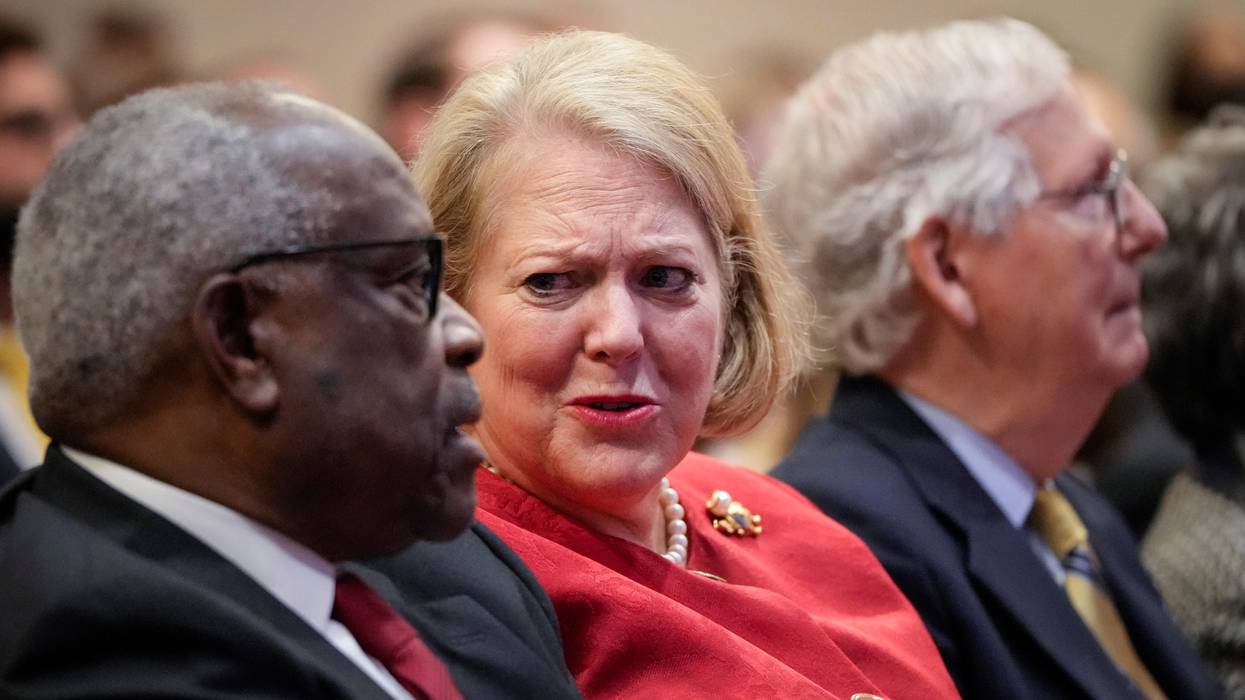
Calls for impeachment proceedings against U.S. Supreme Court Justice Clarence Thomas intensified Thursday amid new reporting that revealed several specific conflicts of interest related to the justice's financial ties to right-wing real estate magnate and Republican donor Harlan Crow.
Following a bombshell report by ProPublica earlier this month regarding trips Thomas took on Crow's private jet, his superyacht, and to his properties in New York and Texas which had not been included in financial disclosures as required by federal law, the conservative justice brushed off criticism by saying he benefited only from "personal hospitality from close personal friends" and that Crow "did not have business before the court."
While also denying any ethics breaches, Crow, who has donated at least $13 million to Republican politicians, acknowledged in an interview with The Dallas Morning News that "every single relationship... has some kind of reciprocity."
The truth of that admission became clearer Thursday as The Guardian reported on findings in the judicial record, which showed Crow's ties to right-wing groups that have been involved in Supreme Court cases since Thomas was first confirmed to the bench in 1991.
The Texas billionaire was part of anti-taxation group Club for Growth's "founders committee," which helped direct its policymaking, in 2003 when the group filed an amicus brief challenging the McCain-Feingold Act, a campaign finance reform law.
"DOJ is the only agency positioned to truly hold Thomas accountable, because Thomas's conduct is more than unethical—it's likely criminal."
Thomas wrote a blistering dissent when the court permitted the law to stand against the wishes of Club for Growth and other right-wing groups. As The Guardian reported, at this point Crow had already "showered Thomas with several lavish gifts" including "a 1997 flight from Washington to northern California on Crow's private jet to attend an all-male retreat at Bohemian Grove" and a $150,000 donation to create a wing dedicated to the justice at a library in Savannah, Georgia.
Crow also held seats on the boards of at least three right-wing organizations that have written amicus briefs in Supreme Court cases; is a longtime trustee of the conservative American Enterprise Institute, which has filed numerous supporting briefs; and is on the board of the Hoover Institution, which filed an amicus brief challenging student debt relief.
Thomas' involvement with Crow raises questions not only about whether the billionaire has "business before the court," said Democratic Sen. Sheldon Whitehouse (D-R.I.). "Nowadays it's consorting with those... whose business is the court—who are deeply enmeshed in the efforts to capture and corrupt the court."
Several progressives have demanded that Thomas be impeached as the latest alleged ethics breach has come to light—amid ongoing outcry regarding the justice's refusal to recuse himself from cases involving the January 6, 2021 insurrection and the 2020 election, which his wife, right-wing activist Ginni Thomas, pushed to overturn.
Following Thursday's revelations, Citizens for Responsibility and Ethics in Washington (CREW) doubled down on a call for an investigation into Thomas both by the Supreme Court and by the U.S. Department of Justice (DOJ).
"DOJ is the only agency positioned to truly hold Thomas accountable, because Thomas' conduct is more than unethical—it's likely criminal," said CREW.
The group acknowledged that "accountability through the legal system in this case is likely to be slow and limited," and suggested Congress hold impeachment proceedings against Thomas.
While the Republican-controlled House is unlikely to pass articles of impeachment, Senate Judiciary Committee Chair Dick Durbin (D-Ill.) announced this month that he plans to hold a hearing on May 2 regarding ethics at the Supreme Court, and on Thursday called on Chief Justice John Roberts to testify.
"The time has come for a new public conversation on ways to restore confidence in the court's ethical standards. I invite you to join it, and I look forward to your response," Durbin wrote in a letter to Roberts.
Democrats currently lack subpoena power on the committee due to Sen. Dianne Feinstein's (D-Calif.) absence, which leaves them without a majority. The 89-year-old lawmaker is out indefinitely on medical leave and the GOP this week blocked an effort to temporarily replace her on the panel.
"The lack of options for real accountability highlights why we so desperately need robust judicial ethics reform—now," said CREW on Thursday. "It is outrageous that the Supreme Court doesn't have a binding code of conduct, so there's no way to enforce justices' compliance with ethics and recusal rules."
One advocate said that by keeping the blue slip tradition intact, Sen. Dick Durbin is endorsing "the worst kind of extreme Republican obstructionism."
"We're not at that point yet," Sen. Dick Durbin (D-Ill.) told HuffPost when asked if he's considering scrapping the so-called "blue slip courtesy"—a non-binding rule that Republicans tossed aside for circuit court nominees when they last controlled the Senate.
When a senator returns a blue slip, they are indicating they will allow a judicial nomination to proceed. Earlier this month, Sen. Cindy Hyde-Smith (R-Miss.) announced she would not be returning a blue slip for Scott Colom, who President Joe Biden nominated to serve on the U.S. District Court for the Northern District of Mississippi.
But Hyde-Smith's decision, which effectively tanked Colom's nomination even though he had bipartisan support in the Senate, wasn't enough for Durbin to abandon the blue slip process—though he said earlier this week that "her conduct and the timing of her decision have made it extremely difficult" to preserve the tradition.
On top of the extended and indefinite absence of Sen. Dianne Feinstein (D-Calif.), Durbin's continued adherence to the blue slip rule has allowed Republicans to dramatically slow the judicial confirmation process, leaving open dozens of vacancies as right-wing judges they've approved in recent years wreak havoc across the country.
In remarks during a Senate Judiciary Committee hearing on Tuesday, Durbin said the blue slip process "has a long history, but there have been instances of success and failure."
"We have an illustration of success today," Durbin said, noting that three Biden nominees received blue slips from senators who represent their home states, including Sens. John Kennedy (R-La.) and Bill Cassidy (R-La.).
But as HuffPost's Jennifer Bendery noted, Durbin "has so many reasons to nix" the non-binding rule, something he can do unilaterally.
"Democrats returned more than 130 blue slips during the Trump admin, confirming 84 district judges in states with at least one or two Dem senators," Bendery wrote on Twitter. "More than two years into the Biden admin, Republicans have returned 13 blue slips. That's as of last month."
"Progressive judicial groups are practically shouting from the mountaintops to ditch blue slips," Bendery continued. "Republicans did it for years with Trump's court picks, as Dems fumed from the sidelines. The result? Trump confirmed a massive [number] of right-wing ideologues to lifetime court seats."
Chris Kang, the chief counsel for Demand Justice, told Bendery that if Durbin refuses to "reform the outdated blue slip tradition," he is endorsing "the worst kind of extreme Republican obstructionism."
The Senate Judiciary Committee is expected to consider 13 Biden judicial nominees during a hearing scheduled for Thursday.
Durbin said during Tuesday's hearing that he hopes Republicans and Democrats on the judiciary panel can "try to find common ground," remarks that came shortly before the GOP blocked Democrats' request to temporarily replace Feinstein on the committee as she recovers from shingles.
Sen. Lindsey Graham (R-S.C.) objected to Senate Majority Leader Chuck Schumer's (D-N.Y.) unanimous consent request to replace Feinstein with Sen. Ben Cardin (D-Md.), saying, "This is about a handful of judges that you can't get the votes for."
Rep. Ro Khanna (D-Calif.), who has urged Feinstein to resign, said in response to the GOP's obstruction that "the ball is now back in Senator Feinstein's court to provide a specific timeline of when she can cast votes on judiciary to confirm President Biden's judges."
"Every day she is not on judiciary is hurting our ability to confirm another judge who will protect women's rights and voting rights," Khanna told NBC News. "I hope more will choose democracy over decorum and speak out about what is painfully obvious. It's time for Sen. Feinstein to step aside to have a dignified conclusion to her public service career."