SUBSCRIBE TO OUR FREE NEWSLETTER
Daily news & progressive opinion—funded by the people, not the corporations—delivered straight to your inbox.
5
#000000
#FFFFFF
To donate by check, phone, or other method, see our More Ways to Give page.
Daily news & progressive opinion—funded by the people, not the corporations—delivered straight to your inbox.
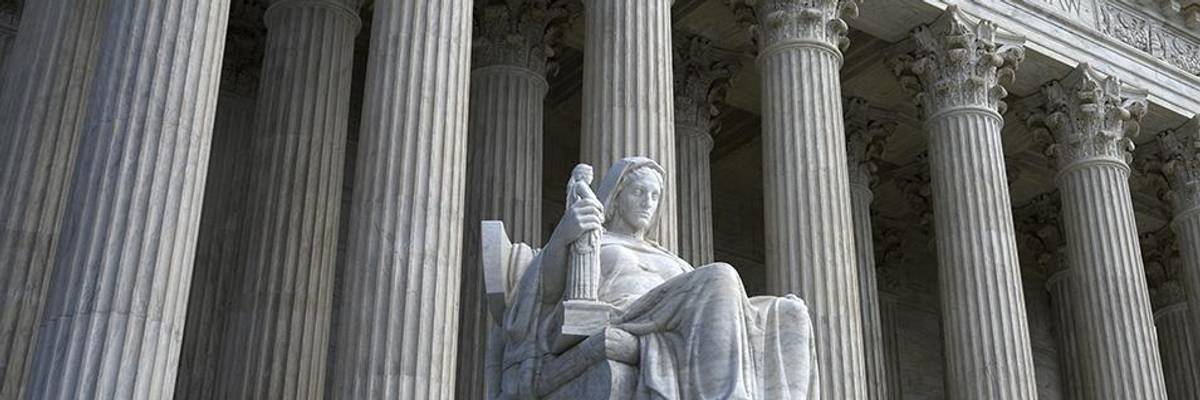
The U.S. Supreme Court has intervened five times so far in electoral protocol cases this session during Covid-19 pandemic. (Photo: Robert Alexander/Getty Images)
In the latest salvo against change efforts at the local grassroots level, the U.S. Supreme Court on Tuesday put a hold on a lower court's ruling to ease restrictions for a citizen ballot initiative campaign in Oregon that organizers called "vital democracy reform."
The justices granted a request by Oregon officials to issue the stay on a July 10 injunction by a U.S. district judge ordering the state to reduce the number of signatures needed to place a redistricting measure on the November ballot amid the coronavirus pandemic.
Tuesday's ruling puts on hold the district court ruling pending an opinion by an appeals court, which is expected later this week. This is the fifth time since the pandemic began that SCOTUS has intervened in election processes in light of Covid-19.
The Oregon initiative would allow voters to decide whether the state should create an independent commission--as opposed to partisan lawmakers--to redraw electoral district lines in the state.
In July, the nation's highest court intervened to block signature gathering for a citizen initiative in Idaho that would expand the state's education funding. SCOTUS has issued similar orders blocking the easing of election restrictions--including for protocols for absentee ballot voting--in Alabama, Texas, and Wisconsin. The court is scheduled this week to consider a request to reinstate witness requirements for absentee ballots in Rhode Island, following the easing of regulations due to Covid-19.
As of Wednesday, organizers in Oregon intended to push forward with their efforts.
"People Not Politicians prevailed in federal district court and we will be defending Oregonian voters' First Amendment rights during our scheduled oral argument in the 9th Circuit on August 13," Norman Turrill, a chief petitioner and campaigner with the advocacy group, said in a statement. "Our coalition will continue doing everything in our power to put this vital democracy reform on the ballot in November and ensure there is a path for redistricting reform in Oregon in 2021."
But watchdogs warn that continued use of what has been dubbed the 'shadow docket,' undermines the democratic process.
"They're becoming especially common in election-related and Covid-related cases--of which we can expect only more between now and this fall," Steve Vladeck wrote in Slate. "And it's all happening as Congress, which has the unquestioned power to exercise far more control over the justices' caseload, has done nothing to change any of the relevant rules in well over three decades."
As Covid-19 cases top 5 million in the U.S. and states grapple with primary elections and preparations for November's presidential contest, Vladeck warns U.S. citizens have not seen the end of these types of directives.
"With more and more of these decisions affecting more and more of us on a regular basis, it would behoove the justices to do whatever they can to bring more of these rulings into the sunlight--and for Congress to consider more aggressive reforms if they don't," he wrote.
Dear Common Dreams reader, It’s been nearly 30 years since I co-founded Common Dreams with my late wife, Lina Newhouser. We had the radical notion that journalism should serve the public good, not corporate profits. It was clear to us from the outset what it would take to build such a project. No paid advertisements. No corporate sponsors. No millionaire publisher telling us what to think or do. Many people said we wouldn't last a year, but we proved those doubters wrong. Together with a tremendous team of journalists and dedicated staff, we built an independent media outlet free from the constraints of profits and corporate control. Our mission has always been simple: To inform. To inspire. To ignite change for the common good. Building Common Dreams was not easy. Our survival was never guaranteed. When you take on the most powerful forces—Wall Street greed, fossil fuel industry destruction, Big Tech lobbyists, and uber-rich oligarchs who have spent billions upon billions rigging the economy and democracy in their favor—the only bulwark you have is supporters who believe in your work. But here’s the urgent message from me today. It's never been this bad out there. And it's never been this hard to keep us going. At the very moment Common Dreams is most needed, the threats we face are intensifying. We need your support now more than ever. We don't accept corporate advertising and never will. We don't have a paywall because we don't think people should be blocked from critical news based on their ability to pay. Everything we do is funded by the donations of readers like you. When everyone does the little they can afford, we are strong. But if that support retreats or dries up, so do we. Will you donate now to make sure Common Dreams not only survives but thrives? —Craig Brown, Co-founder |
In the latest salvo against change efforts at the local grassroots level, the U.S. Supreme Court on Tuesday put a hold on a lower court's ruling to ease restrictions for a citizen ballot initiative campaign in Oregon that organizers called "vital democracy reform."
The justices granted a request by Oregon officials to issue the stay on a July 10 injunction by a U.S. district judge ordering the state to reduce the number of signatures needed to place a redistricting measure on the November ballot amid the coronavirus pandemic.
Tuesday's ruling puts on hold the district court ruling pending an opinion by an appeals court, which is expected later this week. This is the fifth time since the pandemic began that SCOTUS has intervened in election processes in light of Covid-19.
The Oregon initiative would allow voters to decide whether the state should create an independent commission--as opposed to partisan lawmakers--to redraw electoral district lines in the state.
In July, the nation's highest court intervened to block signature gathering for a citizen initiative in Idaho that would expand the state's education funding. SCOTUS has issued similar orders blocking the easing of election restrictions--including for protocols for absentee ballot voting--in Alabama, Texas, and Wisconsin. The court is scheduled this week to consider a request to reinstate witness requirements for absentee ballots in Rhode Island, following the easing of regulations due to Covid-19.
As of Wednesday, organizers in Oregon intended to push forward with their efforts.
"People Not Politicians prevailed in federal district court and we will be defending Oregonian voters' First Amendment rights during our scheduled oral argument in the 9th Circuit on August 13," Norman Turrill, a chief petitioner and campaigner with the advocacy group, said in a statement. "Our coalition will continue doing everything in our power to put this vital democracy reform on the ballot in November and ensure there is a path for redistricting reform in Oregon in 2021."
But watchdogs warn that continued use of what has been dubbed the 'shadow docket,' undermines the democratic process.
"They're becoming especially common in election-related and Covid-related cases--of which we can expect only more between now and this fall," Steve Vladeck wrote in Slate. "And it's all happening as Congress, which has the unquestioned power to exercise far more control over the justices' caseload, has done nothing to change any of the relevant rules in well over three decades."
As Covid-19 cases top 5 million in the U.S. and states grapple with primary elections and preparations for November's presidential contest, Vladeck warns U.S. citizens have not seen the end of these types of directives.
"With more and more of these decisions affecting more and more of us on a regular basis, it would behoove the justices to do whatever they can to bring more of these rulings into the sunlight--and for Congress to consider more aggressive reforms if they don't," he wrote.
In the latest salvo against change efforts at the local grassroots level, the U.S. Supreme Court on Tuesday put a hold on a lower court's ruling to ease restrictions for a citizen ballot initiative campaign in Oregon that organizers called "vital democracy reform."
The justices granted a request by Oregon officials to issue the stay on a July 10 injunction by a U.S. district judge ordering the state to reduce the number of signatures needed to place a redistricting measure on the November ballot amid the coronavirus pandemic.
Tuesday's ruling puts on hold the district court ruling pending an opinion by an appeals court, which is expected later this week. This is the fifth time since the pandemic began that SCOTUS has intervened in election processes in light of Covid-19.
The Oregon initiative would allow voters to decide whether the state should create an independent commission--as opposed to partisan lawmakers--to redraw electoral district lines in the state.
In July, the nation's highest court intervened to block signature gathering for a citizen initiative in Idaho that would expand the state's education funding. SCOTUS has issued similar orders blocking the easing of election restrictions--including for protocols for absentee ballot voting--in Alabama, Texas, and Wisconsin. The court is scheduled this week to consider a request to reinstate witness requirements for absentee ballots in Rhode Island, following the easing of regulations due to Covid-19.
As of Wednesday, organizers in Oregon intended to push forward with their efforts.
"People Not Politicians prevailed in federal district court and we will be defending Oregonian voters' First Amendment rights during our scheduled oral argument in the 9th Circuit on August 13," Norman Turrill, a chief petitioner and campaigner with the advocacy group, said in a statement. "Our coalition will continue doing everything in our power to put this vital democracy reform on the ballot in November and ensure there is a path for redistricting reform in Oregon in 2021."
But watchdogs warn that continued use of what has been dubbed the 'shadow docket,' undermines the democratic process.
"They're becoming especially common in election-related and Covid-related cases--of which we can expect only more between now and this fall," Steve Vladeck wrote in Slate. "And it's all happening as Congress, which has the unquestioned power to exercise far more control over the justices' caseload, has done nothing to change any of the relevant rules in well over three decades."
As Covid-19 cases top 5 million in the U.S. and states grapple with primary elections and preparations for November's presidential contest, Vladeck warns U.S. citizens have not seen the end of these types of directives.
"With more and more of these decisions affecting more and more of us on a regular basis, it would behoove the justices to do whatever they can to bring more of these rulings into the sunlight--and for Congress to consider more aggressive reforms if they don't," he wrote.