

SUBSCRIBE TO OUR FREE NEWSLETTER
Daily news & progressive opinion—funded by the people, not the corporations—delivered straight to your inbox.
5
#000000
#FFFFFF
To donate by check, phone, or other method, see our More Ways to Give page.
Daily news & progressive opinion—funded by the people, not the corporations—delivered straight to your inbox.

Forever chemicals were stored in tanks at an airport at more than 10,000 times the federal limit.
Maine officials in recent days have downplayed the public health risk posed by an accidental discharge of firefighting foam containing the toxic substances known as "forever chemicals" over a week ago, but initial tests on Monday revealed startlingly high concentrations of the chemicals near the airport where the spill occurred.
The state found that perfluorooctane sulfonic acid (PFOS), a type of synthetic perfluoroalkyl and polyfluoroalkyl substances (PFAS) that's been widely used to make firefighting foam and is still in circulation despite being phased out of production, was present in a chemical tank at Brunswick Executive Airport at a level of 3.2 billion parts per trillion (ppt).
The Maine Centers for Disease Control and Prevention (Maine CDC) advised the public not to consume freshwater fish from Mere Brook, Merriconeag Stream, Picnic Pond, and the site 8 stream near the airport, which is a former Naval Air Station.
The chemical tank fed firefighting foam concentrate into a fire suppression system that malfunctioned at Hangar 4 at the airport on August 19, sending the toxic foam into a nearby parking lot, down sewage and storm drains, and floating through the air at Brunswick Landing, a residential and business development in the area. About 1,500 gallons of the foam concentrate spilled.
The tests indicated a level of PFOS well over federal and state limits. Maine requires remedial action when PFOS is found at a level of 1,000 ppt in groundwater and 210 ppt for milk—while the federal drinking water standard is less than 4 ppt.
Samples taken at nearby drainage ponds found PFOS concentrations of a little over 1 million parts per million where the foam entered and 701 ppt where it would leave the ponds.
"In terms of risk, the next step is figuring where that water is going, and if it has reached a public or private drinking water source."
Exposure to PFOS, which are among the substances known as "forever chemicals" because they don't break down easily, have been linked to compromised immune and cardiovascular functions, decreased fertility, and several types of cancer—even in trace amounts, let alone the levels found after the spill.
Environmental toxicology expert Kurt Pennell of Brown University told the Portland Press Herald that officials would likely need to treat the water in the highly contaminated drainage ponds and determine whether the ponds now pose a risk to the public.
"In terms of risk, the next step is figuring where that water is going, and if it has reached a public or private drinking water source," Pennell told the Press Herald.
Officials are planning to continue taking samples from the drainage ponds, nearby water bodies, and Harpswell Cove—the part of Casco Bay where the ponds discharge—but despite the Maine CDC's warnings about freshwater fish in the Brunswick Landing area, the state Department of Environmental Protection (DEP) said in a statement last Friday that it does not believe nearby water wells will be impacted.
"We understand the concerns expressed by the community given the foam's visibility," the DEP said. "The Maine DEP and the Environmental Protection Agency have been studying the former Brunswick Naval Air Station for 30 years and are familiar with hydrogeology on the site. Although the site has a history of PFAS contamination, DEP continues to believe that the recently released material will not impact any nearby wells. The Brunswick-Topsham Water District has confirmed that the public water supply has not been impacted by this incident."
The Press Herald reported that because the public water district "taps distant aquifers" and the "groundwater under Hangar 4 flows away from nearby residential wells," people who rely on the area's water supply are not at risk.
The water district has increased its PFAS testing since the spill, and initial results are expected in September.
The Press Herald's editorial board on Sunday condemned state officials—both for allowing PFOS-laden foam to be stored at Brunswick Executive Airport at more than 10,000 times the federal limit, and the "conflicting and confusing" response to one of the country's largest firefighting foam spills in 30 years, marked by a "flamboyant" absence of transparency:
The Midcoast Regional Redevelopment Authority, the body created by the state to redevelop what is the former Brunswick Naval Air Station, said Monday that the cause of the spill remained under investigation. At the same time, state and town officials were reporting that the fire suppression system in the hangar in question had malfunctioned.
In a subsequent statement, the Midcoast Regional Redevelopment Authority said it was committed to "addressing the cleanup with the utmost urgency and transparency." It was heavily criticized for not adequately notifying local environmental organizations, businesses, or the broader public.
Brunswick officials referred reporters calling about the spill to the state, while state environmental officials would not release information about past forever chemical discharges at the airport—of which there have been several—and the U.S. Environmental Protection Agency "referred questions back to the state, even though the property is a contaminated Superfund site that requires long-term EPA monitoring and remediation," reported the Press Herald.
While state officials offered conflicting messages, Jared Hayes, a policy analyst with the public health watchdog Environmental Working Group, said the spill would "likely create a long-lasting contamination problem" in the area.
"Neighbors should be concerned," Hayes told the Press Herald. "So, yeah, this is a problem. It's a pretty big problem."
State toxicologist Andy Smith acknowledged that the harm PFOS can cause when people inhale foam, which was visible blowing around Brunswick Landing after the spill, is not yet known.
Brunswick officials announced they would host a public information session on Thursday, with state lawmakers as well as representatives from the Maine CDC and the DEP present.
The Press Herald editorial board accused state officials of responding to the disaster so far with the words: "Best of luck with that."
"Best of luck to our water supplies, ponds, brooks, rivers, beaches, and coves, now tainted by these chemicals which we know all too well to have potentially disastrous effects on human and animal health—even in trace quantities," wrote the editors.
"Just how much of this substance is there in Maine?" they added. "Who ensures that it is stored safely and securely? Who is liable for any escape of firefighting foam concentrate and PFAS-laden substances like it? What is the funding formula for the multimillion-dollar cleanup of incidents like this? What is the official protocol for testing exposed drinking water wells, relevant stormwater outfalls, and more? Where else has this happened?"
"The questions go on and on," wrote the board, "and we urgently need answers to all of them."

"This is unprecedented, but the WHO got unprecedented criticism," an expert said after the agency changed course on drinking water guidelines.
The World Health Organization has scrapped its draft guidelines for "forever chemicals" in drinking water and restarted scientific review following criticism that its previous process was unduly influenced by industry-linked science, The Guardian reported Wednesday.
Leading scientists and public health experts from around the world had for the last two years called on the WHO to reverse course after the organization released draft guidelines they deemed to be far too weak to protect human health. Regulators in the United States and the European Union now have much stricter standards for per- and polyfluoroalkyl substances (PFAS) than those the WHO was proposing.
WHO guidelines are consequential because regulators in many countries use them to set standards, and they can be cited in industry-backed lawsuits that argue that a national or subnational regulatory standard is too strict.
The WHO's reversal was highly unusual and showed the level of scrutiny its PFAS process was under, experts said.
"This is unprecedented, but the WHO got unprecedented criticism," Betsy Southerland, the former director of science and technology at the U.S. Environmental Protection Agency (EPA) Office of Water, told The Guardian.
Southerland herself was one of the leading critics. Last year, she and Linda Birnbaum, the former director of the U.S. National Institute of Environmental Health Sciences, wrote a commentary in Environmental Science & Technology, a peer-reviewed journal, in which they called the WHO's approach "stunning" and argued for extensive revision of the guidelines.
In November 2022, a group of more than 100 scientists wrote an open letter to the WHO calling for a reconsideration of the guidelines to include the raft of research on the dangers of PFAS to human health, more transparency about the process, and better enforcement of the organization's conflict-of-interest policy.
PFAS are a class of roughly 16,000 synthetic compounds that were developed by the chemical industry, including companies such as 3M and DuPont, in the mid-20th century. The compounds, which are called forever chemicals because they break down only very slowly, are found in many household and industrial products and are now found in the blood of most humans, raising public health concerns because their links to many types of cancer and other diseases.
Two of the most well-known and well-studied PFAS are perfluorooctanoic acid (PFOA) and perfluorooctane sulfonate (PFOS), and it's these two compounds that have been the focal point of the WHO rulemaking process. The WHO proposed guidelines of limits of 100 parts per trillion for the two compounds—well above the 4 ppt the EPA recently instituted, based on research showing there was "no safe level of exposure" to the contaminants—citing unclear research and inadequate filtration systems for PFOA and PFOS removal at very low levels.
Critics said those arguments came from flawed reasoning and research. For example, the WHO had, in a key document, repeatedly cited the work of Michael Dourson, a controversial toxicologist whom then-President Donald Trump had named to lead the EPA's chemical safety division in 2017 but who ultimately ended up in another position, due to criticism over his ties to industry. The New York Times that year published emails Dourson had exchanged with the American Chemistry Council, a lobby group, that showed a close relationship.
Dourson told The Guardian that the work that he and other scientists whom the WHO cited in its 2022 draft guidelines did was independent of industry influence and that the guidelines had been sound, given the uncertainty about PFAS science.
But Birnbaum told the newspaper that invoking uncertainty and casting doubt on the science is an industry tactic. That's one of the approaches being used in legal challenges to the EPA's stricter rules.
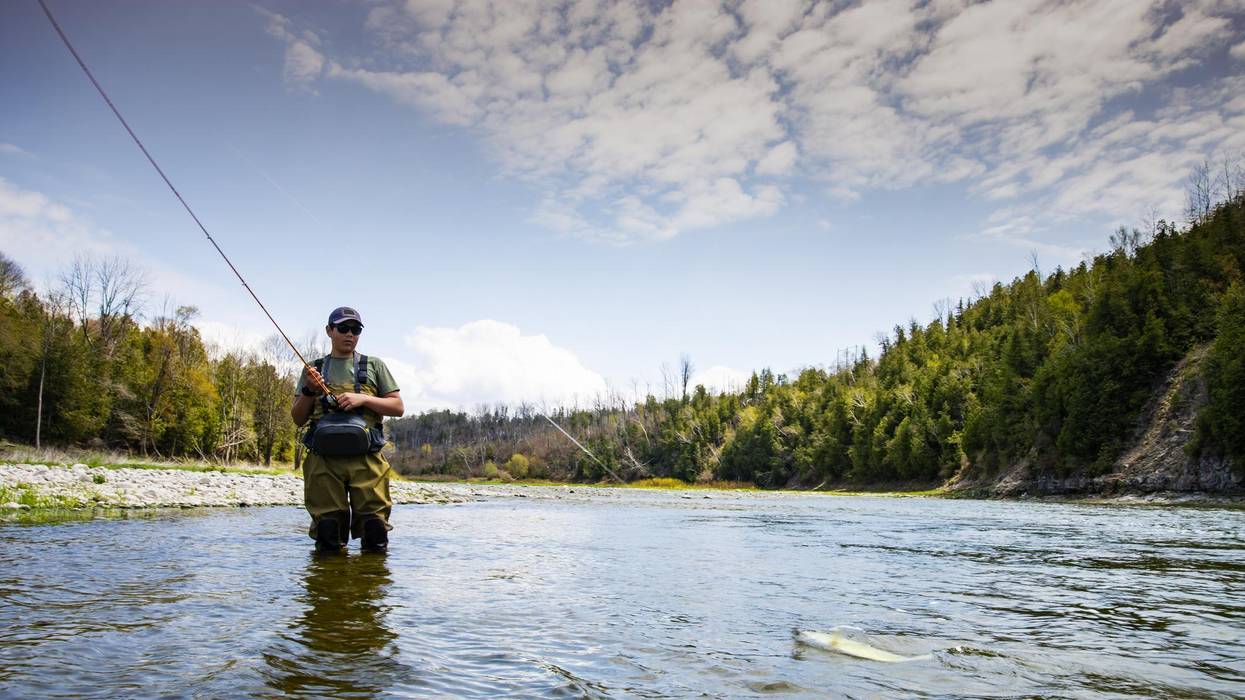
"The extent that PFAS has contaminated fish is staggering," said the lead researcher, advocating for "a single health protective fish consumption advisory for freshwater fish across the country."
Yet another study on Tuesday raised the alarm about the dangers of "forever chemicals," revealing that eating just one locally caught freshwater fish in the continental United States can be equivalent to drinking contaminated water for a month.
Per- and polyfluoroalkyl substances (PFAS) are widely called forever chemicals because they persist in the human body and environment for long periods. Despite public health concerns, the manufactured chemicals have been used in products ranging from firefighting foam and waterproof clothing to nonstick pans and food packaging.
"These test results are breathtaking."
Duke University and the Environmental Working Group (EWG) researchers analyzed data for over 500 fish fillet samples collected across the country from 2013-15 for a pair of U.S. Environmental Protection Agency (EPA) monitoring programs: the National Rivers and Streams Assessment and the Great Lakes Human Health Fish Fillet Tissue Study.
"Identifying sources of PFAS exposure is an urgent public health priority," said study co-author and EWG senior scientist Tasha Stoiber in a statement.
"PFAS contaminate fish across the U.S., with higher levels in the Great Lakes and fish caught in urban areas," she noted. "PFAS do not disappear when products are thrown or flushed away. Our research shows that the most common disposal methods may end up leading to further environmental pollution."
Perfluorooctanesulfonic acid (PFOS) contributed significantly to the high levels in the samples. U.S. manufacturers have largely phased out that PFAS, but it has been used in firefighting foam and was a main component of Scotchgard, a fabric protector by 3M—which announced last month that it plans to exit the PFAS market by the end of 2025.
As the new study states:
The two datasets indicate that an individual's consumption of freshwater fish is potentially a significant source of exposure to perfluorinated compounds. The median level of total targeted PFAS in fish fillets from rivers and streams across the United States was 9,500 ng/kg, with a median level of 11,800 ng/kg in the Great Lakes. PFOS was the largest contributor to total PFAS levels, averaging 74% of the total.
"These test results are breathtaking," said Scott Faber, EWG's senior vice president for government affairs. "Eating one bass is equivalent to drinking PFOS-tainted water for a month."
Specifically, the researchers calculated that eating one 8 oz. serving of fish is equivalent to consuming one month of drinking water with PFOS at 48 parts per trillion (ppt), which is 2,400 times the interim U.S. EPA health advisory.
"People who consume freshwater fish, especially those who catch and eat fish regularly, are at risk of alarming levels of PFAS in their bodies," said co-author and EWG senior scientist David Andrews. "Growing up, I went fishing every week and ate those fish. But now when I see fish, all I think about is PFAS contamination."
The study stresses that "the exposure to chemical pollutants in freshwater fish across the United States is a case of environmental injustice that especially affects communities that depend on fishing for sustenance and for traditional cultural practices."
While the study was published in the journal Environmental Research, EWG's website features an interactive map that details the key findings nationwide.
The researchers found that the median levels of total PFAS in freshwater fish were 278 times higher than those in commercial fish tested by the U.S. Food and Drug Administration from 2019-22.
"It's incredible how different they are," Andrews told The Hill. According to the outlet:
Some commercially caught fish may be less contaminated because they are grown in controlled aquaculture environments, Andrews explained. Meanwhile, large-scale ocean fishing often occurs farther offshore, where PFAS pollution would be more diluted, he added.
Andrews acknowledged, however, that the data on commercially caught fish is much more recent than the freshwater contamination figures.
He also recognized that with the industrial phaseout of PFOS production, the pollution "levels in rivers and streams do seem to be decreasing, which is important."
"At the same time, the levels are still so high that any fish consumption likely impacts [human blood] serum levels," Andrews said. "But they are moving in the right direction, which I think is some good news, at least in terms of the rivers and streams."
Despite some progress—including small steps last year by the EPA—the researchers and others pointed to the findings as evidence of the need for further action on PFAS.
"The extent that PFAS has contaminated fish is staggering," said lead researcher Nadia Barbo, a graduate student at Duke. "There should be a single health protective fish consumption advisory for freshwater fish across the country."
EWG's Faber declared that "for decades, polluters have dumped as much PFAS as they wanted into our rivers, streams, lakes, and bays with impunity. We must turn off the tap of PFAS pollution from industrial discharges, which affect more and more Americans every day."
"The EPA needs to move swiftly to set regulations for the industries most likely to be dumping PFAS into the environment," he added. "Downstream communities especially have suffered the consequences of unregulated PFAS discharges for far too long."
Even as the scientific case for regulating 'forever chemicals' grows clearer and more urgent every year, the EPA under President Trump delays and obfuscates.
A year ago, the Environmental Protection Agency (EPA) promised Congressional leaders that, after years of stalling, it would finally move forward on regulation of two notorious "forever chemicals," PFOA and PFOS. The notice that eventually appeared in the Federal Register on March 10, 2020, however, is not a regulation; it is merely a proposal to consider regulation. Worse, the timeline it sets out pushes actual regulation off for as long as five more years -- if it happens at all.
This marks the latest in a decades-long string of failures by EPA to protect Americans from these dangerous chemicals. Even as the scientific case for regulation grows clearer and more urgent every year, the EPA under President Trump delays and obfuscates.
PFOA and PFOS are the oldest of a class of synthetic per- and polyfluoroalkyl chemicals known collectively as PFAS. Over 5,000 variations of PFAS are currently used in the manufacture of consumer goods including cookware, flame-retardants, waterproofing, furniture and take-out containers.
The Environmental Working Group estimates up to 110 million people could be drinking water with PFAS in it.
Nonetheless, the EPA has dragged its feet on regulating PFAS. Industry voluntarily began phasing out the original "long-chain" PFAS, starting with PFOS in 2002 and PFOA by 2015. It set a non-binding "lifetime health advisory" for drinking water contaminated with PFOA and PFOS in 2016, near the end of the Obama administration.
Meanwhile, the more numerous and less-studied "short-chain" PFAS continue to proliferate. Indeed, the EPA has approved new versions without testing their safety and never finalized key toxicity studies.
On Feb. 14, 2019, the EPA issued a PFAS Action Plan that promised the establishment of a maximum contaminant level (MCL) for PFOA and PFOS in drinking water. The EPA promised it would propose a regulatory determination under the Safe Drinking Water Act by the end of that year and said it was "also gathering and evaluating information to determine if a SDWA [Safe Drinking Water Act] regulation is appropriate for a broader class of PFAS."
The Federal Register notice that appeared more than a year later, however, shows EPA is actually proposing only to consider developing regulations for PFOA and PFOS, and merely continuing to gather information on other PFAS chemicals.
The nearly five-year regulatory timeline it describes makes it abundantly clear that EPA has no intention of protecting Americans from PFAS contamination as long as President Trump is in office.
Trump's EPA has taken only one definite action on PFAS, proposing to restrict imported products containing PFOA and PFOS. However, Sen. Tom Carper (D-Del.) recently released documents that show the White House has worked to create glaring loopholes in this proposal so that many products containing PFOA and PFOS could enter the U.S.
Several bills introduced in Congress have tried to force the EPA to do its job, only to earn a veto threat from President Trump.
Finally this year, the National Defense Authorization Act for Fiscal Year 2020 added 172 PFAS chemicals to the Toxic Release Inventory, which requires reporting by facilities that manufacture or process chemicals included on the list.
But reporting is not enough. The Environmental Working Group estimates that at least 2,500 industrial facilities across the U.S. could be discharging PFAS into the air and water.
Some states have begun filling the regulatory void, but many PFAS-contaminated sites are the result of Department of Defense (DoD) pollution and DoD is refusing to comply with state clean-up laws and standards. For example, at Cannon Air Force Base in New Mexico, the State was forced to sue DoD, but the Air Force continues to ignore the state environmental laws.
While the number of sites with PFAS contamination continues to grow, Trump's EPA continues to do nothing to address this toxic mess.

"It is not a radical idea to demand that when people in the world's richest country turn on their taps, the water they drink is free of toxic chemicals."
"It lays out a plan to finally hold polluters accountable to pay for cleanup of the worst contamination, while providing much needed financial relief for rural homeowners and local governments that need to upgrade treatment plants to remove these forever chemicals."
--Wenonah Hauter, Food & Water Action
So said Sen. Bernie Sanders (I-Vt.) Wednesday as he introduced new legislation that would required a national cleanup effort of drinking water contaminated by the toxic "forever chemcials" per- and polyfluoroalkyl substances, collectively known as PFAS.
Studies have tied this class of chemicals--which have been used in products ranging from nonstick pans and stain-resistant furniture to firefighting foam--to health issues including various cancer, weakened childhood immunity, and endocrine disruption.
The Prevent Future American Sickness (PFAS) Act says the chemicals "have so far been confirmed in the groundwater or tap water of more than 1,400 communities" nationwide, though scientists estimate that more than a million people in the country could be living with PFAS-contaminated tap water.
Noting that, in the absence of federal regulations, "states such as Vermont, New Hampshire, New Jersey, and Michigan are leading the way in terms of setting robust drinking water standards for PFAS chemicals," the bill (pdf) aims to address the issue at a national level.
The bill would direct the U.S. Environmental Protection Agency to designate PFAS as hazardous under both the Clean Air and and the Comprehensive Environmental Response, Compensation, and Liability Act--commonly called CERCLA or Superfund. As Sanders' office summarizes (pdf), it also would set up "authorizations for EPA grants for drinking and wastewater infrastructure to address PFAS contamination in publicly owned water treatment plants, and residential water wells."
The legislation would further ban these "forever chemicals" in food packaging and ban the incineration of PFAS firefighting foam. It would direct the EPA to examine other contaminated waste that shouldn't be burned and require the Pentagon to put out a report detailing where in the country its firefighting foam is now and where it has been incinerated over the past decade.
"As hundreds of communities across the country are dealing with toxic PFAS contamination in their drinking water," Sanders said Wednesday, "it is unconscionable that huge corporations like DuPont have, for decades, concealed evidence of how dangerous these compounds are in order to keep profiting at the expense of human health. Congress must pass this legislation to put an end to corporate stonewalling and criminal behavior and tackle this public health crisis."
"Congress needs to come together to put the health of our communities above the wish lists of American's biggest polluters, and that means establishing and enforcing chemical standards that protect Americans from PFAS substances."
--Sen. Jeff Merkley
According to a statement from Sanders' office, the bill incorporates both the Water Affordability, Transparency, Equity and Reliability (WATER) Act that he introduced last year as well as an effort with Sen. Shelley Moore Capito (R-W.Va.) to direct the Pentagon to disclose details about storing and disposing of firefighting foam.
Sanders, a leading candidate in the 2020 Democratic presidential primary race, unveiled the PFAS Act with support from Sens. Jeff Merkley (D-Ore.) and Ed Markey (D-Mass.).
"Every American--regardless of the color of their skin, their zip code, or their income--has the right to be free from exposure to a slew of carcinogens and hazardous chemicals," said Merkley. "But millions of people are ingesting dangerous PFAS chemicals against their will through the air they breathe, the water they drink, and the food they eat. Congress needs to come together to put the health of our communities above the wish lists of American's biggest polluters, and that means establishing and enforcing chemical standards that protect Americans from PFAS substances."
Markey--who introduced the Green New Deal with Rep. Alexandria Ocasio-Cortez (D-N.Y.) in February 2019--highlighted that landmark climate and economic resolution, which Sanders supports, in the statement Wednesday. "PFAS pose a serious health risk to residents across Massachusetts and the country," he said. "Cleaning up our air, soil, and water of these forever chemicals is an important component of the Green New Deal, as we fight to provide our communities with a future free of the legacy of corporate pollution."
The PFAS Act also already has the backing of at least one advocacy organization: Food & Water Action, which also supported last year's WATER Act.
"Senator Sanders has proposed an urgent solution to address the widespread PFAS contamination of our food and water," said Food & Water Action executive director Wenonah Hauter. "His Prevent Future American Sickness Act of 2020 would rapidly speed up the remediation of toxic PFAS sites across our country. It lays out a plan to finally hold polluters accountable to pay for cleanup of the worst contamination, while providing much needed financial relief for rural homeowners and local governments that need to upgrade treatment plants to remove these forever chemicals."
"This is the sort of concrete and swift action we need to take to help ensure that every American has access to safe water," Hauter declared. "Our communities can't wait; we need Congress to act now to address America's toxic water crisis."
Sanders will discuss the bill tonight on Facebook Live at 6:30 pm ET. He will be joined by activist and actor Mark Ruffalo, scientist Dr. Anna Reade, and Rep. Debbie Dingell (D-Mich.). Dingell, who has been a leading force for federal PFAS regulation in the Democrat-controlled House, is the lead sponsor of the PFAS Action Act, which passed the lower chamber earlier this month in a 247-159 vote, largely along party lines.
The measure--like Sanders' bill--faces an uncertain future in a Republican-held Senate. Even if Dingell's bill were to pass the upper chamber, President Donald Trump has threatened to veto it.

After more than a year of community meetings and deliberations, the U.S. Environmental Protection Agency announced in February 2019 that it would begin the process of regulating two drinking water contaminants, seeking to stem a growing national public health crisis. If EPA follows through, this would be the first time in nearly 20 years that it has set an enforceable standard for a new chemical contaminant under the Safe Drinking Water Act.
The chemicals at issue, PFOA and PFOS, have contaminated drinking water supplies across the country affecting millions of Americans. They belong to a class of synthetic chemicals called PFAS, or per- and polyfluoroalkyl substances, that are widely used in products including firefighting foams, waterproof apparel, stain-resistant furniture, food packaging and even dental floss.
These chemicals have been linked with numerous health problems, including cancers, thyroid disease, high cholesterol, low birth weight, and effects on the immune system. Studies show exposure to PFAS in children can dampen the effectiveness of vaccines--a topic my colleagues and I are currently investigating as part of a project called PFAS-REACH. In laboratory studies, low levels of PFAS can alter mammary gland development, which could have implications for increasing breast cancer susceptibility later in life.
What's more, PFAS are highly persistent. Once released into the environment, they don't break down--a fact that has led many to dub these substances "forever chemicals."
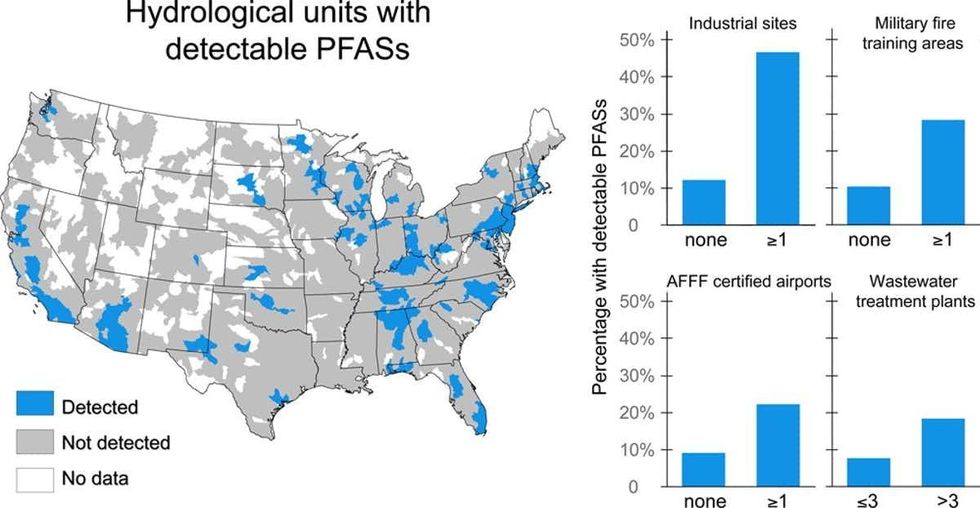
PFAS have been used for decades, but only in the last few years have we begun to grasp the full extent of contamination. A 2016 study reported that over 16 million Americans are exposed to these contaminants in drinking water, and a more recent estimate put that number at 110 million.
PFAS find their way into water supplies from military fire training areas and airports, as well as industrial sites and wastewater treatment plants. For instance, in 2010 my colleagues and I at the nonprofit Silent Spring Institute, which studies links between environmental chemicals and women's health, first detected PFAS in public and private drinking water wells on Cape Cod, Massachusetts. The Department of Defense has identified approximately 400 current or former military sites with known or suspected contamination, stemming mostly from use of firefighting foams.
Today there are more than 4,700 PFAS substances in use. All are chemically similar and highly persistent. The United States phased PFOS out of products in 2000 and PFOA in 2006, but they are still turning up widely in drinking water, which is why states want EPA to set standards specifying what levels of exposure are safe. Meanwhile, studies suggest that some newer PFAS chemicals have similar health effects, and most have not been studied at all.
Scientists are working hard to better understand these chemicals in order to mitigate the public's exposure. For example, researchers at the STEEP Superfund Research Program, a multi-institutional effort which I am a part of, are investigating how these chemicals move through the environment, their chemical characteristics, how they accumulate in our bodies, and their impacts on our health.
EPA has been considering regulating PFOS and PFOA in drinking water since 2009. The agency's recent announcement is a step in the right direction, but still only addresses these two chemicals in drinking water and any new federal standard won't be fully implemented for years.
Earlier this year my colleagues and I published an analysis in which we showed wide variation in the way state and federal regulators manage these contaminants in drinking water. We found that seven states have their own guideline levels for PFOA and PFOS. Of these, Vermont, Minnesota, and New Jersey have adopted levels that are more stringent than EPA's current non-enforceable levels.
More recently, New Hampshire, New York, and California have also proposed guideline levels lower than EPA's. The day after EPA announced its plan, Pennsylvania officials announced they would create their own standards, citing concerns about EPA's sluggish efforts to address the issue.
Meanwhile, some states are developing their own guidelines covering additional PFAS chemicals. For instance, Minnesota has included in its guidelines a chemical called PFBS, which is used in Scotchgard. North Carolina regulators are focusing their efforts on a substitute called GenX that seeped into local water supplies from a plant upstream and has been detected in their air and soil.
A key question now is how EPA's drinking water standard for PFOA and PFOS will compare with what states are doing. Will the agency consider the full body of scientific evidence on health risks associated with exposure to this class of chemicals when setting a "safe" limit in drinking water? Will it consider effects on sensitive populations, such as pregnant women and children? Although the science is still evolving, one thing is clear: The more we learn about these chemicals, the more we see health effects at lower and lower levels.
It is important to give states latitude to adopt more stringent approaches than those set by EPA, and a lot can be learned from how states set guidelines. However, the emerging regulatory patchwork raises concerns that some Americans are not adequately protected. Some states have the resources and technical know-how to conduct their own risk assessments, but others may lack the funding and expertise.
Political and social factors, as well as pressure from industry, can lead to wide disparities in exposure, with some communities protected and others left vulnerable. A federal standard would ensure that everyone is protected, regardless of whether their states have the will and the resources to develop their own standards.
EPA's plan includes other steps that sound promising, such as listing PFOS and PFOA as "hazardous substances" under the Superfund law to establish liability for contamination and support cleanup, enhanced monitoring in drinking water, and better reporting of releases from industry. But the plan largely focuses on addressing problems at existing contaminated sites, not on keeping these chemicals out of water supplies and the environment.
Conducting risk assessments on individual PFAS compounds one at a time is impractical. As a result, many advocacy groups and scientists--including my colleagues at the Green Science Policy Institute--are calling for these chemicals to be regulated as a class.
Under the Toxic Substances Control Act, EPA has authority to restrict approval of new toxic chemicals. But in reality, new ones are approved all the time without thorough evaluations. Given concerns about the extreme persistence and mobility of PFAS compounds, in my view it makes good sense to restrict this entire class of chemicals.
There are precedents for such action. In 1979 the United States banned PCBs after these persistent and toxic chemicals became widespread in the environment. The global community banned chlorofluorocarbons in 1996 when scientists learned that they damage Earth's stratospheric ozone layer. And in 2017 the U.S. Consumer Product Safety Commission voted to ban an entire class of toxic flame retardants from consumer products.
There is ample evidence for treating PFAS the same way. The question is whether federal regulators have the will.

In response to reports this week that the Environmental Protection Agency (EPA) doesn't plan to impose drinking water limits on two toxic chemicals linked to various forms of cancer and other health issues, 20 senators on Friday sent a letter to acting Administrator Andrew Wheeler imploring him to craft nationwide restrictions.
"While our nation's water quality is among the highest in the world, we now face a serious challenge: aggressively addressing the health and environmental threats connected with PFAS."
--20 senators
The chemicals in question are PFOA and PFOS, which belong to a group called PFAS. Politico reported Tuesday that Wheeler had signed off on an unreleased plan that would leave the pair off the list of materials regulated under the Safe Drinking Water Act.
The EPA's Office of Water Assistant Administrator David Ross on Tuesday issued what one journalist described as a "non-denial denial" (Ross claimed that "any information that speculates what is included in the plan is premature") while public health advocates decried the reported move as unsurprising but also "absolutely unconscionable."
In the letter (pdf) spearheaded by Sens. Jeanne Shaheen (D-N.H.) and Shelley Moore Capito (R-W.V.), federal lawmakers call for "immediate actions to protect the public from contamination" and warn that "EPA's inaction would be a major setback to states and affected communities."
Noting that a lack of federal rules has led to states imposing "a patchwork of conflicting drinking water standards and guidelines," and that health advisories put out by the EPA are inadequate, the letter argues:
Without enforceable drinking water standards for PFOA and PFOS, it is doubtful that a national management strategy will sufficiently confront the challenges PFAS chemicals pose to states and affected communities. This decision would also fail to consider the ongoing interagency efforts to determine the human health implications of contamination from PFAS, including the nationwide study being conducted by the Agency for Toxic Substances and Disease Registry (ATSDR).
"Safe drinking water is essential to the health and well-being of every American," the senators conclude. "And while our nation's water quality is among the highest in the world, we now face a serious challenge: aggressively addressing the health and environmental threats connected with PFAS."
In addition to calling for national rules for the water contaminants, the senators' request that the EPA provide lawmakers with briefings on the agency's efforts to limit PFAS contamination as well as regular progress updates.
The letter was also signed by Sens. Maggie Hassan (D-N.H.), Debbie Stabenow (D-Mich), Thom Tillis (R-N.C.), Tom Carper (D-De.), Tom Udall (D-N.M.), Patty Murray (D-Wash.), Bob Casey (D-Penn.), Patrick Leahy (D-Vt.), Maria Cantwell (D-Wash.), Jack Reed (D-R.I.), Martin Heinrich (D-N.M.), Sherrod Brown (D-Ohio), Bernie Sanders (I-Vt.), Joe Manchin (D-W.V.), Bob Menendez (D-N.J.), Kirsten Gillibrand (D-N.Y.), Elizabeth Warren (D-Mass.), and Gary Peters (D-Mich.).

In a decision deemed by critics unsurprising but also "absolutely unconscionable," the Trump administration's Environmental Protection Agency (EPA) reportedly plans to refrain from regulating a pair of toxic chemicals linked to kidney and testicular cancer, even though they are contaminating millions of Americans' drinking water.
"This administration prioritizes corporate profits over public safety, pure and simple."
--Wenonah Hauter, Food & Water Watch
Sources familiar with an unreleased draft plan approved last month by acting EPA Administrator Andrew Wheeler told Politico that the chemicals PFOA and PFOS, known as 'forever chemicals, will remain unregulated under the Safe Drinking Water Act, meaning that "utilities will face no federal requirements for testing for and removing the chemicals from drinking water supplies, although several states have pursued or are pursuing their own limits."
The chemicals "have been used for decades in products such as Teflon-coated cookware and military firefighting foam, and are present in the bloodstreams of an estimated 98 percent of Americans," Politico pointed out. That means, given that they have "contaminated groundwater near hundreds of military bases and chemical plants," any intensive regulation of them would force companies such as 3M as well as the Defense Department to spend billions of dollars on cleanup efforts.
"If these sources are right, the EPA is essentially telling the more than 110 million Americans whose water is likely contaminated with PFAS: 'Drink up, folks,'" warned Environmental Working Group senior scientist David Andrews, Ph.D. "The most efficient and equitable way to remove these chemicals from the nation's drinking water supply is to use the agency's authority to set legal limits... It's a national problem, and it needs a national solution."
"It is absolutely unconscionable for the Trump administration to refuse to even start the process of setting a limit on these poisonous chemicals," declared Erik Olson of the Natural Resources Defense Council (NRDC). "Communities around the country need swift, meaningful action from the government. Punting responsibility to the private sector and states is a total abdication of EPA's role in protecting the American people."
"It is absolutely unconscionable for the Trump administration to refuse to even start the process of setting a limit on these poisonous chemicals."
--Erik Olson, NRDC
"Sadly, it's no surprise the Trump administration is failing to protect Americans from these dangerous chemicals," Food & Water Watch executive director Wenonah Hauter said in a statement.
"It's time for state governments and Congress to step up, since it's obvious we can't rely on Andrew Wheeler and Trump's EPA to protect us from dangerous chemicals in our drinking water," she added, calling on federal lawmakers to enact the Water Accountability, Transparency, Equity, and Reliability (WATER) Act.
"More than ever, we need strong federal legislation to protect drinking water," Hauter said. The WATER Act "would upgrade our aging infrastructure and help keep vital water systems under local public control. But it would also provide funding to help keep drinking water safe from toxins like PFOA and PFOS, in spite of this administration's failure to act."
The news out of the EPA on Monday came after the agency and White House blocked the release of a federal study on PFOA and PFOS last year over concerns that it would produce a "public relations nightmare." The move was widely condemned by public health experts, reporters, and American lawmakers, with critics charging that then-EPA Administrator Scott Pruitt was "more worried about journalists than poisoning millions of Americans."
Noting that decision and, more broadly, the federal government's failures to protect the American public from industry pollution during the Trump era, Hauter concluded, "This administration prioritizes corporate profits over public safety, pure and simple."

Journalists, members of Congress, environmental and public health advocates, and water experts are all calling on the Trump administration to "immediately" release the report on 'forever chemicals'
Fearing a "public relations nightmare," President Donald Trump's White House and the Environmental Protection Agency (EPA), under the reign of administrator Scott Pruitt, blocked the release of a major water contamination story, according to emails obtained by the Union of Concerned Scientists and reported on by Politico.
News of the Trump administration's interference with a federal study on "a nationwide water-contamination crisis" infuriated reporters, politicians, experts, and advocates for public health and the environment. Friends of the Earth tweeted, "Scott Pruitt is more worried about journalists than poisoning millions of Americans."
"There's a lot of bleak news today, but this is important," journalist Mariah Blake said Monday, pointing to the Politico report.
The chemicals that were under review are PFOA and PFOS, which, as Politico notes, "have long been used in products like Teflon and firefighting foam"--as well as by the Department of Defense, when it conducts exercises at U.S. bases--despite the fact that they "have been linked with thyroid defects, problems in pregnancy, and certain cancers, even at low levels of exposure."
The study, conducted by the Department of Health and Human Services' (HHS) Agency for Toxic Substances and Disease Registry (ATSDR), reportedly shows that these chemicals are dangerous to human health at far lower levels than previously known or diclosed by the EPA, and have "contaminated water supplies near military bases, chemical plants, and other sites from New York to Michigan to West Virginia."
One email sent by a White House aide to a staffer who oversees environmental issues at the Office of Budget and Management said:
The public, media, and Congressional reaction to these numbers is going to be huge. ...The impact to EPA and [the Defense Department] is going to be extremely painful. We (DoD and EPA) cannot seem to get ATSDR to realize the potential public relations nightmare this is going to be.
"Soon after the Trump White House raised concerns about the impending study," Politico reports, "EPA chief of staff Ryan Jackson reached out to his HHS counterpart, as well as senior officials in charge of the agency overseeing the assessment to discuss coordinating work among HHS, EPA, and the Pentagon." However, according to HHS, there are no plans to publicly release the study.
"Only Scott Pruitt and the Trump administration would consider reducing drinking water contamination for the American people to be a 'nightmare,'" remarked Ken Cook, president of the Environmental Working Group.
"This is a big deal," oceanographer Jamie Collins said of the study and efforts to block its release.
Rep. Dan Kildee (D-Mich.), who was raised in and now represents Flint, Michigan--which has been poisoned by a water crisis created by state-mandated austerity measures--responded with a letter to Trump-appointed HHS Secretary Alex Azar, demanding that he "immediately" release the study.
In a series of tweets, Sen. Maggie Hassan (D-N.H.) also called on the Trump administration to release the study:
At least six million Americans in 33 states are being exposed to unsafe levels of industrial perfluorooctanoic acid (PFOA) chemicals in their drinking water, found a study published Tuesday in the journal Environmental Science and Technology Letters.
"Virtually all Americans are exposed to these compounds. They never break down. Once they are released into the environment, they are there."
--Xindi Hu, Harvard University"And the available water data only reveals the tip of the iceberg of contaminated drinking water," said study co-author Dr. Philippe Grandjean of the Harvard School of Public Health to the Charleston Gazette-Mail.
The Washington Post details the researchers' findings:
194 of 4,864 water supplies across nearly three dozen states had detectable levels of the chemicals. Sixty-six of those water supplies, serving about six million people, had at least one sample that exceeded the EPA's recommended safety limit of 70 parts per trillion for two types of chemicals -- perfluorooctanesulfonic acid (PFOS) and perfluorooctanoic acid (PFOA).
PFOA and PFOS chemical compounds--including C8, popularly known as the Teflon chemical--are extremely dangerous to human health, and despite an EPA advisory released earlier this year and increasing calls for action, research shows they are near-ubiquitous in the United States.
"Virtually all Americans are exposed to these compounds," said Xindi Hu, the study's lead author and a doctoral student at Harvard's Department of Environmental Health, to the Post. "They never break down. Once they are released into the environment, they are there."
Moreover, the study also notes that research suggests "that exposure to these chemicals can make people sick, even at or below the concentration recommended as acceptable under the EPA health advisory," according to the Gazette-Mail.
"The EPA advisory limit ... is much too high to protect us against toxic effects on the immune system," said Grandjean to the Gazette-Mail.
PFOAs are the contentious center of a years-long legal battle against DuPont, which manufactured the chemical for decades--and dumped it into public waterways--despite knowing that it was severely harmful to human health and the environment. Thousands of personal injury cases are currently pending against the chemical giant.
The Gazette-Mail further reports:
DuPont and other companies have agreed on a voluntary phase-out of the chemical, but researchers noted in this week's study that declines in production in the U.S. and Europe have been offset by increases in developing regions such as Asia. Scientists have also been increasingly concerned about chemical contamination of consumer products, and the new study provides important details about the potential threats from waste disposal practices and varying uses of the substances.
The dire situation is a result of decades of weak or no regulations, as Hu remarked to the Harvard Gazette: "For many years, chemicals with unknown toxicities, such as [PFOAs], were allowed to be used and released to the environment, and we now have to face the severe consequences."
"In addition, the actual number of people exposed may be even higher than our study found," Hu continued, "because government data for levels of these compounds in drinking water is lacking for almost a third of the U.S. population--about 100 million people."