May, 06 2015, 09:00am EDT

Senate Republicans Take Aim at Endangered Species Act
Proposed Legislation Would End Protections for More Than 800 Species, Gut Critical Habitat, Politicize Science
WASHINGTON
The Senate Environment and Public Works Committee will hold a hearing today on eight Republican-sponsored bills attacking the Endangered Species Act, including one that would end federal protection for more than 800 endangered animals and plants around the country.
Several of the bills are nearly identical to legislation introduced by Tea Party Republicans in the House of Representatives last year that sought to limit public participation and citizen enforcement of the Endangered Species Act, and undermine the scientific basis for protection decisions for our nation's most imperiled wildlife. Two bills -- one introduced by Sen. Dean Heller, R-Nev., and one introduced by Sen. Rand Paul, R-Ky. -- would eliminate endangered species protections for hundreds of currently protected species and severely weaken habitat protections for many more.
"In the past four years Republicans have introduced more than 50 bills to weaken the Endangered Species Act and 100 bills going after individual species. Not a single one, though, would help save an endangered plant and animal," said Brett Hartl, endangered species policy director with the Center for Biological Diversity. "Polls consistently show a majority of Americans, including many Republicans, support protecting endangered species. These kinds of bills may please rich campaign donors - especially those exploiting the planet for profits - but they're way outside the mainstream."
Among the bill's in today's hearing:
S. 855, Sen. Paul's so called "Endangered Species Management Self-Determination Act," would eliminate all Endangered Species Act protections for species found only within one state. More than 800 endangered species, including all endangered species in Hawaii and Puerto Rico would lose federal protections if this bill were to pass. Another provision of this bill requires that all endangered species lose their protection every five years, after which they would only regain protection if Congress passes a joint resolution. No endangered species anywhere in the world has ever recovered in fewer than five years. The bald eagle took nearly 40 years to recover, as did the peregrine falcon and gray whale.
S. 112, Sen. Heller's so-called "Common Sense in Species Protection Act of 2015," would require the Fish and Wildlife Service to consider short-term economic costs when protecting critical habitat for endangered species and require the agency to exclude areas if the costs were deemed too high. If passed, such a bill would almost certainly reduce habitat protections for plants and animals. Research has shown that species with designated critical habitat are twice as likely to be recovering than those species without designated habitat.
S. 292, introduced by Sen. John Cornyn, R-Texas, would require that the U.S. Fish and Wildlife Service publish on the Internet all data used for an endangered species listing decision, including detailed maps that could lead to more illegal poaching or collecting.
S. 293, also introduced by Sen. Cornyn, would limit the ability of the Service to settle cases without allowing state governments to intervene and would limit the availability of attorney's fees available under the Endangered Species Act. By changing the basic judicial rules on when parties can intervene in lawsuits, the Department of Justice will not be able to settle patently unwinnable cases, forcing it to waste taxpayer resources in futile litigation. By slowing down litigation, species will continue to wait in limbo for protection under the Act.
S. 736, introduced by Sen. Mike Enzi, R-Wyo., would redefine the "best scientific data" to automatically include data provided by states, tribal governments or localities even if those data are in fact the most inaccurate, out-of-date data available. This bill would result in the Service using poorer data and making worse decisions regarding whether or not to protect endangered species, and would spur countless lawsuits arguing over what information qualifies as the best-available science.
The proposals in the last three bills were all introduced in the last Congress in the House of Representatives.
"Republicans seem to introduce crazier and crazier legislation just to establish their Tea Party credentials for their favorite funders -- the Koch brothers and the American Petroleum Institute," said Hartl. "It's sad that they continue to attack our most vulnerable endangered wildlife rather than trying to find solutions -- such as fully funding endangered species recovery activities -- to benefit our environment and our wildlife. This latest spectacle in the Senate looks to be just the first of many wasted opportunities over the next two years."
At the Center for Biological Diversity, we believe that the welfare of human beings is deeply linked to nature — to the existence in our world of a vast diversity of wild animals and plants. Because diversity has intrinsic value, and because its loss impoverishes society, we work to secure a future for all species, great and small, hovering on the brink of extinction. We do so through science, law and creative media, with a focus on protecting the lands, waters and climate that species need to survive.
(520) 623-5252LATEST NEWS
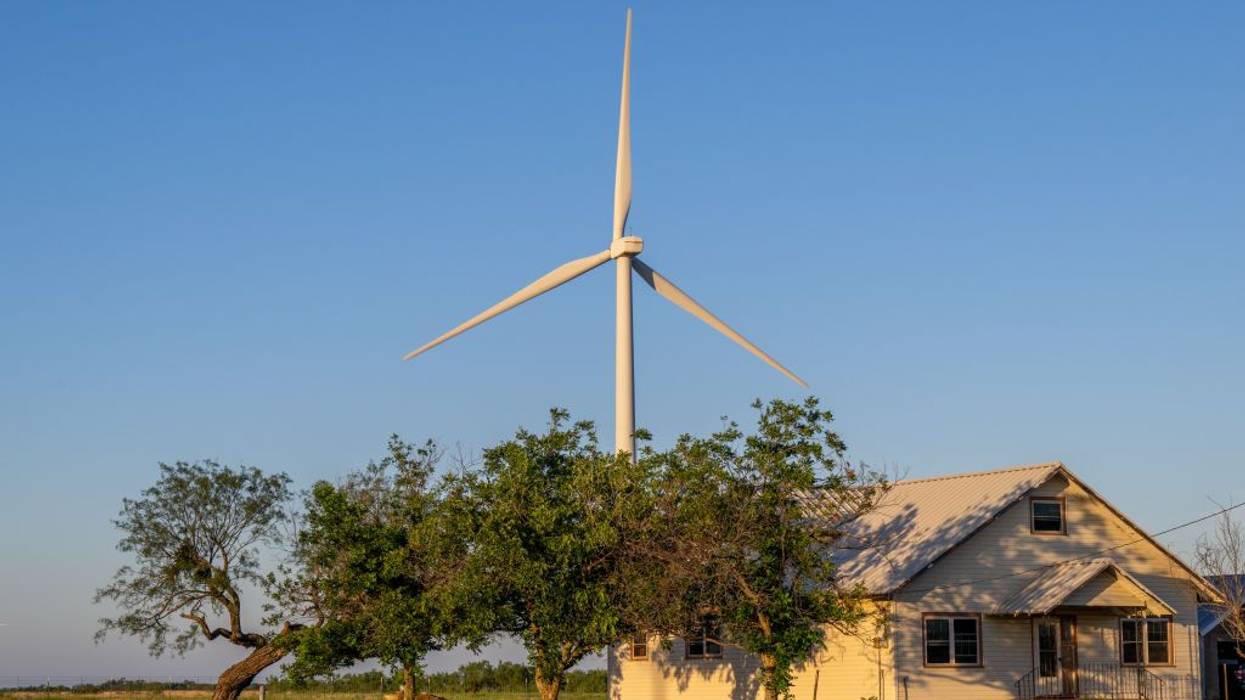
Amid Energy Crisis of His Own Making, Trump Slammed for Using Taxpayer Money to Cancel Wind Projects
"We the taxpayers are going to pay companies $900 million... to NOT build wind power at a time when electricity prices are spiking and we need more clean power?" said one expert.
Apr 28, 2026
President Donald Trump's administration this week shelled out even more US taxpayer money to get energy firms to cancel planned renewable energy projects.
As The New York Times reported, the US Department of the Interior on Monday announced plans to reimburse energy companies a combined $885 million in exchange for forfeiting their leases to build wind farms in federal waters off the coasts of New York, New Jersey, and California.
The companies involved in the projects have promised promised to invest in fossil fuel energy projects, "including liquefied natural gas facilities along the Gulf Coast," the Times reported.
The agreements with the energy companies are similar to a deal the administration struck earlier this year with French firm TotalEnergies, which agreed to forfeit its leases for projects off the coasts of New York and North Carolina in exchange for $928 million that would be plugged into fossil fuels.
Senate Minority Leader Chuck Schumer (D-NY) blasted the administration for killing the projects planned off the coast of his state, decrying "a reckless decision that hurts working families and the economy."
"Once again, Donald Trump is attacking New York offshore wind at the behest of his fossil fuel donors with no justification," Schumer said.
Costa Samaras, director of the Carnegie Mellon University Scott Institute for Energy Innovation, expressed disbelief that the administration was killing clean energy projects at a time when Americans are suffering from surging gas prices, which on Tuesday hit their highest level in four years.
"Hold on," he wrote in a social media post. "We the taxpayers are going to pay companies $900 million, which is more than six times what we spend on wind power research and development, to NOT build wind power at a time when electricity prices are spiking and we need more clean power?"
New polling suggests that Trump's blanket opposition to wind power projects is becoming politically costly.
As Gizmodo reported on Tuesday, a recent survey conducted by GOP public opinion research firm the Tarrance Group found that "nearly three-quarters (74%) of voters favor the construction of offshore wind projects off the coast of their own state, with majorities favoring in every state surveyed."
The poll found that even Republican voters have grown more supportive of wind power projects, with support for offshore wind rising by 30 percentage points over the last year.
In its analysis of the poll, the Tarrance Group said that more voters have come around to supporting offshore wind due in part to "ongoing concerns about energy prices," which have spiked since Trump launched an illegal war with Iran in February.
Keep ReadingShow Less
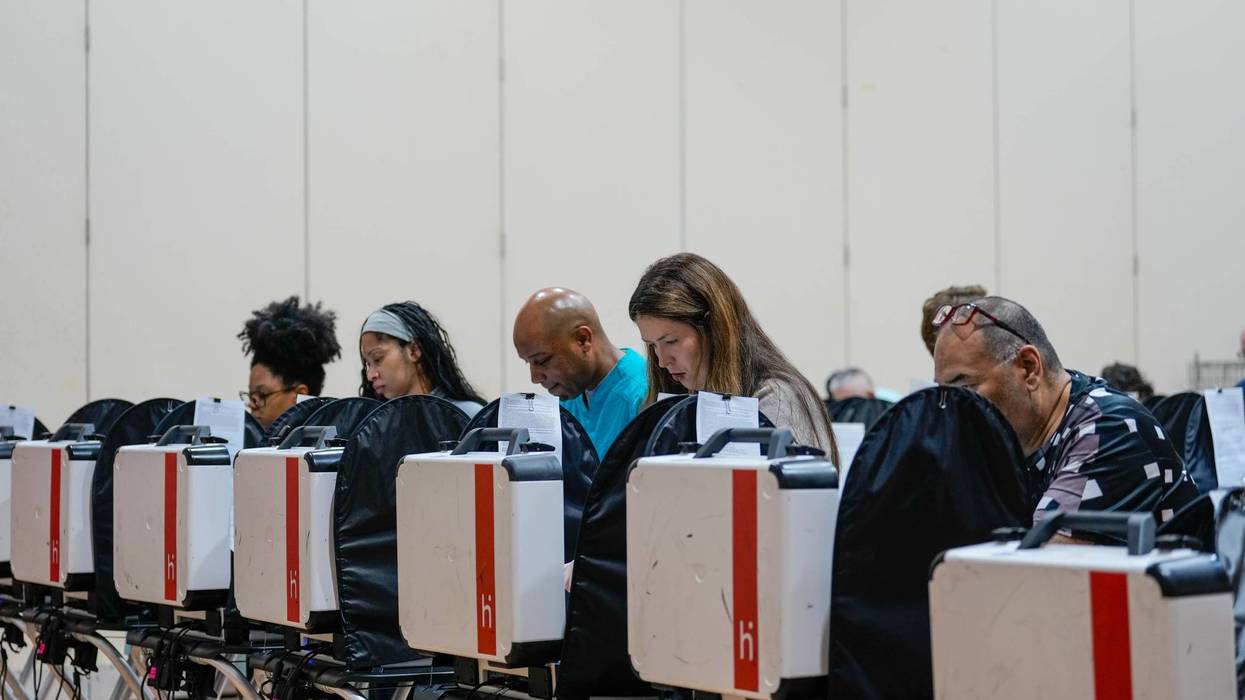
Report Details Trump Effort to Quietly Lay Groundwork to 'Steal Future Elections'
"It seems one of the ways this effort will take shape is, as with DHS's deportation efforts, to racially profile voters and try to invalidate their votes by pretending they're not citizens," said one critic.
Apr 28, 2026
President Donald Trump is using the US Department of Homeland Security to quietly assert federal control over elections in at least eight states, according to an investigation out Monday from Reuters.
Under the US Constitution, elections are run by states, rather than the federal government. But under Trump, who has called on Republicans to "nationalize" voting in Democratic strongholds, DHS—which typically handles issues of counterterrorism, immigration, and national security—along with other executive agencies, has launched what Reuters described as "a wider-than-known federal push into the machinery and conduct of US elections."
"Trump administration officials and investigators have fanned out across the country, seeking confidential records, pressing for access to voting equipment, and reexamining voter-fraud cases that courts and bipartisan reviews have already rejected," the report continued.
Branko Marcetic, a writer for Jacobin, said that the revelations showed that "Trump's push to steal future elections by taking federal control of them is quietly gaining steam."
In Ohio, DHS agents have called local boards of elections in at least six counties, requesting immediate access to data about specific voters, including registration forms, voting histories, and other confidential data, citing unspecified "investigations." Though Ohio leans red, all of the requests were made in counties that either had competitive elections coming up in 2026 or were solidly Democratic.
The Nevada secretary of state received a request from the FBI for voter information as part of an investigation into the 2020 election, which Trump has continued to claim was marred by fraud that cost him a victory despite evidence to the contrary. He never fulfilled the request because those records did not exist.
In Arizona, the state senate complied with a similar subpoena for records related to its report on an audit of the 2020 election, while DHS requested information related to the state attorney general's fraud probe.
In Colorado, Jeff Small, a lobbyist with connections to the White House who claimed to be working on behalf of Stephen Miller, the president's homeland security adviser, called 10 county clerks to request access to Dominion voting machines, which were at the center of Trump's fraud conspiracy theories.
Later, some of those clerks received the same request from a person who identified themselves as a senior official at the Cybersecurity and Infrastructure Security Agency (CISA), which oversees election security. The clerks said they did not comply with these requests, which some said would violate state law.
These efforts follow a high-profile January raid by the FBI on an election facility in Fulton County, Georgia, to seize hundreds of boxes of ballots, tabulator tapes, and voter roll information from the 2020 election. Trump has directly influenced the investigation, speaking with FBI agents about it the day after dispatching Tulsi Gabbard, the director of national intelligence, to take part.
According to Reuters, election officials in many other states are bracing for similar investigations and raids into their operations.
“There is an intimidation factor,” said Amy Burgans, the Republican clerk and treasurer of Douglas County, Nevada. “It puts the question in the back of your mind... Who’s going to be next?”
As Republican chances of prevailing in the 2026 midterms appear grim, Trump has suggested on multiple occasions that elections be "canceled," something he has no power to do.
He has thus far failed in his efforts to pass the SAVE America Act through the Senate, which would require every voter to reregister and provide documents proving their citizenship, a measure experts say would likely disenfranchise millions of eligible voters.
But Reuters' investigation has revealed efforts to achieve similar ends by contacting states to compare their voter rolls with federal citizenship databases.
This happened in Missouri, where Republican Secretary of State Denny Hoskins shared publicly available voter roll data with federal authorities, who handed back lists of potential noncitizens flagged for removal.
Clerks in several of Missouri's counties said that most of the individuals flagged in the federal screenings were US citizens who'd been naturalized.
Clinton Jenkins, the Republican clerk for Miller County, said none of the names of people identified by the review had voted illegally. Rather, he suggested that federal authorities were targeting people who seemed to be of Hispanic and Latino heritage.
"It looks like if you have too many vowels in your name, you show up on a list,” Jenkins said.
"They are doing this through DHS, which it's clear by now this administration views as its own personal police force," Marcetic said.
"It seems one of the ways this effort will take shape is, as with DHS's deportation efforts, to racially profile voters and try to invalidate their votes by pretending they're not citizens," he added.
Keep ReadingShow Less
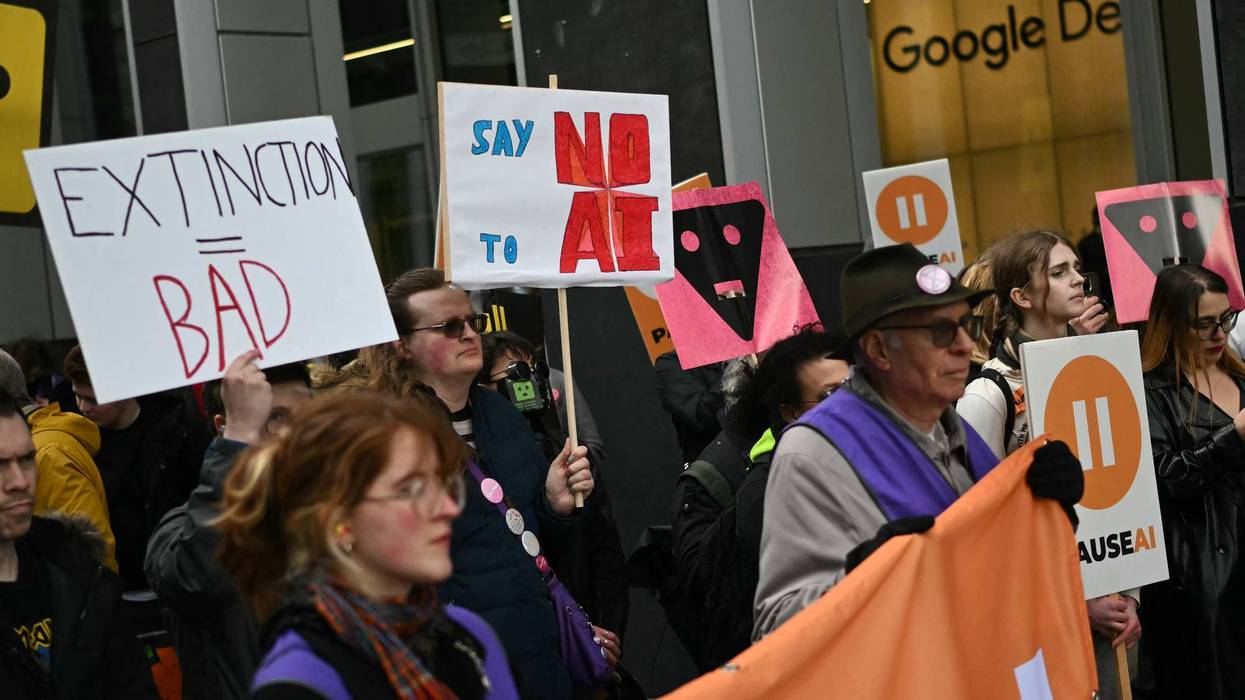
600+ Workers Protest as Google Signs $200 Million Secret Pentagon AI Warfare Deal
“Human lives are already being lost and civil liberties put at risk at home and abroad from misuses of the technology we’re playing a key role in building."
Apr 28, 2026
As Google on Monday became the latest player in the artificial intelligence arms race to sign a classified deal with the US Department of Defense, hundreds of workers at the Silicon Valley giant demanded that its CEO prevent the Pentagon from using the company's AI models for covert work.
Reuters reported that the $200 million agreement includes safety filters and allows the Pentagon to use Google's AI "for any lawful purpose" but not for the development of lethal autonomous weapons systems—commonly known as "killer robots"—or domestic surveillance without human oversight and control.
According to The Information's Erin Woo, the deal does not give Google “any right to control or veto lawful government operational decision-making."
The agreement also reportedly requires Google to adjust its AI safety settings at the government's request.
“We are proud to be part of a broad consortium of leading AI labs and technology and cloud companies providing AI services and infrastructure in support of national security,” a Google spokesperson told The Information.
More than 600 Google employees—many of them from the company's DeepMind AI laboratory—sent a letter Monday to CEO Sundar Pichai demanding that he block the US military from using the firm's artificial intelligence technology for classified projects.
“We want to see AI benefit humanity; not to see it being used in inhumane or extremely harmful ways," the letter says, according to The Washington Post. "This includes lethal autonomous weapons and mass surveillance but extends beyond."
“The only way to guarantee that Google does not become associated with such harms is to reject any classified workloads," the workers stressed. "Otherwise, such uses may occur without our knowledge or the power to stop them."
Thousands of AI experts have called for a pause on the development and deployment of advanced AI technology. However, tech companies and military officials have argued—much as the military-industrial complex did with nuclear weapons during the Cold War—that if the US does not pursue advanced AI, rivals like China will, leaving the US irrecoverably behind.
As US and allied forces from Israel to Ukraine use AI to make life-and-death wartime decisions—including selecting attack targets at a rate unfathomable just a few years ago—use of such technology is expediting Israel's massacres in Gaza and Lebanon and US-Israeli killings in Iran.
“Human lives are already being lost and civil liberties put at risk at home and abroad from misuses of the technology we’re playing a key role in building,” the Google workers' letter states.
The policies and actions of the humans in charge of the US government and military have also stoked fears about their use of AI.
US Defense Secretary Pete Hegseth, for example, has overseen the dismantling of initiatives aimed at reducing wartime harm to civilians—hundreds of thousands of whom have been killed in US-led wars during this century, according to experts. Hegseth has instead promoted "maximum lethality" for US forces while expressing disdain for what he called "stupid rules of engagement" designed to minimize civilian harm.
Critics say their concerns have been validated by actions including the US cruise missile strike on a girls' school in Iran that killed 168 children and staff and Israeli airstrikes, many of them using US-supplied bombs, that have killed tens of thousands of Palestinian civilians in Gaza.
Companies that have run afoul of the Trump administration for refusing military AI use requests also risk getting left behind. Anthropic—maker of the AI assistant Claude—lost a $200 million Pentagon contract and is facing a government blacklist and legal battles after the company refused to loosen safety restrictions on autonomous weapons and surveillance.
Meanwhile, OpenAI, which makes the generative AI platform ChatGPT, rewrote its "no military use" policy to allow "national security" applications of its products, opening the door to lucrative Pentagon contracts.
Not wanting to get left behind as President Donald Trump returned to office last year, Google quietly pulled back its commitment to not use artificial intelligence for harmful purposes, marking a stark departure from the company's long-standing founding motto of "Don't be Evil," which it ditched in 2018.
Pentagon contracts followed, and Google reportedly hopes to add $6 billion in AI deals by next year.
Most AI experts agree that it's not a matter of if, but when, artificial intelligence surpasses human capabilities. Experts are increasingly viewing AI as a new emerging species, and prominent industry voices—including philosopher Nick Bostrom, Machine Intelligence Research Institute co-founder Eliezer Yudkowsky, and "Godfather of AI" Geoffrey Hinton—have noted that when a more intelligent species' goals conflict with those of a less intelligent one, the less intelligent species tends to lose, and usually catastrophically.
Hinton is so concerned that he quit Google in 2023 so he could speak openly about the remote but growing risk of AI one day wiping out humanity.
The perceived probability of existentially catastrophic outcomes from AI—known as p(doom)—was once the stuff of jokes. Now, AI experts' p(doom) predictions are watched like weather or market forecasts. Yudkowski has said there's a greater than 95% chance of AI-driven catastrophe.
Hinton—who was awarded the 2024 Nobel Prize in physics for his work on the neural networks, the foundational technology behind AI—is relatively more optimistic, putting the odds at 10-20%.
"There are very few examples of more intelligent things being controlled by less intelligent things," he said after winning the Nobel Prize.
Keep ReadingShow Less
Most Popular