

SUBSCRIBE TO OUR FREE NEWSLETTER
Daily news & progressive opinion—funded by the people, not the corporations—delivered straight to your inbox.
5
#000000
#FFFFFF
To donate by check, phone, or other method, see our More Ways to Give page.
The world's rivers, lakes, and oceans are suffering the severe consequences of modern industrial mercury pollution, according to a new UN report, which also warns the health of the entire planet and its inhabitants face a perilous future if serious action is not soon taken.
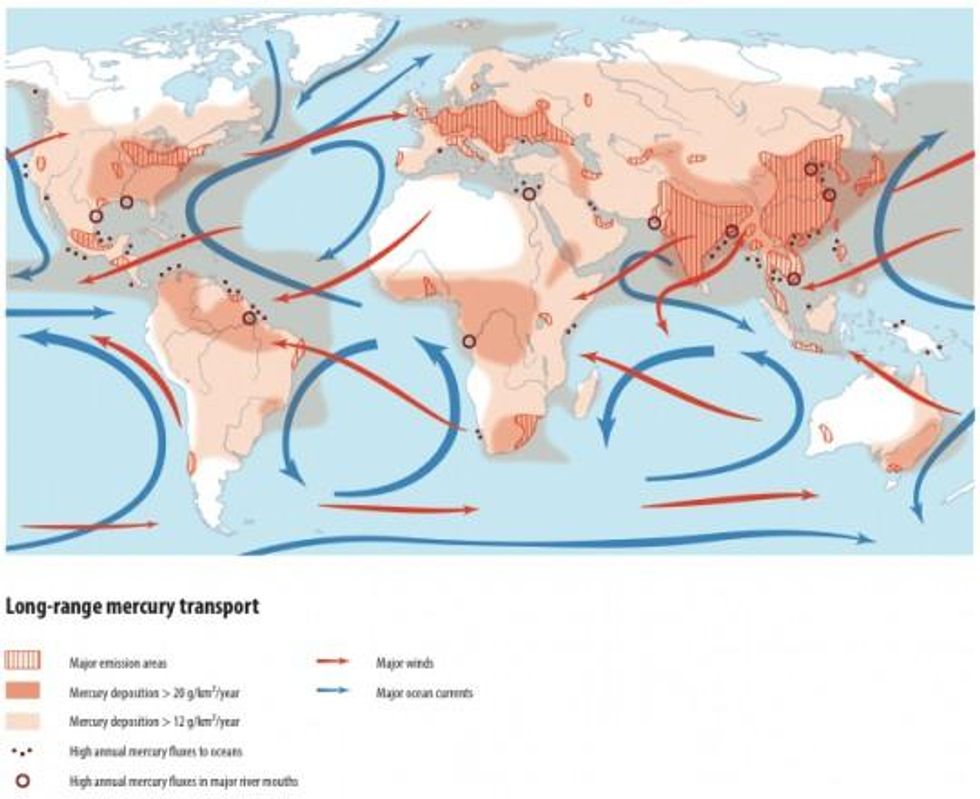
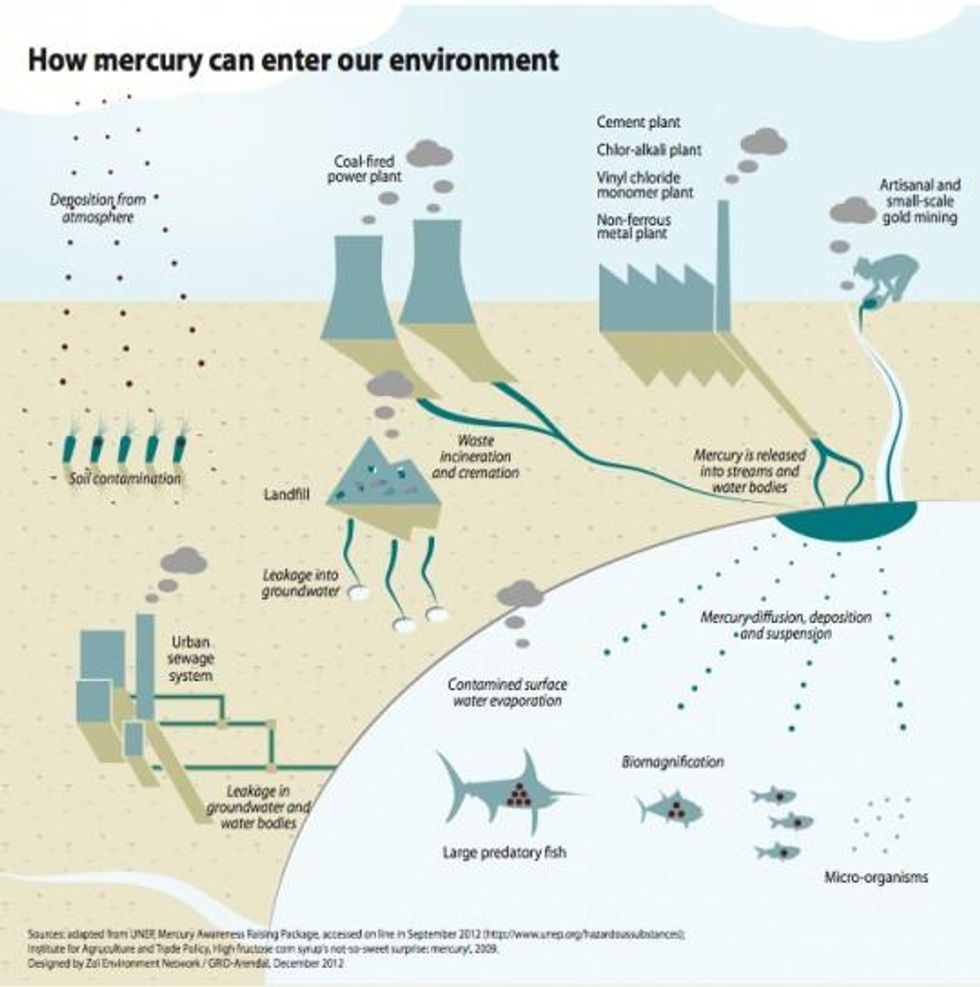
Hundreds of tons of mercury from sources such as coal-fired power plants, gold mining and other industrial processes have seaped into the world's water systems over the past century, dramatically increasing health and environmental risks for people all over the world, according to the Global Mercury Assessment 2013 released Thursday by the United Nations Environment Programme (UNEP).
The report comes just days before representatives of countries are scheduled to meet in Geneva to discuss a proposed, legally-binding treaty to reduce global mercury emissions.
In July 2012, negotiators rejected a stand-alone article on health, contending that the treaty should be primarily focused on the environment. But advocates for stricter emissions restrictions say mercury poisoning is devastating those in developing nations, and demand the treaty address the health implications as well.
"Millions of people around the globe are exposed to mercury on a daily basis, in artisanal mining and elsewhere," said Juliane Kippenberg, senior researcher at Human Rights Watch. "There is a dire need for stronger prevention and treatment of mercury poisoning."
Mercury, which accumulates in fish and climbs up the food chain, poses the greatest risk of nerve damage to pregnant women, women of childrearing age and young children, according to the AP.
Over the past 100 years, mercury in the top 100 meters of the world's oceans has doubled, according to the study. Waters deeper than that have seen mercury concentrations increase by 25 percent, and rivers and lakes contain an estimated 260 metric tons of mercury that was previously held in soils.
Uruguayan environmental affairs Minister Fernando Lugris, who chairs the Intergovernmental Negotiating Committee for the treaty talks, says the "time for action is now" is an interview that accompanied the UNEP report.
Lugris notes that because mercury pollution that occurs today will have long-lasting health impacts for years to come, it is "imperative that we act now to reduce future emissions and releases to the maximum extent possible in order to stop adding more to the global environment."
The Guardian reports that the health effects of mercury poisoning include "brain damage and the loss of IQ points in unborn children, injuries to kidneys and heart, and results in tens of billions of dollars in healthcare costs every year in the US alone."
Coal barons and mining magnates are profiting from poisoning the rest of us. As coal consumption dwindles in the US, these companies are exporting their deadly product to the rest of world. A recent report from World Resources Institute (WRI) estimates that almost 1,200 additional coal-fired plants are planned for development around the world.
But the mercury treaty is likely to call simply for reductions on a per facility basis, rather than an overall reduction in mercury emissions to air and and water. As a result, the treaty could legitimize increased mercury pollution as the number of coal-fired power plants increases globally. Moreover, there is no agreement that the treaty should even require existing facilities to apply the best available techniques to reduce mercury releases.
[...]
Those of us who care about public health and clean water, must stand strong and shame the spineless diplomats in Geneva into crafting a treaty that truly prevents the devastating environmental and public health impacts of mercury.
____________________________
The world's rivers, lakes, and oceans are suffering the severe consequences of modern industrial mercury pollution, according to a new UN report, which also warns the health of the entire planet and its inhabitants face a perilous future if serious action is not soon taken.
Hundreds of tons of mercury from sources such as coal-fired power plants, gold mining and other industrial processes have seaped into the world's water systems over the past century, dramatically increasing health and environmental risks for people all over the world, according to the Global Mercury Assessment 2013 released Thursday by the United Nations Environment Programme (UNEP).
The report comes just days before representatives of countries are scheduled to meet in Geneva to discuss a proposed, legally-binding treaty to reduce global mercury emissions.
In July 2012, negotiators rejected a stand-alone article on health, contending that the treaty should be primarily focused on the environment. But advocates for stricter emissions restrictions say mercury poisoning is devastating those in developing nations, and demand the treaty address the health implications as well.
"Millions of people around the globe are exposed to mercury on a daily basis, in artisanal mining and elsewhere," said Juliane Kippenberg, senior researcher at Human Rights Watch. "There is a dire need for stronger prevention and treatment of mercury poisoning."
Mercury, which accumulates in fish and climbs up the food chain, poses the greatest risk of nerve damage to pregnant women, women of childrearing age and young children, according to the AP.
Over the past 100 years, mercury in the top 100 meters of the world's oceans has doubled, according to the study. Waters deeper than that have seen mercury concentrations increase by 25 percent, and rivers and lakes contain an estimated 260 metric tons of mercury that was previously held in soils.
Uruguayan environmental affairs Minister Fernando Lugris, who chairs the Intergovernmental Negotiating Committee for the treaty talks, says the "time for action is now" is an interview that accompanied the UNEP report.
Lugris notes that because mercury pollution that occurs today will have long-lasting health impacts for years to come, it is "imperative that we act now to reduce future emissions and releases to the maximum extent possible in order to stop adding more to the global environment."
The Guardian reports that the health effects of mercury poisoning include "brain damage and the loss of IQ points in unborn children, injuries to kidneys and heart, and results in tens of billions of dollars in healthcare costs every year in the US alone."
Coal barons and mining magnates are profiting from poisoning the rest of us. As coal consumption dwindles in the US, these companies are exporting their deadly product to the rest of world. A recent report from World Resources Institute (WRI) estimates that almost 1,200 additional coal-fired plants are planned for development around the world.
But the mercury treaty is likely to call simply for reductions on a per facility basis, rather than an overall reduction in mercury emissions to air and and water. As a result, the treaty could legitimize increased mercury pollution as the number of coal-fired power plants increases globally. Moreover, there is no agreement that the treaty should even require existing facilities to apply the best available techniques to reduce mercury releases.
[...]
Those of us who care about public health and clean water, must stand strong and shame the spineless diplomats in Geneva into crafting a treaty that truly prevents the devastating environmental and public health impacts of mercury.
____________________________
The world's rivers, lakes, and oceans are suffering the severe consequences of modern industrial mercury pollution, according to a new UN report, which also warns the health of the entire planet and its inhabitants face a perilous future if serious action is not soon taken.
Hundreds of tons of mercury from sources such as coal-fired power plants, gold mining and other industrial processes have seaped into the world's water systems over the past century, dramatically increasing health and environmental risks for people all over the world, according to the Global Mercury Assessment 2013 released Thursday by the United Nations Environment Programme (UNEP).
The report comes just days before representatives of countries are scheduled to meet in Geneva to discuss a proposed, legally-binding treaty to reduce global mercury emissions.
In July 2012, negotiators rejected a stand-alone article on health, contending that the treaty should be primarily focused on the environment. But advocates for stricter emissions restrictions say mercury poisoning is devastating those in developing nations, and demand the treaty address the health implications as well.
"Millions of people around the globe are exposed to mercury on a daily basis, in artisanal mining and elsewhere," said Juliane Kippenberg, senior researcher at Human Rights Watch. "There is a dire need for stronger prevention and treatment of mercury poisoning."
Mercury, which accumulates in fish and climbs up the food chain, poses the greatest risk of nerve damage to pregnant women, women of childrearing age and young children, according to the AP.
Over the past 100 years, mercury in the top 100 meters of the world's oceans has doubled, according to the study. Waters deeper than that have seen mercury concentrations increase by 25 percent, and rivers and lakes contain an estimated 260 metric tons of mercury that was previously held in soils.
Uruguayan environmental affairs Minister Fernando Lugris, who chairs the Intergovernmental Negotiating Committee for the treaty talks, says the "time for action is now" is an interview that accompanied the UNEP report.
Lugris notes that because mercury pollution that occurs today will have long-lasting health impacts for years to come, it is "imperative that we act now to reduce future emissions and releases to the maximum extent possible in order to stop adding more to the global environment."
The Guardian reports that the health effects of mercury poisoning include "brain damage and the loss of IQ points in unborn children, injuries to kidneys and heart, and results in tens of billions of dollars in healthcare costs every year in the US alone."
Coal barons and mining magnates are profiting from poisoning the rest of us. As coal consumption dwindles in the US, these companies are exporting their deadly product to the rest of world. A recent report from World Resources Institute (WRI) estimates that almost 1,200 additional coal-fired plants are planned for development around the world.
But the mercury treaty is likely to call simply for reductions on a per facility basis, rather than an overall reduction in mercury emissions to air and and water. As a result, the treaty could legitimize increased mercury pollution as the number of coal-fired power plants increases globally. Moreover, there is no agreement that the treaty should even require existing facilities to apply the best available techniques to reduce mercury releases.
[...]
Those of us who care about public health and clean water, must stand strong and shame the spineless diplomats in Geneva into crafting a treaty that truly prevents the devastating environmental and public health impacts of mercury.
____________________________

