SUBSCRIBE TO OUR FREE NEWSLETTER
Daily news & progressive opinion—funded by the people, not the corporations—delivered straight to your inbox.
5
#000000
#FFFFFF
To donate by check, phone, or other method, see our More Ways to Give page.


Daily news & progressive opinion—funded by the people, not the corporations—delivered straight to your inbox.
"The damage done to Big Bend will be felt for future generations of Texans and Americans," one advocate said, "and this administration will bear responsibility for the natural heritage we lose.”
The US Supreme Court on Monday lifted a court order that had halted construction of a barrier wall and roads across Big Bend National Park and the surrounding region, but advocates warned that the "firestorm of outrage" unleashed by the Trump administration waiving of dozens of environmental laws to build the wall would only intensify.
In an 8-1 vote, with Democratic appointee Justice Ketanji Brown Jackson dissenting, the high court lifted an injunction that had been issued October 2 by US District Judge Kathleen Cardone, a Republican appointee in the Western District of Texas.
Cardone handed down the injunction after the Center for Biological Diversity (CBD), Friends of the Ruidosa Church, and a Big Bend-area river guide and landowner filed a lawsuit challenging the administration's decision to waive laws including the Endangered Species Act, the National Wild and Scenic Rivers Act, and the National Park Service Organic Act, arguing that such waivers violate the major questions doctrine, which requires congressional approval for actions with major economic and political consequences.
The majority ruled that construction can continue as the lower court considers its legality, finding that Homeland Security Secretary Markwayne Mullin is permitted by the Illegal Immigration Reform and Immigrant Responsibility Act of 1996 to waive environmental laws and has “broad authority to construct border barriers and roads."
In August, despite a separate coalition's lawsuit, bulldozers appeared at Big Bend and began leveling part of the national park before the October ruling halted construction.
Laiken Jordahl, national public lands advocate at the Center for Biological Diversity, told The New York Times he was "completely devastated" by the ruling.
Customs and Border Protection has indicated the agency plans to build vehicle barriers and patrol roads across the national park, including in the remote Mariscal Mountain region, which would require "extensive dynamite blasting," according to CBD.
“The Trump administration and its contractors are hell-bent on destroying one of America’s greatest national parks, and the Supreme Court just gave them the green light,” Jordahl said in a statement. “This horrific decision clears the way for contractors to bulldoze pristine desert and dynamite canyon walls before the courts have even decided whether this destruction is legal. They’re signing off on the permanent destruction of the wildest place in Texas, and the theft of a great American river from all of us.”
Sierra Club also expressed outrage, and US Rep. Greg Casar (D-Texas) said the decision would only "destroy the nature and wildlife that we love at Big Bend."
"The corrupt and far-right Supreme Court just gave [President Donald] Trump the OK to rip up Big Bend with a border wall. No one will be safer or freer," said Casar. "Democrats, Republicans, Texans of all backgrounds all agree: Leave Big Bend alone."
Jordahl emphasized that the court had ruled in favor of the Trump administration less than a week after two Texas Democrats, Sen.-elect James Talarico and Gov.-elect Gina Hinojosa, stunned the Republican Party with their electoral victories in the longtime GOP stronghold.
Texans “roundly rejected the destruction of this national park and border wall destruction at large," Jordahl told the Times, adding that Mullin's agency “would be wise to listen to Texans and pump the brakes on this project.”
In a statement, he warned that "Americans care deeply about this extraordinary national park and they won’t stand by quietly if its irreplaceable landscapes are butchered and paved over."
"The damage done to Big Bend will be felt for future generations of Texans and Americans," he said, "and this administration will bear responsibility for the natural heritage we lose.”
Hillary Pierce, director of communications for the group No Big Bend Wall, which also sued the administration in September, noted that officials haven't "answered why the government is building a wall in one of the least-crossed stretches of the southern border."
“Once the bulldozers cut through a canyon or a family's ranch gets walled off from the Rio Grande, there's no undoing it," said Pierce. "This isn't the end of our fight. The justices didn't decide whether Big Bend actually qualifies as an area of high illegal entry. That matters because the administration used that designation to justify building the wall and bypassing environmental protections. The government's own numbers show Big Bend has the fewest Border Patrol apprehensions along the southern border. That's exactly what we're challenging in our lawsuit in Washington.”
"This is an organization that believes in privacy," Tester said of Palantir, whose software ICE has used to identify targets for deportation and compile dossiers on activists.
Expecting to face a slew of investigations by a Democratic-controlled Congress, the infamous Trump administration-aligned tech firm Palantir is apparently trying to soften its image by bringing in a trusted name: former Democratic US Sen. Jon Tester of Montana.
NPR reported Monday that the three-term senator—who lost his reelection bid in 2024—was joining the surveillance company in an “advisory” role on the government side of the company's work.
Palantir, co-founded by the billionaire right-wing megadonor Peter Thiel, has received tens of millions of dollars in federal contracts supporting President Donald Trump's “mass deportation” campaign during his second term. The company has developed technology that has been used to identify and track immigrants targeted for removal and has reportedly helped federal agencies integrate vast troves of Americans’ personal data—raising concerns among civil rights groups about violations of privacy.
After Trump returned to office in January 2025, Palantir's leadership aggressively courted his administration. The company's CEO, Alex Karp, who had supported Kamala Harris over Trump in the presidential election, gave $1 million to Trump's inauguration fund before pivoting to praise the president's immigration policies and declare his company “completely anti-woke.” Palantir donated an additional $10 million to Trump's White House ballroom project. Meanwhile, company co-founder Joe Lonsdale has been one of the leading backers of the administration's second-term efforts to criminalize homelessness.
This has drawn the ire of Democrats in Congress, who have vowed to put Palantir's practices under the microscope when they take control of investigative committees beginning in January.
Sen. Ron Wyden (D-Ore.), who will chair the powerful Senate Finance Committee, has threatened to use compulsory investigative powers if Palantir refuses to answer questions about its role in Trump's immigration enforcement and handling of Americans' personal information. Other Democrats have suggested looking into conflicts of interest between the company and the administration.
Stephen Miller, the architect of Trump’s mass deportation policy, who was appointed White House chief of staff last week, for instance, has disclosed that he sold up to $250,000 worth of Palantir stock last summer. Several former Palantir employees have been appointed to powerful government positions. Thiel helped to finance the political rise of Vice President JD Vance.
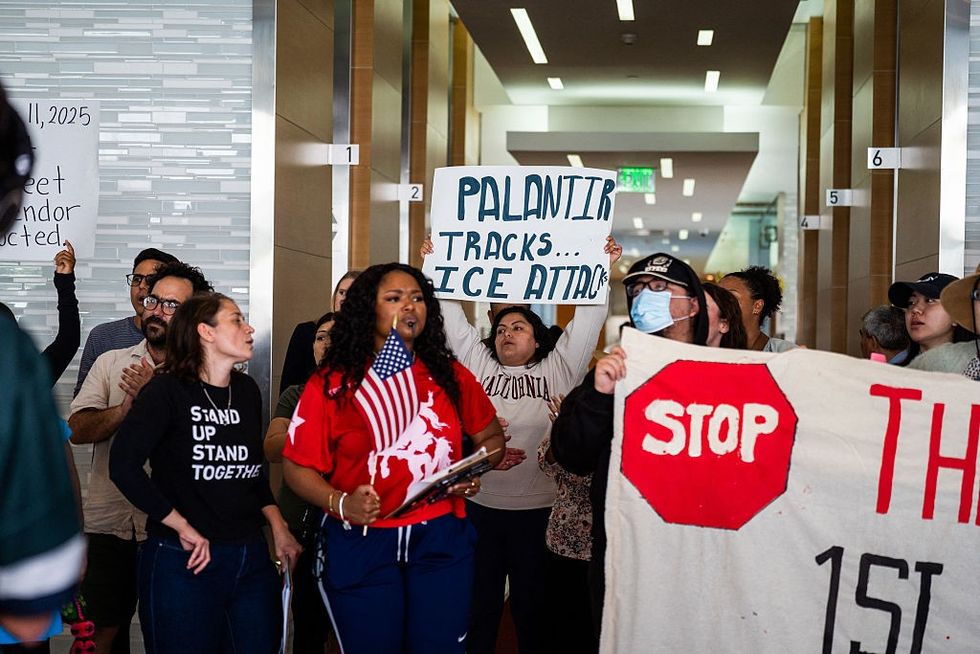
Tester, a vocal critic of the PATRIOT Act and the resulting expansion of government surveillance, told NPR that Palantir's problem was, more than anything, one of "perception."
"Perception is reality in Washington, DC, and in politics in general," said Tester. "But the fact is, I think Palantir has got a good story to tell, and they need to tell it. And hopefully folks will be receptive to it."
Tester said he does not share the fears that many others hold about his new employer: "I've talked to many people within Palantir. They believe the same way I do," he said. "This is an organization that believes in privacy."
He said Palantir was different from other companies because it does not build “big databases.” Though the company maintains that it does not itself collect or own the personal data processed by its software, it specializes in building systems that consolidate, store, cross-reference, and analyze vast amounts of data from different sources.
US Immigration and Customs Enforcement (ICE), for instance, has used a Palantir-developed application called ELITE that combines address data from federal health records, immigration records, commercial databases, and criminal records to map potential targets for immigration raids. Shortly before the midterms, Democracy Docket revealed that ICE had tried to add voter information from at least six states to the platform.
Last month, a WIRED investigation revealed how federal agents assembled dossiers on activists observing immigration enforcement operations in Maine using Palantir's Investigative Case Management system to store information about them—including license plate data and facial recognition information.
During his time in Congress, Tester also criticized lobbyists’ influence over Congress, even while receiving more donations from lobbyists than any other lawmaker in the 2012 and 2018 election cycles.
David Sirota, founder and editor-in-chief of The Lever, said that for the former senator, the transition from surveillance critic to Palantir adviser was quite “on-brand.”
Pollster Adam Carlson described it as "just about the grossest way he could end his career."
"I can count on one hand companies that are more evil and have caused more direct human suffering than Palantir," Carlson said. "And these kinds of revolving door antics make the public even more jaded and distrustful of their elected officials."
Tester has said he would not be acting as a “lobbyist” for Palantir but would instead merely be helping it to navigate its relations with the incoming Congress, using his nearly two decades of insider experience.
Tester is not the first former Democratic lawmaker to take a role advising an industry that has drawn criticism from within the party.
Recent examples include former Sen. Kyrsten Sinema (I-Ariz.), a one-time Democrat who joined Coinbase's advisory council and helped launch an artificial intelligence industry advocacy group, and former Sen. Heidi Heitkamp (D-ND), who joined a fossil fuel industry-funded influence campaign to promote natural gas as part of a clean energy transition.
Melanie D'Arrigo, the executive director of the New York Health Campaign, said Tester's journey to the private sector was an example of this “politician to lobbyist pipeline.”
"It's scientific self-sabotage, and the American public will ultimately pay the price in the discoveries never made and lives never changed for the better."
Some scientists and scientific societies sued President Donald Trump's administration in the District of Massachusetts on Monday for shutting down the entity that provides nearly two-thirds of federal funding for basic academic research in the social, behavioral, and economic sciences.
The administration's effort to eliminate the National Science Foundation's Directorate for Social, Behavioral, and Economic Sciences (SBE) "is a disservice to the American public and a crushing blow to the behavioral and brain sciences," declared Juliane Baron, executive director of the Federation of Associations in Behavioral and Brain Sciences (FABBS).
"When I think about the biggest challenges facing people across our country—advancing health and well-being, providing economic and physical security for our loved ones—these are all inherently human questions," Baron stressed. "We can't solve pressing societal challenges without understanding humans."
FABBS partnered with the Society of Experimental Social Psychology (SESP), the Social and Affective Neuroscience Society (SANS), and two researchers—University of Massachusetts Amherst lecturer Jenna Croteau and Boston College assistant professor Gregg Sparkman—in the lawsuit, which Democracy Forward filed on their behalf.
Over the past century, the complaint explains, "SBE research has driven some of the most groundbreaking innovations in nearly every aspect of modern life—from the way doctors match kidney donors with patients, to how governments approach economic policy, national security, and international relations, to the models behind Google's search engine."
"SBE research has helped mitigate the opioid crisis, the spread of diseases like Ebola and Covid-19, and evolving threats posed by cyberhackers and terrorist networks in the United States and abroad," notes the filing. "And it has transformed economics."
As the complaint details:
When the Trump-Vance administration took office, it deemed these fields “woke.” In its 2026 budget proposal, the administration urged Congress to cut funding for the SBE Directorate. Congress refused. The congressional report that accompanied NSF's January 2026 appropriation expressly directed NSF not to reduce SBE’s budget by more than 5%.
Three months later, NSF decided to shutter the directorate anyway. On April 3, 2026—without a director, and without consulting the National Science Board, the body Congress required to make such decisions—NSF leadership announced that it would unilaterally "close-out" the SBE Directorate in fiscal year 2027. Since the April 3 decision, the agency has stopped funding opportunities for basic SBE research, released the scientists who work in the directorate on assignment from universities, and reassigned nearly all the directorate's permanent staff.
"The administration's dismantling of SBE is not only reckless; it is illegal," emphasized Democracy Forward president and CEO Skye Perryman. "NSF provided no public explanation for its decision to close the Social, Behavioral, and Economic Sciences Directorate, and this dangerous dismissal of scientific expertise is a threat to crucial scientific research. We are honored to work with this coalition to challenge the administration's crusade against science and the unlawful closure of the directorate."
Coalition members highlighted the importance of them prevailing in court, particularly in the current era of rapidly developing artificial intelligence with inadequate safeguards. SANS president Jennifer Kubota said that "understanding how the brain shapes trust, cooperation, emotion, and social behavior is essential to addressing some of society's most pressing challenges, from social isolation and polarization to the rapid emergence of AI."
"Eliminating NSF SBE funding for this research threatens decades of scientific progress and the next generation of scientists," Kubota continued. "Research opportunities lost today cannot simply be recovered tomorrow. We risk losing not only critical discoveries, but also the talented researchers who will make them."
A coalition of scientific societies and individual scientists has united to challenge the unlawful closure of the Social, Behavioral, and Economic Sciences Directorate (SBE) of the National Science Foundation (NSF). Happy to support SESP in joining this lawsuit.democracyforward.org/news/press-r...
[image or embed]
— Kate A. Ratliff (@kateratliff.bsky.social) November 9, 2026 at 1:02 PM
Columbia University professor and FABBS board member Jon Freeman delivered a similar warning, arguing that "we cannot allow this administration to shoot America in the foot."
"American behavioral science has transformed everything from the algorithms powering our technology to how we strengthen human connection, overcome social divisions, improve public health, and make better decisions in our everyday lives," he said. "Dismantling SBE would devastate a vital part of our scientific workforce at precisely the moment we need it most, as AI reshapes society. It's scientific self-sabotage, and the American public will ultimately pay the price in the discoveries never made and lives never changed for the better."
SESP executive officer Steven J. Stroessner also not only acknowledged the past but looked toward the future: "For decades, federal support for basic research in social psychology has helped us understand how people think, make decisions, and relate to one another. The resulting discoveries have strengthened our nation by improving education, informing public policy, fostering cooperation, and helping us address some of society’s most persistent challenges. Dismantling that support threatens not only the research being conducted today, but the discoveries we have yet to imagine."
“There are entities that seek to hold the government accountable, and so the government uses the tools in its toolkit to try to silence them.”
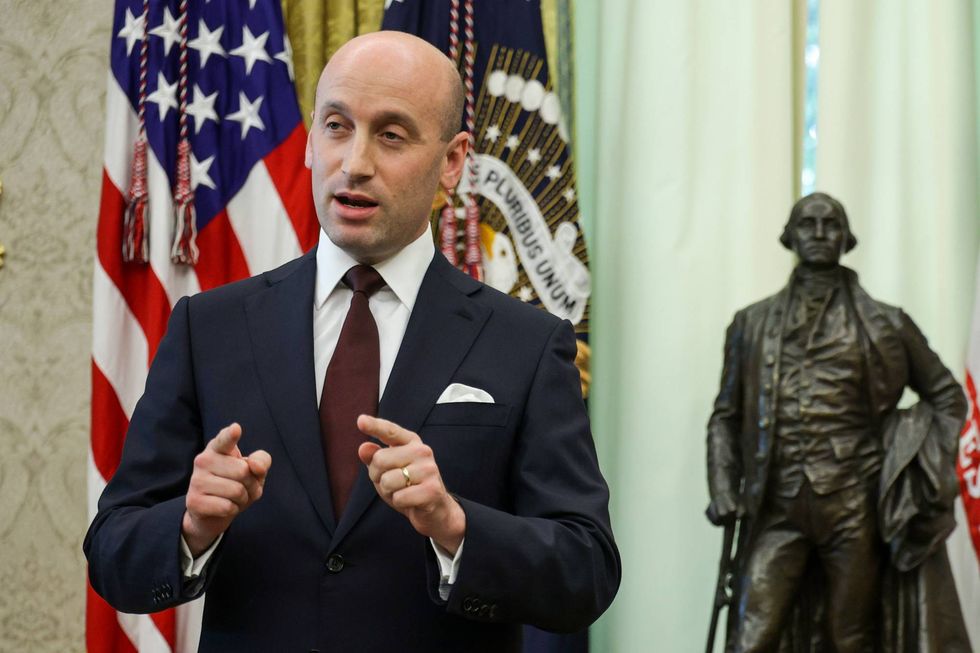
President Donald Trump is reportedly considering a major escalation of his war against left-wing nonprofits with an executive order that would seek to suspend their tax-exempt status with the stroke of a pen.
The Wall Street Journal reported Friday that the order plans to label some nonprofit groups as having "terrorist" ties—an act that would immediately suspend their tax-exempt status, dramatically imperiling their ability to operate and raise money.
According to the report, the administration is seeking to use a little-known provision in the federal tax code to strip nonprofits of their status without going through the normal Internal Revenue Service investigation and appeals process.
The law, signed in 2003 by then-President George W. Bush, allows the president to identify an organization in an executive order as supporting or engaging in terrorism. The law also prevents organizations from challenging designation or suspension in proceedings concerning federal tax liability.
It’s not clear yet which groups will be targeted, but the administration and its allies in Congress have already signaled their intent to go after left-leaning groups like George Soros’ Open Society Foundations, the Southern Poverty Law Center (SPLC), and the Council on American-Islamic Relations (CAIR).
The latter was forced to cease operations in Florida Thursday following a state-level "terrorism" designation by Republican Gov. Ron DeSantis.
In September 2025, weeks after the assassination of right-wing activist Charlie Kirk, Trump signed National Security Presidential Memorandum 7 (NSPM-7), which identified “anti-capitalism,” “anti-Christianity,” “extremism on migration, race, and gender,” and “hostility towards those who hold traditional American views on family, religion, and morality” as ideological characteristics associated with “domestic terrorism.”
The memo directed the IRS and other federal agencies to investigate nonprofits and their funders for alleged connections to political violence.
Shanna Singh Hughey, a policy strategist at the anti-authoritarian watchdog group Protect Democracy, said in September that the memo's vague and subjective language gave the administration expansive powers to target the nonprofits of its political foes.
“It goes way beyond that to the organizations that are connected to the folks who might be accused [of violence], including board members and staff, as long as that organization is accused of either funding or facilitating the violence done by the target," she told Inside Philanthropy.
“This is exactly what we expect to see when authoritarians attempt to consolidate and hold power,” she said. “There are entities that seek to hold the government accountable, and so the government uses the tools in its toolkit to try to silence them.”

Trump's reported plan to attack nonprofits comes on the same day that he named Stephen Miller, the chief architect of NSPM-7, as his new White House chief of staff.
Weeks before the memo was signed, Miller vowed to "dismantle and take on the radical left organizations in this country that are fomenting violence." He has said that descriptions of Trump and his immigration policies as "authoritarian" or "fascist" were examples of language that "incites" violence.
He has also referred to the Democratic Party itself as "not a political party," but "a domestic extremist organization."
During a State Department ministerial on terrorism in July, Miller said that under NSPM-7, the administration was empowered to “disrupt, identify, defund, debank, arrest, and prosecute” what it called terrorist organizations.
In the same speech, he claimed that left-wing extremists invoke "civil liberties" disingenuously to evade criminal punishment.
Describing leftists as the "enemies of civilization," he said, "It is essential that we are wise enough and strong enough to understand that these appeals must fall on deaf ears."
As taxpayers, we are funding our own endgame, but we don't have to.
Tuesday night's election results proved that a majority of people in this country do not want war and genocide. Polling overwhelmingly showed that the war on Iran was one of the biggest motivating factors in voting. So why are we about to give the very people voters rejected an unprecedented $1.5 trillion budget to continue their reign of death and destruction? Why are we going to allow Congress to hand over the largest war budget in human history to weapons manufacturers and AI tech billionaires who work at the behest of known war criminals?
In the next few weeks, Congress is set to pass what should be viewed as the deadliest piece of legislation of our time—the 2027 National Defense Authorization Act (NDAA)—or the country's defense budget, as it is more commonly known. Its potential passage is setting US taxpayers up to be the funders of their own demise by giving carte blanche to a department of war criminals and their humanity-destroying techno-fascist friends with an obscene $1.5 trillion treasure chest to control, murder, oppress, and destroy the planet as we know it.
Sounds a bit hyperbolic? Not if you look at their past and what they are openly saying now, as a prologue.
If you were watching a summer blockbuster and the main characters were handing over their hard-earned money and essentially their trust to the person you know is going to assassinate them in the final act, you would be screaming at the screen, "Don't do it!"
To understand why this war budget is a catastrophic time bomb, you first have to understand what it actually funds. Under the guise of providing national "security" and protecting "democracy," the annual Pentagon budget does little of both. Instead, the budget, which consistently fails its financial audits, is a mechanism to funnel billions of dollars into the pockets of weapons manufacturers, who make the very weapons that murder men, women, and children and destroy the planet. Well over half of the discretionary budget each year goes directly to private contractors.
Between 2020 and 2024, the Pentagon designated roughly $2.4 trillion out of $4.4 trillion in discretionary spending to private industry. But hey, at least those private companies are providing much-needed jobs for America's workforce, right? Well, not so fast.
According to the Climate and Community Institute, employment at military contractors has plummeted over the past three decades: from an estimated 3.2 million workers during the Reagan military-spending peak in the mid-1980s to 1.1 million workers in 2020. The drop occurred even as Pentagon budgets rose 22% over the same period. Meanwhile, the industry's top recipients of military contracts, Lockheed Martin, Raytheon, General Dynamics, and Boeing, pay their CEOs a combined salary of almost $100 million a year. They are literally making a killing off the killing of others.
And now, not only are we draining our pocketbooks for weapon company CEOs, but we are also subsidizing tech-overlords whose recent main objective is to move jobs and agency away from the working class to robots, as well as use that very technology to mass surveil those who oppose it. The Pentagon is requesting an unprecedented $58.5 billion this year for an artificial intelligence program. This program is already responsible for the February 28 Minab School massacre that murdered at least 156 schoolchildren and staff.
Even more frightening, the money for that deadly program is set to go to the most insane lineup of anti-worker villains, including Sam "bad things should happen to benefit AI" Altman; Peter "if you're evil, you're not bad" Thiel; and Elon "AI will make jobs irrelevant" Musk. They're openly telling us they don't need humans anymore. Meanwhile, they are building their bunkers so that when the United States military finally plunders away all the resources around the world, they can survive.
Why are we handing the military $1.5 trillion to do all this? As it stands, US taxpayers are already paying $116.43 million every hour for war and terror. That's more than $4,000 in weapons and war costs for the average taxpayer last year alone. Both figures will likely double, since the Trump administration's request tops former President Joe Biden's already bloated $1 trillion. Meanwhile, nearly 30% of people have to finance groceries, and 45,000 people will likely die because they lack health insurance or access to affordable healthcare.
If you were watching a summer blockbuster and the main characters were handing over their hard-earned money and essentially their trust to the person you know is going to assassinate them in the final act, you would be screaming at the screen, "Don't do it!"
But that is exactly what is happening right now, and in fact, many are screaming.
Polls consistently show that Americans are moving away from a war-centric approach to foreign affairs. Almost two-thirds of people in the United States disapprove of President Donald Trump's war on Iran, and 60% disapprove of the US-supported genocide in Gaza. Similarly, 59% of voters believe the proposed $1.5 trillion Department of Defense budget is too high, and 3 in 5 voters (58%) prefer directing government funds toward domestic priorities like healthcare rather than military or war spending.
The voices are there, but most of those with the power to stop it aren't listening or are too invested in the war-industrial complex to care. Which begs the question: How can we even call ourselves a democracy, much less its defender, when we, the people, seem to have no agency outside of voting and the majority's demands are ignored?
This administration, as did previous ones, proudly ignores what the majority is begging for: an end to the genocide in Gaza and the occupation of Palestine; an end to the war on Iran that was started for no reason and is currently sustained through the administration's pompous arrogance; an end to Immigration and Custom Enforcement's reign of terror across the United States; an end to the AI-data center boom that is chipping away at our humanity and livelihoods; and reinvestment into the things that will actually keep us safe, such as healthcare, housing, and climate justice.
Make no mistake, the $1.5 trillion set to go to Pete Hegseth's war department is not funding our security; it is funding our endgame and stealing from our lifelines. If passed, it will be nearly impossible to undo the damage that will come. We all must unite around this—healthcare workers, environmentalists, teachers, journalists, students, veterans—and make democracy actually work for the people before it's too late. We have to let those we elected to work for us know that this is a red line that humanity cannot afford to cross.
History shows that public pressure can influence policies. Our collective voice can change this country's trajectory—if we mobilize now. We don't have to fund our endgame; we can say no. Join us in DC November 10-13 as we demand our country stop funding war and start funding life.
"They are going to need to plant new forests for all of the subpoenas we’ll be printing," said Sen. Ed Markey.
After Democrats took back both chambers of the US Congress Tuesday, Rep. Robert Garcia, the incoming Democratic chair of the House Oversight Committee, had two words for President Donald Trump and his family: “Lawyer up.”
With solid majorities in the House and Senate, Democrats will have much greater power to conduct hearings, demand documents, and summon witnesses to testify under oath beginning in January.
“They are going to need to plant new forests for all of the subpoenas we’ll be printing,” said Sen. Ed Markey (D-Mass.).
Democrats are expected to aggressively probe the depths of what Garcia (D-Calif.) called “an unprecedented amount of corruption” by the “Trump crime family.”
Trump has added billions of dollars to his personal wealth during his second term. Garcia said Democrats plan to examine Trump’s cryptocurrency empire and whether foreign governments and businesses have used it to purchase political favors.
He said Democrats intend to investigate Donald Trump Jr.’s personal investments and his involvement with companies that have received government contracts. The business dealings of Trump’s son-in-law Jared Kushner, who has been accused of using foreign diplomacy to line his own pockets, will also be investigated.
Responding to voter concerns about the cost of living, which fueled Democratic wins across the map on Tuesday, Garcia said “any CEO that has been ripping off the American public” should prepare to face scrutiny, particularly those whose companies have engaged in price gouging, abused government contracts, or financially benefited from their relationships with Trump.
Punchbowl News noted several powerful executives and officials who could be under the gun:
Expect the tech executives closest to [Trump], including SpaceX’s Elon Musk, Meta’s Mark Zuckerberg, and Nvidia’s Jensen Huang, to be early targets for House Oversight, [the House Energy and Commerce Committee], and [the Senate Commerce, Science, and Transportation Committee]. Democrats will also want to grill OpenAI’s Sam Altman and Anthropic’s Dario Amodei about their [artificial intelligence] products.
“Anyone who has been in bed with the Trumps” is going to have “no choice but to respond to our questions,” Garcia said of businesses alleged to have gotten favorable treatment due to their relationship with the president’s family.
The US Department of Justice (DOJ) will also face scrutiny over its handling of the investigation into the late sex criminal Jeffrey Epstein. A report last month by Democrats on the House Judiciary Committee said the DOJ “appears to be covering up” evidence of Trump’s relationship with the billionaire predator and laid out accounts involving 11 women who connect Trump to Epstein’s alleged sex trafficking operation—five of them have accused the president of sexual assault in Epstein’s presence.
Garcia said Tuesday that in contrast to the closed-door hearings conducted under Republican control, he plans to hold “real public hearings” that “center the survivors” of Epstein’s abuse.
Abuses by US Immigration and Customs Enforcement (ICE) and the US Department of Homeland Security (DHS) will also be examined.
At least 62 people have died in ICE custody since Trump returned to office, while federal immigration agents have opened fire on people in at least 32 incidents, killing nine and injuring 15, including US citizens and immigrants who appeared to pose no threat. Agents have also been documented committing widespread civil rights violations, using excessive force, and engaging in racial profiling.
“Oversight Democrats have documented hundreds of incidents of abuse and misconduct by DHS immigration enforcement agents, and every single one of them deserves a full investigation,” Garcia said in April in a statement with Rep. Summer Lee (D-Pa.).
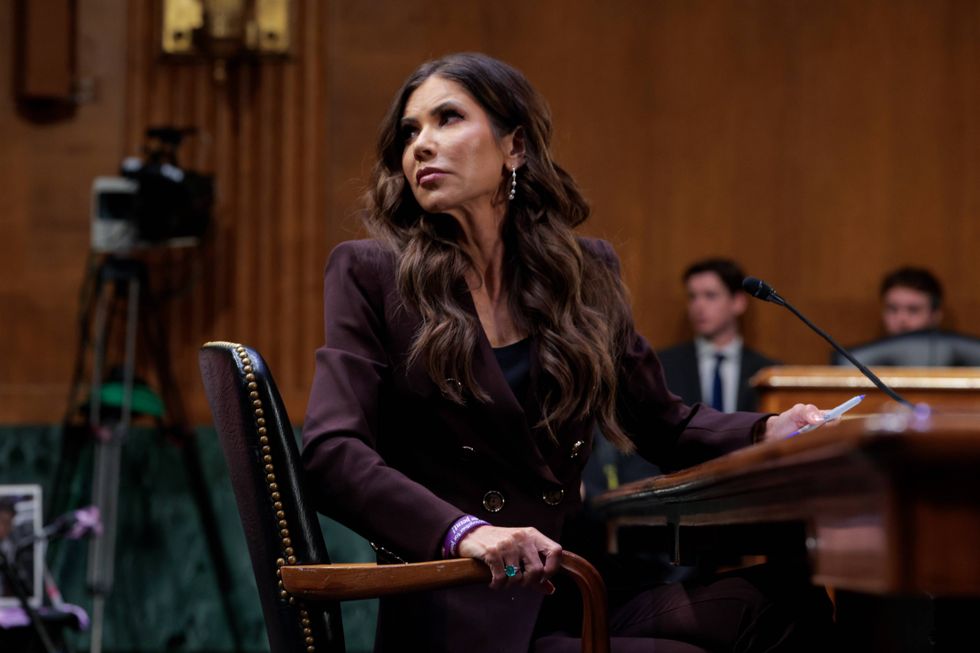
Garcia has stressed that "it can't just be the agents" who face accountability, but anyone “involved in the abuses of ICE."
“The agents are taking direction in some cases from others, and policy is being written to encourage that level of activity and that level of elimination of due process,” he said, adding that he wants “accountability at all levels, and that starts at the top.”
Garcia signaled that top DHS officials, including former Secretary Kristi Noem and her top aide Corey Lewandowski, could face scrutiny over a $220 million taxpayer-funded advertising campaign featuring Noem and allegations that she and Lewandowski used their positions for personal gain. The DOJ was reported in October to have opened a criminal investigation into Lewandowski over whether he personally profited from his government role.
Garcia will likely oversee only a fraction of the inquiries into Trump and his allies’ conduct launched by a Democratic Congress.
Rep. Adam Smith (D-Wash.), the incoming chair of the House Armed Services Committee, is expected to dig into Trump’s decision to launch an unauthorized aggressive war against Iran, as well as its financial cost, attacks on civilians, and the administration’s shifting justifications for the now eight-month-old conflict.
He also said he would examine the legality of Trump's unauthorized strikes on boats in the Caribbean and eastern Pacific, which have killed at least 243 people and have been described as illegal extrajudicial assassinations by human rights groups. He also called for more transparency surrounding the Trump administration's regime change operation and commandeering of oil in Venezuela, and its crippling blockade and threats to invade Cuba.
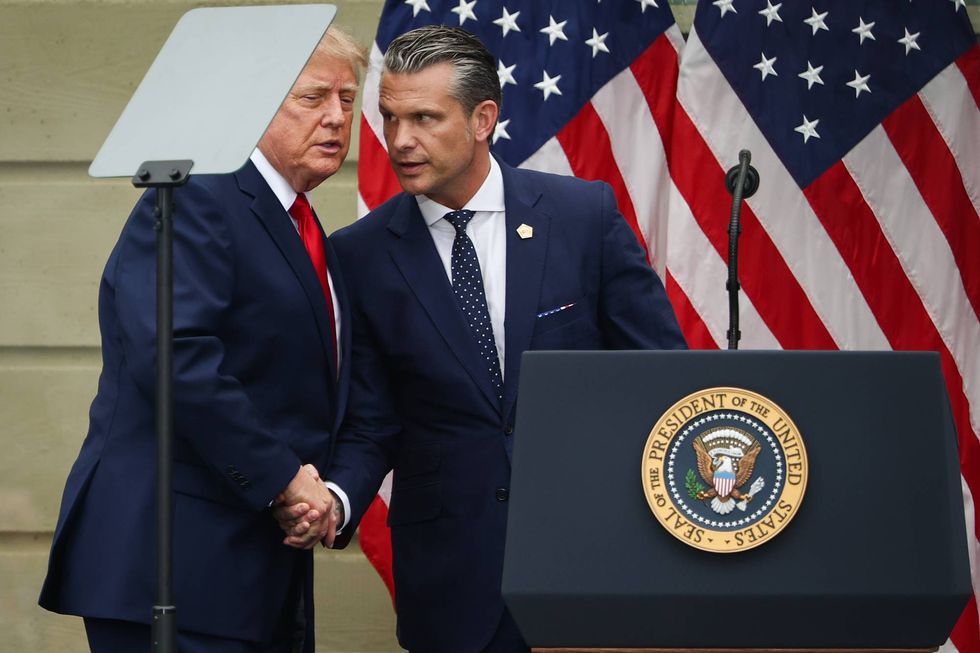
Smith, who has served in Congress for nearly three decades, described Defense Secretary Pete Hegseth as less transparent than anyone who previously held the position.
"Since I became ranking member, I have had the cellphone number of every single secretary of defense," he told The Washington Post earlier this week. "Hegseth does not speak to me."
He has said, "There are Republicans who would support impeaching Hegseth who might not support doing it to Trump."
But that doesn't mean Trump is safe. Rep. Jamie Raskin (D-Md.), the incoming chair of the House Judiciary Committee, said Tuesday that he would not rule out pursuing a third impeachment of Trump, though he cautioned that Democrats would have to weigh it against their other priorities.
Raskin, who managed Trump’s historic second impeachment, called it "one of the people's major instruments of constitutional self-defense against a president who continues to act like a king or an emperor."
"It’s unconscionable to force workers to choose between the care they need and keeping their job," said one reproductive health advocate, "which is why the Trump administration is waiting until after the election to roll this out."
In addition to renewing its war on abortion rights, the Trump administration is planning to roll back workplace protections for women dealing with a range of reproductive health conditions after Tuesday's midterm elections.
The New York Times reported on Monday, citing several people familiar with the plans, that the US Equal Employment Opportunity Commission (EEOC) was prepared to rewrite regulations issued under the 2022 Pregnant Workers Fairness Act (PWFA).
Signed by then-President Joe Biden, the bipartisan law was meant to fill in gaps in civil rights legislation that left pregnant women and others with reproductive health concerns at risk of being denied basic accommodations like bathroom and water breaks, exemptions from heavy lifting on the job, and time off for prenatal appointments.
The law requires employers to make reasonable accommodations for workers with limitations due to “pregnancy, childbirth, or related medical conditions,” language that has existed in antidiscrimination law for nearly half a century.
In 2024, the Biden administration enacted a rule interpreting the law to cover a wide range of conditions and procedures related to women’s reproductive health—including fertility treatments, abortion, and menstruation.
President Donald Trump’s EEOC, led by Andrea Lucas, a conservative employment lawyer, is reportedly leading the effort to narrow the scope of the rule.
In her dissent from the final rule, Lucas argued that it “errs in conflating pregnancy and childbirth accommodation with accommodation of the female sex, that is, female biology and reproduction.”
Republicans have objected to the rule’s requirement to accommodate workers seeking abortions. A federal judge in Louisiana struck down the rule’s requirement to accommodate elective abortions last year, though protections for other reproductive health conditions remained in place.
But Lucas’ argument went far beyond abortion. She said the law should exclude infertility and in vitro fertilization (IVF), menstruation and menopause, hormonal conditions, lactation-related conditions, contraception and its side effects, and other reproductive health issues she considered unrelated to pregnancy or immediate postpartum recovery.
According to the Times, Lucas is expected to shorten the list of “related medical conditions” covered by the rule and expand religious exemptions, which could allow employers to refuse accommodations they deem incompatible with their beliefs.
In May, 15 Democratic senators, including Elizabeth Warren (D-Mass.), Tammy Duckworth (D-Ill.), and Chuck Schumer (D-NY), sent a letter urging Lucas to abandon plans to scrap accommodations for workers undergoing IVF. They noted that Trump had dubbed himself “the fertilization president” and pledged to increase access to fertility treatments.
The senators, including Duckworth, who conceived her two daughters through IVF, described it as an intensive process with “serious impacts on women’s lives.” Treatment can involve daily injections, regular blood draws and ultrasounds, and egg retrieval and embryo transfer procedures that cannot easily be rescheduled. Side effects can include nausea, vomiting, and fatigue.
"The current regulation explicitly protects the right of workers undergoing IVF to request reasonable accommodations like short breaks to take medication, a schedule that accommodates daily monitoring appointments and medical procedures, or even access to a chair," the lawmakers said. "Removing them from this rule does not change the fact that these workers are owed these protections, but it does make it more likely that employers will illegally deny women undergoing IVF their rights under PWFA."
The EEOC is reportedly holding off on the changes until after the election. The US Department of Justice is also waiting until then to step up efforts to restrict access to abortion pills, potentially even in states where abortion is legal, according to reporting last month.
On Tuesday, Mini Timmaraju, president and CEO of Reproductive Freedom for All, said, “It’s unconscionable to force workers to choose between the care they need and keeping their job, which is why the Trump administration is waiting until after the election to roll this out.”
"Today’s elections," she added, "are a crucial opportunity to establish checks on a corrupt administration that continues to leave pregnant workers and working families behind.”
The administration quickly appealed the ruling, making it clear that it "still wants to interfere in Alaska's election and pursue an investigation that would violate the right to a secret ballot."
With numerous recent court rulings dismissing the Trump administration's attempts to intimidate election officials and its push to discount tens of thousands of ballots due to the dubious claim they were cast by noncitizens, a key midterm strategy of President Donald Trump—questioning the results of the election before it happens—is falling apart.
The US Department of Justice has focused in recent days on the Alaska US Senate election, with Trump personally calling on the DOJ to file a lawsuit arguing that a federal court must block the certification of the results if Republican Sen. Dan Sullivan narrowly loses his reelection bid—but Chief Judge Sharon Gleason of the US District Court in Alaska threw that effort out on Sunday, as well.
The administration has focused on the election because, along with Sullivan and former Rep. Mary Peltola, the Democratic candidate, another Dan Sullivan appears on the ballots Alaskans have begun casting: Daniel J. Sullivan, a retired teacher.
The DOJ argued in its lawsuit that if Sullivan loses his reelection race but would have won if the votes for Daniel J. Sullivan had gone to him instead, the election results should not be certified.
The Republican senator is clearly marked with his party affiliation and the word "incumbent" on the ballots, and observers have noted that the state's ranked-choice voting system would likely stop Daniel J. Sullivan from acting as a "spoiler."
"Voters are familiar with the system," wrote Anna Griffin at The New York Times Sunday. "Any voter confused by the existence of two Dan Sullivans could simply rank both candidates."
Voters interviewed at the polls in recent days have said the ballot did not cause confusion.
Alaska Voter: I saw that it showed incumbent and Republican for the current incumbent, I wasn't worried about it at all. People are smart enough to see it's labeled clearly. It's already been determined by our Supreme Court in Alaska. I wasn't worried about it https://t.co/003wocOV7N
— Acyn (@Acyn) November 1, 2026
Still, the DOJ in its lawsuit called for an investigation should Sullivan lose narrowly, without explaining how officials would conduct a probe into the secret, anonymous ballots that American voters have a right to.
The administration, said Gleason as she rejected the lawsuit, "offers no rebuttal to the concerns regarding preservation of the secrecy of voting and provides no explanation of how its request for ballot segregation and a court-ordered investigation by law enforcement officers into certain voters’ intent could be implemented while preserving the secrecy of the ballot.”
As the DOJ filed an appeal to the ruling Sunday, a spokesperson for the department complained to the Times that Gleason had not addressed “the argument of the United States that Daniel J. Sullivan (a/k/a Decoy Dan) entered the race as a frivolous candidate to confuse voters.”
Entering an electoral race to act as a "spoiler," while potentially inconvenient and aggravating for another candidate and sometimes denounced as a "dirty trick," is generally not against the law in the US, according to legal experts. Neither is recruiting or encouraging someone to run as a spoiler, as Peltola's campaign has been accused of doing in the Alaska case.
"Regardless of who encouraged him to run, the second Dan Sullivan validly qualified for the ballot. And this is a matter of state law," Joshua Douglas, a law professor at the University of Kentucky, told Reuters this week.
Gleason rejected the DOJ's claim that the administration is not attempting to interfere in "the time, place, and manner of Alaskan elections," which the Constitution stipulates are to be determined by state officials.
"A court order preventing the state from certifying the election if certain circumstances occur; a court order requiring the state to segregate and preserve certain ballots; and a court order permitting the United States to conduct an investigation into the intent of those voters who cast ballots for Daniel J. Sullivan... certainly involve the time, place, and manner of Alaska’s election,” the judge wrote.
Sullivan said Sunday that he would accept the election results regardless of who wins, while also claiming the election could be "stolen."
The DOJ's decision to immediately appeal Gleason's ruling, said journalist Adam Klasfeld, made clear that the administration "still wants to interfere in Alaska's election and pursue an investigation that would violate the right to a secret ballot."
A labor leader called the ruling "a resounding win for the election workers who make our democracy happen and for all Americans’ freedom to vote."
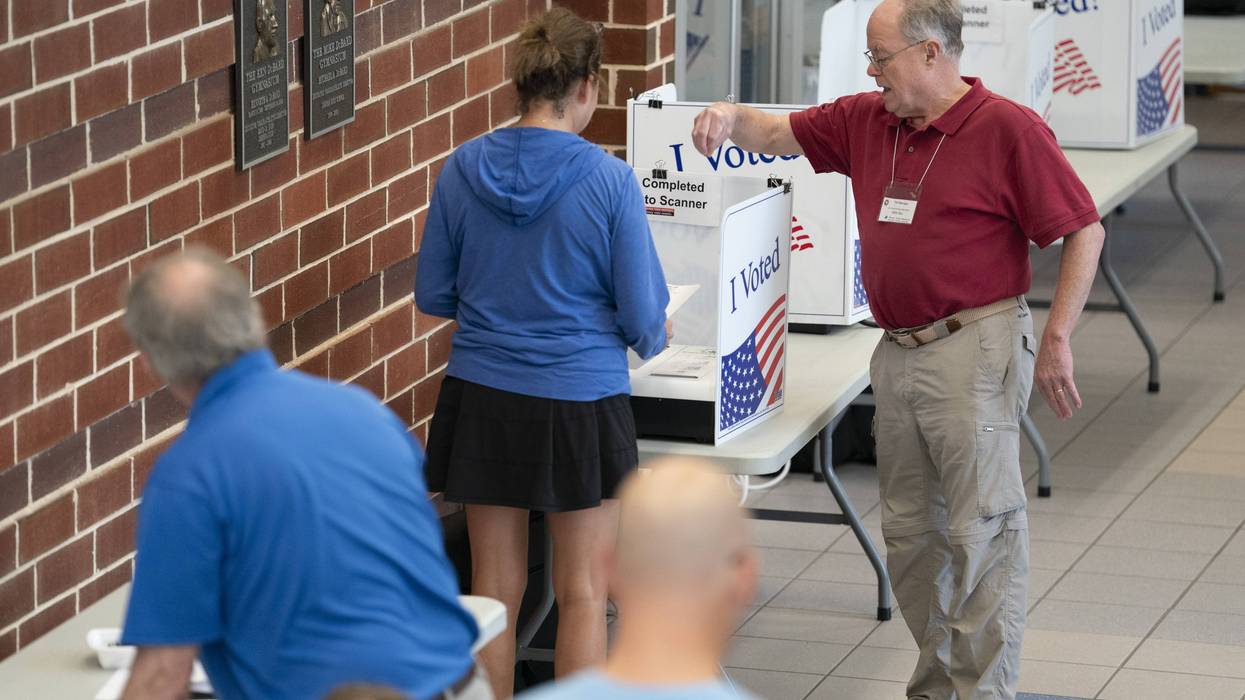
Days after the US Department of Justice threatened election officials in all 50 states with possible prosecution unless they preserve election records—the latest push by the Trump administration to cast doubt on the validity of the upcoming midterm elections—a federal judge on Friday ordered the DOJ to reach out to the officials again, this time to rescind the threat.
The DOJ must contact the state and local officials who received warnings this week and inform them that the "threats of prosecution to election officials and workers... have been enjoined," said District Judge Trina Thompson in the US District Court for the Northern District of California.
Thompson ordered officials with the Trump administration to stop demanding that election workers remove voters from rolls, sequester ballots cast by people the White House has claimed are ineligible to vote due to being noncitizens, and refuse to issue ballots to people who have been included on the administration's error-riddled lists of residents whom it says have voted illegally.
"Because the public has a paramount interest in ensuring that election officials and workers are able to carry out their work in accordance with federal law and election procedure, and the official day of the elections is only a couple of days away, the balance of the equities and public interest weigh in plaintiffs’ favor," said Thompson.
The ruling was handed down in connection with a lawsuit filed by the Service Employees International Union (SEIU), the American Federation of State, County and Municipal Employees (AFSCME), and other groups.
Protect Democracy, part of the coalition that sued, called the threat "yet another attempt designed to shake Americans’ confidence in the election results and undermine our electoral process."
Patrick Moran, president of AFSCME, said Thompson's ruling and the temporary restraining order she issued were "a resounding win for the election workers who make our democracy happen and for all Americans’ freedom to vote."
"We applaud the court for granting a temporary restraining order protecting election workers from unlawful prosecution simply for following the law and forbidding the administration from interfering with the lawful administration of elections," said Moran. "Now, our nation’s nonpartisan election workers, many of them AFSCME members, can continue to do their jobs, and our elections can continue to proceed freely and fairly.”
With President Donald Trump's approval rating at an historic low and Republicans facing widespread disapproval of the illegal war on Iran they've supported, healthcare cuts they voted for, and violent mass deportation operations they've funded, the White House has approached the midterms with a laser focus on sowing doubt about the results before the elections are completed.
The DOJ demanded confidential voter roll data from states across the country last year, pushing the baseless claim that the lists were rife with the names of noncitizens who would be illegally permitted to vote. The administration has been rebuffed by dozens of officials.
In response, the Department of Homeland Security and DOJ have used commercially available data and federal records to cobble together their own lists of voters they say have cast ballots illegally. The results of the effort have included a list of 185 people in Nevada, all of whom were proven to be citizens, and a list of 28 immigrants in California whom federal officials said were suspected of voting before they became naturalized citizens—representing about .0001% of all registered voters in the state.
The administration has also pushed for the certification of Alaska's election results to be blocked, citing the presence of two Dan Sullivans on the ballot—one clearly labeled as the incumbent Republican senator, the other not—and on Thursday, sent the threatening letters to election officials across the country.
Earlier this week, Judge David Carter in the US District Court for the Central District of California said that the administration's threats "must stop," throwing out the DOJ's attempt to force the state to sequester ballots cast by 20,000 people officials claimed were not citizens.
"DOJ tried to bully election workers with threats and intimidation," Norm Eisen, co-founder of Democracy Defenders Action, said Saturday. "Last night, a federal court shut it down. We and our partners are fighting to protect elections in the court of law."
"The consequences could be prison, torture, or worse," said one human rights defender.
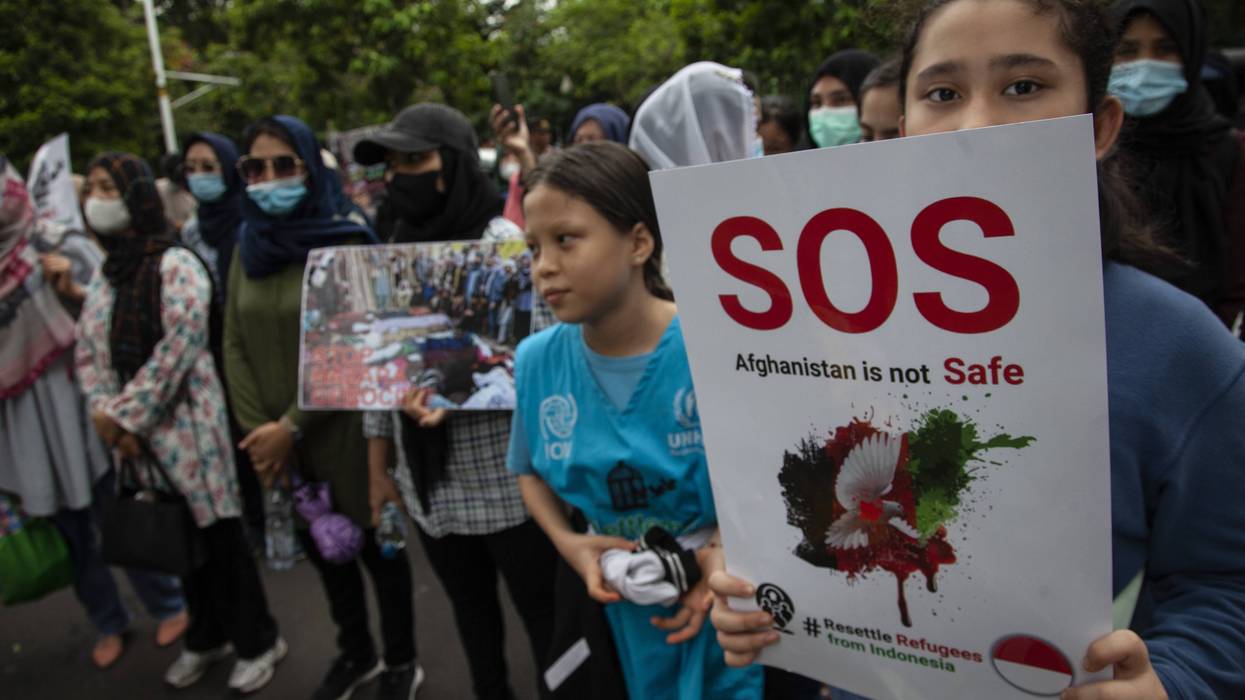
The Trump administration is preparing to deport more than 150 Afghan immigrants and refugees to Taliban-controlled Afghanistan via Pakistan, a move that drew fierce condemnation Friday from a range of critics—including human rights defenders and Democratic US lawmakers—who warned that such expulsions would place many of the deportees' lives in grave danger.
The New York Times reported that US Immigration and Customs Enforcement (ICE) has transferred Afghan detainees from facilities around the country to Louisiana in preparation for a chartered deportation flight expected to leave as soon as Monday.
The administration reportedly intends to send the Afghans to Pakistan, whose government would then expel them across the border into Afghanistan, where the Taliban has ruled since the US withdrew from the country in defeat over five years ago.
According to the Times, those slated for deportation include relatives of people who aided the US military invasion and occupation and at least one gay man. Both categories of people would face possible execution or severe persecution by the Taliban.
"Five years ago, Americans watched Afghans cling to planes to escape the Taliban. On Monday, our government plans to charter one back to their persecutors' hands," Krish O'Mara Vignarajah, president and CEO of refugee resettlement organization Global Refuge, said in a statement Friday.
"For the people on that manifest, the consequences could be prison, torture, or worse," she added. "For their families here, some of whom served alongside US servicemembers, it means losing a loved one without knowing whether they'll ever hear from them again."
Vignarajah implored the Trump administration to halt or reverse the plan before the flight departs.
"Pakistan is patently unsafe for Afghans," she said. "Its own government has made that clear by hounding them out of the country by the millions. Deporting Afghans into that crackdown is a deliberate decision to put them in harm's way."
Since 2023, Pakistan's government has expelled more than 2.7 million Afghans, according to Global Refuge, and has vowed to remove approximately 1.5 million who remain in the country regardless of their immigration status. The United Nations has documented killings, arbitrary detention, and torture of people associated with Afghanistan's former US-backed government and security forces.
The Taliban has also systematically stripped Afghan women and girls of the rights they gained during the US invasion, banning them from secondary schools, universities, and most employment, while imposing sweeping and draconian restrictions on their lives.
"Individuals returned to Afghanistan face grave, systematic dangers, including arbitrary detentions, executions, public flogging, and retaliatory violence," the group Human Rights First said Thursday. "Women and girls face severe restrictions on basic freedoms, including systematic denials of education, employment, and public speech."
Several Democratic US lawmakers, including Democrats on the Senate Foreign Relations Committee, decried the planned deportations.
"We made a promise to our Afghan allies—that after aiding and protecting our troops during the conflict in Afghanistan, America would not abandon them," said Sen. Richard Blumenthal (D-Conn.). "This administration is betraying that promise, deporting them to potential torture and death."
Sen. Chris Coons (D-Del.) posted: "While he hopes nobody is watching, Trump greenlit the expulsion of more than 150 Afghans back to Taliban rule, where they will face almost certain persecution, torture, or worse. Accountability for Trump’s cruel immigration agenda cannot come soon enough."
Sen. Tim Kaine (D-Va.) also weighed in, writing on social media, "Our Afghan allies risked everything to help the United States."
"Now Trump plans to send their relatives back to Taliban-ruled Afghanistan," he added. "Repaying their sacrifice with betrayal is shameful and will make it much harder for America to secure assistance in future conflicts."