

SUBSCRIBE TO OUR FREE NEWSLETTER
Daily news & progressive opinion—funded by the people, not the corporations—delivered straight to your inbox.
5
#000000
#FFFFFF
To donate by check, phone, or other method, see our More Ways to Give page.
Daily news & progressive opinion—funded by the people, not the corporations—delivered straight to your inbox.

“This is Gaza’s fourth winter of genocide,” JVP noted. “No family should lose a child to preventable cold or hunger.”
The US anti-war group Jewish Voice for Peace on Tuesday denounced Israel for creating the humanitarian crisis in which yet another Palestinian baby has died of hypothermia in Gaza, while the United Nations migration agency warned that more Gazans will likely suffer cold-related deaths if desperately needed supplies aren't rapidly delivered.
Nine-month-old Kinan Ahmed Raqiq was found dead by his father on Friday as they sheltered in a tent in the al-Mawasi area of Khan Younis in southern Gaza, Agence France-Presse reported.
Heavy storms and flooding have ravaged Gaza, where nearly 2 million people have been forcibly displaced, with many living in tents and other makeshift shelters that offer inadequate protection from the elements.
“I woke up only to see his skin had turned blue, so I rushed him to Nasser Hospital, but he had already died from hypothermia and frozen to death,” the father, Ahmed Raqiq, told AFP. "I am in complete shock. I found myself holding my son wrapped in a burial shroud.”
On Friday, nine-month-old Kinan Ahmed Raqiq died of hypothermia in Khan Younis, Gaza, amid plummeting temperatures and continued Israeli restrictions on humanitarian aid that are leaving Palestinians without the basic necessities to survive.
[image or embed]
— Jewish Voice for Peace (@jvp.bsky.social) November 17, 2026 at 10:18 AM
Gaza's Health Ministry said that a forensic examination confirmed that hypothermia was the cause of the infant's death, and that it was the first recorded cold-related death of the current winter season.
According to Gaza officials, at least 28 Palestinians—24 of them children—have died from hypothermia over the past four winters.
"No child should die from the cold, a death that could have been entirely prevented with adequate shelter. And winter in Gaza has barely begun," Jewish Voice for Peace said on social media.
"Meanwhile, the Israeli government is pushing Gaza toward the brink of another famine," JVP continued. "The World Food Program (WFP), Gaza’s largest food aid provider, recently announced it was cutting assistance to half a million people each month due to funding shortages."
"Moreover, containers of food and other essential supplies that are already available to reach Palestinians in Gaza are not being allowed in because Israeli restrictions continue to prevent the vast majority of aid from entering," the group noted. "The WFP warns that, if the Israeli blockade continues, up to 90% of Gaza’s population could face acute food insecurity by the end of 2026."
"No family should lose a child to preventable cold or hunger, or struggle to access the basic necessities to survive," JVP stressed.
"As winter deepens and aid restrictions continue, Palestinians deserve more than survival: They deserve warmth, food, safety, and dignity," the group added. "The world cannot look away. No one should have to endure this."
Karl Baker, who heads the United Nations International Organization for Migration's Gaza program, warned Tuesday that "without proper shelter, without critical relief items, then hypothermia deaths" will continue to occur.
"It's unacceptable to have hypothermia in the modern world," Baker added.
The IOM chief said the agency must address a $173 million funding shortfall for its winter shelter programs.
In a rare rebuke, US President Donald Trump's so-called "Board of Peace" said last week that Israel must do more to facilitate the entry of humanitarian supplies into Gaza amid winter storms and cold temperatures, calling Israeli efforts "insufficient."
As the Norwegian Refugee Council (NRC) said Monday:
Israeli restrictions block the most basic shelter materials from entering Gaza. We need cement, rebar, and metal sheeting—materials that can protect people from Gaza’s summer heat and winter storms. Instead, we find ourselves begging even for tents, which offer minimal insulation, provide little protection from floodwaters, and are easily ripped apart or blown away by strong winds, requiring replacement every six months.
"The suffering of Gaza’s 2.1 million people is not inevitable," NRC added. "The world must stop accepting it. Palestinians should have the opportunity to recover, rebuild their lives, and work towards a better future. But this is not possible unless Israel fulfills its obligations under international law: opening all crossings, allowing humanitarian aid to enter, and ending its unlawful occupation of Palestinian land."
Raqiq's death came amid Israel's ongoing US-backed assault on Gaza that belies a purported 13-month ceasefire, during which at least 1,614 Palestinians have been killed and over 5,800 others wounded.
The day before Raqiq’s death, Israeli drones bombed Nasser Hospital's surgical department, killing six people, including a surgeon and a child, while wounding dozens of others.
The overall toll of Palestinians killed since Israel launched what a United Nations commission of inquiry and many experts say is a genocidal war on the coastal strip in October 2023 currently stands at upwards of 74,645, with experts contending the true toll is far higher and thousands of people still missing or buried beneath the rubble of bombed buildings.

"Palestinians should have the opportunity to recover, rebuild their lives, and work towards a better future," said one humanitarian leader. "But this is not possible unless Israel fulfills its obligations under international law."
The United Nations' agency on migration is calling on countries to demand that Israel open additional crossings into Gaza and ensure the delivery of shelter materials and other basic supplies that would allow more than 1.7 million displaced Palestinians to begin recovering from the latest crisis to hit the already devastated exclave: flooding that destroyed tens of thousands of tents earlier this month and pushed families who are entering their fourth winter under Israel's attacks into even more desperate circumstances.
“Anything that can come in at any time, we just highly appreciate it and from any source; but of course, it needs to be durable and that’s what we’re looking for in order just to get through this winter,” said Karl Baker, the head of the Gaza program at the International Organization for Migration, on Tuesday.
Ten days after heavy storms caused the initial flooding, the impacts of the disaster have multiplied, and raised fears about how Palestinians with nowhere to live but makeshift tents—about 1.4 million of whom are facing acute hunger—will survive the coming winter.
Shaun Hughes, the World Food Program's country director for Palestine, told reporters Tuesday that the collapsed infrastructure of Gaza, where about 81% of all structures have been destroyed or severely damaged by Israel's US-backed assault since October 2023, has allowed floodwater as well as sewage to destroy families' meager food stocks.
“Most people burn rubbish to cook their food. Now even the rubbish is wet,” said Hughes, noting that cooking gas and firewood is unavailable or prohibitively expensive for many households.
Families have also started small fires in their tents to keep warm and cook—a practice that has accidentally killed at least two children in recent days as flames have spread. Those deaths were on top of the deaths of at least five people who were killed when a sand bank collapsed last week, and an eight-month-old baby who died of hypothermia this week.
Baker said that without proper shelter and critical relief items, more hypothermia deaths are likely to occur through the winter.
"No child should die from the cold. And winter has barely begun," said Tedros Adhanom Ghebreyesus, director-general of the World Health Organization. "Just a few days of rain have already flooded camps, destroyed tents and left families exposed to the cold. An estimated 950,000 displaced people are living in flood-prone areas, including 400,000 at extremely high risk. For families who have already lost so much, a tent is often their only remaining protection. Losing it means being fully exposed to cold, contaminated water, and disease."
Tedros added that the flooding is increasing the risk of waterborne illnesses, and those who contract diseases face difficulty accessing healthcare as about 90% of Gaza's health infrastructure is destroyed and hospitals are still facing attacks from Israel, like the one that hit Nasser Hospital last week and killed at least six people despite a so-called "ceasefire" agreement that was reached in October 2025.
"This is Gaza's fourth winter of war," said Tedros. "We urgently need unrestricted access at scale for shelter materials, clean water and sanitation supplies, medicines, vaccines, equipment to prevent hypothermia, and laboratory supplies to detect and respond to disease outbreaks early."
UN Women summarized the daily hazards now faced by families in Gaza: "Floodwaters. Sewage. Rodents. Disease. Cold."
"Without urgent access to life-saving humanitarian supplies and equipment, including durable shelter materials and winterization items, more preventable deaths may occur as the coldest months approach," said the agency for women's rights. "Israeli bombardment and ground operations have devastated the Gaza Strip, forcing almost a million people into flood-prone areas. Tents intended as temporary shelter have become homes for years, offering little protection from worsening conditions."
"International law, accountability for violations, immediate unimpeded humanitarian assistance that reaches women and girls and those in need—at scale and without obstruction—must all be fully realized," UN Women added. "There must be no further delay in ensuring that women and their families have the protection and dignity they need to survive."
Along with continued attacks by Israel, said Hughes, “Israeli military control across nearly 70% of Gaza means that people have almost no space to grow their own food."
"When you’re in Gaza, it does not feel like a ceasefire,” he said. “Fishing in the sea is prohibited and also life-threatening. Unemployment is over 80%, so without humanitarian assistance, people have little or no alternate means of survival."
Baker emphasized that IOM has more than 100,000 tents standing by for delivery from Egypt, but Israeli authorities have blocked their entry, reportedly citing the diameter of the tent poles.
“Usually anything under 38 millimeters is okay; anything above, it’s usually deemed as not acceptable,” Baker said. “We don’t get the specifics.”
In addition to calling for aid access, humanitarian teams need at least $9 million in the coming months to support flood prevention, fire safety, lighting, and improvements to emergency sites.
"The world has normalized Palestinian suffering in Gaza and the fact that an entire population relies on aid. Israel continues to conduct daily airstrikes and killings under the guise of a ceasefire and blocks vital aid from reaching people who desperately need it," said Jan Egeland, secretary general of the Norwegian Refugee Council.
"The suffering of Gaza’s 2.1 million people is not inevitable," Egeland continued. "The world must stop accepting it. Palestinians should have the opportunity to recover, rebuild their lives, and work towards a better future. But this is not possible unless Israel fulfills its obligations under international law: opening all crossings, allowing humanitarian aid to enter, and ending its unlawful occupation of Palestinian land."

Civil Defense officials in the obliterated Palestinian exclave say 8,000 people are still missing after three years of Israeli genocide.
A mass funeral was held Sunday for 70 Palestinians killed by Israeli forces whose remains, mostly skeletal, were finally retrieved from the rubble of the obliterated Gaza Strip years after they were massacred in the ongoing genocide.
Gaza's Civil Defense said the bodies—60 of whom have been identified, and include at least 10 children—were recovered from beneath what were once 20 homes in a residential complex in Beit Lahia, as well as from under the ruins of buildings in Jabalia, both in the north.
" Gaza is no longer burying one or two martyrs at a time, but entire families who have remained buried beneath the rubble for years," Civil Defense Major Hamed Abdel Qader told The New Arab. "We ask where the conscience of the world is when it sees children trapped beneath the rubble for all this time without lifting a finger."
Speaking on behalf of the families of the deceased, Bilal al-Sharif told The New Arab that "the martyrs were denied their basic right to have their bodies laid to rest and remained beneath the rubble for many long months. Our feelings of grief are mixed with pride, because the dead must be honoured and buried in a manner befitting their human dignity."
Sometimes called "the world's largest mass grave," the Gaza Strip is believed to have more than 8,000 bodies still buried beneath its rubble after more than three years and over 220,000 metric tons of explosives falling on its 141 square miles.
Israel’s destruction and denial of the heavy equipment needed for such a monumental recovery operation initially left Palestinians largely reliant upon rudimentary tools such as shovels, pickaxes, wheelbarrows, rakes, hoes, and even their bare hands. Earlier during the genocide, they worked amid the stench of death and decomposition that lingered in the air.
Civil Defense said its workers used two bulldozers and two transport trucks and toiled more than 230 hours to recover the 70 bodies buried Sunday. The remains of 90 more people have yet to be removed from the work sites.
"Many bodies remain trapped beneath the rubble, waiting to be recovered so their families can bid them farewell and lay them to rest," said al-Sharif. "This makes it imperative to stand alongside the teams carrying out this work and provide them with the equipment needed to complete the task."
Palestinians are struggling to dig through more than 60 million tons of debris after over 80% of all structures in Gaza were destroyed or damaged by two years of Israeli bombardment. That’s more than 200,000 buildings and other structures.
United Nations experts estimate it would take seven years for 100 trucks to remove all debris across Gaza, where more than three-quarters of roads are damaged, and unexploded ordnance and Israeli booby traps beneath the debris continue to pose deadly threats to recovery workers and survivors in general.
"We call on all international organizations and relevant bodies to intervene urgently and provide the resources needed to recover the remaining bodies," Qader said. "During field search and recovery operations, Civil Defense teams have witnessed scenes that are impossible to bear. Their work has not been limited to clearing rubble; they have also been confronted with entire families buried beneath the ruins of homes that were once safe."
An analysis of Gaza's civil registry published earlier this year found that 2,700 families in the strip had been entirely wiped out since October 2023, when Israel launched its war in retaliation for the Hamas-led attack that month.
Meanwhile, despite a supposed ceasefire in force since October 2025, Israel continues to launch daily attacks in Gaza. More than 74,000 Palestinians have been killed, over 21,500 of them children—although experts say the actual toll is likely much higher. Roughly 176,000 others have been wounded.
A United Nations commission of inquiry and many experts around the world—including numerous Israeli and other Jews—say Israel is carrying out a genocide in Gaza. Israeli Prime Minister Benjamin Netanyahu is wanted by the International Criminal Court for alleged crimes against humanity and war crimes, including murder and forced starvation.

“The patients in the department were all surgical patients waiting to undergo operations. The bombing happened at a time when they should have been asleep," said one doctor.
American-made bombs appeared to have been used in an Israeli strike on Nasser Hospital in Khan Younis, Gaza on Thursday, in which at least six people, including a surgeon and at least one child, were killed and at least 28 more were injured.
Trevor Ball, an analyst with Armament Research Services, told The New York Times that Associated Press footage of the aftermath of the bombing showed two 250-pound precision-guided aerial bombs that were manufactured in the US.
"Arms embargo now," said Dylan Williams, vice president of government affairs for the Center for International Policy, in response to the latest attack on the hospital, which has been struck numerous times since Israel began attacking Gaza more than three years ago in retaliation for a Hamas-led attack.
The US has passed legislation providing Israel with at least $16.3 billion in direct military aid since October 2023, on top of the $3.8 billion the Israel Defense Forces (IDF) receive from the US annually, according to the Council on Foreign Relations.
Both the Trump and the Biden administrations have also vehemently defended Israel's attacks on Gaza even as they have targeted hospitals, journalists, aid workers, and children—repeating Israel's claims that medical facilities are used as military outposts by Hamas and are therefore legitimate targets, and that Israel is targeting the Palestinian group it labels a terrorist organization and is taking steps to protect civilians.
In the case of Nasser Hospital this week, Dr. Ayman Abu Ubaid, a surgical specialist who was wounded in the attack that occurred around midnight, told The Guardian that the IDF provided no warning that could have allowed staff to remove patients and medical providers from harm's way.
“The patients in the department were all surgical patients waiting to undergo operations. The bombing happened at a time when they should have been asleep," Abu Ubaid told The Guardian.
The doctor added that "the bombing caused thick smoke to fill the rooms and fires to break out, amid the groans of [the] wounded and people’s screams. There were many casualties and blood everywhere... Most of us sustained injuries to our limbs, as well as shrapnel wounds in different parts of our bodies.”
Hadja Lahbib, the European commissioner for equality, preparedness, and crisis management, emphasized that "hospitals are protected under international humanitarian law and must never be targets.
"Civilians must be protected," said Lahbib. "I urge a prompt, independent, and impartial investigation to ensure accountability."
Israel said it had targeted and struck Hamas commanders and fighters who were operating out of the hospital, but did not provide evidence.
One confirmed death was that of Dr. Rizk Abu Shaaira, 52, who was featured in the documentary film "American Doctor," working alongside physicians from the US who traveled to Gaza to provide medical aid.
"My colleague and friend Dr. Rizk Abu Shaaira was killed yesterday at work when Israel, backed by the US as always, bombed the surgical recovery room at Nasser Medical Complex," said Dr. Feroze Sidhwa, a trauma surgeon from California who was also featured in the film.
"Dr. Rizk's shocking murder is yet another reminder of why we must get control of our country," said Sidhwa. "Our government has no right to force us to subsidize the mass murder of doctors and children, not in Palestine and not anywhere."
Dr. Thaer Ahmad, a Palestinian-American emergency doctor, also paid tribute to the surgeon, saying he had been seen in the documentary "operating and serving his people."
"He lost his life doing that, he lost his life because he was doing that," said Ahmad.
Abu Shaaira died alongside a patient he had operated on, The Guardian reported.
A 13-year-old boy named Jihad Naeem Muhammad Abu Tilikh was also among those killed, according to the hospital.
Several floors of the hospital were heavily damaged, and part of the surgery department was destroyed. The radiology, laboratory, surgical operations, and inpatient surgical departments were forced to suspend operations.
Nasser Hospital was also struck in August 2025 in a double-tap strike that killed at least 20 people, including journalists and healthcare workers.
United Nations experts have accused Israel of "medicide" due to its destruction of about 90% of Gaza's health infrastructure, which has left just two hospitals operational. More than 1,700 healthcare workers in Gaza have been killed since October 2023.
More than 74,000 Palestinians have been killed in Israeli attacks, including about 1,600 who have been killed since a ceasefire was reached in October 2025.
"How can this still be called a ceasefire?" said Philippe Lazzarini, former commissioner-general of the UN Relief and Works Agency for Palestine Refugees in the Near East. "A real one is needed and overdue."

"Too bad the US media can't find out about this," said one American critic recognizing that such displays of opposition to Israel's violent campaign of ethnic cleansing and forced displacement are rarely given much coverage.
An estimated 200,000 or more people—a sea of protesters dressed in red—marched and rallied in Amsterdam on Sunday to denounce Israel's ongoing genocide in Gaza, castigate the Dutch government and others in Europe for not doing enough to end the suffering and bloodshed after more than 3 years of US-back bombing, intentional starvation, and endless displacement in the world's largest open-air prison.
Organizers behind the "Red Line" rally—including The Rights Forum, Amnesty International Netherlands, Oxfam Novib, and others—celebrated the extraordinary turnout as they called for the Dutch government to do more to stop an Israeli government that "continues to kill, displace, and starve people in Gaza and the West Bank."
“What is happening there is inhumane,” said one protester, Mike van Dongen, who spoke to the Associated Press while he marched among the enormous crowd near the city's Museumplein. “As far as I’m concerned, [the Dutch authorities] are doing nothing. They don’t dare take any serious steps.”
As Al Jazeera reports, the protesters "called for tighter trade restrictions on Israel and a halt to all arms sales" to help bring an end to violence in Gaza and the occupied West Bank.
Large crowds join Red Line Gaza protest in Amsterdam
Signs in the crowd read "Stop the Killing in Gaza," "End the Genocide," and "Free Palestine" as speakers at the rally demanded much tougher actions and global solidarity with those suffering in Gaza, including tens of thousands of people who lost their temporary tents and shelters over the weekend to rainstorms and flooding.
According to AP:
The campaign in Gaza has strained relations between the Netherlands and Israel. The Dutch foreign minister resigned last year after failing to secure new sanctions against Israel.
Since then, a new minority coalition government has taken power and introduced an import ban on products from Israeli settlements, which the Dutch government and most of the international community consider illegal — a move that provoked a diplomatic spat with Israel.
Agence France-Presse spoke with Steven Eisinger, a 33-year-old robotics engineer born in the United States who marched with a red scarf around his neck.
Eisinger, who is Jewish and has family living in Israel, said he wanted all arms shipments to Israel to end and that he attended the rally, according to AFP, "to voice his backing for Palestinians and his opposition to genocide."

Meanwhile, a new poll revealed that a supermajority of Jewish Americans believe that the actions of Israel and AIPAC fuel antisemitism.
Despite an expensive campaign to distort his vocal criticism of Israeli crimes in Palestine as "antisemitic," progressive Michigan Democrat Abdul El-Sayed won his US Senate race with the support of a majority of the state's early Jewish voters, while a survey published Thursday revealed that 8 in 10 Jewish Americans believe Israel's actions and lobbying increase antisemitism.
An analysis of Michigan voting data published by the Jewish newspaper The Forward found that El-Sayed, who will be the first Muslim senator in US history, received approximately 60% of the vote among Jewish early voters.
The survey's results imply a rebuke of the efforts by groups like the American Israel Public Affairs Committee (AIPAC), which spent nearly $30 million on opposing El-Sayed and supporting his primary opponent, Rep. Haley Stevens (D-Mich.).
"The media spent October obsessing over Abdul El-Sayed's 'problem' with Jewish voters," writer and labor organizer Joe Wrote said on social media, noting that corporate outlets including The Washington Post, New York Times, Associated Press, and NPR "ran constant articles."
"In the end, El-Sayed got 60% of the Michigan Jewish vote, 1.3% less than Elissa Slotkin did in 2024," he added, referring to Michigan's Democratic junior US senator, who is Jewish. "The mainstream media is a joke."
While AIPAC's enormous spending helped make the contest one of the most expensive Senate primaries in US history, El-Sayed's focus on issues affecting working families—the affordability crisis, fixing the nation's broken healthcare system via Medicare for All—in addition to broader topics like getting money out of politics and ending US militarism and aid to Israel, led to his Tuesday victory.
AIPAC—whose super political action committee, United Democracy Project (UDP), only started financially supporting congressional candidates in 2021—has flexed its electoral muscles in recent years. In 2024, it helped defeat progressive Reps. Jamaal Bowman (D-NY) and Cori Bush (D-Mo.). However, Rep. Summer Lee (D-Pa.) survived a UDP spending blitz during the previous midterms in 2022, and El-Sayed's victories in both the Michigan primary and general election demonstrate the limits of its largesse.
El-Sayed's victory coincided with the release of a new GBAO survey commissioned by the liberal Jewish lobby group J Street showing that overwhelming majorities of Jewish Americans believe the actions of Israel and AIPAC contribute to antisemitism in the United States.
According to the survey, 80% of respondents believe that Israel's actions in Gaza and the West Bank increase hatred of Jews, while 66% said that AIPAC funding advertisements against candidates who criticize Israel worsens antisemitism, and 60% agree that "Jewish organizations that condemn harsh criticism of Israel as antisemitic are exploiting concerns about antisemitism to defend unpopular Israeli government policies."
Tellingly, more respondents believe that Israel is committing genocide in Gaza (31%) than that Israel deserves unconditional support (30%).
A United Nations Commission of Inquiry, as well as many experts, including Israeli and other Jewish scholars, say that Israel is committing genocide in Gaza. A genocide case against Israel filed by South Africa and formally backed by nearly 20 nations is proceeding through the International Court of Justice.
Israeli Prime Minister Benjamin Netanyahu and former Defense Minister Yoav Gallant are wanted by the International Criminal Court for alleged crimes against humanity in Gaza, including murder and forced starvation, committed during a war that has left more than 250,000 Palestinians dead or wounded and nearly 2 million people forcibly displaced.
In the illegally occupied West Bank, Israel has been accelerating its decadeslong campaign of apartheid, settler colonization, land theft, and ethnic cleansing, expanding illegal settlements and outposts while systematically dispossessing Palestinians of their homes, farms, and ancestral lands.
The far-right Netanyahu government has openly embraced annexation, with ministers pushing to formally absorb Palestinian territory into Israel and explicitly declaring their intention to prevent the establishment of an independent Palestinian state.
Armed Israeli settler-colonists, frequently operating with the protection, participation, or complicity of Israeli occupation forces, have unleashed increasingly brazen pogroms against Palestinian communities, burning homes, mosques, and vehicles, destroying olive groves, stealing livestock, beating residents, and killing Palestinians.
Appearing Thursday on MS NOW's "Morning Joe," El-Sayed was asked by host Willie Geist what message he had for Jewish voters who had been concerned about his positions and how he would protect them against antisemitism.
"I was really privileged to grow up in a community where about 40% of my high school class was Jewish," he said. "I grew up going to synagogue, going to Seder, going to bar and bat mitzvahs growing up. I have so much respect for the Jewish faith and Jewish contributions to American life."
"I also know what it's like to be discriminated against for how I pray," the senator-elect continued. "And I want an America where nobody is discriminated against under our Constitution."
"I know what it's like to drop off my kids to a mosque and wonder if they're going to be safe, and am I going to be able to pick them up safely afterwards," El-Sayed continued. "I'm committed to the safety of Jewish children like I'm committed to the safety of my own children."
"But I want to ask us this," he said. "We spend billions of dollars subsidizing a foreign government unconditionally buying bombs and tanks that have been used to do genocide and apartheid and make war we have no business fighting."
"And we're told that if you want to stand up against the murder of innocent Palestinian children, that that's somehow about hate for anybody. It's not about hate for anybody," El-Sayed stressed. "It's about equal love for those Palestinian children, as you would have for a Jewish child growing up in the Holy Land."
"So if I stand up and say, hey, maybe we shouldn't be sending our money to do the worst things to other people, people are like, well, it must be because you hate the people who are doing the worst things," he said. "I'm like, that's insane."
"We have to separate between Judaism and the Jewish people and Israel and its actions," the senator-elect asserted. "And by the way, I apply the same approach to the government of Egypt where my family came from. And I would hate that somebody would assume that I would be OK with the human rights abuses of the government of Egypt simply because I share the ethnicity of the majority of people who are in Egypt."
El-Sayed concluded by saying he wants to see a world in which "a Palestinian child and a Jewish Israeli child growing up in the Holy Land can look forward at their life and say, my life is not going to be curtailed by somebody's violence."

"You can't make this up," said one critic, who noted that in the UK, "you can openly cheer for mass murder, but you can't protest against it."
British police on Saturday arrested 325 people outside the US Embassy in London—almost all of them supporters of the banned peace group Palestine Action—while allowing at least one demonstrator to hold a sign reading "I support genocide."
Metropolitan Police said 320 of the people arrested at the demonstration organized by the group Defend Our Juries were apprehended for showing support for a proscribed group under the Terrorism Act. Many of those taken into custody were holding placards reading, "I oppose genocide, I support Palestine Action."
Meanwhile, video posted to social media showed a Met officer allowing a woman to hold a sign with the deliberately provocative message, "I support genocide, I oppose Palestine Action."
It was the largest mass arrest of Palestine Action supporters since Prime Minister Andy Burnham took office following the resignation of former Prime Minister Keir Starmer—both members of the Labour Party.
"The Kafkaesque UK laws adopted under the Starmer [government] to appease Israel are such that you'll get arrested for terrorism if you hold a sign saying, 'I support Palestine Action.' But if you hold a sign saying 'I support genocide, I oppose Palestine Action,' then you'll be fine," said Trita Parsi, the executive vice president of the US-based Quincy Institute for Responsible Statecraft.
The arrested protesters are charged under Section 13 of the Terrorism Act 2000, which carries a punishment of six months' imprisonment for carrying the signs.
Among those arrested Saturday were 94-year-old human rights lawyer Margaret Owen, who was also apprehended outside September's Labour Party conference in Liverpool for holding a sign supporting Palestine Action. According to reporting, Owen is Jewish.
"This is truly dystopian," UK Green Party Leader Zack Polanski said in response to Owen's arrest Saturday. "Not in our name."
"Israel killed eight people, including a child, in Gaza this weekend as they continue their genocide," Polanski noted in a separate social media post on Monday. "After a weekend of arresting pensioners for protesting against this horror, Labour has [put] Israel far above serving our local communities."
More than 250,000 Palestinians have been killed or wounded by Israeli forces since the Hamas-led attack of October 2023. That figure includes over 74,000 Palestinians killed, including upward of 21,500 children.
Undaunted, Owen was reportedly arrested again on Monday along with other members and supporters of the peace group No More Bloody Wars, who blocked an entrance to Royal Air Force-Lakenheath, a military base used by the US Air Force.
Rev. Bill White, 72—who also held a sign at Saturday's protest reading, "I oppose genocide, I support Palestine Action"—told The Guardian that he had "hoped for better" from Burnham's government.
“This is the right thing to do," White said of the protest. "There’s a bad law, and it is wrong to criminalize people that are trying to prevent genocide,” he added. “How can I not be here?”
A spokesperson for Defend Our Juries said Saturday that the "overzealous response outside the US Embassy today only serves to further expose how far authorities in the UK will go to appease American interests."
"Israel’s war crimes that have caused death and injury to thousands could not happen without the US’ approval," the spokesperson added.
Saturday's crackdown came as Palestine Action co-founder Huda Ammori prepared to challenge the ban before the UK Supreme Court starting on Wednesday. The lower High Court found the proscription unlawful in February, finding violations involving the government's own policy and free expression protections. The Court of Appeal overturned that decision in June, prompting Ammori's appeal.
The Palestine Action ban took effect in July 2025 after members of the group damaged warplanes on the Royal Air Force base at Brize Norton.
On Monday, members of another UK direct action group, People Against Genocide, broke into a factory in Tring, Hertfordshire owned by the Texas-based arms manufacturer Ultra Intelligence and Communications—which reportedly supplies UAV Tactical Systems, a subsidiary of Israeli weapons-maker Elbit Systems—and smashed equipment with hammers. Three people were reportedly arrested.
According to Novara Media, Monday's action "was timed to coincide with the 109th anniversary of the Balfour Declaration, a statement issued by the British government in 1917 that is widely seen as laying the foundation for the colonization and ethnic cleansing of Palestine."
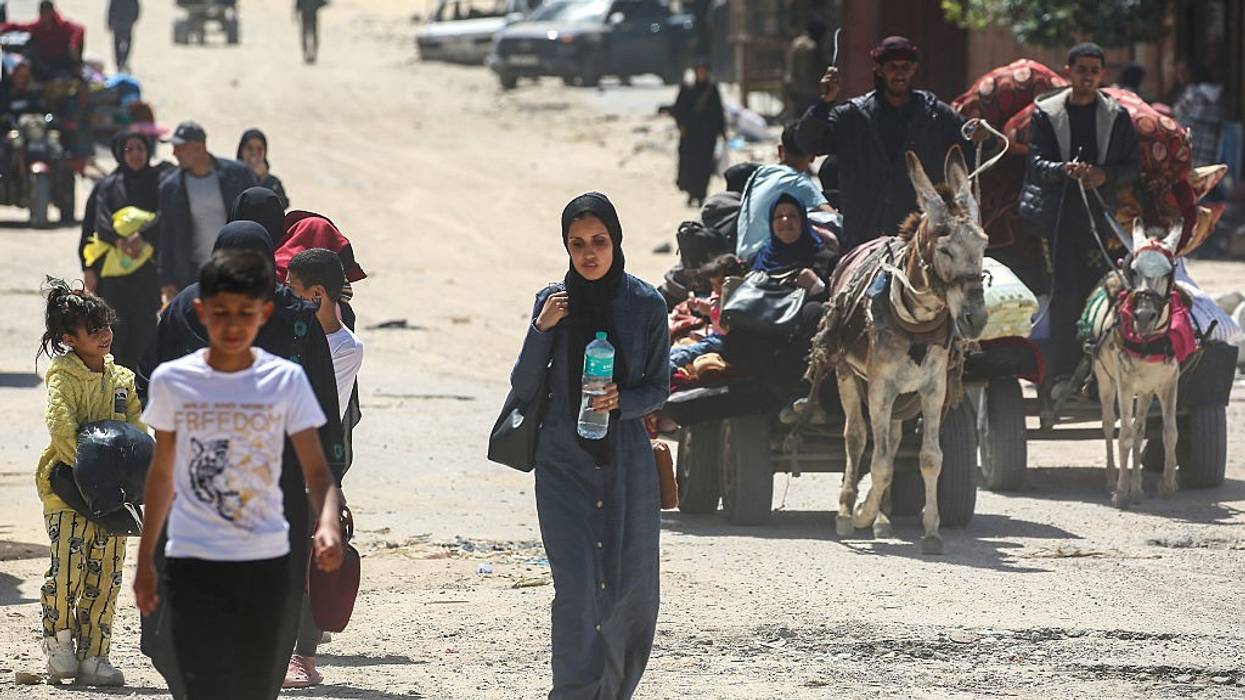
“Those displaced before the announcement of a ceasefire have little to no prospect of return to the areas they fled."
Israel's expanding military occupation of Gaza is accelerating the forced displacement of Palestinians, with the United Nations human rights office warning Friday that an already catastrophic humanitarian situation is further deteriorating as Israeli forces seize more territory and squeeze Gaza's population into an ever-shrinking area.
"Concerns of ethnic cleansing in Gaza endure as Israeli forces continue to push Palestinians into an ever-smaller fraction of the territory, causing recurrent displacement while destroying the remaining civilian infrastructure and attacking displacement sites," the UN Office of the High Commissioner for Human Rights (OHCHR) said in a new report.
The publication details the displacement crisis as a worsening "nightmare," documenting how Israel's expanding control, military operations, and restrictions on Palestinian movement are undermining any prospect of a return home for hundreds of thousands of people uprooted during the genocidal assault on the territory, now in its fourth year.
"Palestinians in Gaza are surrounded by Israeli forces from all sides that continue to push them inwards with the stated aim of increasing the Israeli military deployment area to 70% of Gaza’s territory," the report continues.
"The relentless contraction of space available to civilians comes with new displacement drivers in areas adjacent to Israeli forces’ deployment lines, commonly known as the 'yellow line,'" OHCHR added.
According to OHCHR:
Over the past two weeks, the UN Human Rights Office... has documented the westward expansion of Israeli military deployment areas triggering new displacement of Palestinians in Al-Shujaiyeh, Gaza City, and in eastern Al-Bureij, eastern Deir-al-Balah, and eastern Al-Maghazi, Middle Gaza. In Al-Shujaiyeh, Israeli forces’ westward push came with at least two Israeli attacks reported on displacement encampments, and detonations of the few buildings left standing in the area, with the reported use of explosive robots.
According to reports... an Israeli drone dropped munitions on tents sheltering displaced families at Al-Shujaiyeh junction near the so-called yellow line on October 25, setting tents on fire... The Palestinian Ministry of Public Works and Housing in Gaza said the fire displaced 200 families comprising 800 people, most of them women, children, and elderly persons.
All told, nearly 2 million Palestinians have been forcibly displaced during Israel's genocidal retaliation for the Hamas-led attack of October 7, 2023—most of them multiple times.
“The nightmare of displacement in Gaza is both acute and chronic,” Ajith Sunghay, who heads OHCHR's Palestine division. “Those displaced before the announcement of a ceasefire have little to no prospect of return to the areas they fled, most of which are inaccessible because they fall beyond the so-called yellow line. And they continue to be displaced again and again.”
That's apparently Israel's plan. Israeli authorities have stated that they intend to expand their military deployment to encompass 70% of Gaza's territory. To keep Gazans from returning home, Israeli forces have apparently been treating the area beyond the yellow line as a "kill zone," shooting any man, woman, or child who crosses the invisible boundary.
A United Nations-mandated commission of inquiry on Monday issued a report accusing Israel of crimes against humanity in the occupied Palestinian territories—including extermination, rape, and torture—while also affirming that Israel’s genocide continues in Gaza, despite the nominal yearlong ceasefire.
“There must be an end to this suffering," Sunghay stressed Friday. "This is the fourth year of displacement for most Palestinians in Gaza, the fourth winter in tents too flimsy to withstand the rain, and they are still under fire through it all. Let this be the last.”
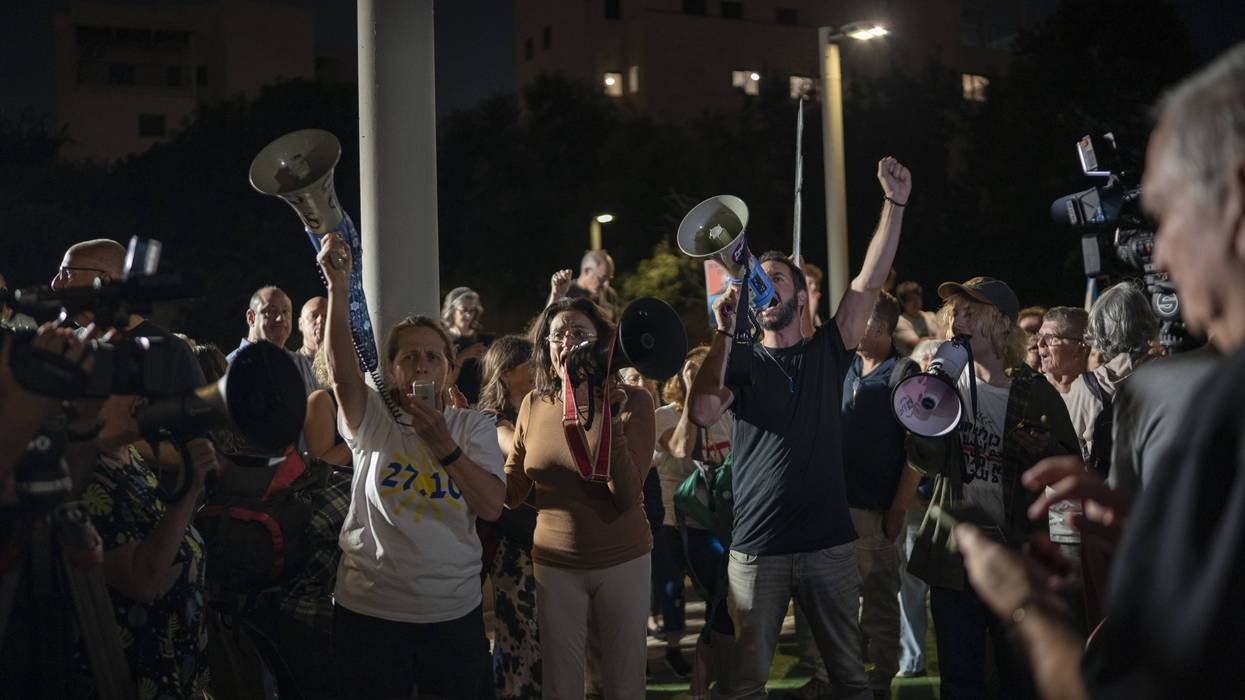
What is needed from the opposition leaders? Nothing beyond decency. The government that ousts Netanyahu is the one that accepts the votes of Arab citizens.
Benjamin Netanyahu, Itamar Ben-Gvir, and Bezalel Smotrich decisively lost Israel’s election on October 27. The governing coalition of Likud, the far right, and the ultra-Orthodox parties fell from 64 seats in 2022 to 53, eight short of a majority in the 120-seat Knesset. The other 67 seats went to parties that campaigned to replace the government: 48 to the Jewish-led opposition headed by Gadi Eisenkot, a former army chief of staff, and 19 to the two Arab parties. Turnout was 77.9 percent, the highest since 1999, and Arab citizens, who make up about one-fifth of Israel’s population, voted at an estimated rate of about 80 percent, up from 53 percent in 2022. The results make it clear: Israeli voters chose to end the Netanyahu government. The solution to Israel’s political crisis is in plain view. The only thing standing in the way of ousting the government is racism: the refusal of Israel’s Jewish opposition leaders to treat Arab citizens as part of the political community.
The racism is not hidden. On election night Netanyahu claimed a “decisive majority among the Zionist and Jewish public,” a formula that simply subtracts the votes of one citizen in five. His Likud party then viciously and absurdly declared that the election had been “stolen” by the Arab parties and demanded investigations by the police and the Shin Bet, Israel’s internal security service. The purpose, of course, is to brand Arab votes as illegitimate, so that no government resting on them can be accepted.
The tragedy is that the opposition leaders have adopted the same premise. Naftali Bennett, a former prime minister, has said that the Arab parties “are not Zionist, and therefore we will not rely on them.” Avigdor Liberman has ruled out any government that depends on Arab votes, even a temporary one. Eisenkot has said that Ra’am’s leader “won’t be part of my next government,” and that he does not “see any Arab or Haredi parties who accept” his conditions for partnership. These leaders do not object to anything the Arab parties would do in government. With good will, they could easily negotiate a governing arrangement.
The consequences of the racism are predictable. If the opposition leaders hold to their refusal, only two outcomes remain. Israel will go to another election, with the current murderous government remaining for many more months, or the opposition will join a unity government in which Netanyahu stays in power. Netanyahu has ruled out abandoning his far-right partners. Either way, the opposition leaders would hand Netanyahu and his murderous colleagues the victory that the voters denied him.
There are no real policy obstacles to cooperation. Ra’am, the United Arab List, has already served in an Israeli government. In 2021 it joined the coalition led by Bennett and Yair Lapid, the first independent Arab party ever to do so. The other Arab party, the Joint List, has said it would vote with an Eisenkot-led government to establish an official inquiry into the failures of October 7, which is the opposition’s own first priority. Israel’s voters appear to be ahead of their leaders. A Hebrew University survey on election night found that more than 61 percent of opposition voters want Eisenkot to form a government with Ra’am, while only 20 percent prefer new elections. Arab and Jewish opposition voters want the same thing, which is to oust Netanyahu, Ben-Gvir, and Smotrich.
A practical plan should follow directly from the arithmetic. First, when the new Knesset convenes, the 67 members opposed to the Netanyahu government should elect a new Speaker, giving the new majority control of the parliamentary agenda even before a government is formed. Second, Eisenkot should form a true coalition in which Ra’am sits as a full partner with ministerial posts, giving 56 seats, with the Joint List supporting the government from outside to reach 67.
The program of such a government would not be hard to negotiate, because the parties that would be in it already share most of it. The government would establish an official inquiry into the failures of October 7. It would adopt an emergency plan against the crime and violence that have devastated Arab towns, and it would invest in housing and services for Arab communities, including the unrecognized Bedouin villages of the Negev. It would restore the independence of the courts and the attorney general.
The government might last a year. Questions of borders and the Palestinian territories would not be settled by this government, but a non-racist coalition government now would move Israel toward a lasting peaceful solution, perhaps toward a binational democratic state or toward the two-state solution of the long-standing Arab Peace Initiative. In the meantime, and crucially, Netanyahu and the other war criminals would be ousted.
Israel’s leaders should also understand what is at stake beyond Israel’s borders. Israel’s racism and murderous campaign in Gaza and the occupied West Bank have profoundly alienated people all over the world. A Pew Research Center survey of 36 countries this spring found that a median of 67 percent of respondents view Israel unfavorably, including 60 percent of Americans. In Pew’s surveys this year, Israel was viewed more negatively than any other country it asked about. More Americans now sympathize with the Palestinians than with the Israelis. The alienation extends to Jews all over the world. If the politicians double down on their racism now, they will confirm the world’s harshest judgments of Israel.
What is needed from the opposition leaders? Nothing beyond decency. The government that ousts Netanyahu is the one that accepts the votes of Arab citizens. Israel’s president has asked the party leaders to come to his consultations with an open mind. The majority to remove Netanyahu exists, provided that the leaders drop their racism
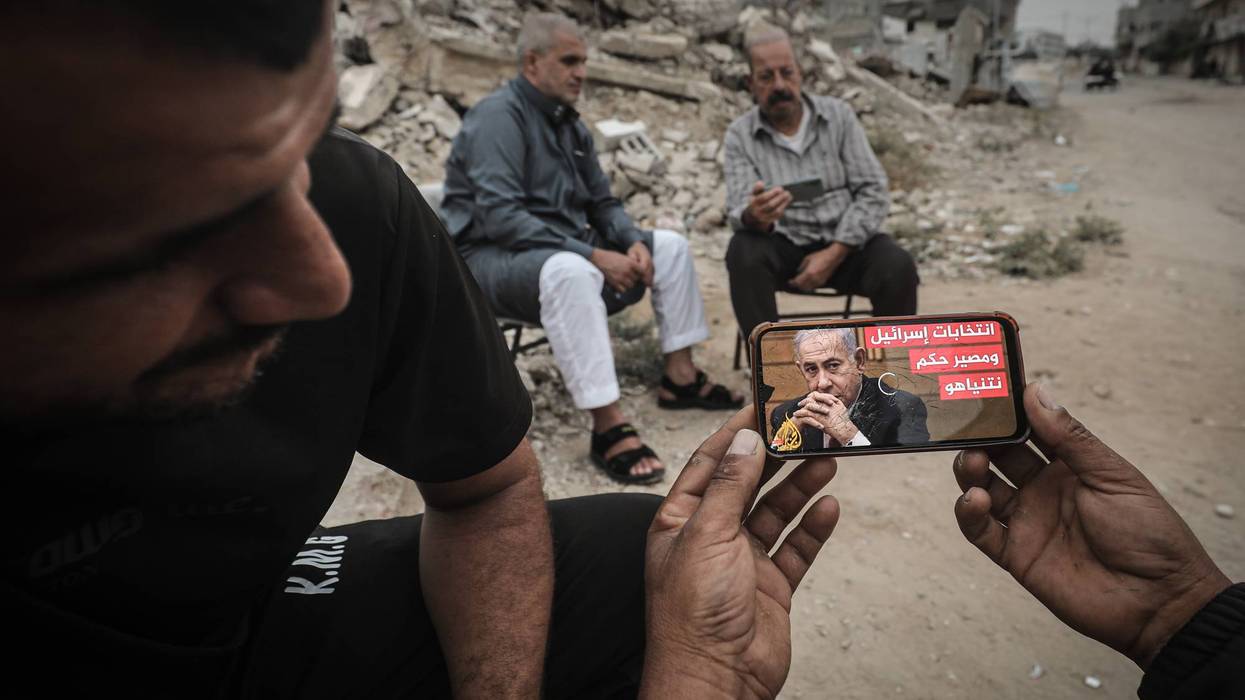
"Israeli policy will stay the same," said one woman in a Gaza refugee camp. "It's the policy that the Israeli state was founded on."
As Israelis await the results of this week's elections with a sense of uncertainty, Palestinians are certain of one thing—that their suffering will continue regardless of who emerges victorious.
"We don't care about their elections in any way. Gaza is in the same state. Their elections change nothing here," one elderly Palestinian woman told The Specter on Wednesday from a refugee camp in the obliterated strip, where three years of US-backed Israeli genocide have left 250,000 people dead or wounded, nearly 2 million inhabitants displaced, and the territory in ruins.
A younger woman in the camp told the outlet that "things in Gaza won't change, and they will get worse" if Prime Minister Benjamin Netanyahu is reelected.
"The first thing he'll do is pick up where he left off, displacing Palestinians from the occupied West Bank... and from the Gaza Strip," she continued.
If former lawmaker and ex-Israel Defense Forces Chief of Staff Gadi Eisenkot wins, "things may unfold a little differently," she predicted, but Israeli policy will stay the same. It's the policy the Israeli state was founded on."
Like Netanyahu, Eisenkot emphatically rejects Palestinian statehood, calling the two-state solution “a mistake" and "delusional," given the October 2023 attack led by the militant resistance group Hamas—whose animus was fueled by over a century of Zionist usurpation.
With around 90% of ballots counted as of Thursday, Israeli media projected that Netanyahu’s right-wing and ultra-Orthodox allies would capture 53 seats in the 120-member Knesset, compared with 48 for the opposition led by Eisenkot.
The Knesset has 120 seats, so 61 are needed for a parliamentary majority. The candidates' shortfall means either side would likely need support from Arab parties to emerge victorious—a prospect rejected by many Jewish political leaders.
Netanyahu would remain caretaker prime minister throughout any negotiations to form a new coalition.
Palestinian American fashion designer Alana Hadid—the half-sister of models Gigi and Bella Hadid—said in a video posted to social media that "it's important for people to understand that the intention of an election in Israel to make you think that there will be change. And of course, there will be some change in that there will be a different brand of Zionism."
"Zionism is universal across Israelis," she added, "so whoever wins this election, the change will be in name only."
Haaretz, Israel's oldest daily newspaper, on Thursday published an article in which Gazans mostly shrugged off the Israeli elections.
"Honestly, I don't feel anything about the results. As someone from Gaza, I'm just waiting to see who will bomb me next—the right or the left," a young man named Mahmoud said. "In the end, the bad will go, and the worse will come. They're two sides of the same coin, and both support your killing as a Gazan."
"I think people in Gaza will be happy to see Netanyahu fall, not because of Eisenkot, of course, but because they experienced Netanyahu and saw what he did," he added. "They hope Eisenkot will deal with Gaza differently, or that there will be some relief. But, as I said, even though the two are against each other, both want you killed."