

SUBSCRIBE TO OUR FREE NEWSLETTER
Daily news & progressive opinion—funded by the people, not the corporations—delivered straight to your inbox.
5
#000000
#FFFFFF
To donate by check, phone, or other method, see our More Ways to Give page.
Daily news & progressive opinion—funded by the people, not the corporations—delivered straight to your inbox.

Brazilian President Luiz Inácio Lula da Silva is moving to demarcate scores of Indigenous territories by the end of the year—but many say the government needs to act faster amid deadly attacks.
A tribal leader from Brazil stressed on Monday, the opening day of the United Nations Climate Change Conference in Türkiye, that protecting Indigenous lands is a critical part of tackling the climate emergency, remarks that came as Brazil's government advances a plan to demarcate dozens of Indigenous territories amid surging violence against native people.
Joziléia Kaingang, co-founder and executive director of the National Network of Indigenous Women Warriors of Ancestral Wisdom (ANMIGA), told attendees of a session in COP31's Brazil Pavilion in Antalya that there are no real climate solutions without Indigenous participation.
"This means a very simple thing for us Indigenous peoples, something that our grandmothers have been saying for a long time and have known for a long time. Protecting Indigenous territory is indeed a climate policy," said Kaingang, who is a member of the Kaingang people of southern Brazil. "It is not charity, it is not compensation, it is a solution."
Kaingang hailed progress under the government of Brazilian President Luiz Inácio Lula da Silva, who was reelected last month with the support of 608 of the country's 658 Indigenous polling places. Lula's overwhelming support from Indigenous Brazilians is in no small part due to his government's substantial—yet tenuous—progress against illegal mining, logging, and other invasions of tribal lands.
Lula's policies marked a sharp reversal from former far-right President Jair Bolsonaro's deliberate dismantling of Indigenous territorial protections and other actions that lived up to his self-bestowed "Captain Chainsaw" moniker.
"The state withdrew invaders from our lands," Kaingang said. "The forest breathes again from the action of the last government of President Lula, and will continue to do so in this presidency in the next four years."
Kaingang continued:
In the Yanomami territory... 98% of illegal mining fell. This is important for all of us. Indigenous lands and local communities keep about a third of the carbon that humanity cannot lose.
And we want to say that we, Indigenous peoples, are here to celebrate the Brazilian government. We want to advance the roadmap to stop and reverse deforestation and forest degradation by 2030. But it is necessary that the roadmap brings the perspective of Indigenous peoples, of traditional communities, of our knowledge.
"Let's reaffirm that without demarcation, there is no climate solution," Kaingang added. "So let's keep demarcating the Indigenous territories so that we are the solution."
Brazil's government is preparing to approve dozens of additional Indigenous land demarcations before the end of 2026, Indigenous Peoples Minister Eloy Terena, who is a member of the Terena people, told Brasil de Fato on Sunday, as native communities face continuing deadly violence, land invasions, and encroachment by agribusiness interests.
During Lula’s third term, Brazil's government has recognized 20 Indigenous lands, declared 21 others, and established 31 reserves, according to the minister.
However, recent Indigenous land demarcation protests across Brazil have decried the government's failure to move faster in recognizing and protecting Indigenous territories amid ongoing violence.
Terena linked recent attacks against Guarani Kaiowá communities in Mato Grosso do Sul—including reported murders, vehicle attacks, and threats to poison drinking water—to the government's failure to secure their ancestral territories. He said that more than 150 technical working groups are advancing demarcation procedures, but warned that executive action alone cannot overcome entrenched political and judicial resistance, which is sustained by pressure from agribusiness and other destructive interests.
The minister added that the government seeks "to strengthen Indigenous organizations, the Indigenous movement, and communities. Because we understand that if eventually the democratic winds turn, we need to have a very committed society and very well-structured social movements."

Lula's comeback offers a powerful lesson: Ambitious economic policies can capture voters' imaginations when they promise tangible improvements in everyday life and win their hearts when you can deliver on that vision.
In just three weeks last month, Brazilian President Luiz Inácio Lula da Silva turned a 2.2-million-vote deficit in the first round into a 4.4-million-vote victory in the runoff. He won 52% to 48%. The six-point reversal made him the first candidate in Brazil's modern presidential history to win a runoff after being down in the first round. He increased turnout and appears to have converted voters who didn’t initially vote for him.
Much has been written about the organizing mechanics of this remarkable turnaround and the revitalization of "Lula's Army." While these explanations tell us how Lula’s campaign mobilized voters, they don’t tell us why voters mobilized. The contrasts between Lula and Flávio Bolsonaro were of course already stark, but if they were so stark, the changing of the tides wouldn’t have been so dramatic over three weeks. That emphasis on organizing mechanics overlooks strategic policy decisions Lula made those final weeks to deliver concrete victories for Brazilian workers.
And the most powerful of those decisions? In October, Lula successfully fought for the passage of a constitutional amendment to shorten the workweek from six days to five days, which had been one of his main campaign pledges. This was one of the most meaningful Brazilian labor reforms in decades. By the end of 2027, workers will have 10% of their time back and an additional day of rest. So many voters are used to politicians making promises but not delivering on them. Lula made sure workers knew he had their back by delivering real policy change in a critical period of the election. And this policy was not a niche policy change impacting small segments of the population. It’s estimated it would concretely touch the lives of over 30 million Brazilian workers by giving them their time back.
For millions of Brazilian workers, they’ve had a “6x1” schedule their entire lives: working six days every week with just a single day to recover. Burnout, unsurprisingly, had become epidemic. Shortening the Brazilian workweek had been advanced by unionists in Brazil for decades, but had taken on newfound pressure from a grassroots campaign called Vida Além do Trabalho (Life Beyond Work). This campaign, founded in 2023 by worker-turned-politician Rick Azevedo, helped turn growing frustration into a real political movement. From 2023 to 2026, workers and politicians worked together to steadily build support in Congress, organizing demonstrations, running for office on a shorter workweek agenda, collecting millions of signatures, and incorporating the demand into campaign rallies. This culminated in Lula focusing on shortening the workweek in his May Day 2025 rally and sending a bill to Congress in April 2026, bringing this issue into the forefront of the presidential election.
The grassroots campaign also helped seed widespread support for shorter workweeks across the political spectrum, helped in part by the fact that shorter workweeks intuitively connected to workers’ material self-interest. In March 2026, a Datafolha poll showed that 71% of Brazilians supported ending the six-day workweek, including 77% of women.
Lula recognized the opportunity. Just days after his first-round defeat in October, he publicly challenged Bolsonaro to support the reform. Simultaneously in October, University of Brasilia’s student union held a 50,000-person rally with the slogan “Bolsonaro never again, and end the 6x1 now.” This bottom-up and top-down approach worked. Bolsonaro and his opposition party initially opposed the proposal. But amid widespread backlash, they quickly backed down. They agreed to a special Senate session to ensure the passage of a constitutional amendment which would result in a 10% reduction of workers’ workweeks (from 44 hours to 40 hours) and two guaranteed days of rest by the end of 2027, with no loss in pay. The public hunger for this change was so deep that the amendment passed 75-1 in the Senate and Congress passed it two days later.
Lula's comeback offers a powerful lesson. Ambitious economic policies can (1) capture voters' imaginations when they promise tangible improvements in everyday life, and (2) win their hearts when you can deliver on that vision. And few promises are more meaningful than giving workers back the one thing they can never earn more of: their time.
The cost-of-living crisis is a global issue: When you hear the struggles of Brazilian workers, they’re not too different from those of American workers. Just as in Brazil, there’s an epidemic of burnout and widespread frustration that the American dream has just resulted in being overworked and tired. Brazilian politicians and movement leaders savvily recognized that cost-of-living and affordability is about prices and wages, but also about time.
American politicians should start paying attention. The United States established the 40-hour workweek nearly 90 years ago. Despite massive changes in who works, how we work, where we work, and when we work, that workweek has stayed at approximately 40 hours at the individual level, and we work more household hours than we did 60 years ago. With AI on the horizon, even more could change rapidly with work.
American politicians should keep in mind that the shorter workweek offers an opportunity to translate this burgeoning coalition for shorter workweeks into meaningful policy change.
In this moment of burgeoning economic populism, shorter workweeks could be a policy that helps politicians deliver real widespread change that is also immensely popular. The Brazil example is instructive. Any shorter workweek bill deserves to be passed merely for the sake of giving time back to workers, but it also holds real electoral fruits. As in Brazil, approximately 7 in 10 Americans support shorter workweeks. After all, a better economy shouldn't just mean having more money in your pocket. It should mean having more life outside of work.
Similar to Brazil in 2023, we’re seeing small scale progress in the last few years. At the federal level, 32-hour workweek bills have been introduced in both houses of Congress from Sen. Bernie Sanders (I-Vt.) and Rep. Mark Takano (D-Calif.). At the state and local level, policymakers as wide-ranging as a Republican in Maine, Rick Bennett, and a DSA NY Member in NYC, Phara Souffrant Forrest, have advanced shorter workweek legislation. Both unions have advocated for this and hundreds of companies have adopted it.
The dust will soon settle on the 2026 midterms, and campaigns will start prepping for the 2027 and 2028 elections. American politicians should keep in mind that the shorter workweek offers an opportunity to translate this burgeoning coalition for shorter workweeks into meaningful policy change. Lula's comeback shows what can happen when politicians give workers something worth fighting for, and then deliver on that idea.

"It offers every country a menu of policies to build its own plan to move away from coal, oil, and gas, whether it's a major producer, a big consumer, or an economy that depends on imports."
With the next United Nations Climate Change Conference less than a week away, greenhouse gas levels soaring, and a temporary overshoot of the Paris Agreement's 1.5°C goal now inevitable, Brazil, the host of last year's COP30, on Tuesday published a pair of roadmaps for transitioning away from planet-heating fossil fuels and tackling deforestation.
"We don't need more negotiations. What we need is for governments to start taking action," André Aranha Corrêa do Lago, the Brazilian diplomat who served as the president of COP30, told Reuters. "We need to completely change the way governments deal with climate change. To implement this, we need finance, infrastructure, and transportation ministers at the table."
In his foreword for the transition report, Corrêa do Lago explained that at the closing plenary in Belém last November, "and in the context of the COP being held in the Amazon, I committed to developing... roadmaps for implementing two outcomes of the First Global Stocktake, agreed by consensus at COP28 just two years earlier: (i) transitioning away from fossil fuels in energy systems in a just, orderly, and equitable manner; and (ii) enhancing efforts toward halting and reversing deforestation and forest degradation by 2030. With their publication, that commitment is fulfilled."
"Both transitions depend on finance," he stressed. "The two roadmaps are therefore presented alongside a third document, 'Implementing the Baku to Belém Roadmap to 1.3T,' which sets out how financing to developing countries for climate action can be scaled up from all public and private sources to at least US$1.3 trillion per year by 2035. Read together, the three documents describe what has to change and propose ways forward so that change can be financed and sustained."
After ending with what critics called "an empty deal," COP30 was condemned as a "catastrophic failure to take concrete action to implement a funded and fair fossil fuel phaseout," and there was some criticism of the new roadmaps for also not going far enough.
Greenpeace Brazil executive director Carolina Pasquali said in a statement that "this is a major effort by the COP30 presidency and a crucial step towards ensuring the COP28 decision to transition away from fossil fuels is fully implemented. As our climate races towards a 1.5°C overshoot, the roadmap encourages important measures but stops short of setting clear fossil fuel phaseout targets or calling for an immediate halt to the expansion of fossil fuels."
However, Pasquali praised the forests roadmap—launched in the aftermath of Brazilian President Luiz Inácio Lula da Silva's reelection victory over far-right candidate Flávio Bolsonaro—which she said "represents a major effort from the COP30 presidency and was launched with the credibility of a Brazilian government that has achieved the lowest deforestation rate in its history. The presidency has helped bring together, through multiple contributions and dialogues, a wide range of existing initiatives and views."
It remains slightly mad that governments have agreed to phase out fossil fuels from energy systems, but can't agree to even the principle that having a plan for doing so would be a good idea. www.businessgreen.com/news-analysi...
[image or embed]
— James Murray (@james-bg.bsky.social) November 3, 2026 at 11:34 AM
Despite some shortcomings, other climate campaigners welcomed the roadmaps—released as activists and world leaders alike prepare for COP31, which is scheduled to kick off Monday in Antalya, Türkiye.
"Brazil has offered a valuable blueprint for the global transition away from fossil fuels," said Oil Change International global policy lead Romain Ioualalen in a statement. "It recognizes there is no one-size-fits-all pathway, that all countries need to plan their transition now, and that equity and finance are critical to achieving fossil-free prosperity in many countries."
Like Corrêa do Lago, he emphasized that "now that we have a global roadmap, we need to see action. If all this process leads to is another series of dialogues, it will be a massive missed opportunity in an already closing window. Countries need to develop their own domestic roadmaps that plan their economic diversification away from fossil fuels using the guidance and tools provided by Brazil’s report."
"We also need to see the global Mutirão for the transition away from fossil fuels deliver key decisions that allow countries with strong economic and energy constraints to unlock their transition. The Second Global Stocktake in 2028 will be a critical opportunity to make that happen," Ioualalen continued.
"Delivering on this global roadmap for countries with deep financial constraints hinges on finance. But it does outline some finance tools that have a track record of failing, like debt swaps and derisking methods," he noted. "Enough public finance can be delivered to fund a fair fossil fuel phaseout as rich countries can unlock trillions every year through taxing polluters and extreme wealth, ending fossil fuel subsidies, and reforming unfair financial rules."
Ioualalen added that "one area of real concern is the suggestion that global action on reducing fossil fuel supply could wait until the 2030s. That would be a grave mistake, and a guarantee to further lock in fossil fuels and for a chaotic transition. Existing fossil fuel extraction projects already commit the world to emissions nearly seven times the remaining 1.5°C carbon budget. There is no time to pass the baton between supply and demand. Both need to be addressed now, through a fair, funded, and fast transition."
“The roadmaps are valuable but fall short of clearly indicating the pace of change needed by including no timeline or key benchmarks” ~Joeri Rogelj, professor of climate science and policy at Imperial College London.
[image or embed]
— Suzanne York (@suzanneyork.bsky.social) November 3, 2026 at 12:06 PM
Fanny Petitbon, a policy analyst at the international movement 350.org, similarly said that "this roadmap is a critical handbook for ending the fossil fuel era, which leaves governments with no excuse not to act. It offers every country a menu of policies to build its own plan to move away from coal, oil, and gas, whether it's a major producer, a big consumer, or an economy that depends on imports."
"Electrification is absolutely central to this transition, but it will only deliver if it is powered by renewable energy, matched by investment in modern grids, and brings clean, affordable energy to everyone," she highlighted. "We cannot swap one energy system for another while leaving the same communities behind."
Petitbon argued that "the roadmap must not end up as just another report gathering dust on a shelf. France, the Netherlands, and Germany have already published national roadmaps, but they fall short of the ambition the climate crisis demands and of their responsibility in it. Pacific Island states plan to deliver a regional strategy to break free from fossil fuels. So the question for all major emitters is simple: When will you submit your roadmap?"
"Rich nations must also mobilize public finance to support developing countries with their transition and ensure that the fossil fuel industry cannot continue to profit from a crisis that is costing people their livelihoods, health, and homes," she asserted. "COP31 must be the moment when governments take this work forward, with clear commitments, timelines, and the resources to deliver a fair and orderly exit from coal, oil, and gas."
"The COP30 presidency has set out clear next steps, and future COPs must keep this issue at the top of the agenda every year so the momentum is never lost," she added. "2028 will be the moment of truth. As the world will take stock of how far it has come in delivering the Paris Agreement, it will become clear who has honored the promise made in Dubai to transition away from fossil fuels, and who has walked away from it."
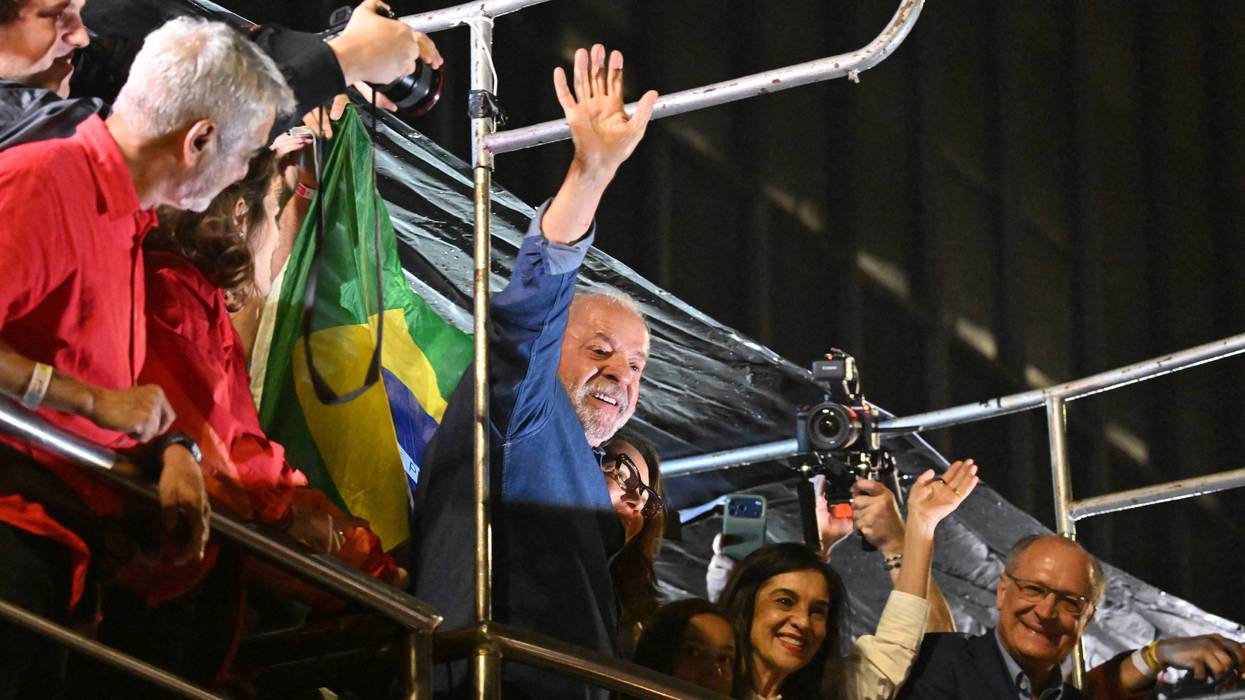
"In the two largest democracies in the hemisphere, we cannot tolerate authoritarian efforts to deny election results, overturn the will of hundreds of millions of voters, or violently interrupt the peaceful transfer of power."
Progressive leaders in the US House of Representatives on Friday demanded that President Donald Trump recognize Brazilian President Luiz Inácio Lula da Silva's reelection victory, accusing the Republican of joining defeated far-right candidate Flávio Bolsonaro's bid to undermine democracy in Latin America's largest country.
“Trump continues to ramp up his election denialism," Congressional Progressive Caucus Chair Greg Casar (D-Texas), CPC Deputy Chair Ilhan Omar (D-Minn.), and CPC Whip Jesús G. "Chuy" García (D-Ill.) said in a statement, adding that Lula won by "more than 4 million votes. Yet Trump called it 'rigged’ and ‘corrupt’ and refused to recognize the outcome."
Turning to loser Bolsonaro's flight from Brazil to the United States, where senior Trump officials said he and his family would be granted visas, the progressives continued, "As soon as Flávio Bolsonaro touched down in Florida, he thanked Donald Trump for his support and claimed that Brazil’s election was stolen, outrageously declaring himself the rightful ‘president-elect.’"
"Trump’s and Bolsonaro’s partnership in election denial must stop immediately," they stressed. "We demand that the United States join the rest of the world in accepting the results of Brazil’s election. In the two largest democracies in the hemisphere, we cannot tolerate authoritarian efforts to deny election results, overturn the will of hundreds of millions of voters, or violently interrupt the peaceful transfer of power."
“As November approaches, we are committed to using every congressional tool at our disposal to defend election integrity at home and stop Trump’s election interference and denialism abroad," the lawmakers added, alluding to next week's US midterm elections.
The Trump administration's response to the results of the Brazilian runoff has angered many in Brazil, especially those on the left.
According to Folha de São Paulo, the US State Department had prepared a customary statement congratulating Brazil on its election but was ordered to withhold its release after Bolsonaro challenged the results. The US Embassy in Brasília subsequently offered no indication of when the statement would be issued.
Lula's leftist Workers' Party addressed Trump's behavior in a resolution saying that "Brazil will not accept foreign interests interfering in its democracy, nor will it accept political disputes serving as a pretext to disrespect the sovereign will of the Brazilian people, in elections that were widely monitored and recognized for their integrity."
"The position of US President Donald Trump regarding the election results and [Bolsonaro's] presence on US territory also requires attention," the resolution added.
Dan Beeton, communications director at the Center for Economic and Policy Research, told Common Dreams on Friday that "the CPC leaders are right."
"Trump should join the rest of the world and recognize Lula’s historic electoral victory and, hopefully, turn a new page in US-Brazil relations, which have deteriorated significantly during Trump’s second term, with Trump’s unprovoked and unnecessary tariffs, sanctions against officials responsible for holding former President Jair Bolsonaro accountable for his 2023 coup attempt, and other hostile actions," Beeton added. "Trump will risk further isolating the US on the world stage as long as he doesn’t.”
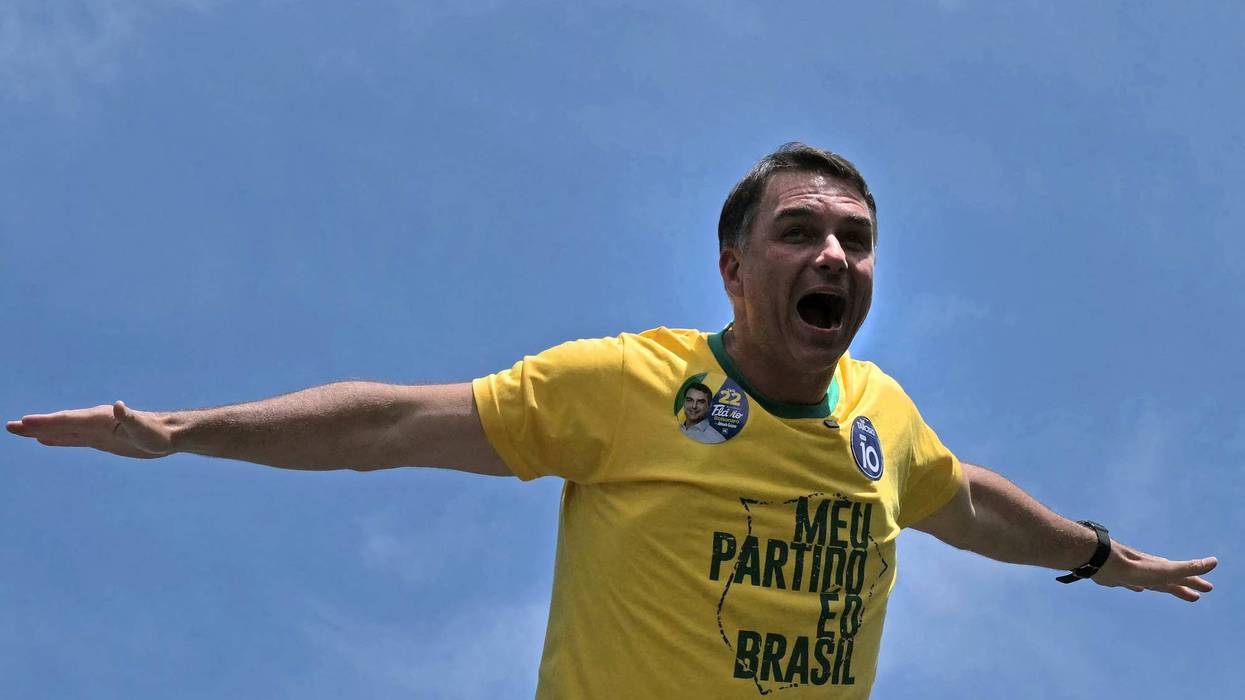
"This reveals the DNA of Bolsonarism," said one critic. "Bolsonarism is made of cowardice."
Just one day after vowing he would remain in Brazil to disprove allegations of money laundering, corruption, and other crimes, far-right Brazilian Sen. Flávio Bolsonaro followed in his disgraced father's footsteps by fleeing to the United States after losing a presidential election.
Bolsonaro, his wife Fernanda Bolsonaro, and their two daughters, ages 14 and 12, left Brazil for an unknown location in the United States, according to initial reporting by Isadora Teixeira at the Brasília-based news site Metrópoles, which was subsequently confirmed by other Brazilian and international media.
The Argentinian site Infobae reported that Bolsonaro and his family may have crossed into Argentina—which is run by his ally, far-right President Javier Milei—and then traveled to the US in a private jet. It is not known where the family went in the US.
Bolsonaro's brother, Eduardo Bolsonaro, lives in Texas while facing criminal punishment in Brazil after trying to use the Trump administration to pressure Brazilian authorities over the prosecution of his father, former President Jair Bolsonaro, who last year was convicted of conspiring to violently remain in power following leftist President Luiz Inácio Lula da Silva's 2022 election win.
Flávio Bolsonaro, a 45-year-old senator representing Rio de Janeiro, was defeated by Lula in Sunday's second-round election, but refused to accept the results and groundlessly demanded an annulment. The following day, Supreme Court Justice Alexandre de Moraes ordered the seizure of Bolsonaro's passport. He was supposed to have turned in the document Tuesday, but he didn't.
US President Donald Trump also cast doubt on the election's outcome, saying the contest appeared to be "rigged."
Jair Bolsonaro also fled to the United States while refusing to acknowledge his own 2022 defeat, which occurred during the administration of former President Joe Biden.
Like Trump, Bolsonaro incited a violent insurrection in his nation's capital following his loss.
Unlike Trump, Bolsonaro was held accountable for his crimes, and, in addition to a 27-year prison sentence—now being served under house arrest—is banned from running for any political office for the rest of the decade.
Now, with Trump back in the White House and Secretary of State Marco Rubio in charge at Foggy Bottom, Bolsonaro and his relatives are set to be issued US visas, a senior State Department official told The Associated Press.
The younger Bolsonaro's flight—which may have been aided by his obtaining an Italian passport in 2023—contradicts his pledge on Monday, when he said, "I have never thought about leaving the country" and "I will hand over my passports and defend myself against this travesty."
He was referring to de Morães' order to surrender his passport amid accusations of corruption, money laundering, tax evasion, and foreign currency violations.
Bolsonaro is also the subject of an inquiry pertaining to the millions of dollars he raised from a disgraced banker implicated in a massive corrupt plot to finance a biopic of Jair Bolsonaro.
The senator has not been charged and denies any wrongdoing.
Bolsonaro's flight stands in stark contrast to Lula, who spent 580 days in prison after being convicted in corruption cases stemming from the sprawling Operation Car Wash investigation.
In 2021, Brazil’s Supreme Federal Court annulled Lula’s convictions on procedural grounds, ruling that the court in Curitiba lacked jurisdiction over the cases and separately finding that former judge Sergio Moro had acted with bias in one of them. The decisions restored Lula’s political rights and eligibility to run for office, paving the way for his 2022 presidential victory over Bolsonaro.
Lula responded to the senator's departure by saying, "Unfortunately, the Bolsonaro family is like that."
"Brazil is his second homeland," the president continued, accusing Bolsonaro of "bootlicking in the United States."
Secretary-General of the Brazilian Presidency Guilherme Castro Boulos ripped Bolsonaro, saying: "Leaders face things head-on! Rats run away!”
"It is a shameful thing, which should make Brazilian society as a whole reflect, especially those who supported and voted for Flávio Bolsonaro," Boulos asserted. "He slapped his supporters in the face and left them on the side of the road."
"Almost 60 million Brazilians trusted him as political leadership to run the country, and 24 hours later, he flees," he continued. "And it's no use coming up with this talk of persecution, of dictatorship. He ran away because he must."
"This reveals the DNA of Bolsonarism," Boulos added. "Bolsonarism is made of cowardice."
Erika Hilton, a member of the Chamber of Deputies—the lower house of Brazil's Legislature—representing São Paulo for the Socialism and Liberty Party, weighed in on social media, calling Bolsonaro "a traitor to the homeland."
In the United States, Congressman Joaquin Castro (D-Texas) said on X that "losing an election is not grounds for asylum."
"Yet the Trump administration is giving Flávio Bolsonaro safe haven in the United States," he continued. "The Trump administration owes Congress answers on its role helping Bolsonaro flee Brazil in contravention of Brazilian law."
Mark Weisbrot, co-director of the Center for Economic Policy and Research (CEPR), told Common Dreams:
Trump is now the most corrupt president in US history, raking in billions from his presidency. It's no surprise when the most powerful corrupt authoritarian government in the hemisphere uses international law designed to protect the persecuted to shield another corrupt authoritarian government from criminal prosecution. Perhaps this is what is meant by the Trump-led 'Shield of the Americas.'
Francesca Emanuele, senior international policy associate at CEPR, noted that "the United States has long served as a destination for numerous right-wing Latin American political figures who fled their home countries while facing corruption allegations, criminal investigations, or accusations of grave human rights violations, including crimes against humanity."
"The list is extensive," she added, "ranging from former presidents such as Panama’s Ricardo Martinelli and Bolivia’s Gonzalo Sánchez de Lozada to dictators such as Nicaragua’s Anastasio Somoza."
Emanuele also contrasted the actions of the Bolsonaros and Lula, arguing that the latter's decision to remain in Brazil "reflected a commitment to the Brazilian people and a determination to defend his rights through the country’s own institutions, even when those institutions failed to uphold them."
"Rather than leaving Brazil," she told Common Dreams, "Lula stayed, fought to clear his name, and continued his political struggle alongside the people he sought to represent."
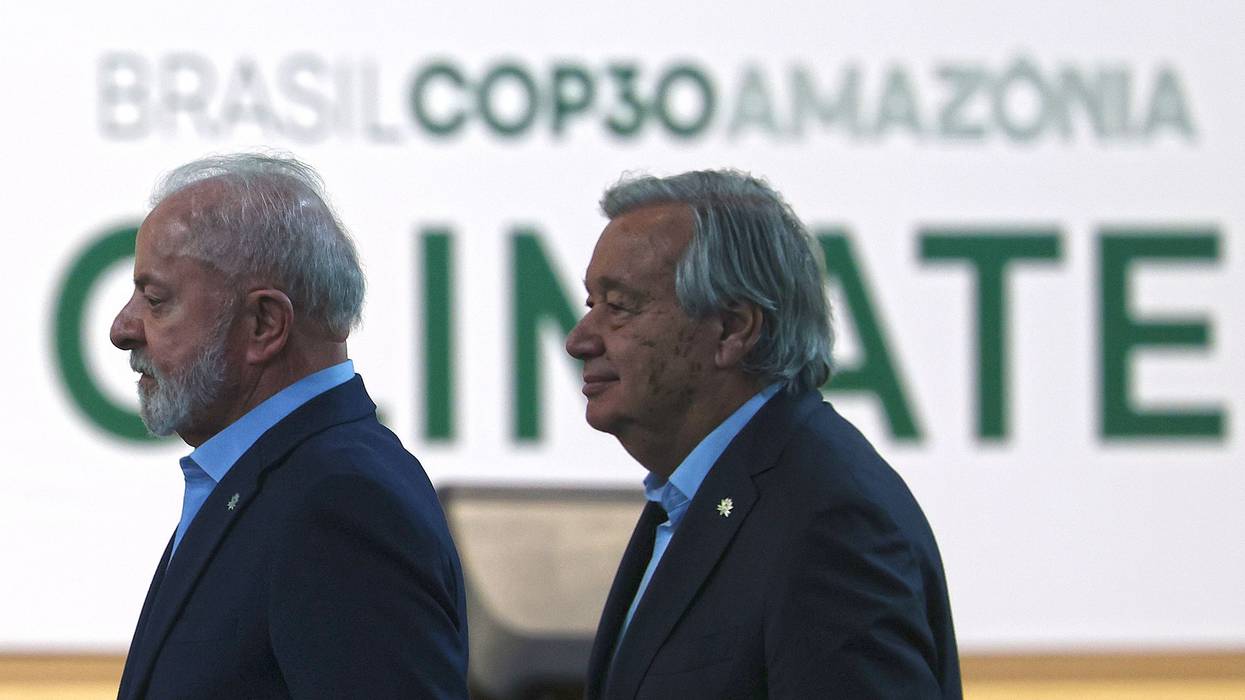
The win in Brazil, the win in Serbia, the probable win in Israel against Prime Minister Benjamin Netanyahu’s disastrous far-right coalition, and the upcoming midterms in the US, show that the power belongs to the people.
When Luiz Inácio Lula da Silva lost the first round of the Brazilian election and fell behind in the polls, I thought he would lose the election. So, the fact that he won is a stunning comeback. It took the three weeks between the two elections, hundreds of hours of street and online mobilization by Lula’s Army of Supporters, to defeat the conservative candidate, Sen. Flávio Bolsonaro. Another member of the Bolsonaro family, of course!
Lula’s winning magic was helped by a video. It’s a clip between the two men from their debate that rightfully deserves to be immortalized. In it, Bolsonaro asks him: “Why are 73% of the prisoners voting for you?” And the wise Lula answers: “I want 100% of the prisoners’ votes. Including your dad’s vote!” The people in the studio laughed. This exchange made Brazilian society laugh too, wake up, and think, after seeing a dynamic performance by Lula on live TV. It was the opposite of former US President Joe Biden in that infamous debate.
Bolsonaro (son of the ex-president Jair Bolsonaro who is imprisoned), who had pledged to join President Donald Trump’s “Shield of the Americas” security and political initiative, is the big loser. Flávio reportedly fled Brazil after losing. Nobody has to be a genius to advise him: “Flávio, you lost. Concede with dignity. Don't follow Trump's infamous playbook. Show some grace in defeat.” But Bolsonaro losing is great news not only for the people of Brazil, but also for the flora and fauna of the Amazon rainforest.
Thus, Lula, who is a former worker, a unionist, and a pragmatic politician, prevents the return to power of the far-right with the Bolsonaros.
Thus, Lula wins a fourth term as Brazilian president, after a dramatic run-off. The crucial matter is that Lula, alone, defeated Elon Musk, Mark Zuckerberg, Donald Trump, and Flávio Bolsonaro together. After all, defeated are those who stop fighting! Musk said Brazil's presidential election results do not “add up.” Relax, Mr. Trillionaire! Next to Lula, the Amazon rainforest won big time, ensuring it will not become a place for giant companies worth billions who want to mine for diamonds, gold, and extract petrol from its lands. And Anne Applebaum wrote in an X post: “In one day, two politicians—Bolsonaro in Brazil and Vucic in Serbia—with ties to Trump and his family have lost surprise elections, thanks to high turnout. The rise of the international far-right is not inevitable.”
Lula has four fingers on his left hand! The one finger that's missing, he lost at 17 years old when he was working as a metalworker and a mechanical lathe crushed his pinky finger. As he has said, “I arrived at three in the morning [at the hospital] smelling like work overalls, smelling like grease” and he looked so bad that the doctor didn’t bother to save his finger. In his eyes, that was the result of poverty.
During his years in power, Lula has supported democratic institutions and made important progress on protecting the forest—there is a web of laws protecting the Amazon now–and local communities who depend on it for their survival, but of course, for a few analysts, he had a mixed record in other areas. The economy has problems, but the same happens in countries like Germany and Japan.
Someone must acknowledge that deforestation has dropped drastically under Lula’s government, which has “set a target of completely halting illegal deforestation by 2030.” It reactivated the Amazon Fund, which is a mechanism backed by countries like Norway to finance conservation and monitoring, and stepped up enforcement through satellite imagery and policing. Lula also launched on November 6, 2025 the Tropical Forests Forever Facility to help developing nations to keep their forests intact.
The win in Brazil, the win in Serbia, the probable win in Israel against Prime Minister Benjamin Netanyahu’s disastrous far-right coalition, and the upcoming midterms in the US, which will also test control of Congress, show that the power belongs to the people. That’s democracy in other words, and the people must have the final say.
Thus, Lula, who is a former worker, a unionist, and a pragmatic politician, prevents the return to power of the far-right with the Bolsonaros. So, this is a great result not only for the workers and democracy, but also for the giant Amazon lung. An electoral win for all the species that have lived there for thousands of years! Money is not above everything as capitalism’s big corporations teach, while in the end, the poor get crumbs if they’re lucky. The “pro-worker” left, headed by Lula, may have its own problems, but it is far better for society and the environment. The right thinks mainly of the plutocrats and the big profits; it leaves barbarism, which is a society in ruins.
The tireless Sen. Bernie Sanders (I-Vt.) said about Lula’s victory: “He will continue to fight for Brazilian workers and democracy over the next four years.” All the progressives and their grassroots movements around the world breathed the fresh air of the Amazon again.
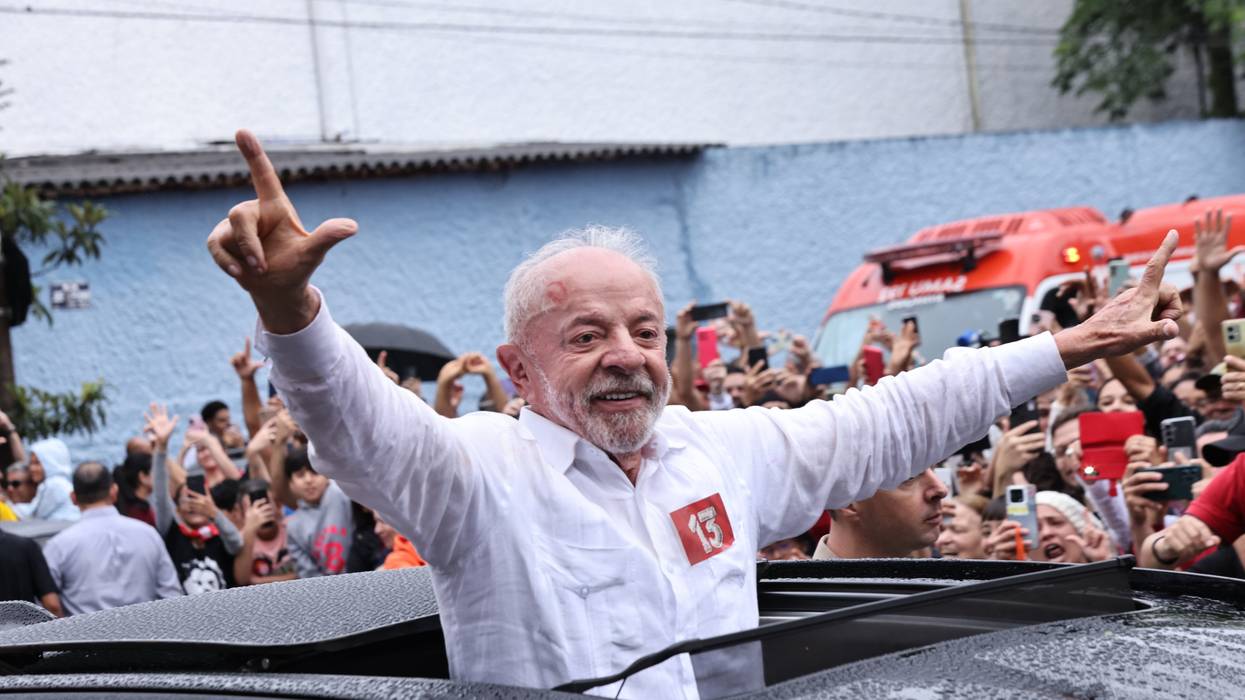
The Brazilian leader framed the election as a choice between a sovereign Brazil charting its own course and one subordinated to Washington’s geopolitical agenda. Sunday’s election result shows that the Brazilian people have made their choice.
At 80, President Luiz Inacio Lula da Silva has pulled off an extraordinary political victory. After losing the first round to Flavio Bolsonaro, son of former President Jair Bolsonaro, by 47 percent to 45 percent, Lula defied the odds to secure a stunning second-round victory, with 51.8 percent of the vote against Bolsonaro’s 48.2 percent.
His triumph confounded every pre-election poll and crowned a dramatic campaign revival that few had anticipated.
Lula’s victory in Latin America’s largest country does more than halt the far right’s return to power in Brazil. It breaks a succession of right-wing electoral victories across the region and deals a major blow to United States President Donald Trump’s increasingly interventionist agenda in the Western Hemisphere.
When Bolsonaro unexpectedly defeated Lula in the first round, the result sent shockwaves across Brazil and beyond. For the government, the defeat was particularly startling given its strong socioeconomic record. What followed was an extraordinary three-week political mobilisation that transformed the sluggish first-round campaign of Lula’s Workers’ Party into an existential confrontation over the future of democracy and sovereignty in Brazil.
The economic record was hardly that of a government heading for defeat. Brazil’s economy grew by a cumulative 9.2 percent between 2023 and 2025, compared with an average of just 5.6 percent among its South American neighbours. Unemployment fell from 9.3 percent in 2022 to a historic low of 5.4 percent in 2026.
Brazil also exited the United Nations Hunger Map in 2025, after having returned to it under the Bolsonaro senior administration. In the Amazon, deforestation fell to its lowest level in decades, a sharp reversal of the trend under his predecessor.
Not everything has been rosy under the Lula administration. Millions of Brazilians have remained trapped in credit-card debt, struggling with extremely high interest rates, while an explosion of online gambling has devastated the livelihoods of families. The run-off result sent a clear signal that there was social discontent.
Lula responded with unusually bold measures: a sweeping debt-relief initiative and restrictions on online betting, as well as expanded social benefits, fuel subsidies, and the transition from a six-day to a five-day working week. These policies sought to reconnect the government’s macroeconomic achievements with the everyday economic anxieties of Brazilian voters.
Bolsonaro offered a radically different vision for Brazil: sweeping spending cuts, privatisations, lower taxes and, above all, an iron-fisted response to crime and insecurity. His proposals included building five maximum-security prisons modelled on El Salvador’s notorious penitentiary system and authorising lethal force against heavily armed criminals.
Bolsonaro also pledged to pardon his father, sentenced to 27 years for plotting to overturn the 2022 election, and to grant clemency to those convicted over the January 8, 2023 assault on Brazil’s democratic institutions. For his supporters, this represented an opportunity to reverse what they considered judicial persecution. For his opponents, it threatened to rehabilitate the attempted coup and undermine judicial independence.
Lula’s campaign came back re-energised, with many young Brazilians mobilising at the grassroots level. The campaign was able to overcome even algorithmic bias by social media giants like Meta, which favoured Bolsonaro.
Ultimately, the election became a battle not only over Brazil’s democracy but also its sovereignty. Trump’s administration has intervened conspicuously in Brazilian politics throughout Lula’s term, imposing punitive tariffs, sanctioning a Supreme Court justice involved in Jair Bolsonaro’s prosecution and openly embracing his son’s candidacy.
In May, Trump received Flavio Bolsonaro in the Oval Office. Two days later, Secretary of State Marco Rubio designated Brazil’s two largest crime organisations as foreign terrorist organisations, a measure Flavio had publicly requested.
These designations carry implications extending far beyond electoral politics. They potentially open the door to US military operations on Brazilian territory under Washington’s expanding war on so-called “narcoterrorism”. The world saw how one such foreign terrorist designation enabled the US to intervene militarily in Venezuela and abduct its sitting president.
Whereas Trump seeks to draw Latin America’s largest country into Washington’s expanding system of hemispheric military dominance, Lula has defended Brazil’s strategic autonomy, insisting that cooperation against organised crime must respect national sovereignty.
He framed the election as a choice between a sovereign Brazil charting its own course and one subordinated to Washington’s geopolitical agenda. Sunday’s election result shows that the Brazilian people have made their choice.
Importantly, Lula’s victory may mark a turning point in Latin America’s rightward shift. Since Trump’s return to the White House, the right has scored a string of electoral victories in Honduras, Chile, and Bolivia, among others. But Lula’s re-election suggests that its momentum may be faltering.
The result comes just ahead of the US midterms and could deliver a significant setback to the strength of Trump’s leadership in the Americas. In Argentina, President Javier Milei — who regularly attacks Lula and threw all his weight behind Bolsonaro — has been sliding in the polls ahead of next year’s presidential election. In Chile, President Jose Antonio Kast has suffered an even more precipitous collapse in public support.
Mexico’s Claudia Sheinbaum, for her part, has likely breathed a sigh of relief. A Lula defeat would have left her increasingly isolated in a region gravitating towards Mexico’s northern neighbour. Instead, Latin America’s two most populous countries and largest economies will remain firmly on the left for the foreseeable future.
It is too early to declare the region’s rightward turn over. But Lula’s victory raises the possibility that the wave has already crested. Brazil will not be joining Trump’s Shield of the Americas, and while the “Donroe Doctrine” remains a threat, its moment of greatest ascendancy may already be behind it.
Lula’s victory is a vindication of a lifetime spent fighting for society’s most marginalized and disenfranchised. And its significance extends far beyond Brazil’s borders. For defenders of democracy, multilateralism, international law, environmental protection and the sovereignty of the Global South, it sends a powerful message: the far right’s advance is neither inevitable nor irreversible. Not in Brazil. Not anywhere.
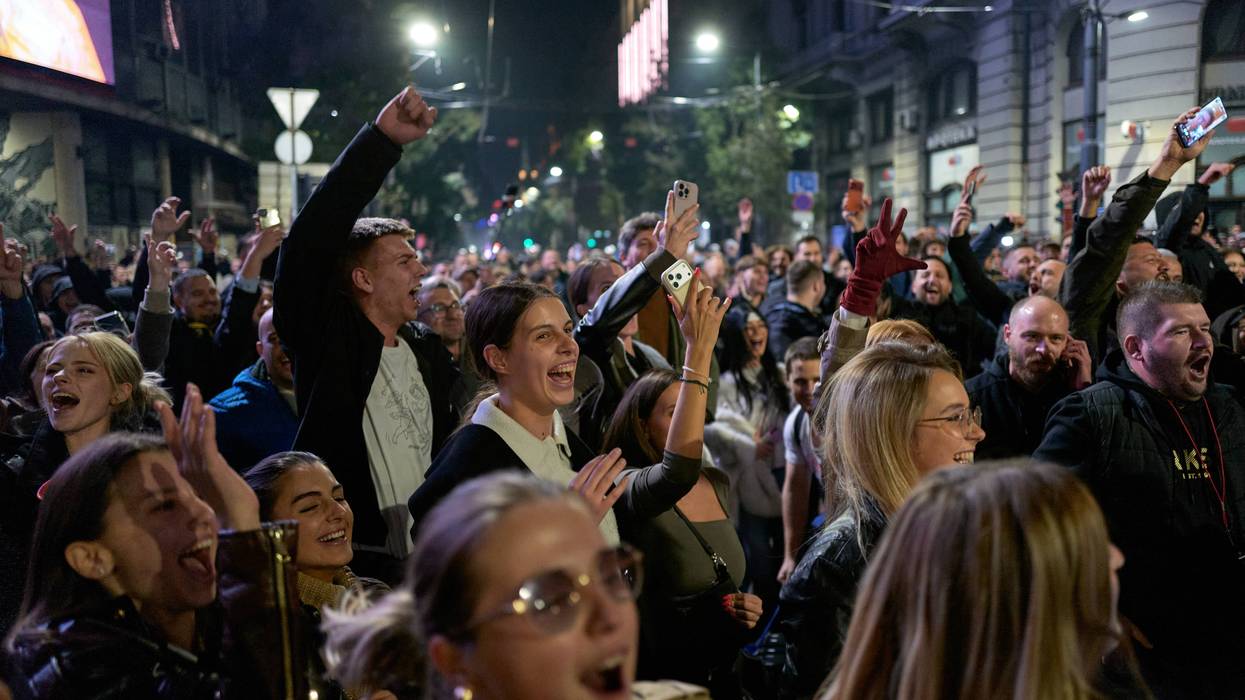
"Israel could be next on Tuesday, then the US midterms the following week," said one human rights advocate. "The best case against the autocrats is the autocrat."
"There is nothing inevitable about the far right," said one former Obama administration official Sunday night as supporters of the left-wing Student List in Serbia poured into the streets of Belgrade and other cities across the Balkan country, celebrating their defeat of right-wing President Aleksandar Vučić, who has led the nation for nearly a decade and has been accused of corruption and autocratic rule.
The Student List's victory coincided with that of Brazilian President Luiz Inácio Lula da Silva, who was also backed by a student-led movement that marched through Rio de Janeiro and other cities in recent weeks, as US President Donald Trump was accused of election interference on behalf of right-wing Sen. Flávio Bolsonaro, Lula's opponent.
Both countries reported high voter turnout in the pivotal elections, proving, as journalist Anne Applebaum said, "that voters can alter what feels like a historical shift."
In Serbia, Vučić said it was "clear that we have lost the election,” as results showed his Serbian Progressive Party (SNS) had won about 105 seats while the Student List had won at least 135.
The Student List movement, officially registered by the Republic Electoral Commission as “Studentska lista—Studenti pobeđuju” (Student List—Students Win) began in November 2024 after the concrete roof of a newly renovated train station in Novi Sad collapsed, killing 16 people. Students and other Serbians blamed corruption and negligence by Vučić's government, and soon began blockades at a majority of the country's higher education institutions.
Rallies in the coming year drew hundreds of thousands of people. The political movement that grew out of the sustained protests called for an independent judiciary, a special prosecutor to hold public officials accountable, independent reviews of major infrastructure projects, a higher minimum wage, and better funding for education, healthcare, and agriculture.
A cardiologist and professor from Novi Sad, Ilija Srdanović, topped the list of 250 candidates that the Student List put forward ahead of the snap elections on Sunday, but the movement has said Srdanović will not automatically be its choice for prime minister. The list of candidates for Serbia's 250-seat Parliament includes doctors, farmers, activists, athletes, and actors.
“Never again tyrants in our country," Srdanović said after the defeat of Vučić, who was prime minister before becoming president in 2017 and has been Serbia's central political figure since 2012, developing a reputation for threatening his critics and cracking down on press freedom.
One Student List supporter, Sara, told The Guardian in Belgrade, “It’s very strange that on the very streets where the police beat us, on the streets where we retreated countless times in the face of the gendarmerie, we are now standing here as the victors."
Nebojsa Cosic said to Reuters: “The people have won! The people defeated a dictator! The people will lead Serbia!”
In Brazil, thousands rallied ahead of the runoff election between Lula and Bolsonaro, the son of convicted former President Jair Bolsonaro, a close Trump ally who is serving a 27-year sentence under house arrest for orchestrating a coup attempt after his election loss in 2022.
Right-wing candidates won a significant number of seats in the earlier elections, which followed Trump's push to secure partnerships across Latin America—stoking fears that Bolsonaro could win Sunday's runoff and pushing students to lead pro-Lula rallies and marches across the country.
At a Copacabana Beach rally in Rio on Saturday, supporters carried a yellow and green banner that read, "We are going to turn this around!"
Isabella Graze, a retired teacher who joined a 10-million member WhatsApp group aimed at mobilizing pro-Lula voters, told The Guardian that “being a soldier in Lula’s army... means fighting for Brazilian democracy. This isn’t a normal election."
The Serbian and Brazilian elections came two days before Israelis are set to vote, potentially ending the long-running term of Prime Minister Benjamin Netanyahu, an accused war criminal whose US-backed government has waged war on Gaza, killing more than 74,000 Palestinians, and pushed to violently take control of more of the occupied West Bank.
They also came just over a week before the midterm elections in the US, with Democrats pushing for congressional control to rein in Trump for the final two years of his term. The campaign has been marked by openly racist, anti-Muslim attacks by Trump and his allies on Michigan US Senate candidate Abdul El-Sayed, a Republican ad claiming that Ohio Democratic gubernatorial candidate Amy Acton lied about her abusive childhood, and persistent claims by the president that the cost of living is down, contrary to all evidence.
"Feeling so much hope from the results out of Serbia and Brazil," said Rep. Yassamin Ansari (D-Ariz.). "This took tremendous people power, organizing, and grit. Now it’s time to turn our country around, too."
Kenneth Roth, former executive director of Human Rights Watch, said Sunday was "a good day for democracy."
"Israel could be next on Tuesday, then the US midterms the following week," said Roth. "The best case against the autocrats is the autocrat."
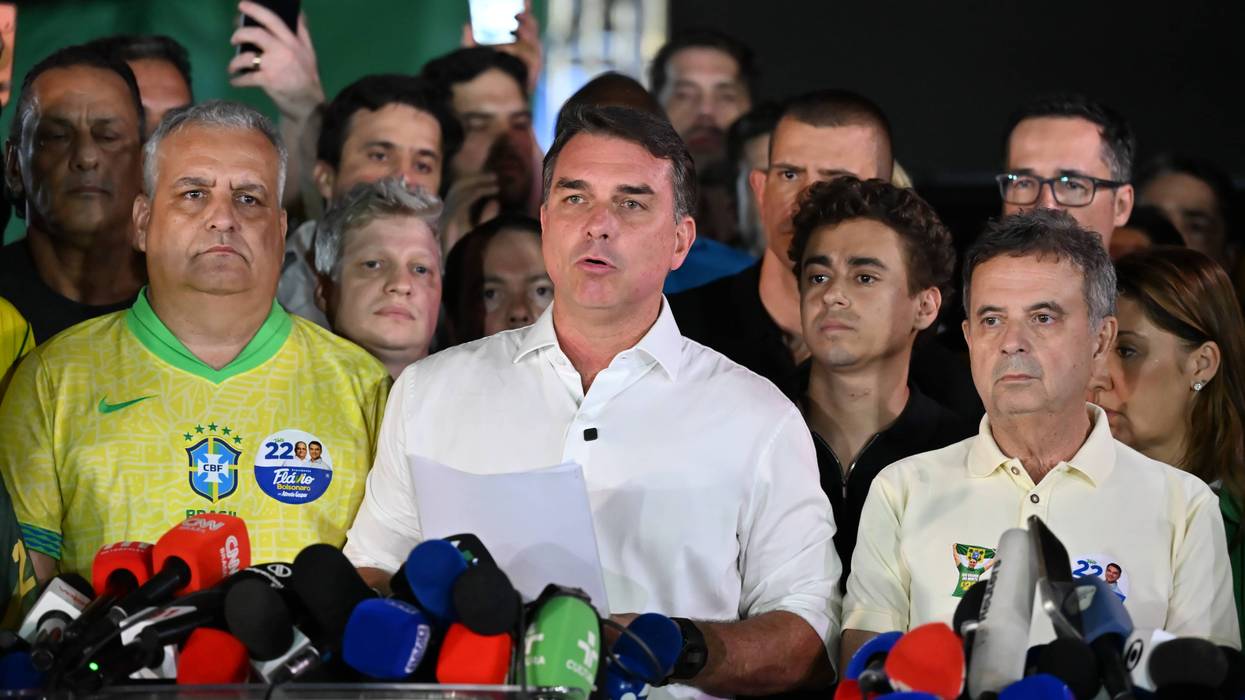
"The Trump administration, which has close relations with the Bolsonaro family, could help defuse this threat by joining other governments in recognizing the election outcome."
Pro-democracy campaigners urged governments around the world, including in the US, to formally recognize Brazilian President Luiz Inácio Lula da Silva victory in Sunday's runoff election as his far-right challenger, Sen. Flávio Bolsonaro, refused to accept the results, sparking fears of political violence and another coup attempt.
"It is impossible to recognize the results. I am going to request the annulment of these elections," said Bolsonaro, the son of former Brazilian President Jair Bolsonaro, who was convicted last year over a plot to violently maintain power following Lula's 2022 election win. On Sunday, the younger Bolsonaro pointed to the Brazilian Supreme Court's decision to keep polls open for two hours past the scheduled deadline as a reason to dispute the results—even though both Lula and Bolsonaro pushed for the extension, for different reasons.
Numerous world leaders, including Mexican President Claudia Sheinbaum and Canadian Prime Minister Mark Carney, congratulated Lula on his reelection win over Flávio Bolsonaro, an ally of US President Donald Trump. The US-based Center for Economic and Policy Research (CEPR), which sounded the alarm about the Trump administration's attempts to interfere in the Brazilian elections ahead of Sunday's runoff, said in a statement on Sunday that "governments—including the Trump administration—should immediately recognize the outcome, to prevent a possible coup or further violence."
"It’s likely that Flávio Bolsonaro will, like his father in late 2022, encourage his supporters to mobilize in order to try to overturn the election results, which could trigger a new wave of political violence,” said Alex Main, CEPR’s director of international policy who was in Brazil for the elections. "The Trump administration, which has close relations with the Bolsonaro family, could help defuse this threat by joining other governments in recognizing the election outcome."
Trump, who hosted Bolsonaro at the White House in May, has yet to comment on the Brazilian election results, as of this writing. US Secretary of State Marco Rubio, whose department led the effort to tilt the election in Bolsonaro's favor, has also not publicly commented on Sunday's results.
Mark Weisbrot, CEPR's co-director, called Lula's win "a victory for democracy and independence in the Americas against the massive intervention from the Trump administration in favor of the Bolsonaro team."
"This included politically driven tariffs and other efforts to influence the campaign," said Weisbrot. "Trump also tried to stop the trial of Jair Bolsonaro, who—like Trump—refused to accept his defeat in a presidential election, and was convicted of attempting a coup d’état and attempted violent abolition of the democratic rule of law."
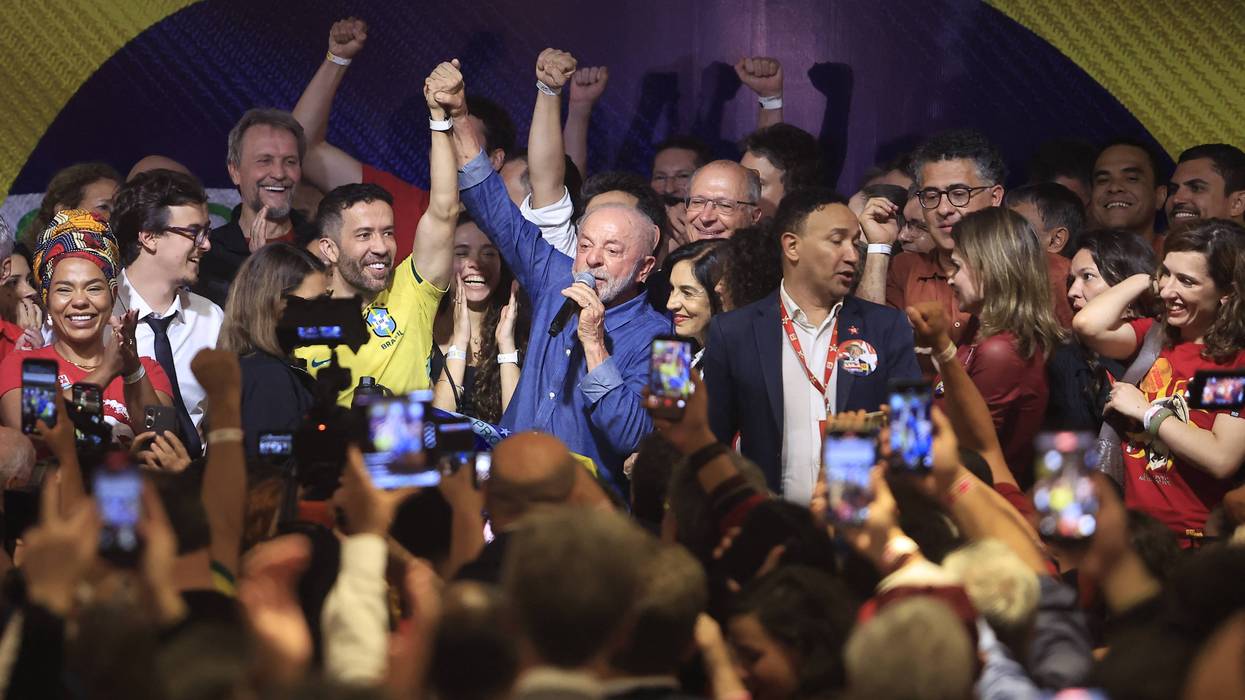
"This shows that Trumpismo is waning, and it is our responsibility now to make sure that we kill the beast," Pennsylvania Democratic House nominee Chris Rabb said.
In a historic comeback, Brazilian President Luiz Inácio Lula da Silva triumphed in Sunday's run-off election over right-wing challenger Flávio Bolsonaro, the son of former Brazilian President and convicted coup-plotter Jair Bolsonaro.
Lula's victory comes despite the best efforts of US President Donald Trump and his Big Tech backers, as Trump's administration openly intervened on behalf of Bolsonaro and Meta boosted pro-Bolsonaro over pro-Lula content on its social media platforms.
"Lula won, Brazil won, democracy won, the Americas won," said Pennsylvania Democratic House nominee Chris Rabb from Lula's campaign headquarters in Sao Paulo, Brazil, after the results were announced around 9:15 pm Brasilia time. "They declared victory for Lula da Silva for his fourth term against a raging fascist, rubber-stamped for Donald Trump."
"These elections have represented a historic victory for the majority of the Brazilian people, who mobilized to defend democracy against the threat of fascism."
Rabb noted that Lula's victory marked an important turning point for the left in Latin America, as far-right parties had won every other national election in the region since the start of Trump's second term. "This is the first victory for democracy in this hemisphere since Trump took office," Rabb said.
With 99.99% of the votes counted, Lula won by 51.79% to Bolsonario's 48.21%, making him the first Brazilian candidate since the restoration of democracy in 1985 to win a second-round election after coming in second in the initial round.
“I would like to thank the Brazilian people for the generosity they have shown me for a long time,” Lula said in his victory speech in São Paulo late Sunday. “And, in this second round, I want to thank the generosity of the Brazilian youth, who took to the streets to defend democracy.”
After finishing two percentage points behind Bolsonaro in the October 4 poll, Lula re-energized his campaign by finally shortening the Brazilian workweek from six to five days, as his supporters launched demonstrations against the far-right.
"These elections have represented a historic victory for the majority of the Brazilian people, who mobilized to defend democracy against the threat of fascism," Francesca Emanuele, senior international policy associate with the Center for Economic and Policy Research (CEPR), told Common Dreams from Sao Paulo, Brazil, where she was monitoring the elections. "It was the Brazilian people themselves (students, working-class, and middle-class Brazilians) who took to the streets and mobilized tirelessly from the very first day after the first round of voting to overturn the first-round results and secure Lula’s victory."
Reginaldo Lopes, a federal deputy for Lula's Workers' Party, told The Guardian: “I feel incredible… This is Brazil telling the world that the extreme right is fascist, that the extreme right is against Black people, is against the poor, against the state, against gay people... We are going to reorganize the democratic forces [in this country.]"
Sunday's victory did not come easily, as the Lula campaign complained of bus shortages in the key cities of Salvador and Sao Paulo, requesting that the Brazilian Supreme Court extend the voting by two hours. The court granted the request, so polls closed at 7 pm Brasilia time instead of 5 pm.
"Lula’s win is the first good news for the planet in a while!"
"Lula has won despite the unfair practices his campaign has faced from Meta, interference from the Trump administration, and severe disruptions to public transportation on election day in major cities (where up to 50% of bus fleets were reportedly out of service)," Emanuele told Common Dreams. "These disruptions disproportionately affected working-class voters, who rely heavily on public transportation and have historically been a key part of Lula’s electoral base."
She continued: "Despite all these obstacles, Lula’s campaign managed to turn around a first-round result that, just a few weeks ago, had seemed extremely difficult to reverse. This is a major victory for the majority of the Brazilian people."
Several advocates and lawmakers hailed the election results as a rebuke to the far-right and the Trump administration in particular.
"During his campaign, President Lula characterized 2026’s elections as a choice between 'sovereignty or submission.' Brazil has clearly chosen sovereignty," the Democratic Socialists of America (DSA), who sent a delegation to observe both rounds of Brazil's elections, wrote in a statement.
Progressive Rep. Ro Khanna (D-Calif.) posted on social media: "People all across the world are fighting back against extremism. With Lula in Brazil, they just won. Authoritarian leaders always attack democracy because they stand no chance against the will of their people. Trump must respect the results and not undermine Brazil’s elections."
Sen. Bernie Sanders (I-Vt.) said: "Congratulations to Lula on his extraordinary reelection victory in the Brazilian presidential election. Lula has stood up for Brazilian workers & democracy—and will continue to do so in the next four years."
"Lula's hard-fought victory is an indictment on the right-wing wave sweeping through Latin America," Joseph Bouchard, a journalist and researcher who focuses on Latin America, told Common Dreams. "Except for [ Salvadorian President Nayib] Bukele, the right across the region is still incredibly unpopular, and rightly seen as corrupt, autocratic, and uncommitted to fixing systemic issues. Lula shows there is still a fight for democracy worth having, while the region is plunged into its darkest, most regressive period since the Cold War. The entire region is populated by vassal states for US interests, who have declared states of exception to curtail rights, freedoms, and basic principles of social democracy, in the name of a failed and anti-human war on drugs."
Lula's victory also has planetary consequences, as he brought deforestation in the Amazon rainforest back down to record lows after it accelerated during the tenure of Jair Bolsonaro, who attacked environmental protections and Indigenous rights.
"Lula’s win is the first good news for the planet in a while!" wrote 350.org and Third Act co-founder Bill McKibben. "I bet it shaves a tenth of a degree off how hot our Earth eventually gets, which will save millions of lives. Thank you Brazil!"
Lula still faces a fight ahead, as Bolsonaro announced it was "impossible to concede the election result" due to the extension of polling hours, even though his team had also sought an extension in parts of southeastern Brazil because of unfavorable weather.
Bouchard pointed out that "Lula will fight an uphill battle with a far-right Congress, inept Supreme Court, and constant outside pressure.."
"Trump's silence on the result is worrisome, with Flavio not conceding and demanding an annulment," he told Common Dreams. "Sadly, much of the corporate press has legitimated these claims, despite the right's concerted efforts at destroying democracy. No matter how much the authoritarians try to tip the scales, the people can still prevail, if the left is willing to fight. This might prove to be a confidence boost to the demoralized and overpowered left all over the region, and may hopefully set the region back toward progress, hard fought after decades of dictatorship and neoliberal transitions."
US-based Lula allies urged others in the US to defend Brazil's democracy from Trump administration interference and to take their own stand against the far-right in the upcoming midterm elections.
The DSA wrote:
However, the fight continues—the thin margin of this victory indicates that continued struggle and mobilization will be crucial. As global capitalism fails to solve worsening problems of its own making, the capitalists turn to right-wing authoritarianism. Brazil’s left-wing coalition will face a right-wing Congress at home, a hostile Trump administration in the US, and hostile capitalists both [at] home and abroad in the years ahead. We of the DSA stand in solidarity with our comrades in the PT [Lula's Partido dos Trabalhadores], PSOL [Brazil's left-wing Socialism and Liberty Party], and Brazilian social movements in this fight for democratic self-determination.
This solidarity means recognizing our country’s role in the threat to Brazilian democracy. These elections were marred by interference from the US, whether by Trump’s politically motivated tariffs, or by manipulation of social media by US-based tech companies like Meta. They aimed to subvert Brazil’s democracy to favor its far-right allies grouped in the "Shield of the Americas," and to get their hands on crucial natural resources, such as lithium, cobalt, and rare earth minerals as well as petroleum and iron ore, which Brazil possesses in abundance and which Lula has sworn to protect as national patrimony. The DSA categorically denounces these meddlesome, imperialist efforts. We fight for a working-class foreign policy—one which centers peace, multilateralism, and respects national self-determination, free from US interference.
Rabb concluded his message with a call to action, and a celebration: "This is a big deal for us in the United States. This shows that Trumpismo is waning, and it is our responsibility now to make sure that we kill the beast. That beast is injustice, it's oligarchy, it's neoliberalism. All of these things. Now it's our turn, folks. November 3 is right around the corner, but right now I'm going to party with these Brazilians."
Update: This piece has been updated with commentary from Joseph Bouchard.