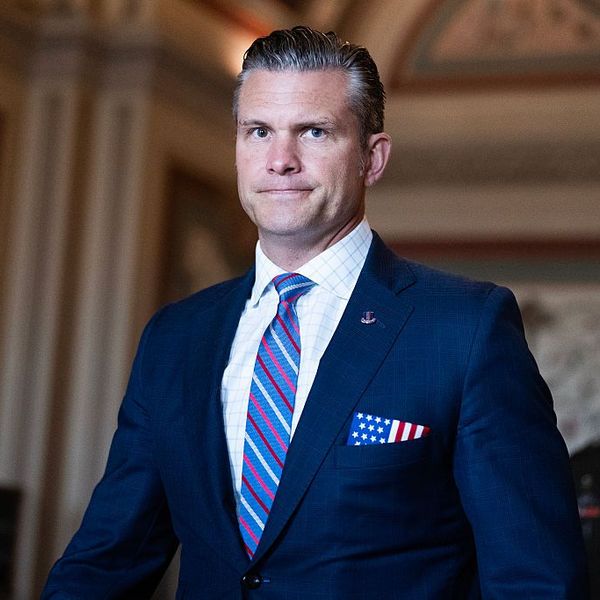
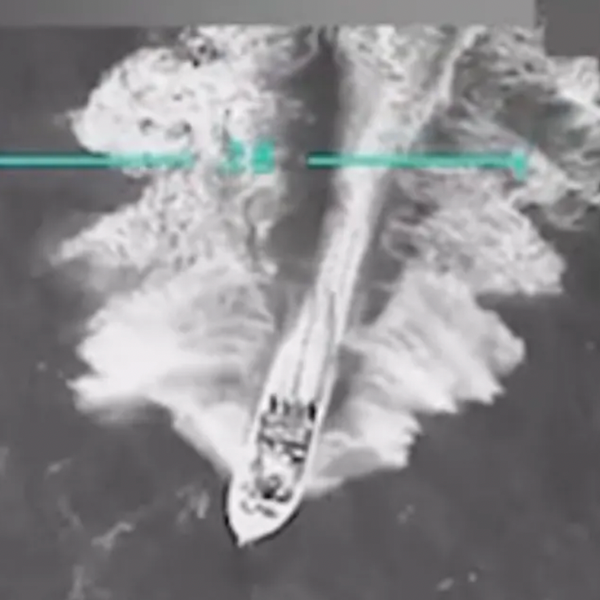

US President Donald Trump and Secretary of Defense Pete Hegseth announced that they bombed another boat in the Caribbean on October 3, 2025.
(Photo: screenshot/Donald Trump/Truth Social)
Second US Strike on Boat Attack Survivors Was Illegal—But Experts Stress That the Rest Were, Too
"It is blatantly illegal to order criminal suspects to be murdered rather than detained," said one human rights leader.
Dec 02, 2025
As the White House claims that President Donald Trump "has the authority" to blow up anyone he dubs a "narco-terrorist" and Adm. Frank M. "Mitch" Bradley prepares for a classified congressional briefing amid outrage over a double-tap strike that kicked off the administration's boat bombing spree, rights advocates and legal experts emphasize that all of the US attacks on alleged drug-running vessels have been illegal.
"Trump said he will look into reports that the US military (illegally) conducted a follow-up strike on a boat in the Caribbean that it believed to be ferrying drugs, killing survivors of an initial missile attack. But the initial attack was illegal too," Kenneth Roth, the former longtime director of the advocacy group Human Rights Watch, said on social media Monday.
Roth and various others have called out the US military's bombings of boats in the Caribbean and Pacific as unlawful since they began on September 2, when the two strikes killed 11 people. The Trump administration has confirmed its attacks on 22 vessels with a death toll of at least 83 people.
Shortly after the first bombing, the Intercept reported that some passengers initially survived but were killed in a follow-up attack. Then, the Washington Post and CNN reported Friday that Bradley ordered the second strike to comply with an alleged spoken directive from Defense Secretary Pete Hegseth to kill everyone on board.
The administration has not denied that the second strike killed survivors, but Hegseth and the White House press secretary, Karoline Leavitt, have insisted that the Pentagon chief never gave the spoken order.
However, the reporting has sparked reminders that all of the bombings are "war crimes, murder, or both," as the Former Judge Advocates General (JAGs) Working Group put it on Saturday.
Following Leavitt's remarks about the September 2 strikes during a Monday press briefing, Roth stressed Tuesday that "it is not 'self-defense' to return and kill two survivors of a first attack on a supposed drug boat as they clung to the wreckage. It is murder. No amount of Trump spin will change that."
"Whether Hegseth ordered survivors killed after a US attack on a supposed drug boat is not the heart of the matter," Roth said. "It is blatantly illegal to order criminal suspects to be murdered rather than detained. There is no 'armed conflict' despite Trump's claim."
The Trump administration has argued to Congress that the strikes on boats supposedly smuggling narcotics are justified because the United States is in an "armed conflict" with drug cartels that the president has labeled terrorist organizations.
During a Sunday appearance on ABC News' "This Week," US Sen. Chris Van Hollen (D-Md.) said that "I think it's very possible there was a war crime committed. Of course, for it to be a war crime, you have to accept the Trump administration's whole construct here... which is we're in armed conflict, at war... with the drug gangs."
"Of course, they've never presented the public with the information they've got here," added Van Hollen, a member of the Senate Foreign Relations Committee. "But it could be worse than that. If that theory is wrong, then it's plain murder."
Michael Schmitt, a former Air Force lawyer and professor emeritus at the US Naval War College, rejects the Trump administration's argument that it is at war with cartels. Under international human rights law, he told the Associated Press on Monday, "you can only use lethal force in circumstances where there is an imminent threat," and with the first attack, "that wasn't the case."
"I can't imagine anyone, no matter what the circumstance, believing it is appropriate to kill people who are clinging to a boat in the water... That is clearly unlawful," Schmitt said. Even if the US were in an actual armed conflict, he explained, "it has been clear for well over a century that you may not declare what's called 'no quarter'—take no survivors, kill everyone."
According to the AP:
Brian Finucane, a senior adviser with the International Crisis Group and a former State Department lawyer, agreed that the US is not in an armed conflict with drug cartels.
"The term for a premeditated killing outside of armed conflict is murder," Finucane said, adding that US military personnel could be prosecuted in American courts.
"Murder on the high seas is a crime," he said. "Conspiracy to commit murder outside of the United States is a crime. And under the Uniform Code of Military Justice, Article 118 makes murder an offense."
Finucane also participated in a related podcast discussion released in October by Just Security, which on Monday published an analysis by three experts who examined "the law that applies to the alleged facts of the operation and Hegseth's reported order."
Michael Schmitt, Ryan Goodman, and Tess Bridgeman emphasized in Just Security that the law of armed conflict (LOAC) did not apply to the September 2 strikes because "the United States is not in an armed conflict with any drug trafficking cartel or criminal gang anywhere in the Western Hemisphere... For the same reason, the individuals involved have not committed war crimes."
"However, the duty to refuse clearly unlawful orders—such as an order to commit a crime—is not limited to armed conflict situations to which LOAC applies," they noted. "The alleged Hegseth order and special forces' lethal operation amounted to unlawful 'extrajudicial killing' under human rights law... The federal murder statute would also apply, whether or not there is an armed conflict."
Goodman added on social media Monday that the 11 people killed on September 2 "would be civilians even if this were an armed conflict... It's not even an armed conflict. It's extrajudicial killing."
An Urgent Message From Our Co-Founder
Dear Common Dreams reader, The U.S. is on a fast track to authoritarianism like nothing I've ever seen. Meanwhile, corporate news outlets are utterly capitulating to Trump, twisting their coverage to avoid drawing his ire while lining up to stuff cash in his pockets. That's why I believe that Common Dreams is doing the best and most consequential reporting that we've ever done. Our small but mighty team is a progressive reporting powerhouse, covering the news every day that the corporate media never will. Our mission has always been simple: To inform. To inspire. And to ignite change for the common good. Now here's the key piece that I want all our readers to understand: None of this would be possible without your financial support. That's not just some fundraising cliche. It's the absolute and literal truth. We don't accept corporate advertising and never will. We don't have a paywall because we don't think people should be blocked from critical news based on their ability to pay. Everything we do is funded by the donations of readers like you. Will you donate now to help power the nonprofit, independent reporting of Common Dreams? Thank you for being a vital member of our community. Together, we can keep independent journalism alive when it’s needed most. - Craig Brown, Co-founder |
Our work is licensed under Creative Commons (CC BY-NC-ND 3.0). Feel free to republish and share widely.
As the White House claims that President Donald Trump "has the authority" to blow up anyone he dubs a "narco-terrorist" and Adm. Frank M. "Mitch" Bradley prepares for a classified congressional briefing amid outrage over a double-tap strike that kicked off the administration's boat bombing spree, rights advocates and legal experts emphasize that all of the US attacks on alleged drug-running vessels have been illegal.
"Trump said he will look into reports that the US military (illegally) conducted a follow-up strike on a boat in the Caribbean that it believed to be ferrying drugs, killing survivors of an initial missile attack. But the initial attack was illegal too," Kenneth Roth, the former longtime director of the advocacy group Human Rights Watch, said on social media Monday.
Roth and various others have called out the US military's bombings of boats in the Caribbean and Pacific as unlawful since they began on September 2, when the two strikes killed 11 people. The Trump administration has confirmed its attacks on 22 vessels with a death toll of at least 83 people.
Shortly after the first bombing, the Intercept reported that some passengers initially survived but were killed in a follow-up attack. Then, the Washington Post and CNN reported Friday that Bradley ordered the second strike to comply with an alleged spoken directive from Defense Secretary Pete Hegseth to kill everyone on board.
The administration has not denied that the second strike killed survivors, but Hegseth and the White House press secretary, Karoline Leavitt, have insisted that the Pentagon chief never gave the spoken order.
However, the reporting has sparked reminders that all of the bombings are "war crimes, murder, or both," as the Former Judge Advocates General (JAGs) Working Group put it on Saturday.
Following Leavitt's remarks about the September 2 strikes during a Monday press briefing, Roth stressed Tuesday that "it is not 'self-defense' to return and kill two survivors of a first attack on a supposed drug boat as they clung to the wreckage. It is murder. No amount of Trump spin will change that."
"Whether Hegseth ordered survivors killed after a US attack on a supposed drug boat is not the heart of the matter," Roth said. "It is blatantly illegal to order criminal suspects to be murdered rather than detained. There is no 'armed conflict' despite Trump's claim."
The Trump administration has argued to Congress that the strikes on boats supposedly smuggling narcotics are justified because the United States is in an "armed conflict" with drug cartels that the president has labeled terrorist organizations.
During a Sunday appearance on ABC News' "This Week," US Sen. Chris Van Hollen (D-Md.) said that "I think it's very possible there was a war crime committed. Of course, for it to be a war crime, you have to accept the Trump administration's whole construct here... which is we're in armed conflict, at war... with the drug gangs."
"Of course, they've never presented the public with the information they've got here," added Van Hollen, a member of the Senate Foreign Relations Committee. "But it could be worse than that. If that theory is wrong, then it's plain murder."
Michael Schmitt, a former Air Force lawyer and professor emeritus at the US Naval War College, rejects the Trump administration's argument that it is at war with cartels. Under international human rights law, he told the Associated Press on Monday, "you can only use lethal force in circumstances where there is an imminent threat," and with the first attack, "that wasn't the case."
"I can't imagine anyone, no matter what the circumstance, believing it is appropriate to kill people who are clinging to a boat in the water... That is clearly unlawful," Schmitt said. Even if the US were in an actual armed conflict, he explained, "it has been clear for well over a century that you may not declare what's called 'no quarter'—take no survivors, kill everyone."
According to the AP:
Brian Finucane, a senior adviser with the International Crisis Group and a former State Department lawyer, agreed that the US is not in an armed conflict with drug cartels.
"The term for a premeditated killing outside of armed conflict is murder," Finucane said, adding that US military personnel could be prosecuted in American courts.
"Murder on the high seas is a crime," he said. "Conspiracy to commit murder outside of the United States is a crime. And under the Uniform Code of Military Justice, Article 118 makes murder an offense."
Finucane also participated in a related podcast discussion released in October by Just Security, which on Monday published an analysis by three experts who examined "the law that applies to the alleged facts of the operation and Hegseth's reported order."
Michael Schmitt, Ryan Goodman, and Tess Bridgeman emphasized in Just Security that the law of armed conflict (LOAC) did not apply to the September 2 strikes because "the United States is not in an armed conflict with any drug trafficking cartel or criminal gang anywhere in the Western Hemisphere... For the same reason, the individuals involved have not committed war crimes."
"However, the duty to refuse clearly unlawful orders—such as an order to commit a crime—is not limited to armed conflict situations to which LOAC applies," they noted. "The alleged Hegseth order and special forces' lethal operation amounted to unlawful 'extrajudicial killing' under human rights law... The federal murder statute would also apply, whether or not there is an armed conflict."
Goodman added on social media Monday that the 11 people killed on September 2 "would be civilians even if this were an armed conflict... It's not even an armed conflict. It's extrajudicial killing."
From Your Site Articles
- Senator Says New Details of Venezuela Bombing Reveal 'Trump's Growing Lawlessness' ›
- Trump's Venezuela Boat Strikes Are War Crimes, So Where’s The Media? ›
- 'These Are Murders': Trump Condemned After Bombing Yet Another Boat Off Venezuelan Coast ›
- Experts Decry US 'Summary Execution' of Alleged Drug Runners Off Venezuelan Coast ›
- 'Patently Illegal': Experts Raise Major Red Flags About Trump's Drug Boat Bombings ›
As the White House claims that President Donald Trump "has the authority" to blow up anyone he dubs a "narco-terrorist" and Adm. Frank M. "Mitch" Bradley prepares for a classified congressional briefing amid outrage over a double-tap strike that kicked off the administration's boat bombing spree, rights advocates and legal experts emphasize that all of the US attacks on alleged drug-running vessels have been illegal.
"Trump said he will look into reports that the US military (illegally) conducted a follow-up strike on a boat in the Caribbean that it believed to be ferrying drugs, killing survivors of an initial missile attack. But the initial attack was illegal too," Kenneth Roth, the former longtime director of the advocacy group Human Rights Watch, said on social media Monday.
Roth and various others have called out the US military's bombings of boats in the Caribbean and Pacific as unlawful since they began on September 2, when the two strikes killed 11 people. The Trump administration has confirmed its attacks on 22 vessels with a death toll of at least 83 people.
Shortly after the first bombing, the Intercept reported that some passengers initially survived but were killed in a follow-up attack. Then, the Washington Post and CNN reported Friday that Bradley ordered the second strike to comply with an alleged spoken directive from Defense Secretary Pete Hegseth to kill everyone on board.
The administration has not denied that the second strike killed survivors, but Hegseth and the White House press secretary, Karoline Leavitt, have insisted that the Pentagon chief never gave the spoken order.
However, the reporting has sparked reminders that all of the bombings are "war crimes, murder, or both," as the Former Judge Advocates General (JAGs) Working Group put it on Saturday.
Following Leavitt's remarks about the September 2 strikes during a Monday press briefing, Roth stressed Tuesday that "it is not 'self-defense' to return and kill two survivors of a first attack on a supposed drug boat as they clung to the wreckage. It is murder. No amount of Trump spin will change that."
"Whether Hegseth ordered survivors killed after a US attack on a supposed drug boat is not the heart of the matter," Roth said. "It is blatantly illegal to order criminal suspects to be murdered rather than detained. There is no 'armed conflict' despite Trump's claim."
The Trump administration has argued to Congress that the strikes on boats supposedly smuggling narcotics are justified because the United States is in an "armed conflict" with drug cartels that the president has labeled terrorist organizations.
During a Sunday appearance on ABC News' "This Week," US Sen. Chris Van Hollen (D-Md.) said that "I think it's very possible there was a war crime committed. Of course, for it to be a war crime, you have to accept the Trump administration's whole construct here... which is we're in armed conflict, at war... with the drug gangs."
"Of course, they've never presented the public with the information they've got here," added Van Hollen, a member of the Senate Foreign Relations Committee. "But it could be worse than that. If that theory is wrong, then it's plain murder."
Michael Schmitt, a former Air Force lawyer and professor emeritus at the US Naval War College, rejects the Trump administration's argument that it is at war with cartels. Under international human rights law, he told the Associated Press on Monday, "you can only use lethal force in circumstances where there is an imminent threat," and with the first attack, "that wasn't the case."
"I can't imagine anyone, no matter what the circumstance, believing it is appropriate to kill people who are clinging to a boat in the water... That is clearly unlawful," Schmitt said. Even if the US were in an actual armed conflict, he explained, "it has been clear for well over a century that you may not declare what's called 'no quarter'—take no survivors, kill everyone."
According to the AP:
Brian Finucane, a senior adviser with the International Crisis Group and a former State Department lawyer, agreed that the US is not in an armed conflict with drug cartels.
"The term for a premeditated killing outside of armed conflict is murder," Finucane said, adding that US military personnel could be prosecuted in American courts.
"Murder on the high seas is a crime," he said. "Conspiracy to commit murder outside of the United States is a crime. And under the Uniform Code of Military Justice, Article 118 makes murder an offense."
Finucane also participated in a related podcast discussion released in October by Just Security, which on Monday published an analysis by three experts who examined "the law that applies to the alleged facts of the operation and Hegseth's reported order."
Michael Schmitt, Ryan Goodman, and Tess Bridgeman emphasized in Just Security that the law of armed conflict (LOAC) did not apply to the September 2 strikes because "the United States is not in an armed conflict with any drug trafficking cartel or criminal gang anywhere in the Western Hemisphere... For the same reason, the individuals involved have not committed war crimes."
"However, the duty to refuse clearly unlawful orders—such as an order to commit a crime—is not limited to armed conflict situations to which LOAC applies," they noted. "The alleged Hegseth order and special forces' lethal operation amounted to unlawful 'extrajudicial killing' under human rights law... The federal murder statute would also apply, whether or not there is an armed conflict."
Goodman added on social media Monday that the 11 people killed on September 2 "would be civilians even if this were an armed conflict... It's not even an armed conflict. It's extrajudicial killing."
From Your Site Articles
- Senator Says New Details of Venezuela Bombing Reveal 'Trump's Growing Lawlessness' ›
- Trump's Venezuela Boat Strikes Are War Crimes, So Where’s The Media? ›
- 'These Are Murders': Trump Condemned After Bombing Yet Another Boat Off Venezuelan Coast ›
- Experts Decry US 'Summary Execution' of Alleged Drug Runners Off Venezuelan Coast ›
- 'Patently Illegal': Experts Raise Major Red Flags About Trump's Drug Boat Bombings ›
We've had enough. The 1% own and operate the corporate media. They are doing everything they can to defend the status quo, squash dissent and protect the wealthy and the powerful. The Common Dreams media model is different. We cover the news that matters to the 99%. Our mission? To inform. To inspire. To ignite change for the common good. How? Nonprofit. Independent. Reader-supported. Free to read. Free to republish. Free to share. With no advertising. No paywalls. No selling of your data. Thousands of small donations fund our newsroom and allow us to continue publishing. Can you chip in? We can't do it without you. Thank you.