We are fools - or are we? - we 10 or 12 who keep coming out every Friday to stand for an hour in front of the Federal Building in Montpelier, and declare our objection to the war in Iraq
We've been performing this act for ten months now. On a recent Friday, the temperature was near 90 degrees. There were days last winter when we stood in our accustomed place bundled up against a temperature of 10 below. In the days of nearly constant rain this spring, we juggled umbrellas along with our wide placards.
In the spring, when it still seemed possible to prevent the invasion of Iraq, the number of participants in our vigil on a couple of Fridays reached a hundred - equivalent, proportionally, to a turnout of 100,000 in New York, a city with a population about a thousand times greater than Montpelier's. What's left to deal with now, since George Bush declared the war over, is the floundering of the calamitous occupation, together with its dreadful daily toll in American and Iraqi lives.
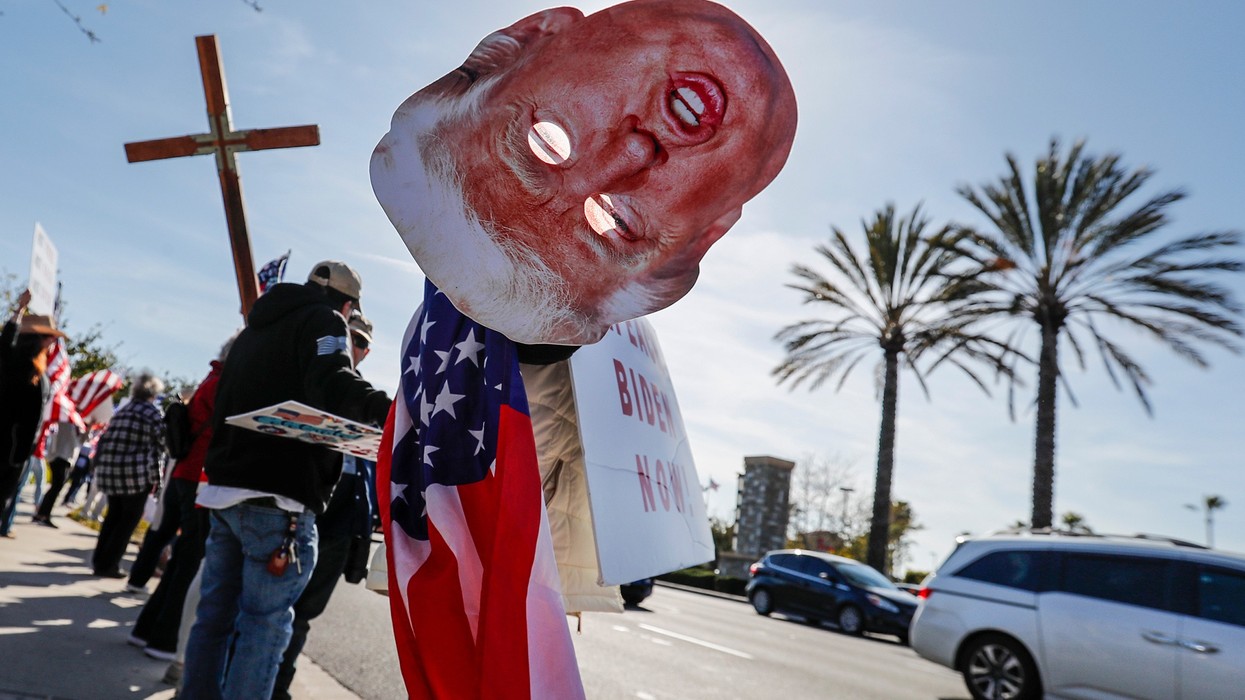
In the early days of our protest, the signs we carried said, "War in Iraq? Illegal and Immoral!" Now our signs say, "Because our President Lied, Hundreds of G.I.'s and Thousands of Iraqis Died" and "Support our Troops: Bring them home NOW."
We demonstrators may appear to be fools and crackpots. Ordinary Vermonters, "regular people," don't make such a spectacle of themselves as we do, standing before the public with our blaring signs.
It has appeared to me that in the process of publicly and deliberately exposing our views on the street and at the same time exposing our country's dirty linen, we have embarrassed and faintly annoyed some passersby who would rather not see us. This embarrassment and annoyance expresses itself in the refusal of some pedestrians even to glance sideways at us as they pass. As loyal citizens, respectful of authority, they may not want to contemplate the possibility that they have been brazenly lied to by the men who right now occupy our country's highest offices.
The matter is less complex in the case of some - perhaps most - others who pass by without giving us a glance. Why should they suspend their own private thoughts in order to attend, at this ordinary, busy moment in their lives, to the distraction of One More Thing to Think About?
There are a few arts and wiles we practice to draw the attention of our fellow-citizens.
One of these is the raw poetics of our signs.
Like advertisements for soap and cereal, our signs have to be at once pithy, comprehensive, and comprehensible ... to compress into a few words the gist of a complex political argument. People walking and driving by, absorbed in their own mental agendas and light daydreams, can't afford the time to take in lengthy texts.
Another art that some of us practice is the art of the connecting glance. Some of us in the vigil line chat together through the entire hour, and don't take much notice of the parade of people going by. Some others of us seek out the faces of passersby, to read their reactions to what we're saying, and beyond that, to establish even the briefest human contact, if we can. We are not mere billboards displaying our signs, but Persons with Something to Say: "Neighbor, consider this .... it's very important to us all."
One more art we practice is the art of the informal poll. How do the people who encounter us respond to what we're doing and saying?
Most of them respond with silence and eyes directed straight ahead: people on lunch break, people calculating stamp purchases as they head into the post office, people with not an inch of free space in their minds to consider other people's disconcerting ideas.
Almost every week, we undergo one or two drive-by verbal assaults from passing cars: "Get a job!" "If you don't like this country, leave it!" The drive-bys are almost always late-teens with their hats on backwards, and they shout at us with the rowdy aggression of kids who are high on game competition.
Every couple of weeks we provoke, just standing there, a spirited sidewalk debate, where our patriotism, our facts, and our reason are questioned.
One memorable Friday, we were assaulted verbally and luridly by a short, solidly- built young man in his early twenties with close-cropped hair and a girl on his arm. He informed us that he was a soldier, just back from Iraq, and he was seething.
"What the f....... did we think we were doing?" he yelled at us. And, no credit to his calling and the high moral purpose of the campaign he had been serving, he kept on cursing us, juicily, as if we were barracks mates of his, or prisoners of war. "Faggots!" was the least offensive and most often repeated word he used. A strange epithet, since two-thirds of the Montpelier vigilers, generally, are women, and half or more are of grandparent age.
One of our number that day, a history instructor, attempted to discuss the issues with the outraged soldier. Myself, having been raised in Boston long ago, I told him quietly, old man to young man, that it wasn't proper to use that kind of language in the presence of women (there was his girlfriend standing mutely beside him) and the elderly.
One of the federal guards who regularly appear on the sidewalk when we demonstrators gather, sniffed trouble brewing and walked over to intervene. The soldier asked him indignantly why he allowed us to stand there. The guard said that was our right, and told the soldier to calm down. Obedient, probably, to the authority of another man's uniform, and the arsenal of his mouth having failed to blow us away, the boiling-mad soldier took the guard's advice and quit the scene.
I have told the worst, first.
Resuming my observations on the art and results of our sidewalk poll, I would say that for every negative or antagonistic expression we encounter in the blessed city of Montpelier, we receive 10 or 20 affirmations, ranging from a silent thumbs-up, to a series of honks on the horn and a friendly wave, to the declarations by persons who stop before one or another of us to say something like, "Thanks. You're doing this for me."
My casual sidewalk poll wouldn't claim that 80 percent or 90 percent of all passersby agree with our opposition to Bush's war. I suspect that many passersby, being Vermonters, say nothing -- on the principle that if you can't say a good thing, say nothing. But of those who see fit to comment, in words or with a gesture, at least 80 percent do comment favorably on our action.
On the street, at our vigil, I have been promiscuous with my eyes and with my greetings. If a passerby's eyes meet mine, I nod and say, "Hello." The message of my sign is toneless if I'm not present to ratify it.
I remember addressing recently, with my eyes and a nod, a middle-aged man just passing in front of us. The sign I carried that day read: "Because Our President Lied, Hundreds of G.I.'s and Thousands of Iraqi's Died." The man responded to the words on my sign and to my silent salutation by compressing his lips tightly and shaking his head disbelievingly from left to right and right to left - and looking straight ahead in the direction in which he was walking.
He couldn't have expressed himself more completely in words ("How can you people stand there and say such things!")
The man's silent rejoinder, bitter and graphic as it was, has stayed in my mind. I had made a statement, which he had had the goodness to consider and respond to. His rejoinder (as I read it) wounded me a little, but that he had taken notice and said his say, too, was what I desired. He had suspended business for a moment and joined our public forum of the sidewalk.
Jules Rabin (JHRabin@sover.net) is a writer and baker
in Marshfield, Vermont
###